 PawStyle Daily
Homemade Dog Treats & Meal Planning
7 No-Bake Peanut Butter Dog Treats (Golden Recipe)
No-bake peanut butter treats are the fastest win for Golden Retrievers: oats + peanut butter + pumpkin, rolled and chilled — no oven, no guesswork. These seven versions cover softer textures, training-size bites and freezer batches, every one with xylitol safety built in.
By PawStyle Daily · Updated 14 November 2026
Good to know: 10-20 minutes + 1 hour chill · No xylitol in the peanut butter · For informational purposes, consult your vet.
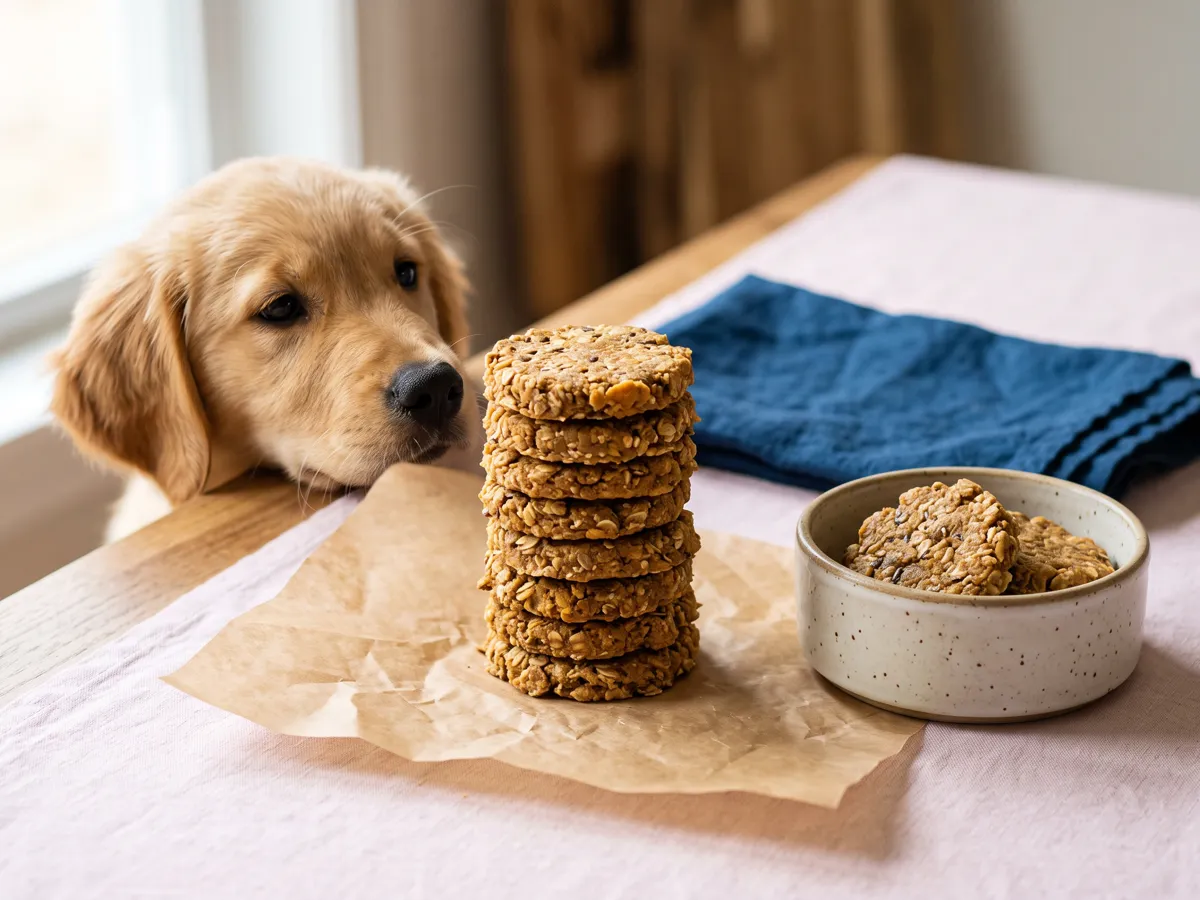
Safety first: peanut butter rules
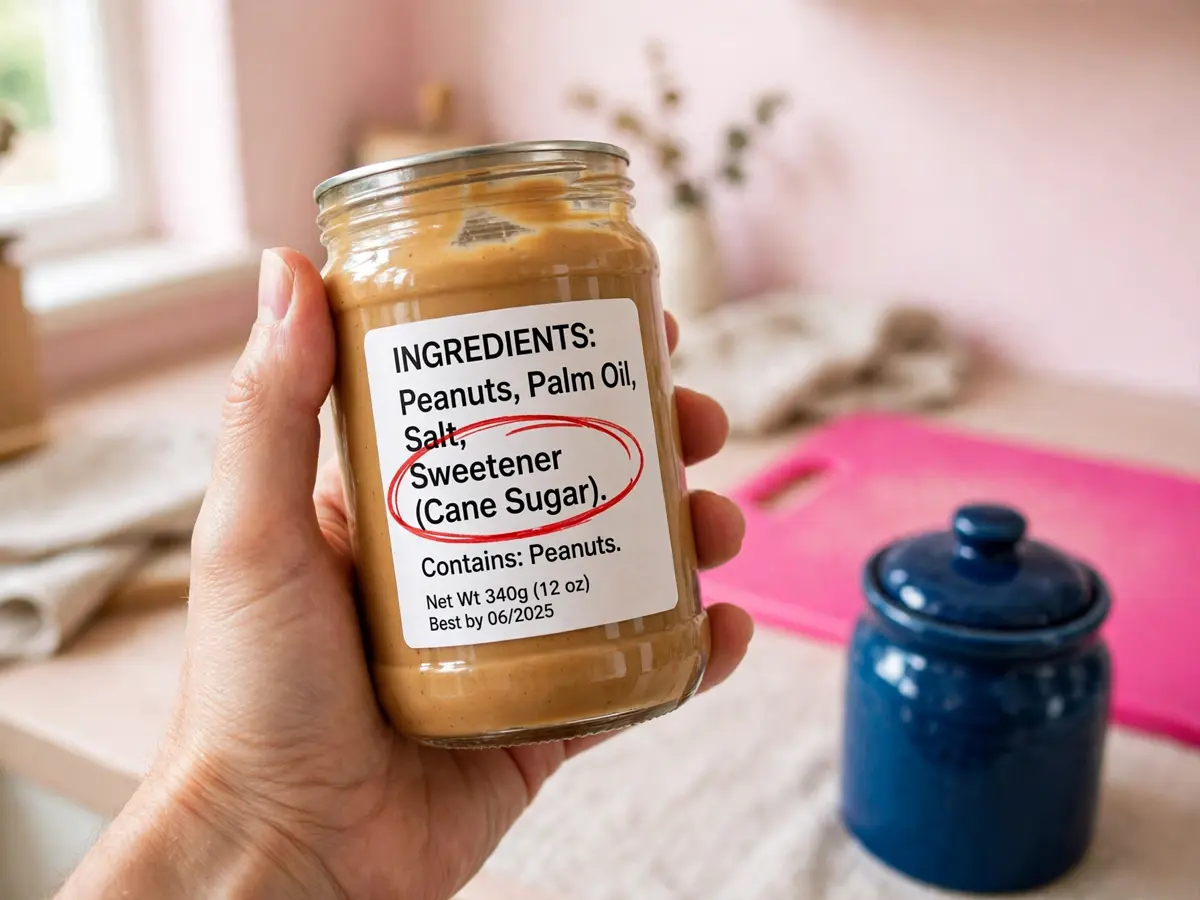
Use peanut butter with peanuts + salt only — never xylitol, birch sugar, or added sweeteners. Check the label every new jar. Treats should stay at no more than five percent of a dog's daily calories, so keep the pieces small. Introduce one new ingredient at a time, and stop if stools loosen. For informational purposes, consult your vet before changing treats for puppies, seniors, or dogs with allergies.
The seven recipes at a glance
Seven no-bake recipes
| Recipe | Hands-on time | Storage |
|---|---|---|
| Classic 3-ingredient balls | 15 minutes | Freezer 2 months |
| Frozen yogurt bites | 10 minutes | Freezer 3 hours |
| Banana oat cookies | 10 minutes | Fridge 5 days |
| Pumpkin squares | 15 minutes | Chill, then cut squares |
| Tiny training dots | 20 minutes | Fridge door bag |
| Apple crunch balls | 15 minutes | Chill after rolling |
| Freezer batch | 25 minutes | Freezer 2 months; label the date |
Pick by the time you have and the texture your Golden likes. Every row starts from the same peanut butter rule.
Before you roll: the counter setup
No-bake day is a short job once the bowl is out, so set the counter first. One mixing bowl, a fork, a measuring cup set, a sheet of parchment and a tray that fits your freezer shelf. Add the silicone molds for the yogurt bites, and the bags plus a marker for the freezer batch.
Keep the peanut butter jar on the counter while you work, not back in the cupboard. Every recipe here starts with reading that label. Oats go in a wide bowl so the dough is easy to fold, pumpkin goes in a small dish so a wet spoon never goes back into the can, and the measuring cups stay in one place instead of migrating across the counter.
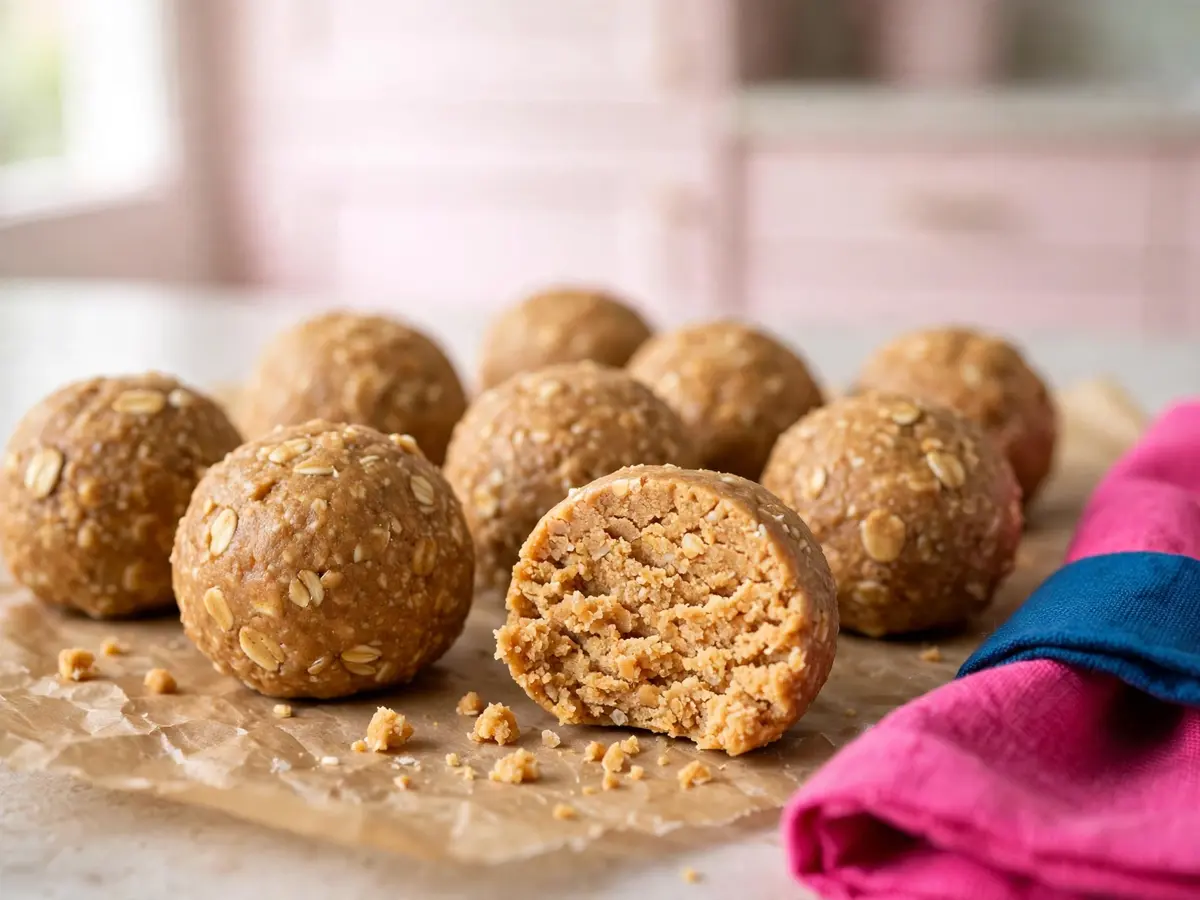
We roll on parchment, chill on the same tray, and bag the balls only once they are firm. That order keeps the shapes round and keeps the washing up to one bowl and one fork.
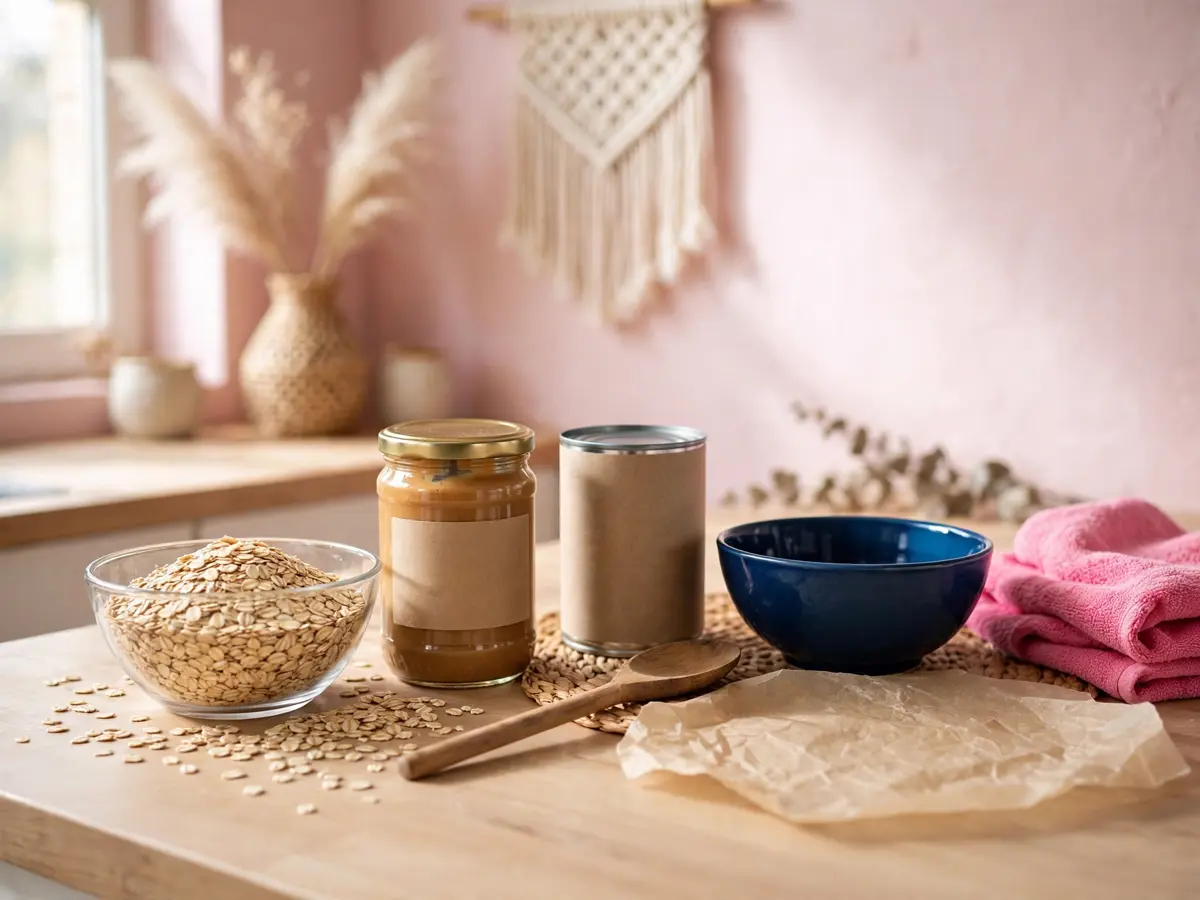
1. Classic 3-ingredient balls
One cup of oats, half a cup of peanut butter with no xylitol, and one third of a cup of pumpkin puree. Roll into grape-size balls, chill 1 hour. The Golden default — soft, training-friendly, freezer-safe 2 months.
Golden · 15 minutes · Oats, peanut butter, pumpkin · Grape-size for large breeds, pea-size for training.
Watch the classic batch get rolled
Recipe 1 above is the batch in this video: peanut butter, oats and a little water worked into a dough, rolled into balls and chilled. Watch how the mixture comes together in the bowl and how firm the balls look before they go in the fridge, then compare that to your own bowl.

The same no-bake peanut butter and oat treats from this page, rolled and chilled on camera. Video by CamyxAlandel / Cupcakes & Pupcakes on YouTube.
2. Frozen yogurt bites
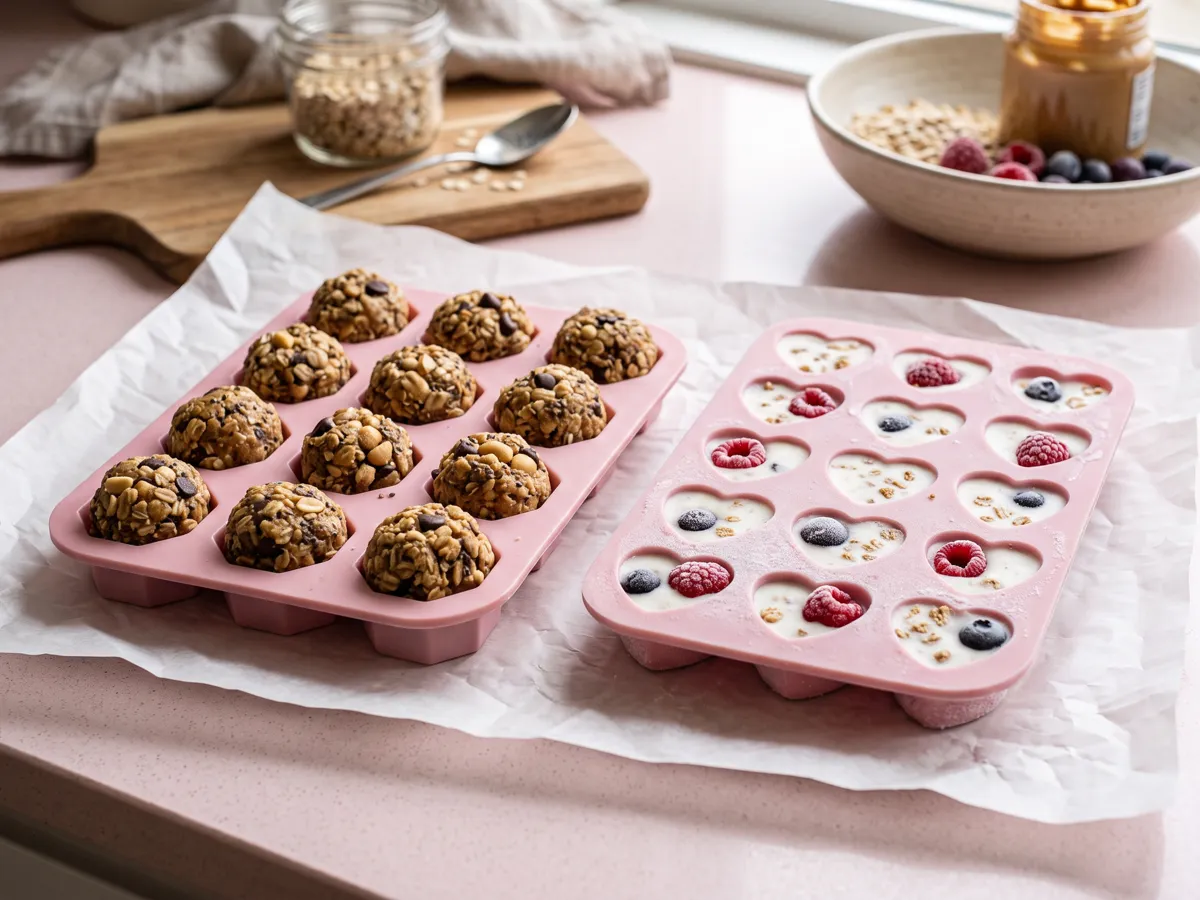
Swirl peanut butter into plain unsweetened yogurt, spoon into silicone molds, freeze 3 hours. Summer training reward — cool, lickable, portion-controlled by the mold.
Any breed · 10 minutes + freeze · Yogurt, peanut butter, silicone molds · One bite per session for small dogs.
3. Banana oat cookies (no-bake)
Mash one ripe banana with oats and a spoon of peanut butter, press flat, chill. Softer than baked cookies — an easy texture for seniors and puppies learning to chew treats gently.
Seniors + puppies · 10 minutes · Banana, oats, peanut butter · Refrigerate 5 days max.
4. Pumpkin squares, gentle on the stomach
Extra pumpkin, less peanut butter — one cup of pumpkin, a quarter cup of peanut butter, and one and a half cups of oats. Press into a pan, chill, cut squares. The gentle option for Goldens with rich-food stomachs.
Pumpkin swaps beyond this dough live in our healthy pumpkin dog treats.
Gentle batch · 15 minutes · Pumpkin-heavy ratio · Start with half portions.
5. Tiny training dots
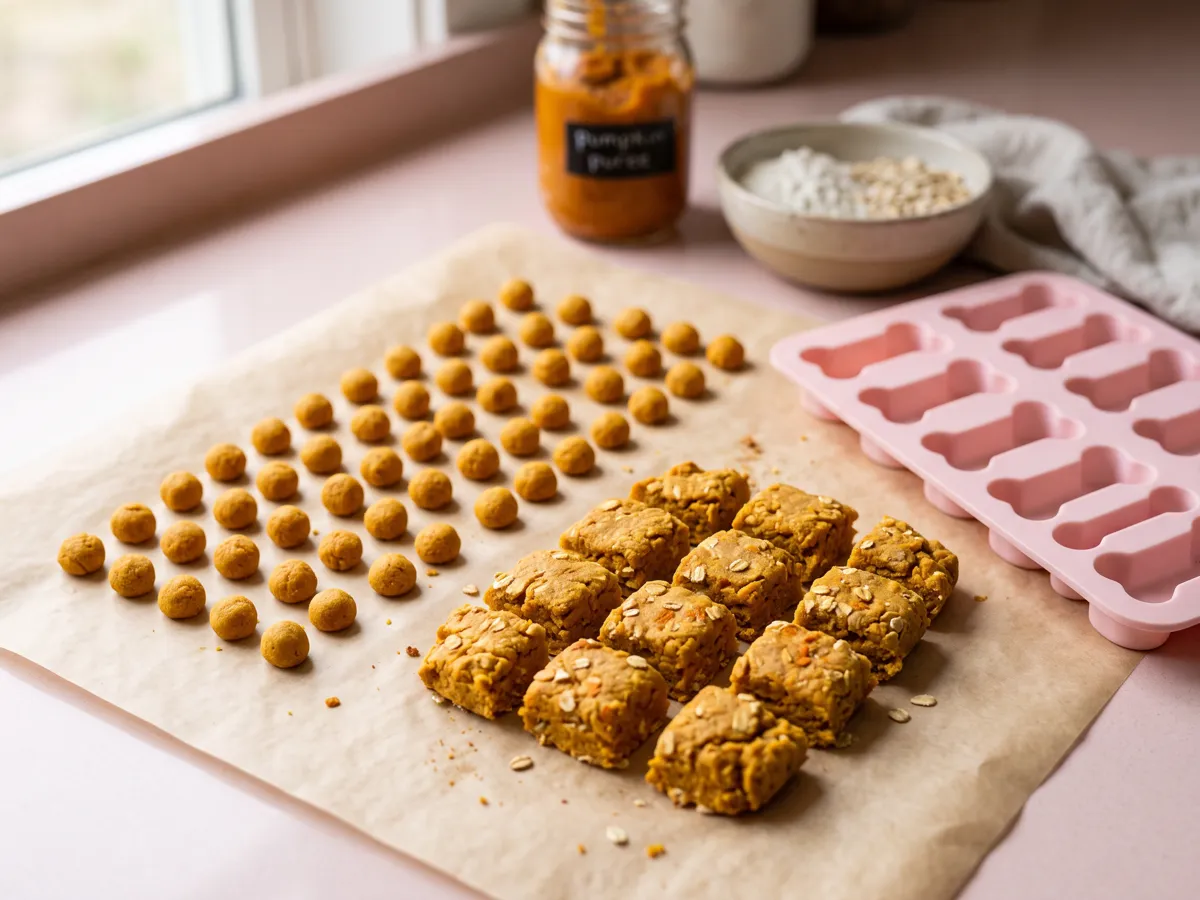
Same classic dough, rolled pea-size and lightly flattened. Fifty dots per batch — a full training session without overfeeding. Keep a bag in the fridge door for daily reps.
For doodle training, see the poodle training treat rewards.
Training · 20 minutes rolling · Classic dough, pea-size · Max 10-15 dots per session.
6. Apple crunch balls (no peanut butter)
For peanut-free weeks: unsweetened applesauce + oats + a spoon of pumpkin, rolled and chilled. Lighter, apple-fresh — good rotation treat so peanut butter stays high-value.
Peanut-free · 15 minutes · Applesauce, oats, pumpkin · No seeds, no core, no added sugar.
7. Freezer batch for busy weeks
Double the classic recipe, freeze balls on a tray, then bag with the date. Thaw 10 minutes before serving. One Sunday batch covers two weeks of Goldens — the meal-prep version of treats.
Meal prep · 25 minutes · Double batch, freezer bags · Freezer 2 months; label the date.
Texture fixes before anything goes in the fridge
Every batch has a moment where it looks wrong. Most of the time it is the oats or the moisture, and both are fixable in the bowl.
Too crumbly to roll: add pumpkin a spoon at a time and fold rather than stir. The dough is ready when a walnut-size piece holds together in your fist. Too sticky to shape: sprinkle oats, fold again, then let the bowl sit for a few minutes before you judge it. Balls cracking at the seam: warm the peanut butter between your palms and roll with a lighter hand.
If the dough still fights you, press it into a pan instead of rolling. Squares cut clean, stack in a tub, and nobody at dog level has ever complained about the shape.
Storage: fridge, freezer, counter
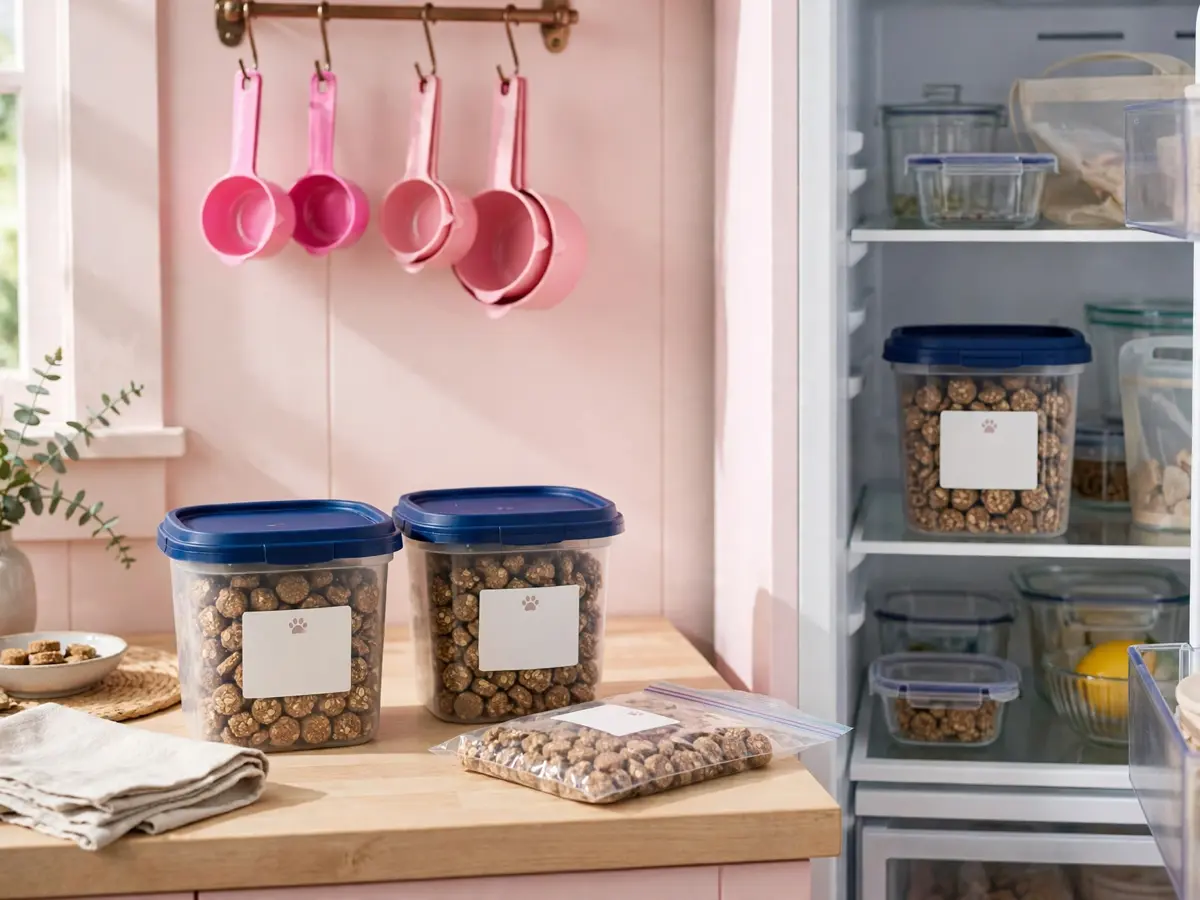
A treat is only convenient if it is still good when the dog asks. Three places, three habits.
Fridge: a shallow tub with a lid, one layer deep if the shelf allows it, and the date written on the lid. The banana cookies and the pumpkin squares live here, and five days is the outside edge for the soft ones. Freezer: freeze the balls on the tray first so they do not weld into one lump, then tip them into a bag, press the air out and write the date. Two months is our ceiling, and the bag at the back of the freezer is always the one that gets forgotten.
Counter: nothing creamy stays out. The apple crunch balls and the training dots go back in the fridge door after a session, and the jar on the counter is a closed jar, not an open bowl.
How much, and how small
Most of a pet’s nutrition should still come from their regular diet, with treats as the extra bit. That one idea decides portion size: the smaller the piece, the more often you can reach for the jar without turning a training session into a second dinner.
For a Golden, a grape-size ball is one reward. Break the same ball into four pea-size dots and the dog gets four chances to earn one treat, which is why the dots win at training time. Puppies and seniors get the smaller end of that range, and a dog who gulps gets the piece halved again.
We keep a small tub of dots in the fridge door and the bigger balls in the freezer. Two containers, two jobs, and no guessing at the counter with a hungry dog watching every move.
Shapes that survive a pocket
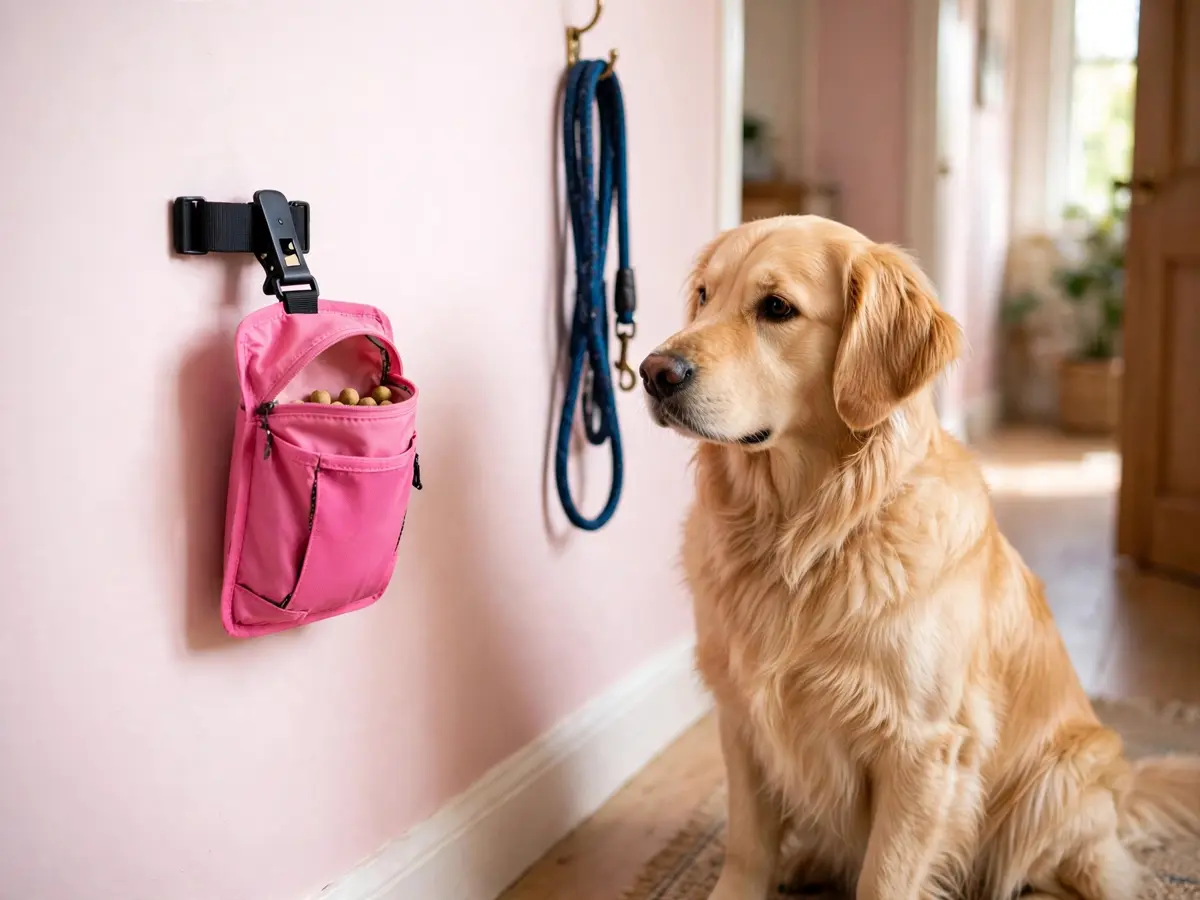
A treat that crumbles on the way to the park is a treat you stop carrying. The classic balls hold up in a training pouch; the banana cookies do not, so they stay home and earn their keep at the back door. The pumpkin squares travel well in a flat tub, and the frozen bites only leave the freezer in a cooler bag.
Roll dots a little flatter than you think they need to be. A flat dot sits in a palm without rolling off, breaks in half cleanly, and takes up less room in the pouch. A round ball is prettier in a photo and worse in a pocket.
One more habit: carry the day’s portion, not the whole tub. It keeps the treat budget honest, and it means the pouch is empty when the session ends instead of the dog finishing the batch on the walk home.
When you are out of something
The seven recipes share one short ingredient list, so a missing item rarely ends the batch. These are the swaps we actually make, and each one stays inside the texture rule from the section above.
Swaps for a missing ingredient
| Out of | Use instead | What changes |
|---|---|---|
| Peanut butter | Applesauce and a spoon of pumpkin | You are making the apple crunch batch instead |
| Pumpkin puree | A mashed ripe banana | Softer set, so chill before you judge the shape |
| Plain yogurt | A mashed ripe banana | The frozen bites go into the molds the same way |
| Silicone molds | A small ice cube tray | Bigger bites, so break each one in half |
| Parchment | A clean dinner plate | Same chill, one more plate to wash |
| Freezer bags | A lidded tub | Write the date on the lid instead of the bag |
Swap one thing at a time so you know what the dog thought of it, and keep the oats on the counter while you adjust.
Pumpkin, the swap we reach for first
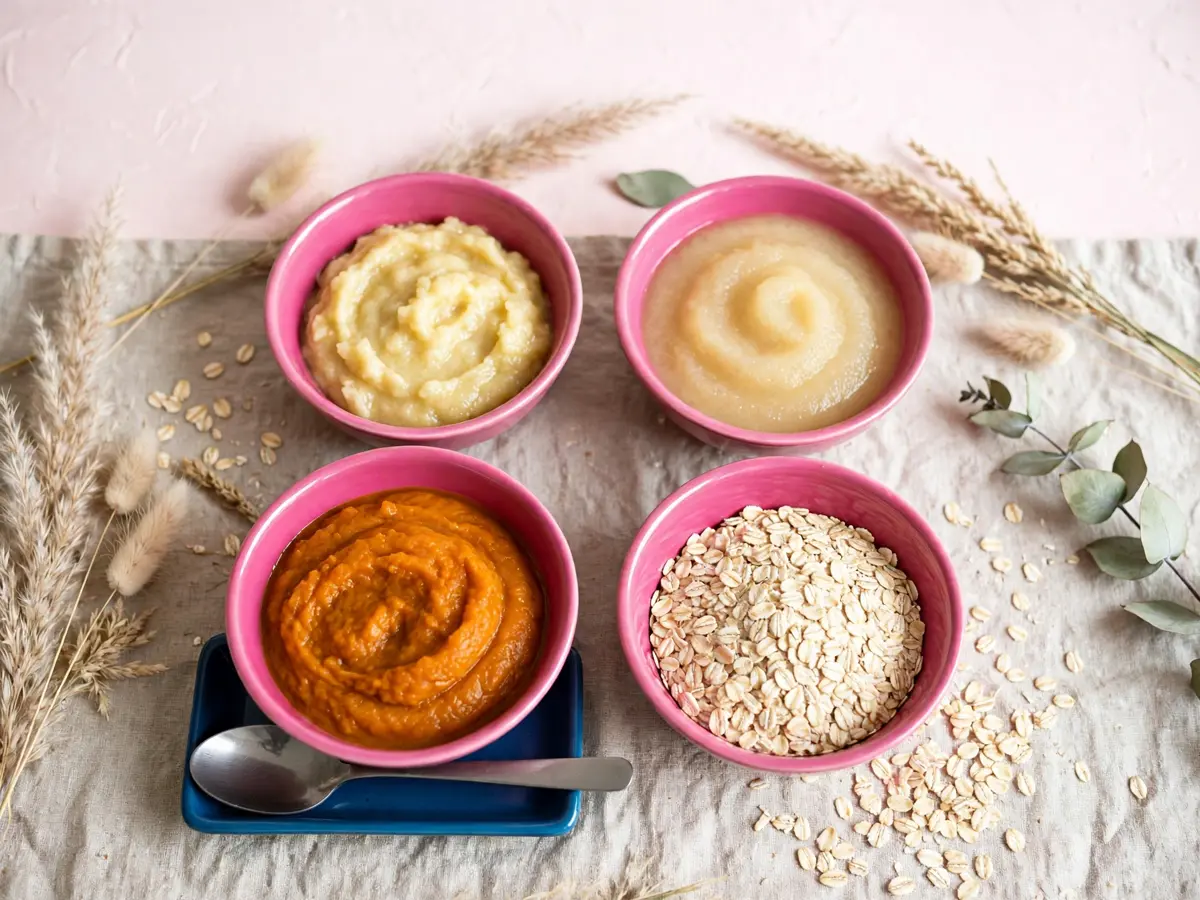
We keep a spare can of plain pumpkin on the shelf, because it rescues a dry dough and it earns its place in a bowl on its own. Two tablespoons (30 g) of canned pumpkin without salt is a 15-calorie treat, which makes it a small addition beside a training session rather than a meal in itself.
Small amounts of plain canned pureed pumpkin (never pumpkin pie filling) can help bind loose stool, because pumpkin is high in soluble fiber. That is a vet conversation, not a home experiment: ask your vet first, then add a spoon beside the normal diet and keep a note of what changes over the next day.
Read the can twice at the store. Pumpkin pie filling is a different product with sugar and spice already in it, and it does not belong in a dog’s bowl. The label says puree or filling, and the two cans look almost identical on a shelf.
Read the label on every jar
The jar in your hand is the only label that matters. Peanuts and salt is the whole ingredient list we look for, and anything that reads like a sweetener goes back on the shelf.
If a product is labeled sugar-free, check its ingredient list for xylitol before it goes anywhere near a dog. The same glance is worth doing on anything new that comes into the house, and again on a jar you have bought a hundred times, because labels change between batches.
If your dog may have eaten a product containing xylitol, call your vet, an emergency clinic, or animal poison control right away. Take the jar or the wrapper with you. A label in your hand is faster than a story from memory, and the clinic will ask what was in it.
Treats are the extra bit, and here is the honest part
Every recipe on this page is a treat, not a diet. The honest version of that: the majority of homemade pet-food recipes published in books and online, even those written by veterinarians, do not provide complete and balanced nutrition. A treat dodges that problem by design, because it is a small extra beside a complete food rather than the food itself.
If you are moving toward a home-prepared diet rather than a treat jar, do it with a plan instead of a recipe. For pet owners who prefer to feed home-prepared diets, a consult with a board-certified veterinary nutritionist is recommended. That conversation is about the whole bowl, and it is the difference between a weekend hobby and a diet a dog lives on.
A week of no-bake, in practice
Here is the rhythm that keeps us out of the kitchen every night. Sunday: one classic batch and one freezer batch, both on the same tray. Monday to Wednesday: the fridge tub for training and after-walk rewards. Thursday: pull a bag from the freezer and let it thaw in the fridge overnight. Friday: a fresh batch only if the tub is empty, which it usually is not.
Dogs do not need the variety we do. A Golden will take the same pea-size dot for the same sit every day of the week, and the treat stays high-value because it only appears in training. Rotate flavors for your own interest, not for the dog’s.
The batch that gets forgotten is the one at the back of the freezer. Put the new bag behind the old one, and the oldest bag is always the next one you open.
Two dogs, one batch
Two dogs means two treat budgets, not one doubled batch. A Golden and a Corgi eat the same recipe at very different sizes, so the grape-size ball for one is two rewards for the other. Split the batch at portion time rather than at the jar: one tub of big balls, one tub of pea-size dots, and both dogs queue at the same fridge door.
The other adjustment is speed. A faster eater finishes first and then supervises, which is when the treat count quietly doubles. Two bowls, two spots on the floor, and the dots handed out one at a time keeps the session honest.
If one dog is on a different food for a medical reason, keep the tubs labeled and apart. A treat jar that trades hands is the easiest way to undo somebody else’s plan.
What stays on the pantry shelf
The pantry side of no-bake treats is five items and a marker. Rolled oats in a lidded jar, peanut butter with peanuts and salt on the label, a can or two of plain pumpkin, unsweetened applesauce, and plain yogurt for the frozen bites. Bananas come from the fruit bowl once they go soft, which is the only moment they are useful here.
We buy peanut butter two jars at a time and keep the backup unopened, because the day the jar runs out is always the day the dog has a training class. The marker lives in the drawer beside the freezer bags, not in a drawer across the kitchen, and the parchment stays rolled inside the tray it belongs to.
Cleanup, in five minutes
One bowl, one fork, one tray, and the whole job is done before the treats are cold. Scrape the dough scraps into the bin rather than the sink, rinse the bowl while the water is still running, and wipe the counter where the oats landed. The tray goes back in the freezer with the next batch already on it, and the tubs stack on the shelf where you can see the dates.
Treat checklist: copy this before you roll
- Peanut butter label: peanuts + salt only, no xylitol
- Grape-size for Goldens, pea-size for training
- Chill 1 hour minimum; freeze extras with date
- One new ingredient at a time; watch stools 24 hours
- Treats max five percent of daily calories
- Supervised chewing; fresh water always nearby
Questions we get about xylitol and peanut butter
What is xylitol, and why is it never in a treat?
Xylitol is a sweetener that can drop a dog's blood sugar and hurt the liver, so it never goes into a homemade treat. Check every jar before it goes in the bowl.
How do I know the peanut butter has no xylitol?
Only a few peanut butter brands add xylitol, so read the ingredient label on the jar before a spoonful goes in the bowl. A jar with peanuts and salt on the label is the everyday choice.
How many treats is too many in a day?
Treats should stay at no more than five percent of a dog's daily calories, so keep the pieces small. A few training dots go a long way.
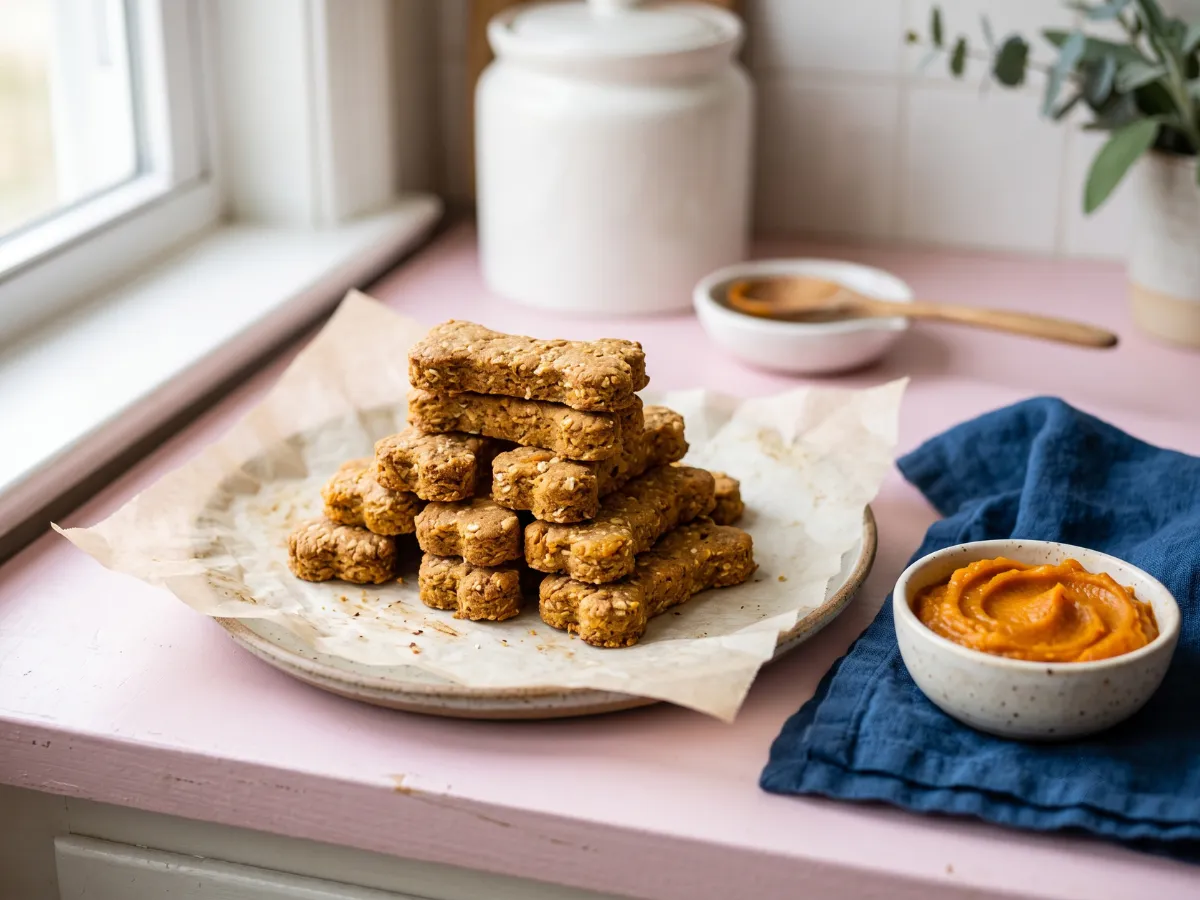
What we use
What we use for no-bake dog treats
Silicone molds, peanut butter with no xylitol and plain pumpkin puree — the three staples that cover all seven recipes below.
See what we use →As an Amazon Associate we earn from qualifying purchases.
Save these on Pinterest
Pin the recipe that fits your week — classic balls for every day, frozen bites for summer. The Dog Food collection holds the meal-prep and puppy portions pages.
Xylitol is a sweetener that can drop a dog’s blood sugar and hurt the liver, so it never goes into a homemade treat. Treats should stay at no more than five percent of a dog’s daily calories, so keep the pieces small: the ASPCA people-foods list.
For the batch that covers a whole week of sessions, the no-bake rewards for training days page is the classic.
The freezer tray on this page is half of the frozen peanut butter bites story.