 PawStyle Daily
Homemade Dog Treats & Meal Planning
The Weekly Dog Meal Prep Planner (One Sunday Session)
One Sunday session turns a week of kibble bowls into labeled toppers: lean protein cooked plain, vegetables cut small, and a fridge shelf with the date on every lid. The planner walks the portion math from the bag's own chart, a rotation so the week stays interesting, and the labels that keep the fridge honest. It is a topper planner, not a full-diet change — the base of every bowl stays the food your dog already eats. For informational purposes, consult your vet.
By PawStyle Daily · Updated 14 November 2026
Good to know: one Sunday session · Toppers ride on the kibble base · For informational purposes, consult your vet.
The planner in one page
The printable planner holds four things on one page: a week grid with a row per day, the topper rotation written next to each day, a treat tally column at the edge, and the storage labels that match what is in the fridge.
Print it, clip it to the fridge, and fill it in on Sunday night when the tubs are labeled and the counters are clear. The grid is deliberately boring — that is what makes it work on a Thursday.
Portion math starts on the bag
Every portion on this page starts on the bag, not on a guess. The feeding chart on the bag gives you the daily total, so divide it by the number of meals to get one serving. Write that daily total at the top of the planner and let the math run downhill from there.
Feed at the same times daily. That is what the day rows on the grid are for: same slots every day, same total from the chart, and the topper is what changes.
Puppy rows get their own count, because the number of meals changes with age: Four feedings a day from 6 to 12 weeks, then three by 3 to 6 months and two after 6 months.
Treats sit outside the meal math with their own ceiling. Treats should stay at no more than five percent of a dog's daily calories, so keep the pieces small. Most of a pet's nutrition should still come from their regular diet, with treats as the extra bit.
The Sunday session
One session, five steps, and the counters are clear before lunch. Here is the order we prep in:
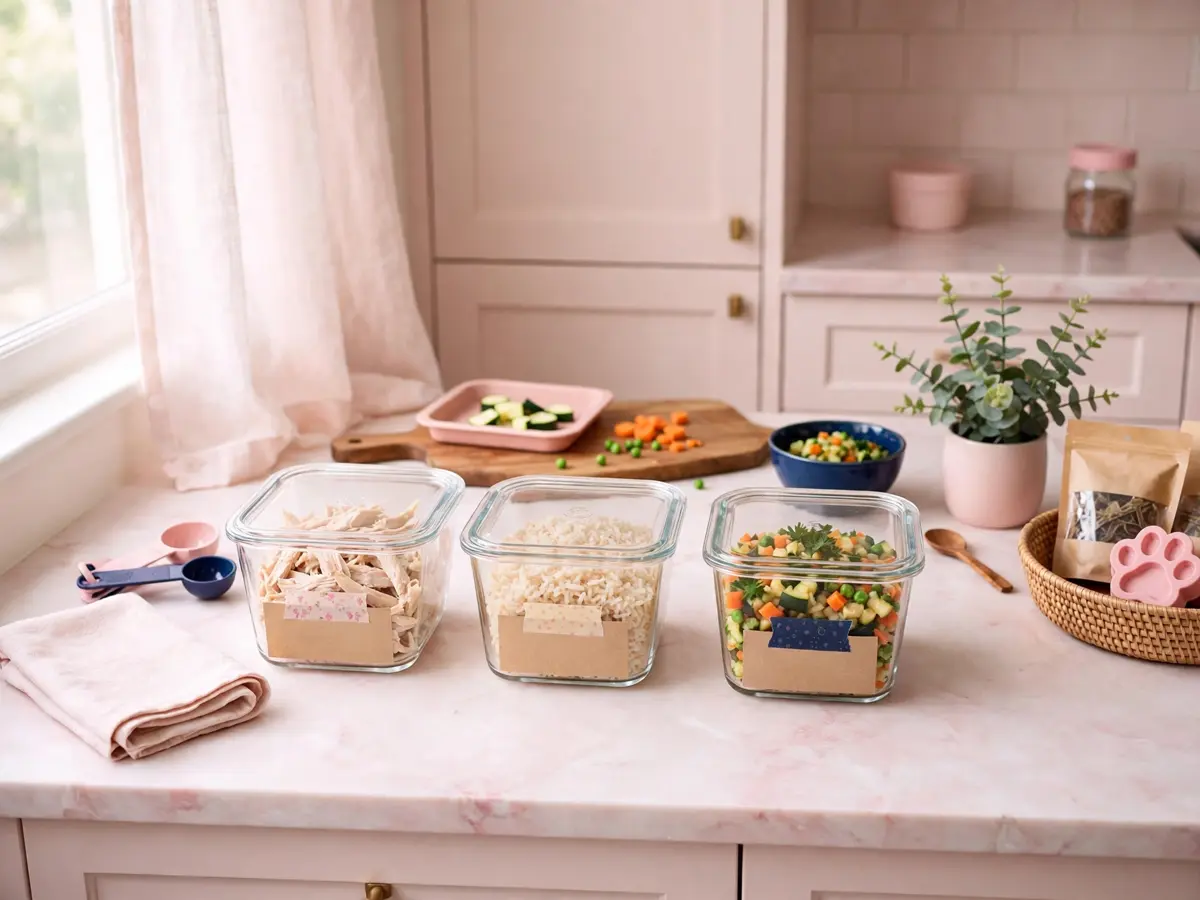
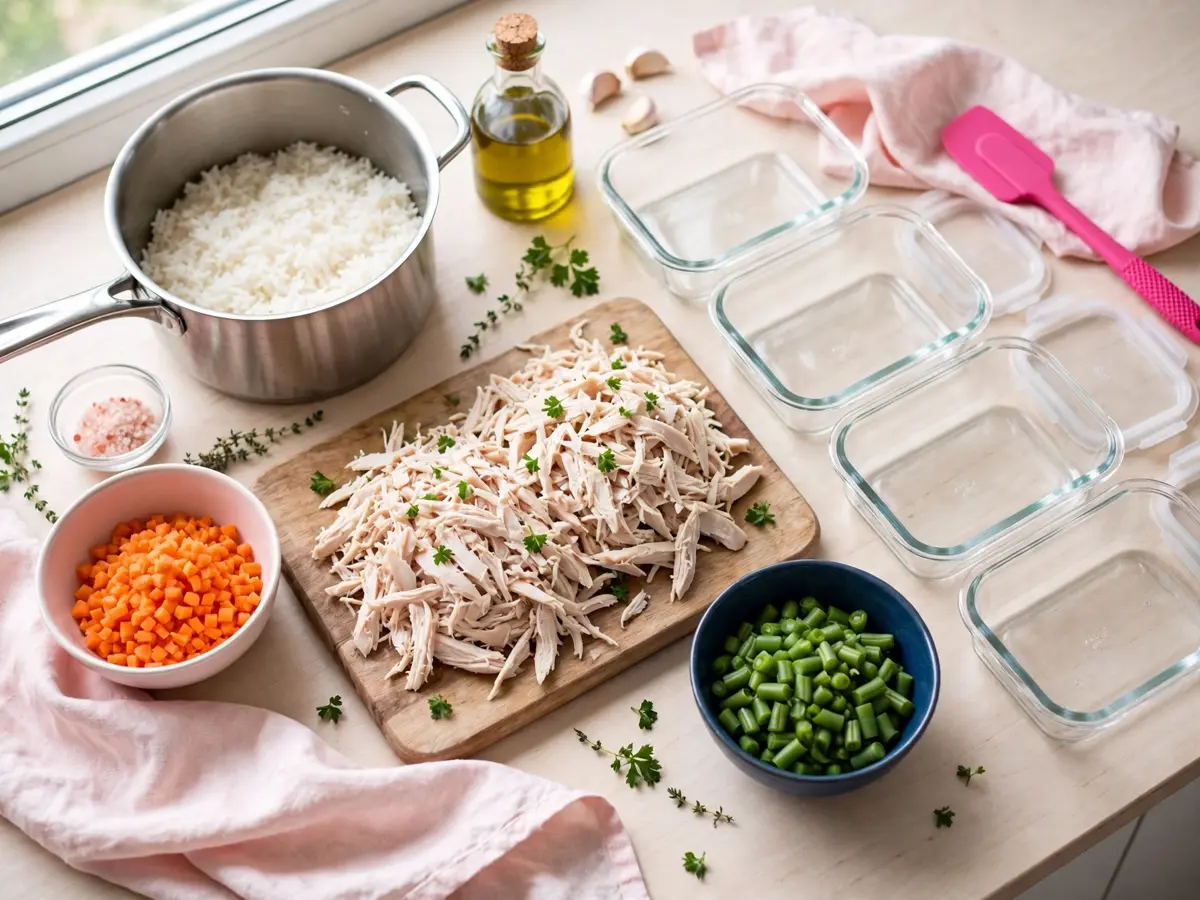
- Batch the toppers: one lean protein cooking while the vegetables get washed and cut small.
- Cool everything fully before it goes into a tub — steam trapped under a closed lid is what shortens a batch's life.
- Portion into the week's tubs following the planner grid — one tub per day, with that day's topper already chosen.
- Label every lid with the day and the date, and match each label to the planner grid.
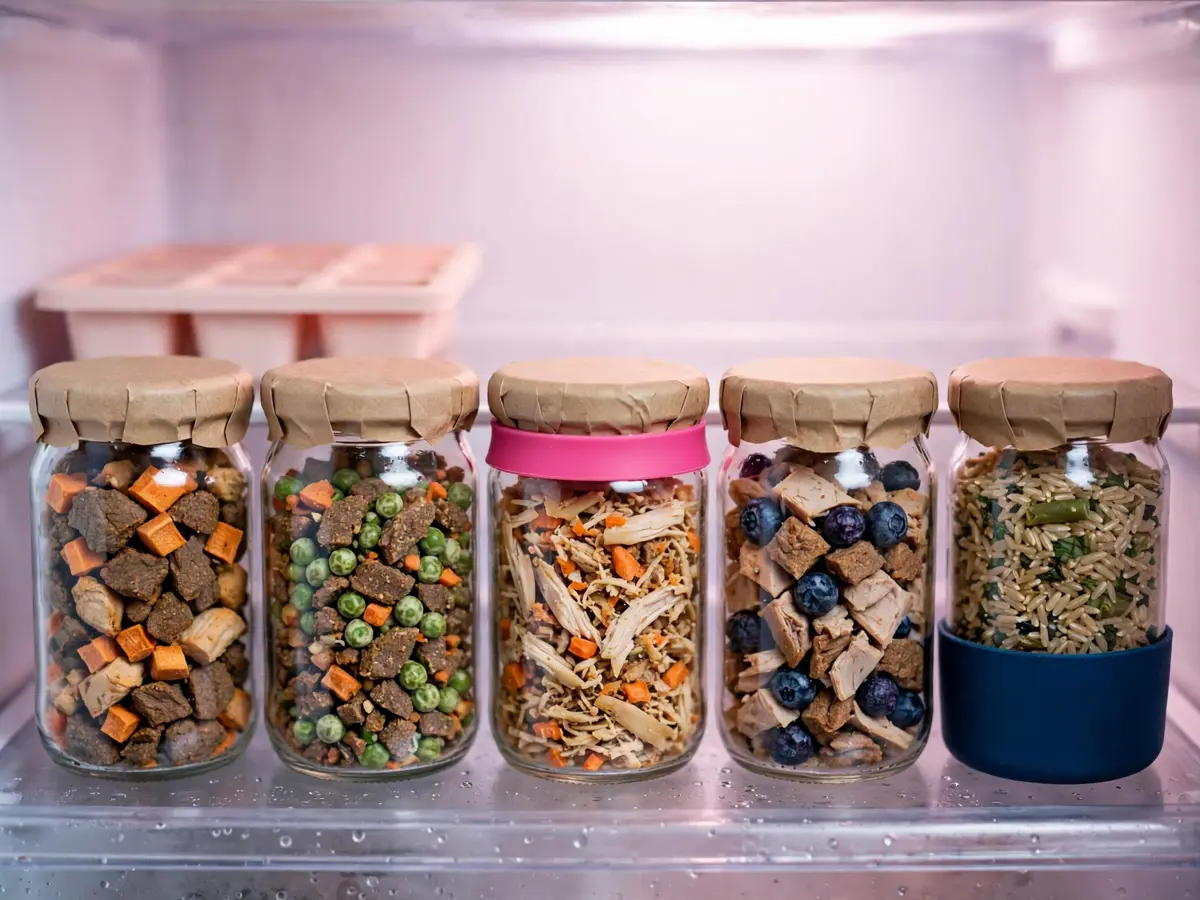
- Freeze the back half of the week. Homemade dog food keeps about three days in the refrigerator and a month or two in the freezer, depending on how it's sealed. The fridge holds the front of the week; the freezer holds the rest. The full container-and-label method is on the food safety and storage page.
Rotation so the week stays interesting
The same topper seven days running is how a dog learns to pick around the kibble, so the planner rotates instead. Small pieces of carrot, broccoli, green beans or cooked pumpkin make easy snacks. Small amounts of lean cooked chicken, turkey, beef or pork with no bones and no seasoning are fine to share. That is the whole pantry the rotation draws from — cut small, cooked plain, nothing from the keep-out list.
Pumpkin is the easy rotation slot. Small amounts of plain canned pureed pumpkin (never pumpkin pie filling) can help bind loose stool, because pumpkin is high in soluble fiber. We treat it as a slot in the rotation, not a fix to reach for: if the stool is off, that is a question for your vet.
A week of toppers on a kibble base
| Day | Kibble base | Topper idea | Prep note |
|---|---|---|---|
| Monday | Kibble, daily total from the bag | Lean cooked chicken | Shredded on Sunday, fridge tub |
| Tuesday | Kibble, daily total from the bag | Plain pumpkin puree | Spoon from the can, fridge tub |
| Wednesday | Kibble, daily total from the bag | Green beans | Snipped small, no salt |
| Thursday | Kibble, daily total from the bag | Carrot pieces | Steamed soft or raw, cut small |
| Friday | Kibble, daily total from the bag | Lean cooked turkey | Shredded on Sunday, fridge tub |
| Saturday | Kibble, daily total from the bag | Lean cooked beef | Shredded on Sunday, fridge tub |
| Sunday | Kibble, daily total from the bag | Plain yogurt lick | Last tub of the week, cool from the fridge |
Swap any day for another topper from the same list — the rotation is the point, the specific day is not.
Storage and labels
Homemade dog food keeps about three days in the refrigerator and a month or two in the freezer, depending on how it's sealed. That is the outside edge rather than a target, and it is what the fridge/freezer split on the planner is drawn around.
A label carries what is inside and the date it went in — the grid tells you which tub tonight, and the label tells you whether to trust it. Oldest tub at the front, new batch at the back, and anything that sat out all afternoon goes in the bin rather than back on the shelf.
One honest note before the planner becomes a habit: toppers stay toppers, and the base stays the diet. The majority of homemade pet-food recipes published in books and online, even those written by veterinarians, do not provide complete and balanced nutrition. If Sunday prep starts growing into the whole bowl, that is a different project — for pet owners who prefer to feed home-prepared diets, a consult with a board-certified veterinary nutritionist is recommended. Until then, the kibble is the meal and the homemade part stays the spoonful on top.
Breed notes
Small breeds: small mouths do better with smaller pieces, so cut the vegetables smaller than looks necessary and shred the protein fine. A little topper goes a long way in a little bowl.
Large breeds: the bowl is bigger and dinner takes longer, so stir the topper through the kibble instead of leaving it in one spot — the whole bowl gets finished the same way.
Puppies: the puppy rows carry the meal count, not the portion. Four feedings a day from 6 to 12 weeks, then three by 3 to 6 months and two after 6 months.
Treats and the five percent budget
The planner carries a treat tally column for a reason. Treats should stay at no more than five percent of a dog's daily calories, so keep the pieces small. Training rewards, the biscuit after the walk, the piece someone drops at dinner — they all go in the tally, and the tally keeps the week honest.
Most of a pet's nutrition should still come from their regular diet, with treats as the extra bit. The tally column is small on purpose: it is a budget, not a bucket.
The Sunday checklist
- Daily total copied from the chart on the bag
- Total divided by the number of meals
- Toppers cool before the fridge
- Every lid labeled with the day and date
- Back half of the week in the freezer
- Treat tally running at five percent
- Vet conversation before any full-diet switch
Questions we get about the meal prep planner
How many meals a day should my dog eat?
Most adult dogs settle into two mealtimes, but the count is your dog's, not ours — puppies run their own schedule. Four feedings a day from 6 to 12 weeks, then three by 3 to 6 months and two after 6 months.
Can I prep the whole week in one Sunday session?
Yes, with the freezer doing half the work. Homemade dog food keeps about three days in the refrigerator and a month or two in the freezer, depending on how it's sealed. Front of the week in the fridge, back half frozen flat, and every tub labeled with the date.
Fridge or freezer for the toppers?
Both, split by date. The fridge tubs cover the first days; the frozen bags cover the rest and thaw overnight in the fridge rather than on the counter. Warm gently, stir, and test it against your wrist before it goes in the bowl.
How do I know the portion is right?
Start from the bag: The feeding chart on the bag gives you the daily total, so divide it by the number of meals to get one serving. From there, your vet reads body condition at the visit and tells you when to move the number.
Can the toppers become the whole diet?
No, and this page is written so they don't try to. The majority of homemade pet-food recipes published in books and online, even those written by veterinarians, do not provide complete and balanced nutrition. The kibble stays the meal; the topper stays the spoonful.
What about a puppy on the planner?
Use the puppy rows: Four feedings a day from 6 to 12 weeks, then three by 3 to 6 months and two after 6 months. Feed at the same times daily, and keep the vet in the loop before any change to what a growing puppy eats.
What we use
What we use for meal prep Sunday
Glass containers, silicone freezer trays, a small crockpot and portion tools — the Sunday kit in one list.
See what we use →As an Amazon Associate we earn from qualifying purchases.
Save these on Pinterest
Pin the planner for Sunday prep. The Dog Food collection holds the crockpot topper, the puppy portions page and the no-bake treats.
Keep the keep-out list beside the cutting board on prep day. The ASPCA poison control center publishes a list of the people foods to avoid feeding your pets: open the ASPCA list.