 PawStyle Daily
Homemade Dog Treats & Meal Planning
Pet Food Label Rules the FDA Actually Sets
The back of a kibble bag is the one place federal law actually shows up in a pet home. The front has a brand name, a photo, and a line of marketing copy. The back has the fields the law requires and the order the law sets. This page walks what the FDA does and does not do with a pet food label, which fields are the legal minimum, and where the line between a regulated fact and a marketing word actually sits. Nothing here tells you which bag to buy, because that is the one thing the FDA does not do either.
By PawStyle Daily · Updated 19 November 2026
Back panel first · four required fields · no ranking · marketing is not a verdict · for informational purposes, consult your vet.
What the label is, and what it is not
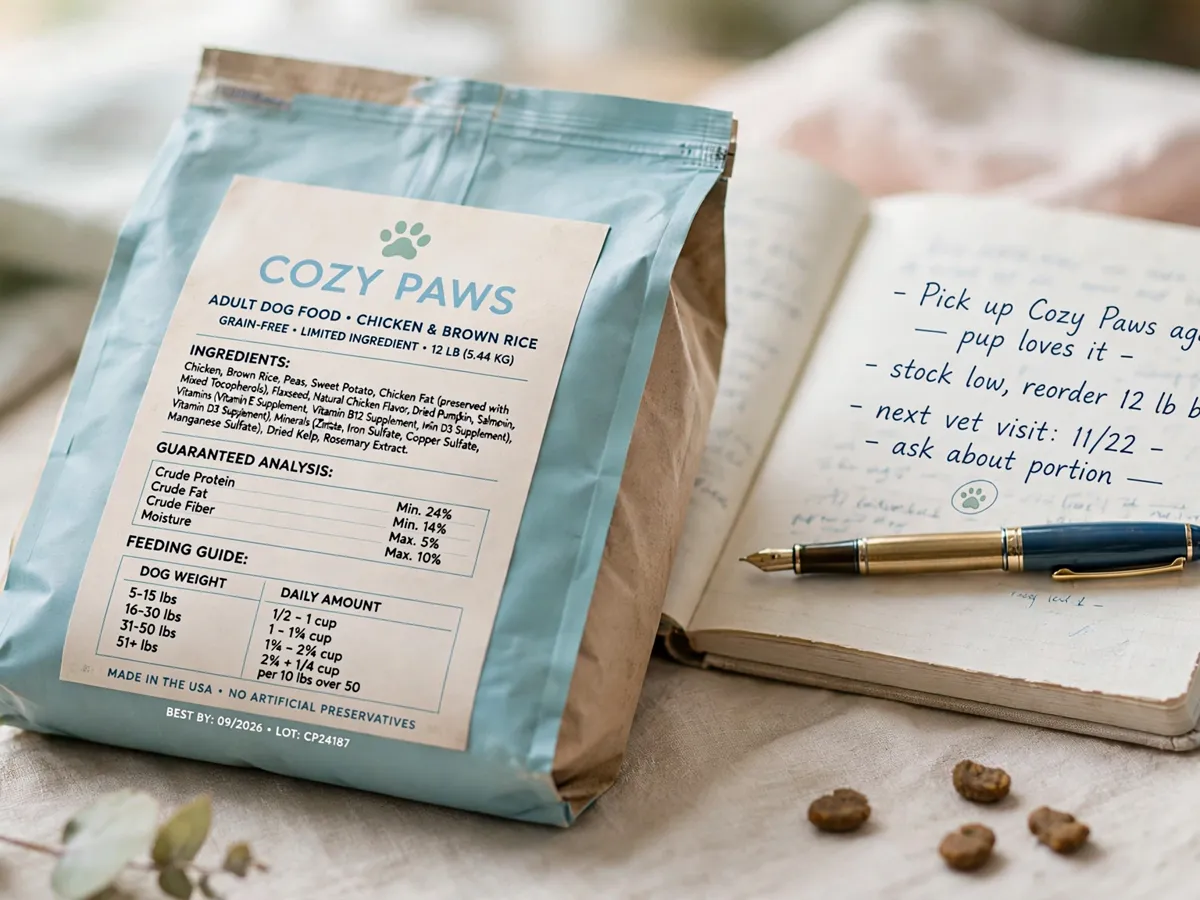
A pet food label is a legal document before it is a marketing one. The fields on the back panel are the ones the law sets, and the words on the front are the ones the brand writes. The two do different jobs, and a reader who turns the bag over is reading the half the law actually governs. The front of the bag is where a brand sells; the back is where the brand complies.
The reason the back panel matters is that the front panel can say almost anything. A word like premium, natural, or gourmet carries no legal weight in the way the required fields do, and a bag reader who only reads the front is reading advertising, not the record. The back panel is the record, and the record is what the FDA actually sets rules for.
If you already work through the how to read a dog food label page, this is the federal half of the same walk. That page reads the panel bag by bag; this one reads the rules the panel answers to.
The federal rules that govern the bag
Federal rules require pet food to be safe to eat, made under sanitary conditions, free of harmful substances and truthfully labeled.
That sentence is the floor, not the ceiling. It tells a maker what the bag has to be before it leaves the plant, and it tells a reader what the label has to be before it reaches the shelf. The four pieces run together: the food has to be edible, the plant has to be clean, the contents have to be free of things that do not belong, and the label has to tell the truth about all of it. A label that lies about any of the four breaks the same rule a label that omits a field does.
The phrase that carries the front and the back together is the one about honest labeling. A brand can call a food premium on the front, but the back panel has to match the contents, and the back panel is the one the law reads. A label that is honest on the back and loose on the front is still a label the FDA reads from the back.

The floor applies to every bag on the shelf, not to a chosen few. A reader who wants to know whether a bag meets it reads the back panel, because the back panel is where the four pieces show up as fields. The same logic is why the homemade food safety and storage page treats a kitchen batch by the same standard: edible, clean, free of what does not belong, and honestly described.
The fields the law requires
A pet food label has to carry the product name, the net quantity, the maker's name and place of business, and the ingredients from most to least by weight.
Those four fields are the legal minimum, and a bag missing any one of them is a bag that has not met the label rule. The product name is the name on the front carried through to the back. The net quantity is the weight or count of what is inside. The maker's name and place of business is the address the law can reach. The ingredient list is the ordered record of what went in, with the heaviest first and the lightest last.
The order of the ingredient list is the part a bag reader can use without the FDA telling them what to think. The first few entries are the bulk of the food, and the last few are the trace additions. A reader who wants to know what a bag is mostly made of reads the top of the list, and a reader who wants to know what was added reads the bottom. Neither of those reads is a ranking; both are a read of the record the law requires.
A bag reader who also keeps fresh produce in the rotation can cross the same idea over to the dog-safe vegetables list page, where the order of a list is the order a reader uses too. The label rule and the vegetable list are different documents, but both are read top down for the same reason: the top of the list is the bulk of the contents.
Why the FDA ranks no food over another
The FDA does not rank one pet food over another, so a brand's own page is never the source for what is best for a pet.
That line is the one a reader has to hold on to when the marketing starts. A brand page will say its bag is the best, and a review site will say its pick is the best, and a shelf tag will say a bag is recommended. None of those is the FDA. The agency sets the floor, checks the floor, and stops there. The choice above the floor is the reader's, and the reader makes it with the back panel and the ingredient order, not with a ranking the FDA never published.
The practical version of this is simple. Turn the bag over, read the four fields, read the ingredient order, and decide whether the top of the list is what you want to feed. The FDA does not tell you the answer, and a brand page is not the answer either. The answer is the record on the back of the bag, read by the person buying it.
What marketing is, and what it is not
The front of the bag is marketing, and marketing is not a regulated field. A word like ancestral or wild reads as a story about the food, but the story is the brand's, not the law's. The law reads the back panel, and the back panel is where the words have to match the contents.
A reader who treats the front of the bag as a verdict treats advertising as a fact. The front can say a food is formulated for a breed, a life stage, or a lifestyle, and the back panel has to carry the fields that make the food legal. The two halves of the bag do different work, and the half the law reads is the half the reader should read first.
The same line holds for a label that carries a health word. A brand can print a health claim on the front, and the FDA reads the claim against the back panel. If the claim matches the contents, the label is truthful. If the claim overreaches the contents, the label is not. A reader who wants the truth reads the back, because the back is the half that has to be true.
The short version of the whole page is this: the back panel is the record, the front panel is the pitch, and the FDA reads the record. A bag reader who turns the bag over is reading the half the law actually governs, and a bag reader who stops at the front is reading the half the brand wrote. Both halves are on the bag, but only one of them is the one the law sets rules for.
Questions we get about pet food label rules
Does the FDA approve pet food brands?
No. The rules set a floor that every bag has to meet, and the agency checks that floor rather than sorting the shelf into better and worse. A brand's own page cannot carry a verdict the federal rules never issued.
What has to be on a pet food label?
Four fields. The name of the product, how much is in the bag, who makes it and where, plus the ingredient list run heaviest first. A bag missing any one of them has not met the label rule.
Do front-of-bag words mean quality?
Not the way the regulated fields do. The front carries the brand's story, and the back carries the record the law reads. No federal stamp names one bag the top choice, so treat the front-of-bag language as advertising rather than a verdict.
Save these on Pinterest
Pin the label rules page for the next bag you turn over, or send it to someone reading the front of a bag as a verdict. The Dog Food collection holds the label walkthrough, the homemade safety page, and the vegetable list that all read off the same back panel.
For informational purposes, consult your vet.
Federal rules cover the bag, and reading a cat food label is the field by field pass for a cat that lives inside.