 PawStyle Daily
Cat-Friendly Home
Indoor Cat Food: The Everyday Bowl Guide
An indoor cat eats from the same shelves as any other cat and lives a different day. No patrols along the fence line, no hunting shift at dusk, no weather to thermally argue with. The bowl is the same object, the label runs by the same rules, and the water is the same water, but the routine around all three bends toward apartment life: measured meals at set hours, a water station the cat actually visits, and a reading habit on the label that keeps the choosing honest. This page owns the indoor bowl explainer, from the shape of an indoor day to the corner of a small apartment where the whole system lives.
By PawStyle Daily · Updated 24 November 2026
Good to know: a feeding explainer, not a food recommendation · for informational purposes, consult your vet.
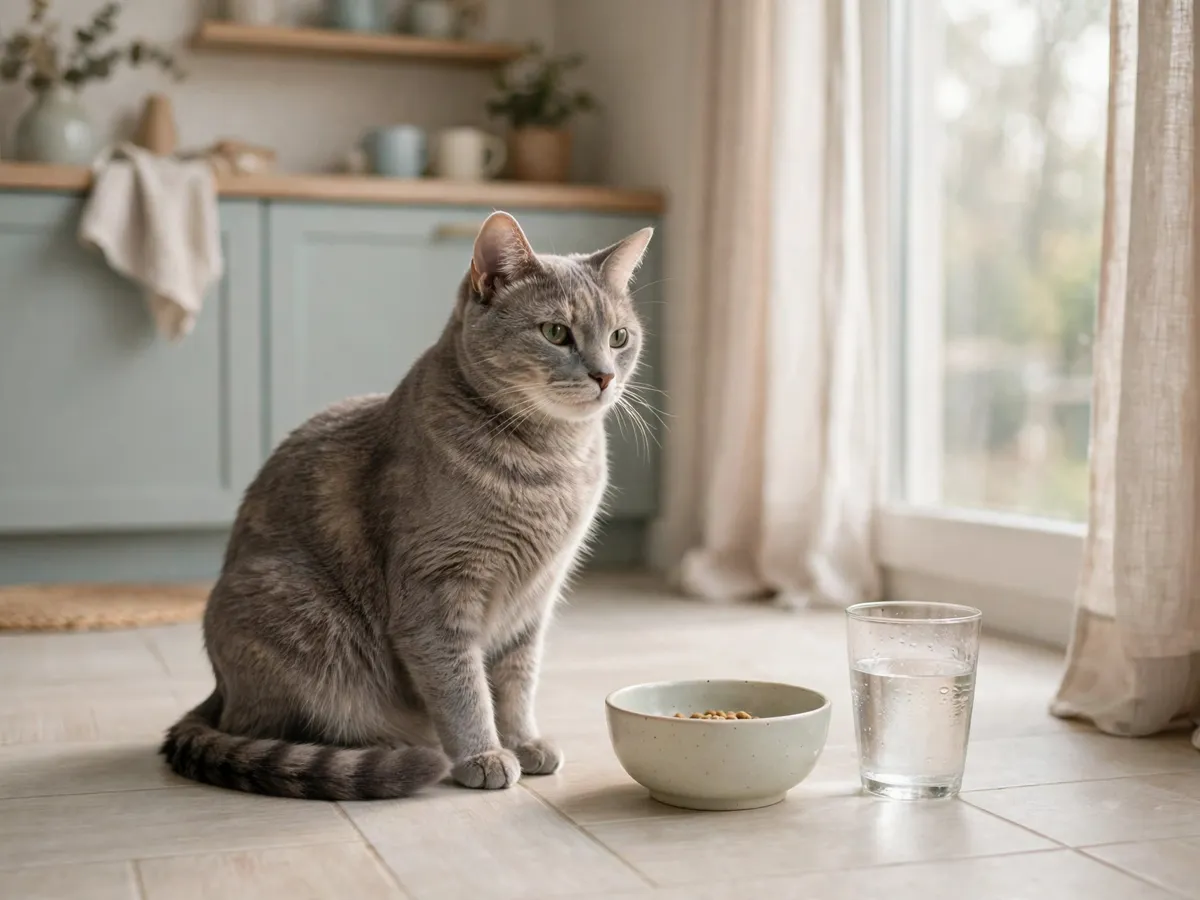
The Bowl of an Indoor Cat
The bowl of an indoor cat is the whole food environment. An outdoor cat's day is full of built in snacks and movement; an indoor cat's day is full of rooms that stay the same size. Everything the cat eats arrives through a decision a human made at a store, on a schedule a human keeps, in an amount a human measured. That is not a burden, it is just the shape of the job, and it is a job that runs better as a system than as a feeling.
The system has four moving parts and this page walks them in order. The day shape: what an indoor cat actually does between meals, and why the meal times carry the rhythm of the whole day. The energy question: what changes, modestly and honestly, when the miles come off. The water question: where indoor hydration actually comes from, which surprises people every year. And the label question: the fields worth reading before a bag enters the apartment, without pretending any source ranks one food over another.
The Shape of an Indoor Cat Day
An indoor cat day runs on a short cycle: sleep, eat, patrol the apartment, window shift, sleep again. The patrol is short and the window shift is stationary, so the food times become the load bearing structure of the day. A cat fed at the same hours each day organizes the rest of the day around them, and the predictability reads to a cat as territory working correctly: the food arrives where it always arrives, at the hour it always arrives, and nothing has to be hunted to make that true.
The same predictability is what makes the morning cry so easy to misread. A cat vocalizing an hour before breakfast is not starving, the cat is anticipating, and the habit trains the human as fast as it trains the cat. The fix is structural rather than stern: the meal times hold, the bowl is filled after the cry quiets rather than during it, and the space between dinner and breakfast is bridged with a play session rather than a top up. The cat's day is already full. The trick is filling it with the right things.
Energy Needs Without the Outdoor Miles
The honest version of the energy story is small. An indoor cat moves less than an outdoor cat, so the same bowl can carry more than the cat spends, and over months that gap becomes weight. But the gap is not a chasm, and it is not a reason to redesign the diet or shop a special shelf. The label that matters names the life stage and the nutrient profile for that stage, and an indoor cat eats from the same life stage shelf an outdoor cat does.
The practical instrument is the body condition read, run weekly, with flat hands. Ribs felt easily under a thin layer, a visible waist from above, a tucked belly from the side. A cat drifting past that read does not need a new food so much as a measured one: the same food, weighed or counted into the same bowl, at the same hours, with the drift gone in a month. The switch for an older cat, with the weight check done properly, has its own page: the senior cat food switch page owns that whole conversation, including when a vet visit belongs in it.
Water From the Bowl and From the Wet Food
Cats take water from more places than the water bowl, and the can is a bigger one than most people expect. Wet food carries a large share of water in itself, so a cat eating wet food may visit the bowl less, which reads to an owner like a drinking problem and is usually just a different route to the same total. The bowl still matters, the fountain is still worth trying, and the honest signal to watch is the whole day's intake rather than one station's traffic.
The arrangement that encourages drinking is arrangement, not equipment. Water away from the food, because a bowl beside the kibble reads to a cat as contaminated by the kill. Water in more than one location, because an apartment tour that passes a glass of water is a tour with two chances. And a wide bowl, because whiskers against the rim of a deep one are a quiet reason to leave early. The summer heat angle, with the dehydration signs worth knowing by name, lives on its own page: the cat hydration signs page owns that half of the water story.
The Label Fields Worth Reading
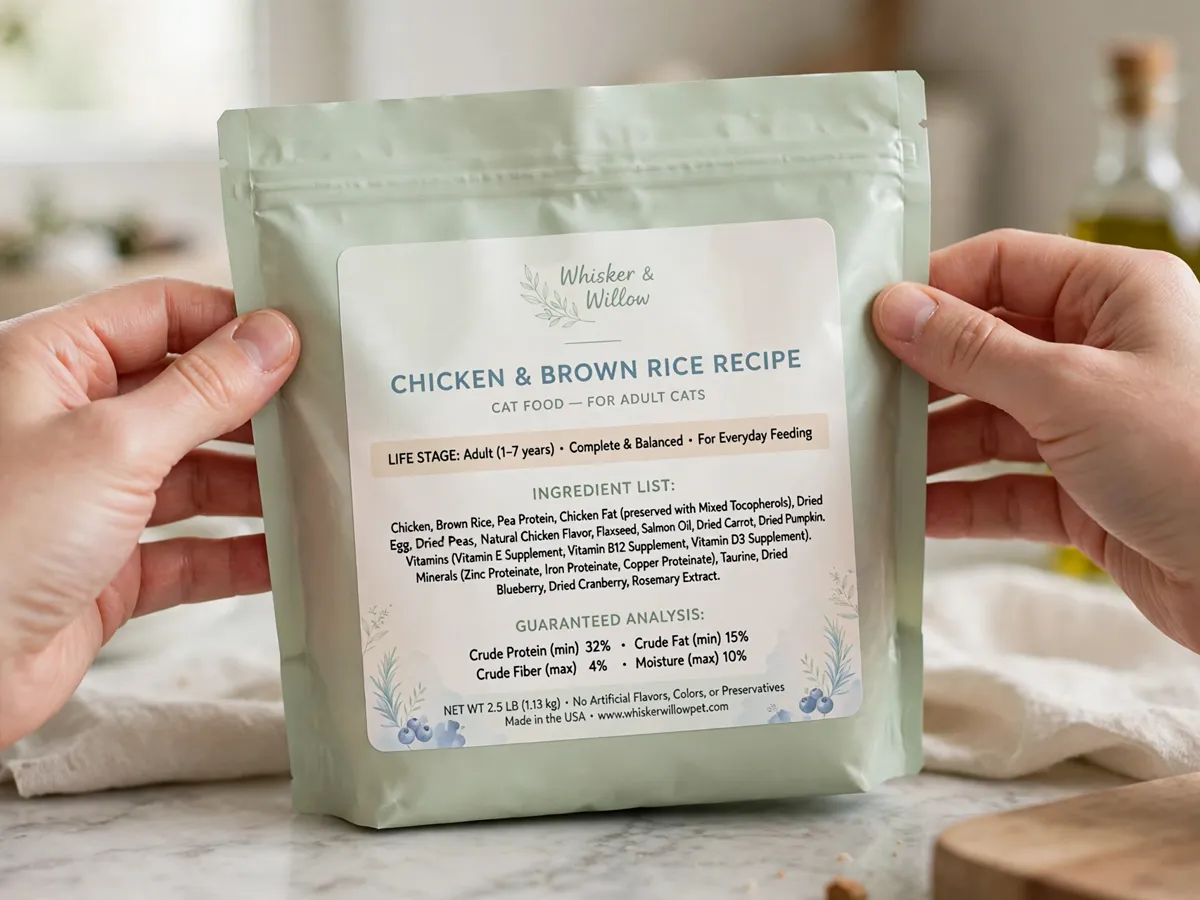
A cat food label is a legal document wearing a marketing outfit, and the fields that carry the meaning are plain. The life stage line, which says who the food is for: kitten, adult, all life stages. The statement of nutritional adequacy, which says the food is complete and balanced for that stage, or says it is meant only as a supplement or treat. The ingredient list, which runs by weight, so the first entries carry the mass. And the calorie statement, the quiet line that makes home measuring possible at all.
Read those four fields and the bag has told you everything it is required to. What it will not tell you is which brand is best, because no label does, and the honest reason sits one level up: the regulator itself does not rank foods. A marketing page belongs to the company that paid for it, and reading it as a review is the mistake the whole industry is built around. The field by field walk of the label panel, with the same four fields in slow motion, lives on the pet food label reading page, which covers the panel as a document rather than as a shopping decision.
The Bowl in a Small Apartment Routine
A small apartment is not a constraint on the bowl system, it is an argument for it. Two meals at set hours, measured into the same bowl, on the same placemat: the routine takes less floor than a shoebox and gives the cat an anchor point that never moves. The feeding station wants quiet, away from the washing machine and the front door, with the water a few steps off rather than in the same footprint. Cats prefer their drinking and their eating in separate rooms when the floor plan allows, and an apartment tour is long enough for both.
The station itself is three objects. A placemat that survives the wash and defines the territory. Two ceramic bowls, wide and shallow, one for food and one held in reserve for the rotation days, both heavy enough that a paw does not tip them. And the water glass, refreshed morning and evening, in the other spot. The whole arrangement sets up in a corner, tears down for a clean in minutes, and reads to the cat as the one part of the apartment that never surprises it.
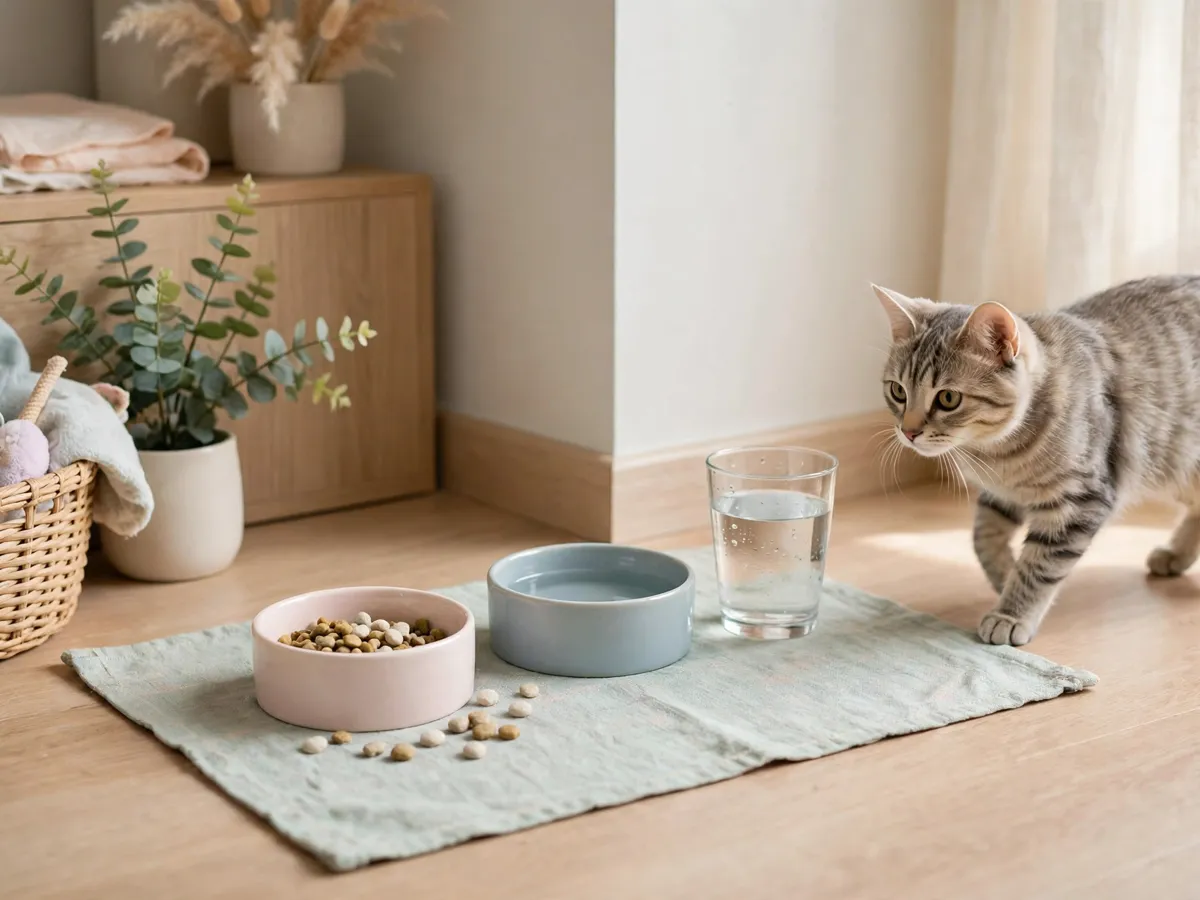
One habit closes the system: the refill happens before the bowl runs empty in the evening, and the washing happens on the same day each week rather than when the mat looks tired. A station kept to that rhythm never smells, never dulls the cat's interest in the meal, and never turns into the corner of the apartment the cleaning routine quietly skips.
Indoor cat bowl questions
Do indoor cats need a different food than outdoor cats?
The label that matters names the life stage and the nutrient profile for that stage, and an indoor cat eats from the same life stage shelf an outdoor cat does. Wet food can be up to 80% water, so a cat eating wet food may drink less from the bowl. An indoor cat's water can come from the can as much as the fountain.
How do I read a cat food label without a nutrition degree?
Start with the life stage line and the statement of nutritional adequacy, then read the ingredient list top down, because the entries run from most to least by weight. The label reading guide walks the same panel field by field. One caution comes from the source itself. The FDA does not rank one pet food over another, so a brand's own page is never the source for what is best for a pet.
Is free feeding okay for an indoor cat?
Free feeding works when the bowl stays measured and the cat's body condition stays easy to feel, and it fails quietly when a bored indoor cat eats for something to do. Split the day into measured meals at set times instead, keep the water separate from the food, and check the ribs weekly with the body condition read. A cat that clears the bowl and cries for more is telling you something worth measuring.
Save the Indoor Cat Bowl Sheet
Pin the day shape and the label fields for the next bag run. The Cat-Friendly Home collection holds the rest of the apartment system. For informational purposes, consult your vet.