 PawStyle Daily
Homemade Dog Treats & Meal Planning
Dog Safe Vegetables List and Serving Ideas
Vegetables are the easiest snack to add to a dog's day, and the easiest to get wrong. This page keeps it simple: a crunch trio that works raw, a couple of cooked extras, the body-size slices that decide how much goes in the bowl, and the one keep-out line that stays above the counter. Keep the vegetables as the crunchy extra, keep the regular food as the meal, and keep the allium family off the cutting board.
By PawStyle Daily · Updated 19 November 2026
Crunch trio raw · cooked extras soft · alliums off the board · for informational purposes, consult your vet.
Where vegetables sit in a dog's day
A vegetable is a snack, not a meal, and the order matters: most of a pet's nutrition should still come from their regular diet, with treats as the extra bit. That single line is the fence around everything on this page. The vegetables below earn their place as the crunchy extra — a few sticks between meals, a cooked spoonful on top of the bowl, a frozen slice on a warm afternoon. None of them replaces the food your dog already eats, and all of them are more interesting than a store treat on a slow day.
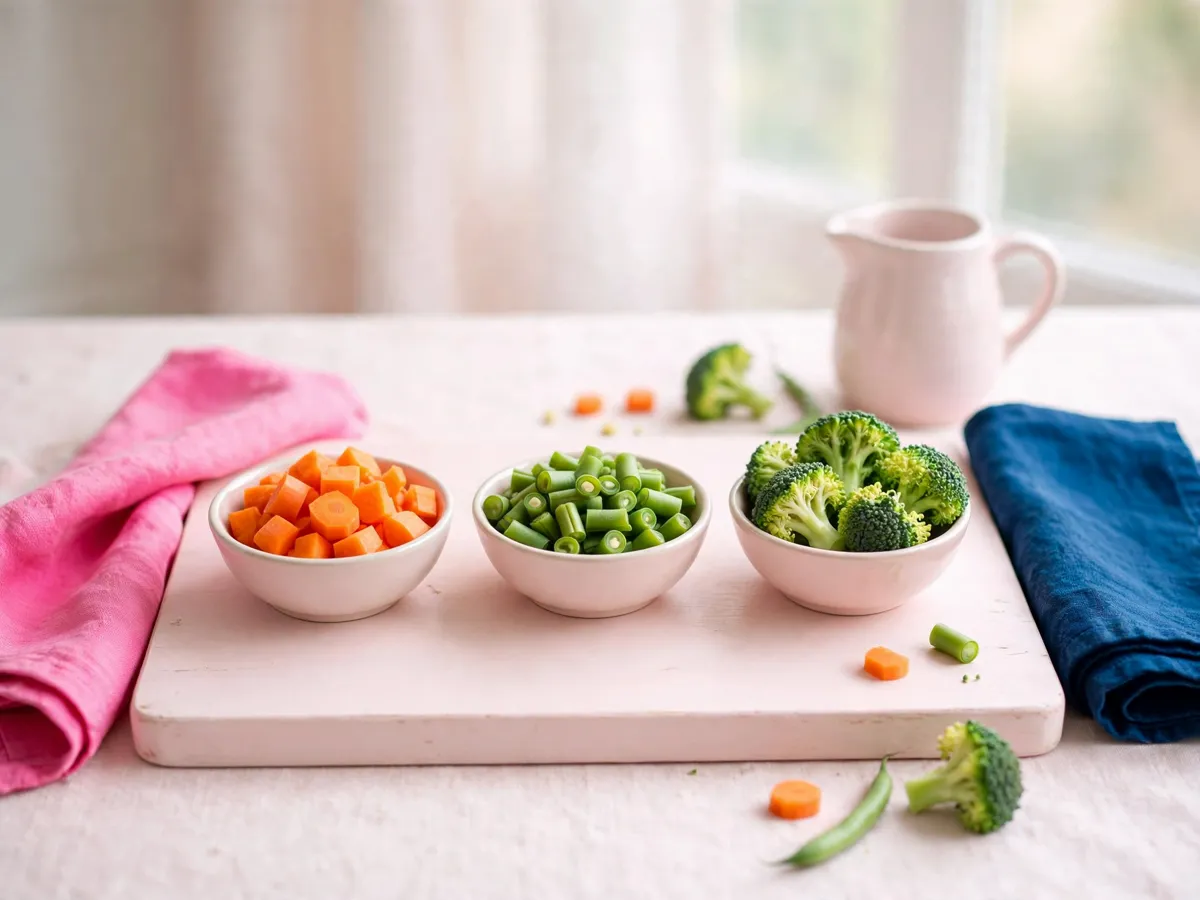
Small pieces of carrot, broccoli, green beans or cooked pumpkin make easy snacks. That is the working list for this page — a short shelf of plain, everyday vegetables, cut to the dog's size, served the way each one wants to be served. The full picture of what does not belong in the bowl lives on the full toxic foods list page, and the allium line on this page is the one carry-over you need at the cutting board. For informational purposes, consult your vet.
The crunch trio: carrot, green beans, broccoli
Three vegetables do most of the work on this page, and all three are served raw. Carrot sticks are the classic — crunchy, sweet enough to be interesting, and easy to cut thin enough for a small jaw. Green beans come whole or snapped, and a small dog gets the snapped pieces while a large one can manage a whole bean. Broccoli florets are the third of the trio, served in small pieces and in small amounts, because a large pile of any cruciferous vegetable is more than a dog's afternoon needs.
The crunch is the point. Raw carrot and green beans keep the jaw busy and the pace slow, and a dog who spends a minute on a carrot stick spends a minute less on the couch cushion. Cut everything to the dog's size — a Chihuahua gets pea-sized carrot coins, a Golden gets a stick — and keep the bowl count small. The trio is a between-meal extra, not a refill.
The cooked extras: pumpkin, sweet potato
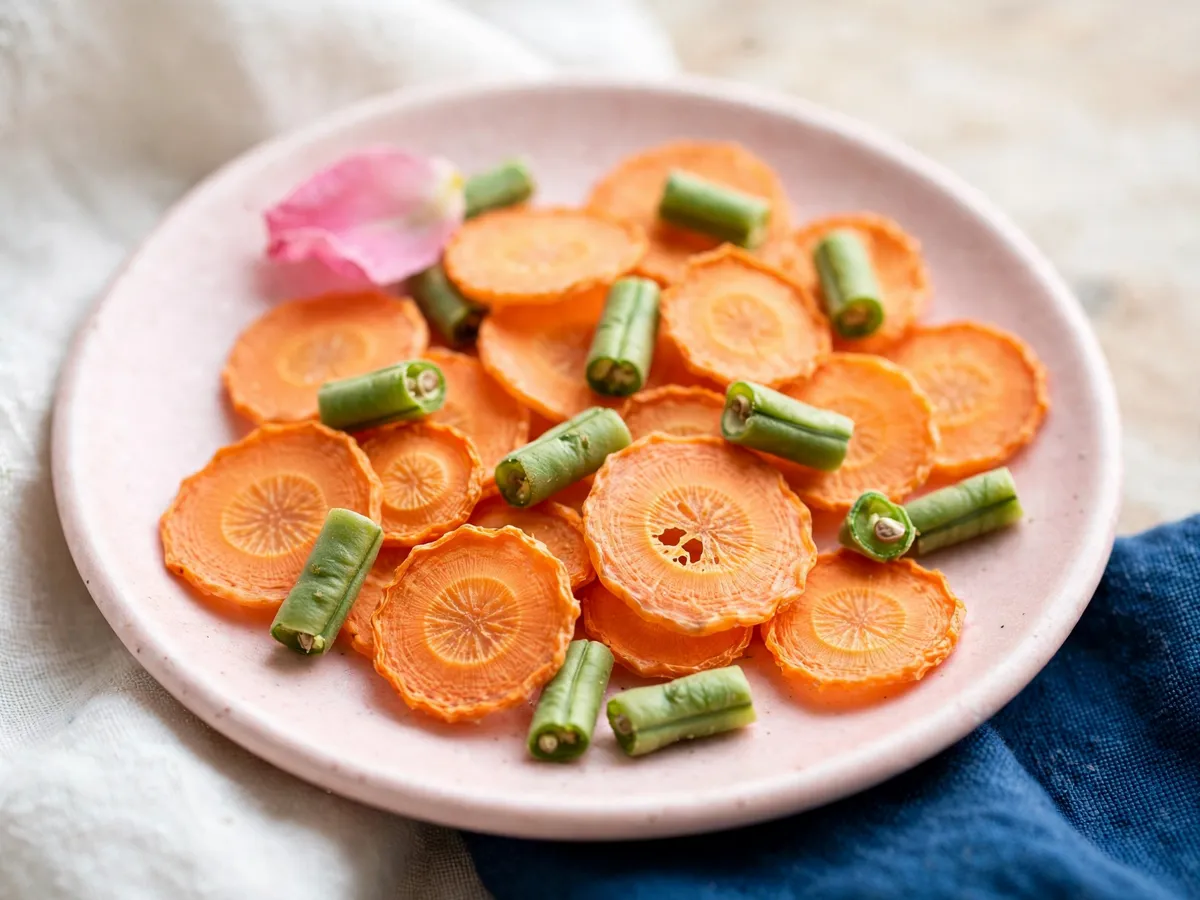
A couple of vegetables want cooking before they reach the bowl, and cooked pumpkin is the one most dog owners already know. Plain canned pureed pumpkin — never pumpkin pie filling — is the easy version, and a small spoonful on top of the regular food is the usual way to serve it. Sweet potato is the other cooked extra: steamed or baked plain, cooled, and cut into soft pieces that a small dog can manage without working at it.
Cooked means plain, every time. No butter, no salt, no seasoning, no oils — the vegetable arrives at the bowl the way it left the pot. For the pumpkin side, the healthy pumpkin treats page takes the same ingredient into a baked version, and the sweet potato treat recipes page does the same for the sweet potato. For informational purposes, consult your vet.
Daily amount and body-size slices
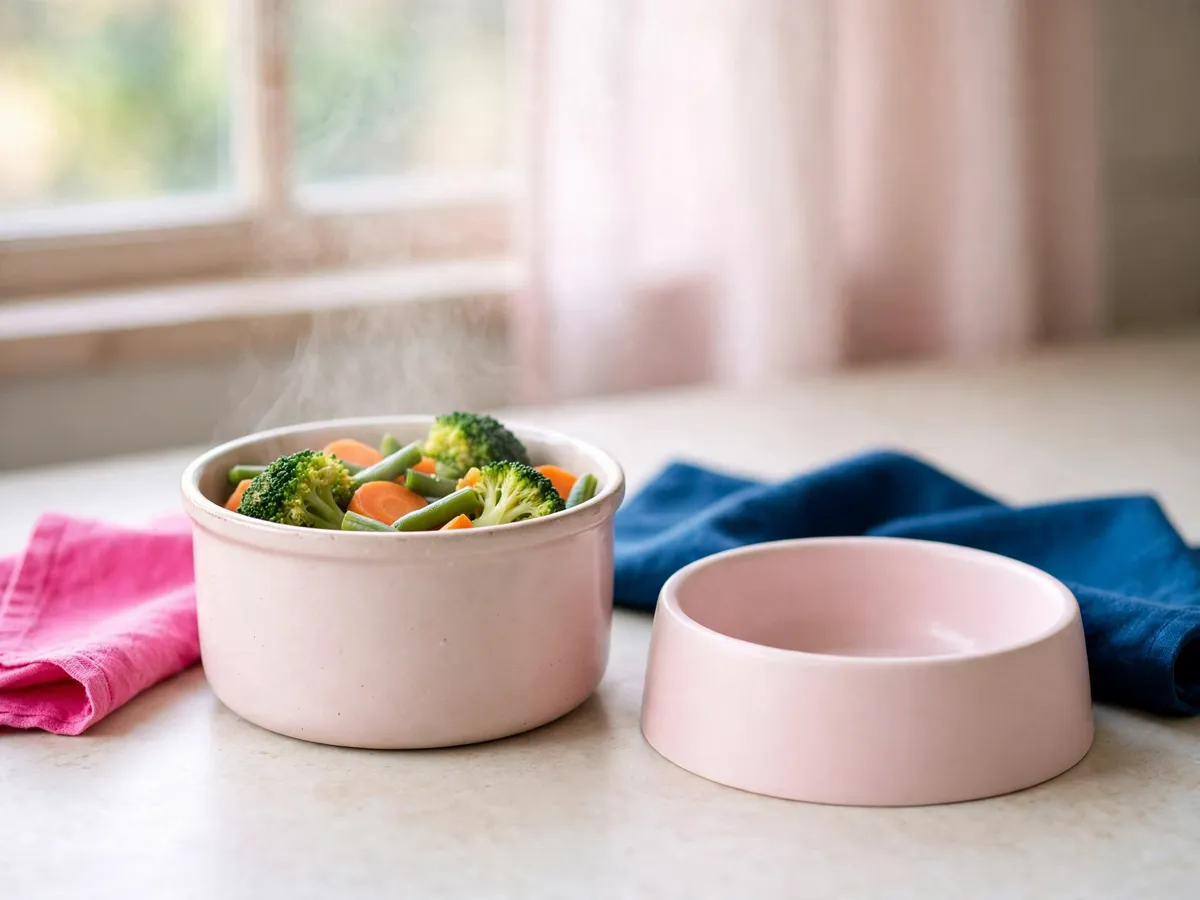
The daily amount of vegetable stays on the small side of the bowl, and the slice size follows the dog. A small dog — under twenty pounds — gets a tablespoon or two of crunchy pieces across the day, cut to the size of a pea or a thin coin. A medium dog gets a few more tablespoons, and a large dog can manage a small handful of carrot sticks alongside the regular food. The vegetable is the extra, never the main event, and the daily amount sits beside the regular food, not on top of it.
Most of a pet's nutrition should still come from their regular diet, with treats as the extra bit. Read that line twice, because it is the rule that keeps the vegetable snack from drifting into a second meal. The body-size slices are the practical version of the same rule: cut to the jaw, keep the daily count small, and reach for the bowl of regular food before the bowl of carrots. For informational purposes, consult your vet.
Vegetable serving ideas by body size
| Dog size | Daily amount | Cut to |
|---|---|---|
| Small (under 20 lb) | 1–2 tablespoons across the day | Pea-sized carrot coins, snapped green bean tips |
| Medium (20–50 lb) | A few tablespoons, split across the day | Thin carrot sticks, small broccoli florets |
| Large (over 50 lb) | A small handful alongside the regular food | Full carrot sticks, whole green beans |
Vegetables are the crunchy extra — keep the regular food as the meal. For informational purposes, consult your vet.
Prep: wash, cut, keep it plain
The prep is the unglamorous half of the page and the half that keeps the snack honest. Wash every vegetable under cold water, cut on a clean board that has not just held onion or garlic, and keep everything plain — no salt, no butter, no seasoning, no oils. The cutting board rule is the one that catches people: a board that held onion for the soup, wiped and reused for the carrot sticks, carries the allium residue onto the snack. Use a separate board, or cut the dog's vegetables first.
Frozen is the other prep route, and it earns its place on a warm day. Carrot sticks and green beans freeze well in a single layer, and a frozen stick slows a fast eater down in the way a room- temperature one does not. Thaw is not required — a frozen carrot stick is a popsicle and a chew in one, and a small dog manages the smaller pieces just fine.
The keep-out line: onion, garlic, chives
Onion, garlic and chives belong to the allium family and can damage red blood cells, so they stay out of every homemade batch. That is the one keep-out line on this page, and it is the line that earns the separate cutting board in the prep section above. The alliums show up in the kitchen in more forms than people expect: the onion in the soup, the garlic in the seasoning, the chives on the baked potato, the onion powder in the rub. None of them reaches the dog bowl, and the residue on a shared board is the version that catches a careful cook.
For the rest of the keep-out picture — chocolate, grapes, xylitol, the rest of the list — the full toxic foods list is the companion page. Keep this page open for the vegetables that go in the bowl, and that page open for the ones that do not. For informational purposes, consult your vet.
Questions about vegetables for dogs
Can dogs eat raw carrots?
Yes, and crunchy raw carrot is the classic. Cut sticks thin enough for a small jaw, and treat them as the snack, not the meal.
Which vegetables should never reach the bowl?
Onion, garlic and chives lead the never list, and the whole allium family stays out of the snack drawer. When in doubt, our full toxic foods list covers the rest.
How much veggie can I give in a day?
Keep treats to the small side of the bowl. Most of a pet's nutrition should still come from their regular diet, with vegetables as the crunchy extra.
The crunch-trio kit
What makes the veggie snack easy
A simple slicer and a small treat tray — the two things that turn a carrot and a handful of green beans into a quick, plain snack your dog actually wants.
See the snack kit →As an Amazon Associate we earn from qualifying purchases.
Save these on Pinterest
Pin the crunch trio before the next snack afternoon. The Dog Food collection holds the recipe pages that turn the same vegetables into baked treats, and the toxic-foods page that keeps the keep-out line visible.