 PawStyle Daily
Homemade Dog Treats & Meal Planning
Golden Retriever Meal Planning: A Weekly Rhythm
A cook day, a cooling tray and a stack of labeled containers: that is the whole rhythm of a golden retriever’s week. Cook once, portion while the food is cool, label every lid, and let the fridge do the rest. No guessing at seven in the morning, and no mystery pot at the back of the shelf.
By PawStyle Daily · Updated 18 November 2026
Good to know: one cook day each week · the oldest container goes first · treats stay the extra bit · for informational purposes, consult your vet.
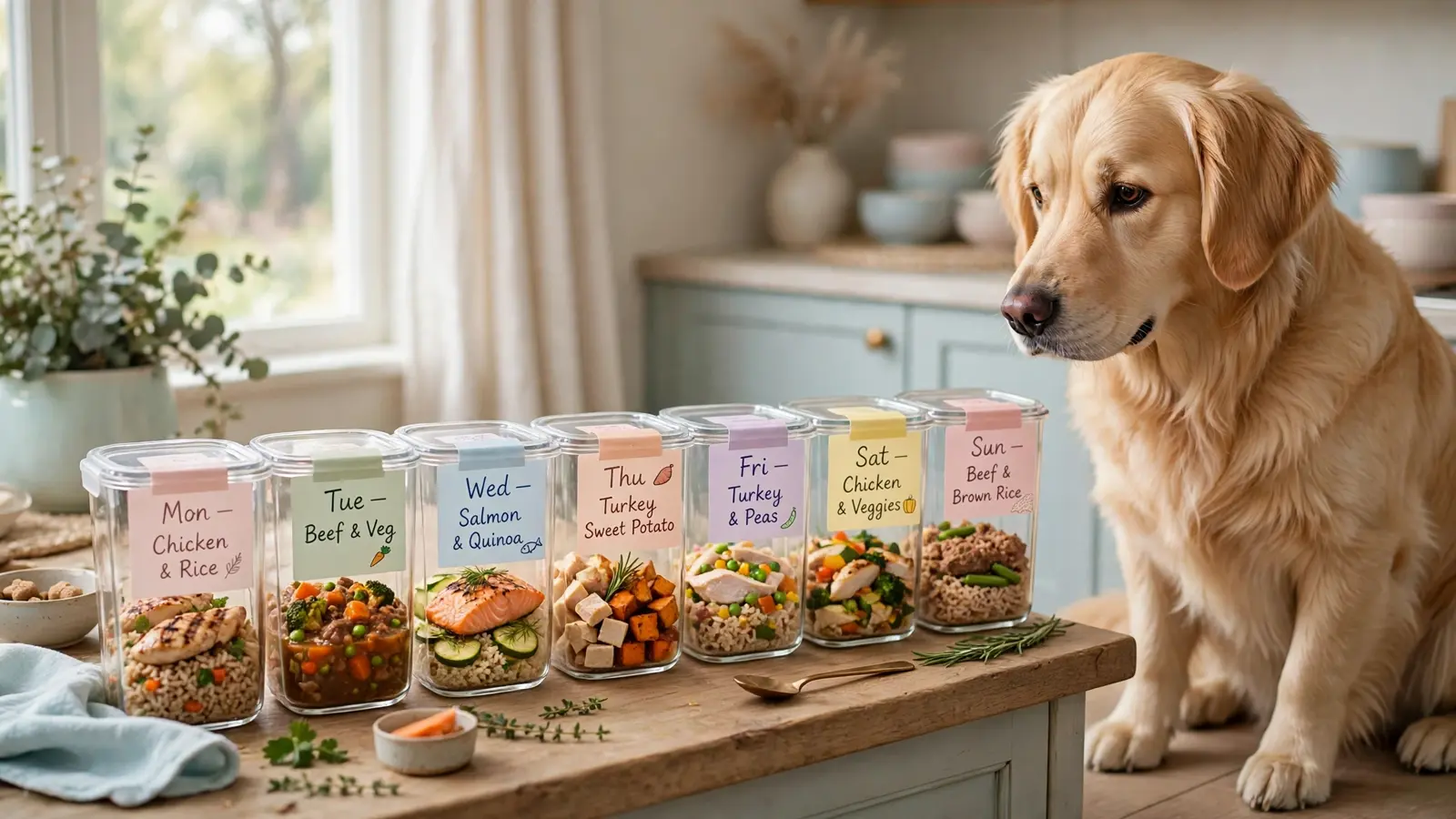
A week has a shape
A golden retriever is a big, busy dog, and a dog that size eats enough that the week has to be set up in advance. The shape is simple: one cook day, one cooling hour, one stack of containers, and a shelf order that puts the oldest food at the front.
Write the plan on the fridge door, not in your head. A note with the cook day, the container count and the shopping list turns a chore into a habit, and it keeps anyone else in the house from opening the wrong lid on a Tuesday.
The cook day, start to finish
Cook the meat plainly and let it cool on a tray before anything is sealed. Rice, oats and vegetables cook in the same session, in the same pot when the timing allows, and everything is off the stove within an hour.
- Shop once for the week: meat, a grain, two vegetables, and the containers you already own.
- Cook the meat with no salt and no seasoning, then pull it apart while it cools.
- Cook the grain and the vegetables, and let both come to room temperature uncovered.
- Portion into the containers you will actually carry to the bowl, not the biggest pot in the cupboard.
- Label each lid with the date and what is inside before it goes in the fridge.
- Wash the pot while the food cools, not after dinner.
One pot · one tray · one session · the rest of the week is opening lids.
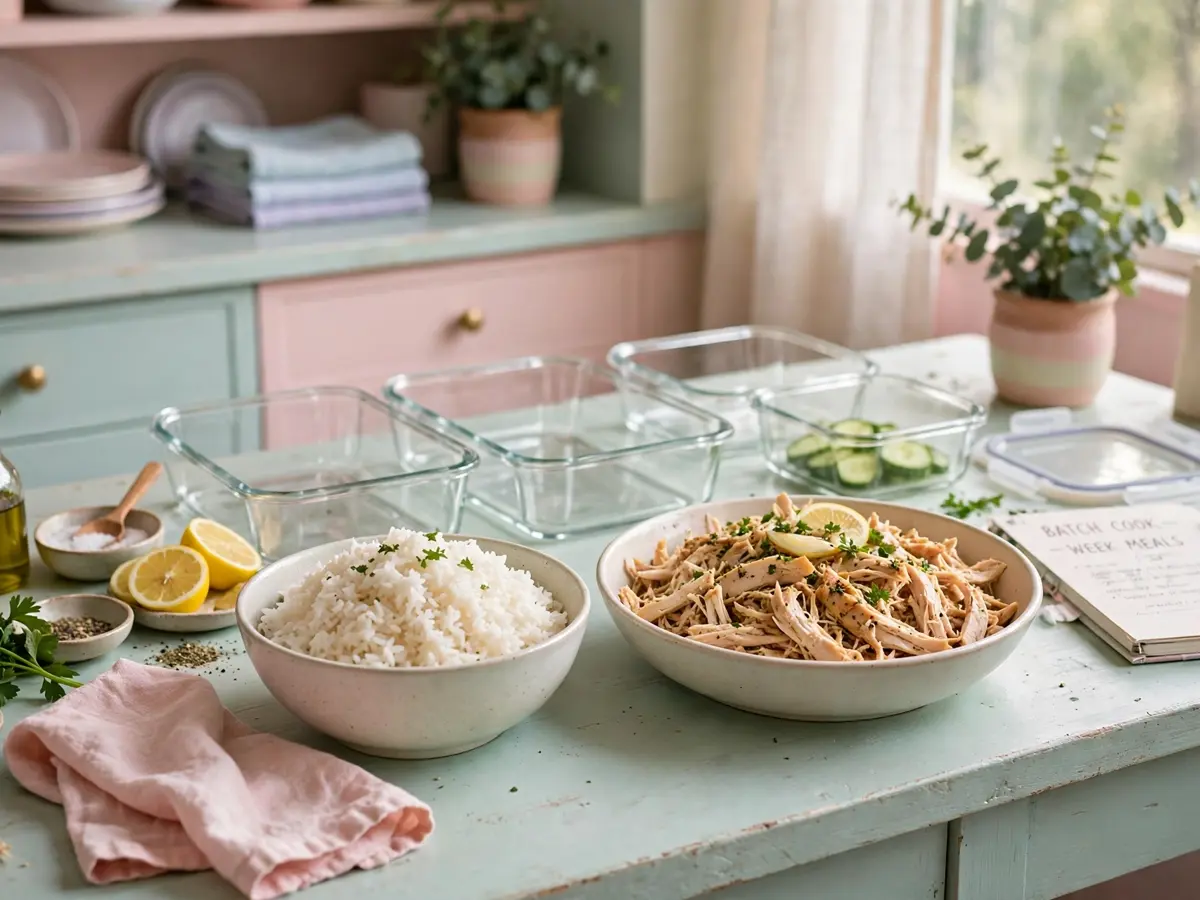
The fridge window and the freezer window
Homemade dog food keeps about three days in the refrigerator and a month or two in the freezer, depending on how it's sealed. That is the whole storage rule, and it is why the labels matter more than the containers do.
The week runs on a rotation: the container cooked on Sunday is eaten by Wednesday, and anything still in the fridge after that window moves to the freezer or leaves the house. Write the date big enough to read through a shelf.
Freezer containers stay flat and get the same label on the lid. A thawed container should be the amount the dog eats in a day, so nothing sits half-eaten at the back of the fridge for the rest of the week.
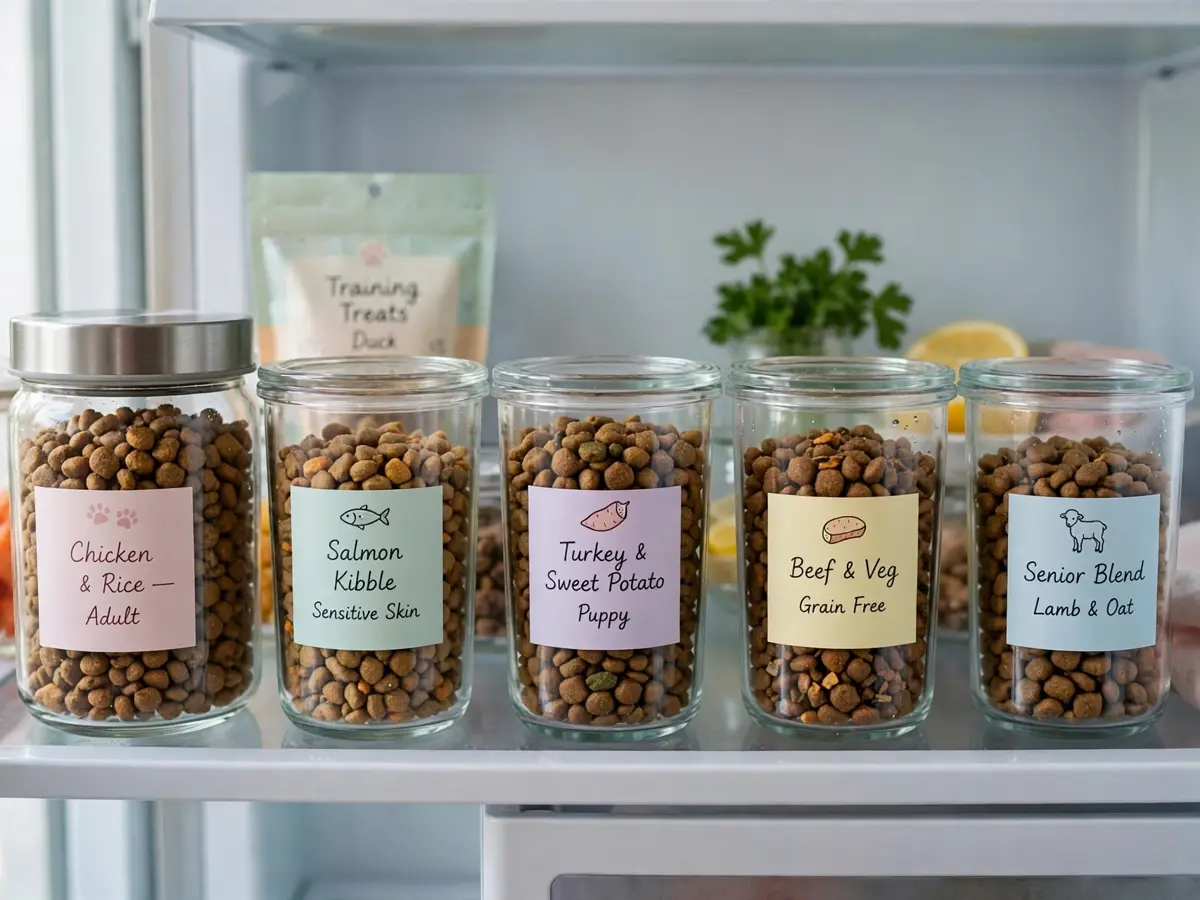
Rotating proteins without rewriting the week
Two or three proteins across a week keep the shopping list short and the bowls from tasting identical. Chicken one week, turkey the next, a little beef or salmon when it is on offer, with the same grain and the same vegetables underneath.
What stays fixed is everything around the meat: the same bowl, the same spot on the mat, the same two times each day. A golden knows the routine before you do, and a steady routine makes a missed meal obvious instead of invisible.
Rotate one thing at a time. If the meat changes and the grain stays, a strange day has one suspect instead of four, and the change is easy to undo.
Treats stay the small share
Most of a pet's nutrition should still come from their regular diet, with treats as the extra bit. Treats should stay at no more than five percent of a dog's daily calories, so keep the pieces small.
The easiest way to hold that line is a small dish on the counter, filled once in the morning. When the dish is empty, the day’s treats are done, and the training session in the park is already covered.
A golden that trains for ten minutes in the park does not need a bigger reward, just more small ones. Cut a training piece to the size of a pea, and the same handful lasts a whole session and the walk home.
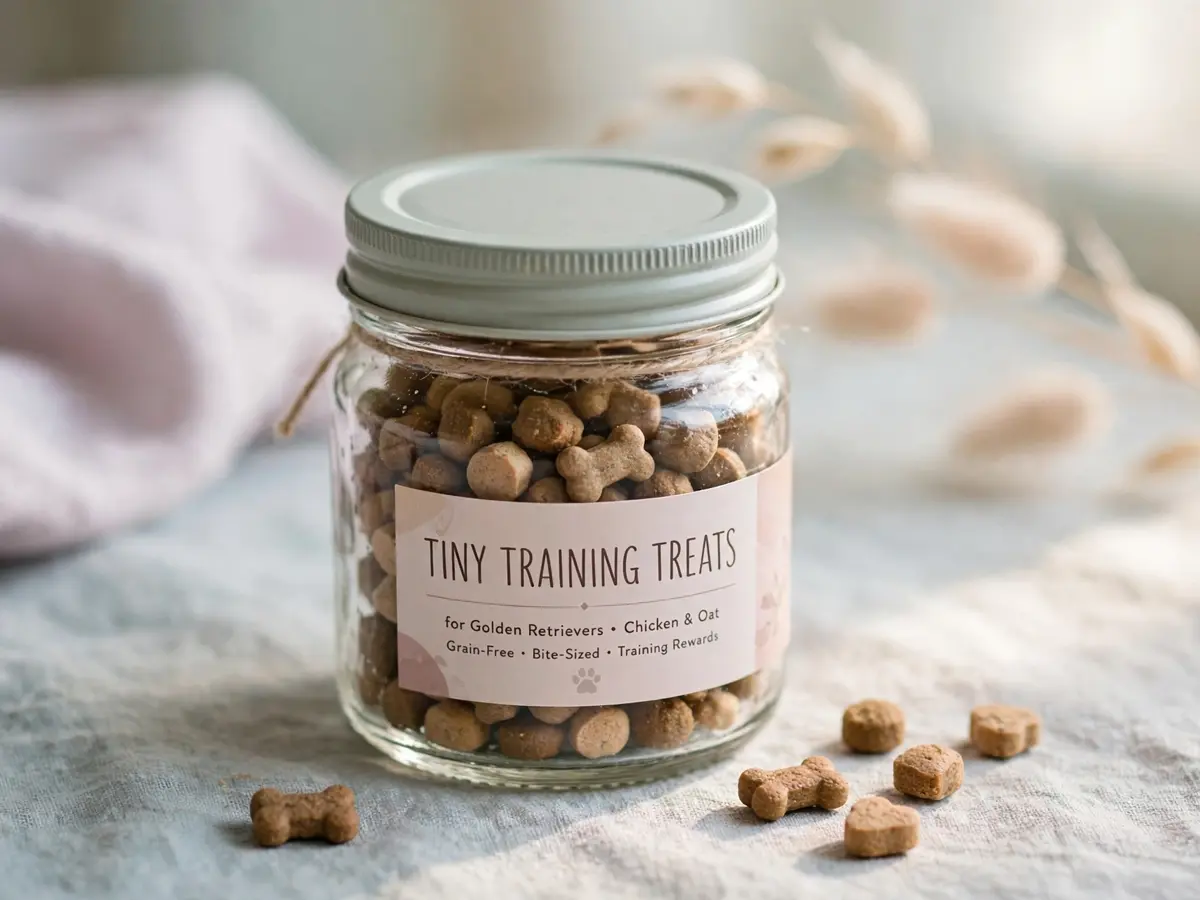
Why the recipe you found online still falls short
This is the part that lands hard after a good cook day. The majority of homemade pet-food recipes published in books and online, even those written by veterinarians, do not provide complete and balanced nutrition. A recipe can read well, photograph beautifully and still leave a gap that only shows up over weeks.
For pet owners who prefer to feed home-prepared diets, a consult with a board-certified veterinary nutritionist is recommended. Bring the recipe you want to use and ask what it is missing; that conversation is worth more than another blog post.
Most of us land in the middle: a complete diet from the bag or the tin, with a homemade topper cooked on Sunday. That keeps the cooking pleasure and the checked balance in the same bowl.
The week at a glance
| Moment | What happens | What keeps it simple |
|---|---|---|
| Cook day | Meat, grain and vegetables cook in one session | One pot, one tray, one afternoon |
| Cooling | Everything sits uncovered until it stops steaming | Portion only when cool |
| Fridge shelf | The oldest containers sit at the front | Date on every lid |
| Freezer drawer | Flat containers for the weeks ahead | Same label, same size |
| Treat dish | One small dish filled each morning | An empty dish means done |
| Shopping list | Two or three proteins, one grain, two vegetables | Write it on the fridge note |
The amount in each container comes from your vet or a board-certified veterinary nutritionist, sized to this dog rather than to the breed.
The small-apartment version
A one-bedroom kitchen with one counter and a fridge shelf the width of a shoebox can still run this week. The trick is to cook less, more often, and to treat the freezer as a shelf rather than a storage unit.
- One pot on the stove, one tray on the counter, one shelf in the fridge.
- Flat freezer containers stack in a drawer and thaw overnight on the bottom shelf.
- A cutting board over the sink becomes the prep counter for an hour.
- The bowl, the mat and the treat dish live in the same corner every day.
For the golden who lives in that apartment, the routine matters more than the square footage. Same bowl, same corner, same times; the dog does not need a kitchen, only a rhythm. The weekly meal prep planner has the printable version of that note.
Golden retriever meal planning questions
How much should I cook for a golden retriever in a week?
The daily amount belongs to your dog, not to a breed chart, so ask your vet or a board-certified veterinary nutritionist for the number and multiply it by the days you cook for. Then portion the food into that many containers, so the week is decided before the first morning scramble.
Can homemade food be the whole bowl?
It can, with a plan behind it. For pet owners who prefer to feed home-prepared diets, a consult with a board-certified veterinary nutritionist is recommended. A topper is the easier first step, because the regular diet still carries the balance while you learn the cooking.
How long does one container keep?
Homemade dog food keeps about three days in the refrigerator and a month or two in the freezer, depending on how it's sealed. Label the lid with the cook date, keep the oldest container at the front, and move anything older than the fridge window to the freezer before it becomes a question.
Do training treats come out of the same cook?
They can, as long as they are counted. Most of a pet's nutrition should still come from their regular diet, with treats as the extra bit. Cut a few pieces small enough for a training session, put them in the same little dish, and let the dish be the day's limit.
What about the last container nobody wants?
Freeze it the day before the fridge window closes, with the cook date and the contents on the lid. A flat freezer container thaws overnight on the bottom shelf, and a labeled one never becomes the mystery block at the back of the drawer.
When should I call the vet instead of adjusting the recipe?
If a golden leaves meals two days running, drops weight, or the stool changes, call your vet before you change the cooking. A recipe is the easy part to blame and the hardest part to prove, and a vet can see things a bowl cannot tell you.
Save these on Pinterest
Pin the cook-day rhythm for the next grocery run, then pair it with the homemade dog food storage rules, the no-bake peanut butter treats for goldens and the dog food and treats collection. Three pins, one week, one clean fridge.
Treats should stay at no more than five percent of a dog's daily calories, so keep the pieces small. For informational purposes, consult your vet.