 PawStyle Daily
Homemade Dog Treats & Meal Planning
Freeze Dried Raw Dog Food: The Format, and the Handling
Freeze dried raw dog food sits in a spot on the shelf that confuses a first-time buyer: it looks like kibble, it stores like kibble, and it is not kibble. The moisture is gone and the raw is not. That one fact shapes everything else about the format: how it compares with the bag you already scoop, why the counter work changes, what it costs per bowl, and how a switch to it is paced. This page is the format explained from the first bag to the steady bowl: what freeze dried raw is, how it differs from kibble and frozen raw, the handling steps on a home counter, the cost math, and the slow switch that keeps the changeover steady.
By PawStyle Daily · Updated 22 November 2026
Good to know: freeze dried holds raw, so handle it like raw | the label panel still gets read | cost math before the switch, not after | for informational purposes, consult your vet.
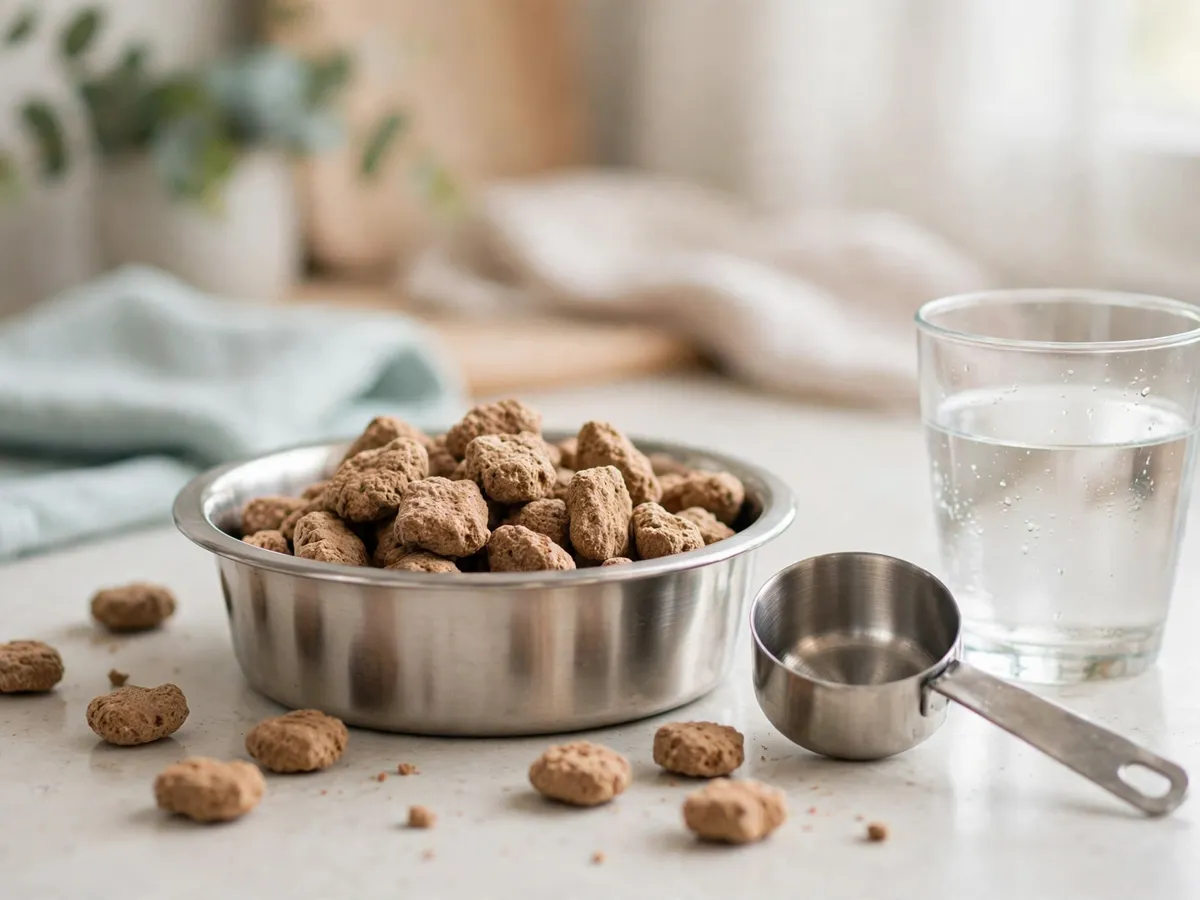
The Bowl That Skipped the Oven
Every dog food on the shelf answers the same question in a different way: how does meat stay good in a pantry for months? Kibble answers it by cooking. Frozen raw answers it with the freezer. Freeze dried raw answers it by pulling the water out under vacuum, and water is what bacteria need, so the food keeps sealed on a shelf while staying uncooked. That is the whole trick of the format, and it is why the bag reads like kibble and the handling reads like raw.
The format earns its shelf slot because of what the vacuum step leaves behind: the meat, the organs, the bone content a raw formula carries, held in a nugget that weighs almost nothing. What it trades away is the one thing kibble never asks of you: the counter work of treating an uncooked food like an uncooked food. The sections below take the format apart in the order a buyer meets it, starting with what the nugget actually is.
What Freeze Dried Raw Actually Is
The process runs cold. Raw ingredients are prepared, then frozen, then placed under a vacuum strong enough that the ice in the food turns straight into vapor and leaves, a step called sublimation. No oven, no rendering, no steam: the moisture departs and the structure of the food stays standing. What comes out is a light, dry nugget that carries the raw recipe in nearly the state it went in, minus the water.
Because the water is gone, the weight drops hard, which is why a small jar holds the food of a much heavier bag: you are not paying for moisture, and you are not storing it either. The same property is why rehydration matters. A nugget served dry takes its water from the bowl and the dog; a nugget soaked in warm water first comes back to something close to its original texture. Both ways of serving exist, and the bag states which the maker designed the recipe for.
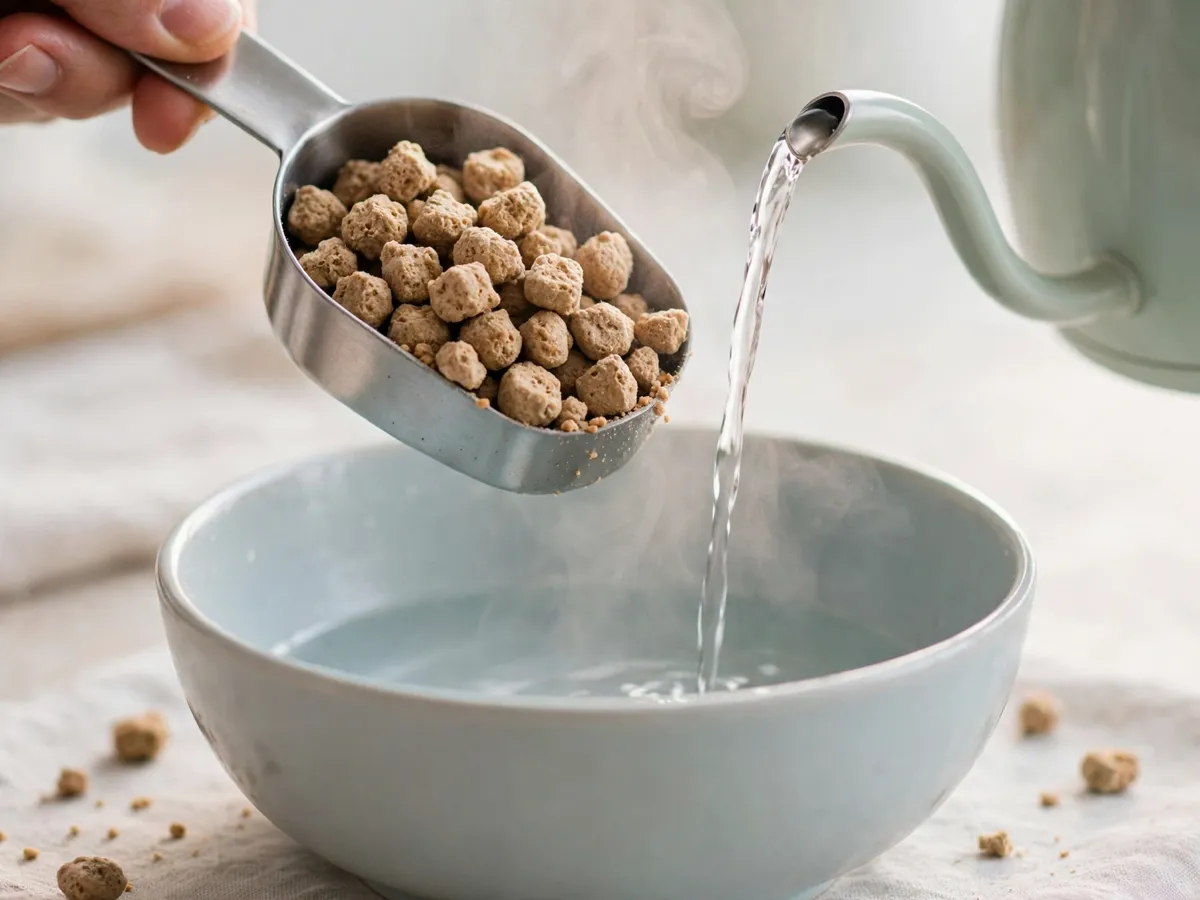
The label panel on a freeze dried bag is read the same way any bag is read: the ingredient statement in order, the analysis lines, the feeding rows, the life stage wording. The freeze dried raw label checklist walks that panel line by line; this page keeps to the format itself and points there for the reading skill.
Freeze Dried Raw vs Kibble vs Frozen Raw
The three formats sit on three answers to the same question, and each answer sets its own house rules. Kibble is cooked, dried and shelf stable, so it asks for a scoop and a sealed bin. Frozen raw is uncooked and kept cold, so it asks for freezer space and thaw planning. Freeze dried raw is uncooked with the moisture pulled out, so it keeps like kibble and handles like raw. Comparing them is mostly comparing what each format asks of your kitchen.
- Storage: a sealed bin for kibble, freezer space for frozen raw, a sealed bag in the pantry for freeze dried.
- Counter work: scoop and go for kibble, thaw and wash for frozen raw, soak or serve dry plus a wash-up for freeze dried.
- Weight and space: freeze dried is the lightest per meal, because you carry no water in the bag.
- What the food is: cooked for kibble, uncooked for the other two, which is what sets the handling rules.
Frozen raw has a warm-weather cousin worth knowing: the frozen pupsicle, a treat built from the same freezer logic. The frozen dog treat recipes page holds those; the switch section below handles the diet change itself.
Handling Safety on the Kitchen Counter
The one fact to hold onto is that freeze drying keeps the raw ingredients raw. Nothing in the process cooks them, so the counter rules are raw-food rules, the same family of habits a raw chicken dinner already runs in your kitchen. The bag is not a hazard; it is an uncooked food with the moisture removed, and it is handled the way uncooked food is handled.
- Wash the scoop and the bowl after every use, in hot soapy water, and keep a sponge that is only for the dog bowls.
- Rehydrate away from the prep area: a spot of the counter that is not where salads get made.
- Keep the bag closed and dry between meals, sealed as it came, so the shelf life the format promises holds.
- Wash hands after the bowl goes down, the same as after handling any uncooked meat.
- Keep children and counters honest: the nuggets look like snacks, and they are not.
Homemade raw is a different project with deeper safety questions, because storage, grinding and batch hygiene all land on you. The homemade dog food safety and storage page covers that technique; the commercial freeze dried bag in the pantry asks only for the counter rules above.
The Cost Math of a Freeze Dried Diet
Freeze dried raw usually prices above kibble per bowl, and the reason is structural: removing water concentrates the weight and the price of the meat into a small, light package. A jar that looks modest next to a tall kibble bag can hold weeks of meals for a small dog, and the per-bowl number only appears when you divide the bag by the feeding rows. That division is the whole worksheet, and it is worth running before the first bag, not after.
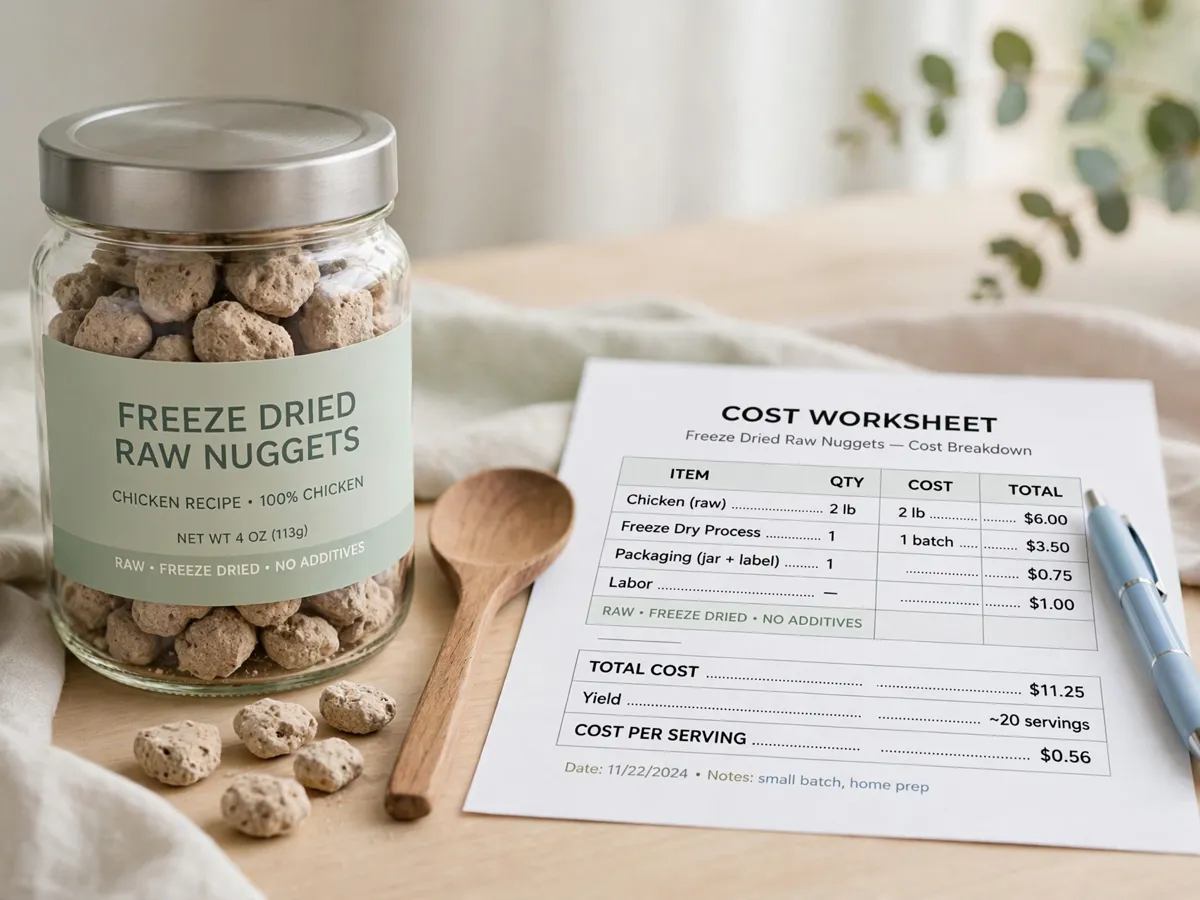
The worksheet works the same for any diet format: bag price, days the bag lasts at your dog’s feeding row, and the two divided into a per-day figure you can set beside the kibble number you already pay. No stated figure belongs on this page, because the number that matters is the one your bag and your dog produce. What the math usually shows is a picture, not a verdict: some households run freeze dried as the whole bowl, some run it as a topper or a meal-mixer, and the per-day figure is what makes that choice a budget line instead of a surprise at checkout.
A Slow Switch, Week by Week
Any food change goes slowly, and the pace belongs to the dog, not the calendar. The general pattern holds across formats: a little new mixed into the old, a little more each day, the bowl and the place and the hours unchanged, and the stool watched as the only honest guide. If it runs loose, hold where you are and let it settle before adding more. For the full week-by-week transition mechanics, the the slow food changeover page owns that detail; what follows here is only the freeze dried shape of it.
The freeze dried shape adds two things to the mix: the soak and the handling. Decide at the start whether the nuggets are served dry or rehydrated, because a dog that has learned one texture accepts the mixed bowl faster than a dog that meets a different texture every day. And from the first mixed bowl onward, the counter rules are already on: the scoop washes, the bag seals, the hands wash, exactly as they will for the steady bowl later. The switch is not just a food change; it is the household learning the new format’s routine a week early.
One steady state is the goal: same food, same texture, same hours, the raw-handling habits running without being thought about. When the stool and the rib check both read steady across the changeover, the format has landed, and the weekly weigh-in carries on as it always did.
Freeze dried raw questions
Is freeze dried raw safe to handle in a home kitchen?
Raw meat and raw eggs can carry salmonella and E. coli, and cooked bones can block a gut and need surgery. Freeze drying holds the raw ingredients, so the handling is raw-food handling: wash the scoop and bowl after use, rehydrate away from the prep area, and keep the bag closed and dry. Lighter to store than frozen raw, but the food still gets raw-food care.
How is freeze dried raw different from kibble and frozen raw?
Kibble is cooked into a dry shelf shape, frozen raw is uncooked and kept cold, and freeze dried raw is uncooked with the moisture removed under vacuum, so it keeps on the shelf sealed. Rehydrate the nuggets in warm water before the bowl goes down, or serve them dry. The trade is kitchen work: no freezer space, but a soak step kibble never had.
Does switching to freeze dried raw cost more than kibble?
Freeze dried raw usually costs more per bowl than kibble, because removing water concentrates the weight and the price of the meat. The worksheet in the pack prices the daily bowl against the current bag, so the comparison is your bag and your dog, not a category average. Run the cost math before the switch week, and budget the same food for the whole switch so the changeover stays steady.
Save the Freeze Dried Raw Sheet
Save this page for the shelf decision and keep the worksheet for the budget line: the cost math, the handling rules and the slow switch all belong to the same first bag. Pin it now, run the numbers before checkout, and let the switch week carry the changeover at the pace the dog sets. For informational purposes, consult your vet.