 PawStyle Daily
Homemade Dog Treats & Meal Planning
Homemade Dog Food: Turkey & Rice Bowls
Sunday afternoon, one wide pot, and the kitchen smells like a diner for an hour: two pounds of ground turkey browning, rice taking up the water, carrots and green beans folded in at the end. The batch cools on the counter, gets portioned into tubs, and spends the week as the quarter of the bowl that makes kibble worth finishing. This is a topper guide, and it stays one on purpose. For informational purposes, consult your vet.
The honest framing first: most of a pet’s nutrition should still come from their regular diet, with treats as the extra bit. The bowls below are built around that sentence. Turkey for the smell, rice for the texture, a quarter of the bowl for the portion, and a keep-out list taped where you cook.
By PawStyle Daily · Updated 16 November 2026
Good to know: about 20 minutes of prep plus simmer · Topper only, not a complete diet · Plain cooking, no seasoning, no bones.
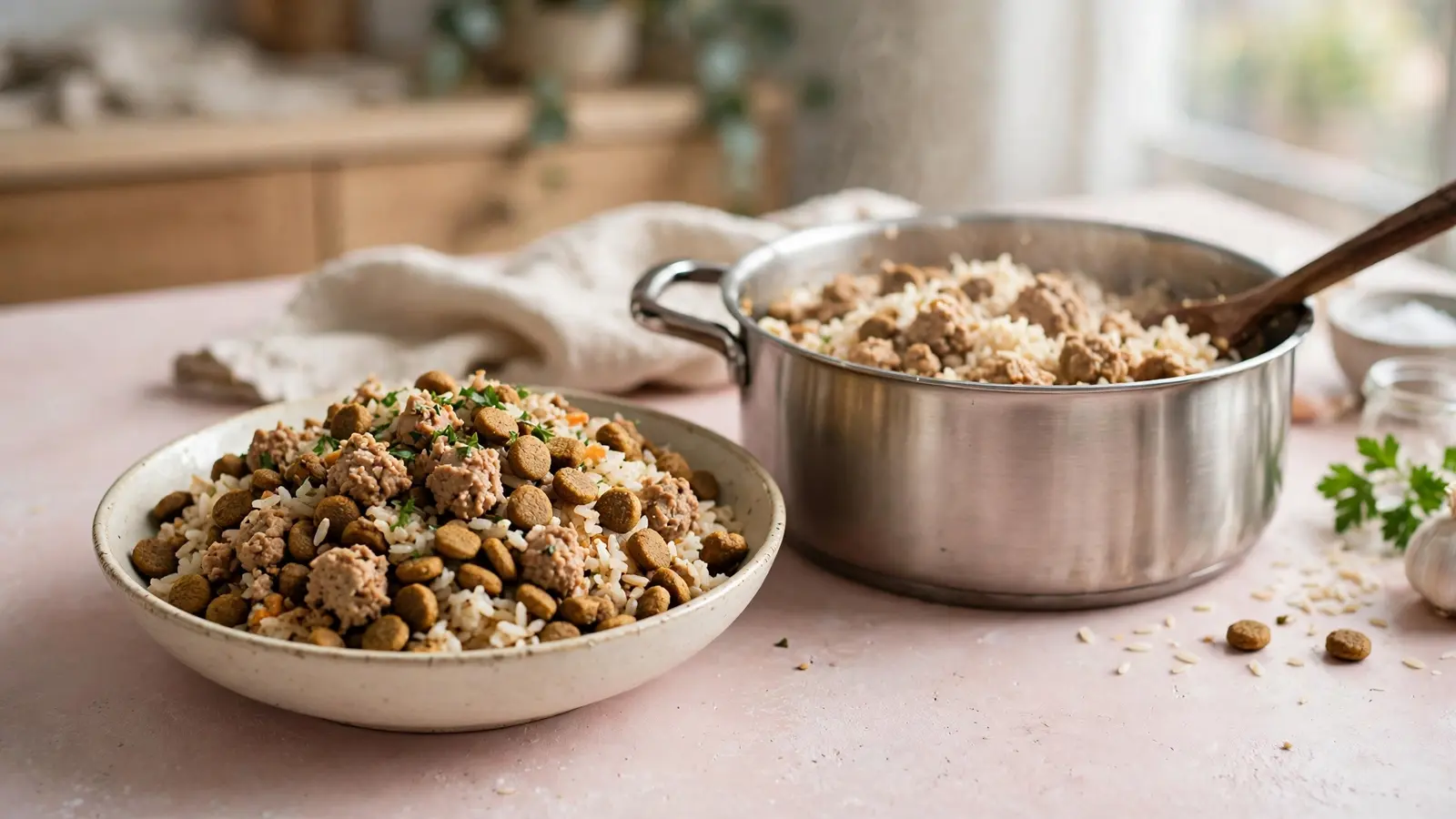
The batch: turkey, rice, two vegetables
Two pounds of lean ground turkey, two cups of white rice, two cups of chopped carrots and green beans, four cups of water. Brown the turkey in a wide pot and drain the fat off, because lean on the label is a promise the pan keeps better than the packet does. Add the water and the rice, lid on, simmer until the rice is soft, then fold the vegetables in for the last few minutes so they keep a little bite.
Small amounts of lean cooked chicken, turkey, beef or pork with no bones and no seasoning are fine to share, which is the whole reason this recipe works: plain cooked meat, plain cooked rice, nothing from the spice rack. Follow the recipe exactly as written, every batch, because a topper that drifts into improvisation is how a keep-out ingredient sneaks in.
Any breed · Topper quarter of the bowl · Cool fully before portioning.
The chicken version of the same idea is our crockpot chicken topper, for the weeks you would rather set it and leave the house.
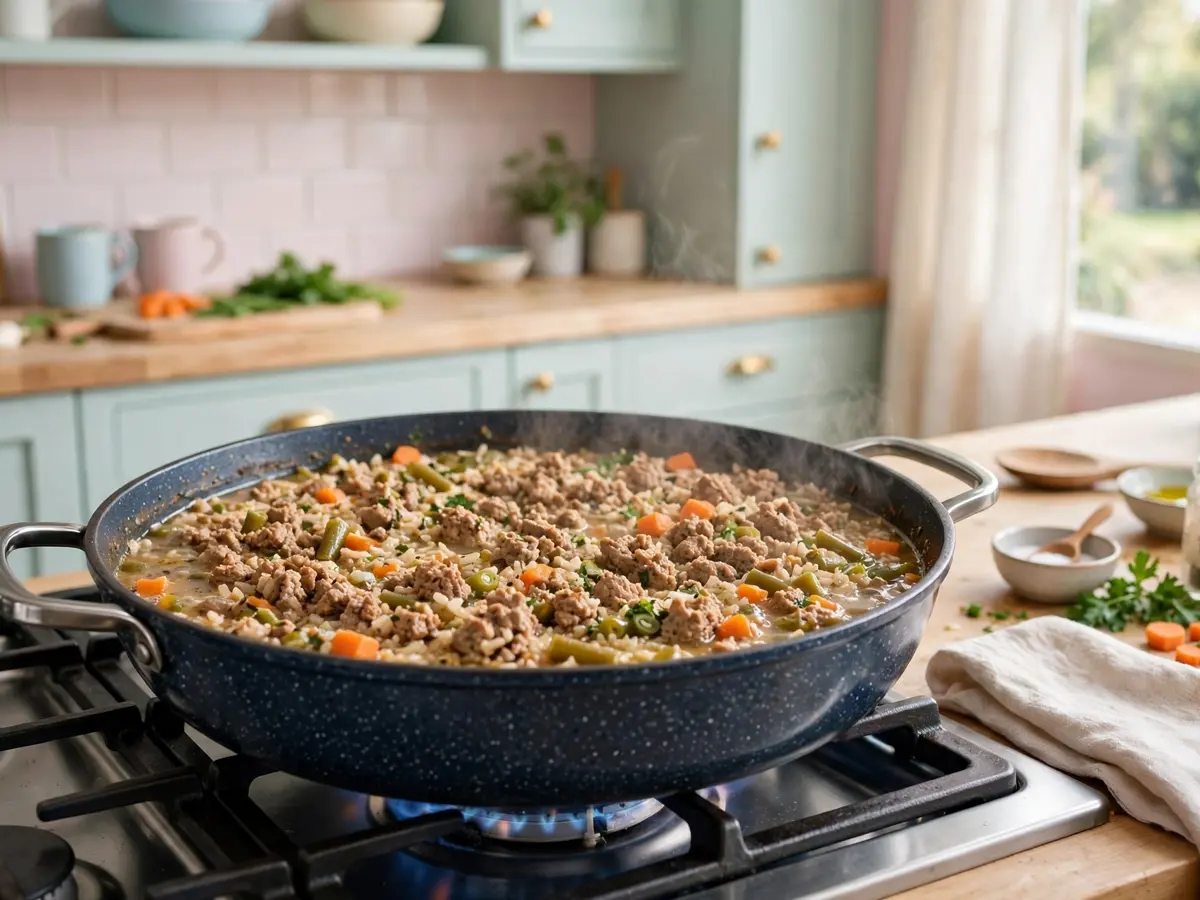
Cook day, in order
- Chop the carrots and green beans small before anything hits the heat, because a topper gets mixed through kibble and a big piece is the thing a dog leaves on the floor.
- Brown the turkey in the dry pot, breaking it up with a wooden spoon, until it is cooked through with no pink left.
- Drain the fat off, and let the pot come back off the boil before the water goes in.
- Add the water and the rice, lid on, and let it simmer until the rice is soft and has taken the water up.
- Fold the vegetables in for the last few minutes, then take the pot off the heat.
- Cool the batch fully before portioning: spread it in a wide pan, stir it while it stops steaming, lid only after it is cold.
The cooling step is where a batch is won or lost. A deep pot of warm food with a lid on it stays warm for hours, and a tub of still-warm topper is a tub that spoils early. Cool first, portion second, lid third.
What never goes in the pot
The pot stays plain on purpose, and this is the list we cook by.
Keep-out list for the turkey pot
| Never in the pot | Why it is out | The swap instead |
|---|---|---|
| Onion, garlic, chives | Allium family, red blood cell damage | Nothing, the batch is plain on purpose |
| Cooked bones of any kind | Cooked bones can block a gut | Boneless ground meat only |
| Raw meat or raw eggs | Salmonella and E. coli risk | Cook the batch through |
| Salt, broth cubes, spice racks | Seasoning has no place in a topper | The turkey carries the smell |
| Leftovers from your own plate | Cooked-with ingredients are invisible | Only what the recipe lists |
When in doubt, leave it out. The keep-out list is the recipe.
Onion, garlic and chives belong to the allium family and can damage red blood cells, so they stay out of every homemade batch. That includes the onion powder in a spice jar and the garlic in last night’s leftovers, which is why our-plate scraps never make it into the pot.
Raw meat and raw eggs can carry salmonella and E. coli, and cooked bones can block a gut and need surgery. So the turkey goes in the pot cooked through, the rice goes in cooked, and bones never go in at all.
If you think your dog ate something off this list, call your vet or an emergency clinic right away, and take the wrapper or the packet with you. A label in your hand is faster than a story from memory.
Storage and the week
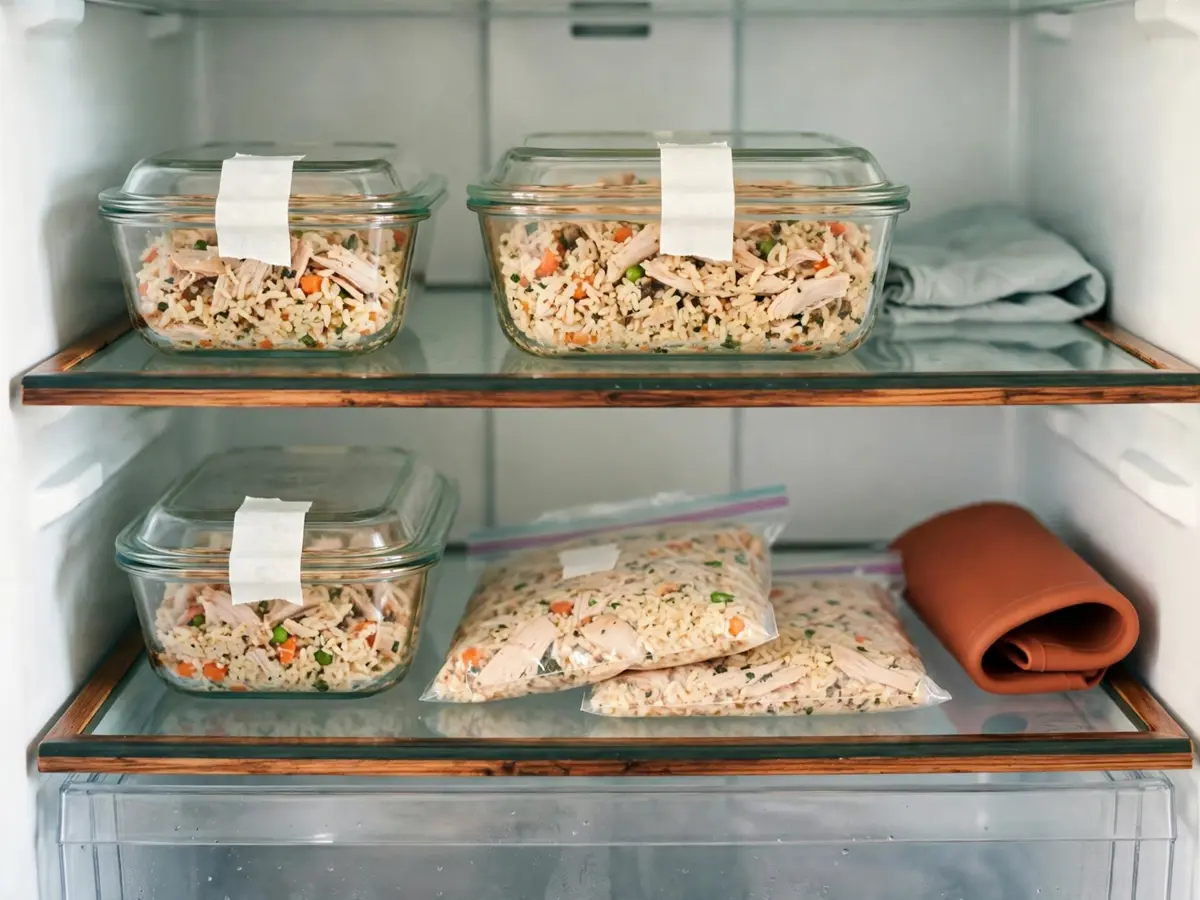
Homemade dog food keeps about three days in the refrigerator and a month or two in the freezer, depending on how it’s sealed. That is the outside edge rather than a target, and it is what the Sunday plan is built around: two tubs in the fridge for the near week, the rest flat in dated freezer bags behind them.
Sealing is the part worth slowing down for. A tub with a real lid pressed down beats a bowl with a plate balanced on top, and freezer bags get pressed flat so they stack like books. Every tub and bag carries the date and the word turkey, because a freezer full of unlabeled bags is a freezer full of mystery.
Thaw a bag overnight in the fridge, never on the counter, warm it gently, stir it, and test it against your wrist before it goes down. Oldest tub to the front, new batch to the back, and anything that has sat out all afternoon goes in the bin. The weekly dog meal prep planner is the printable version of the same Sunday session.
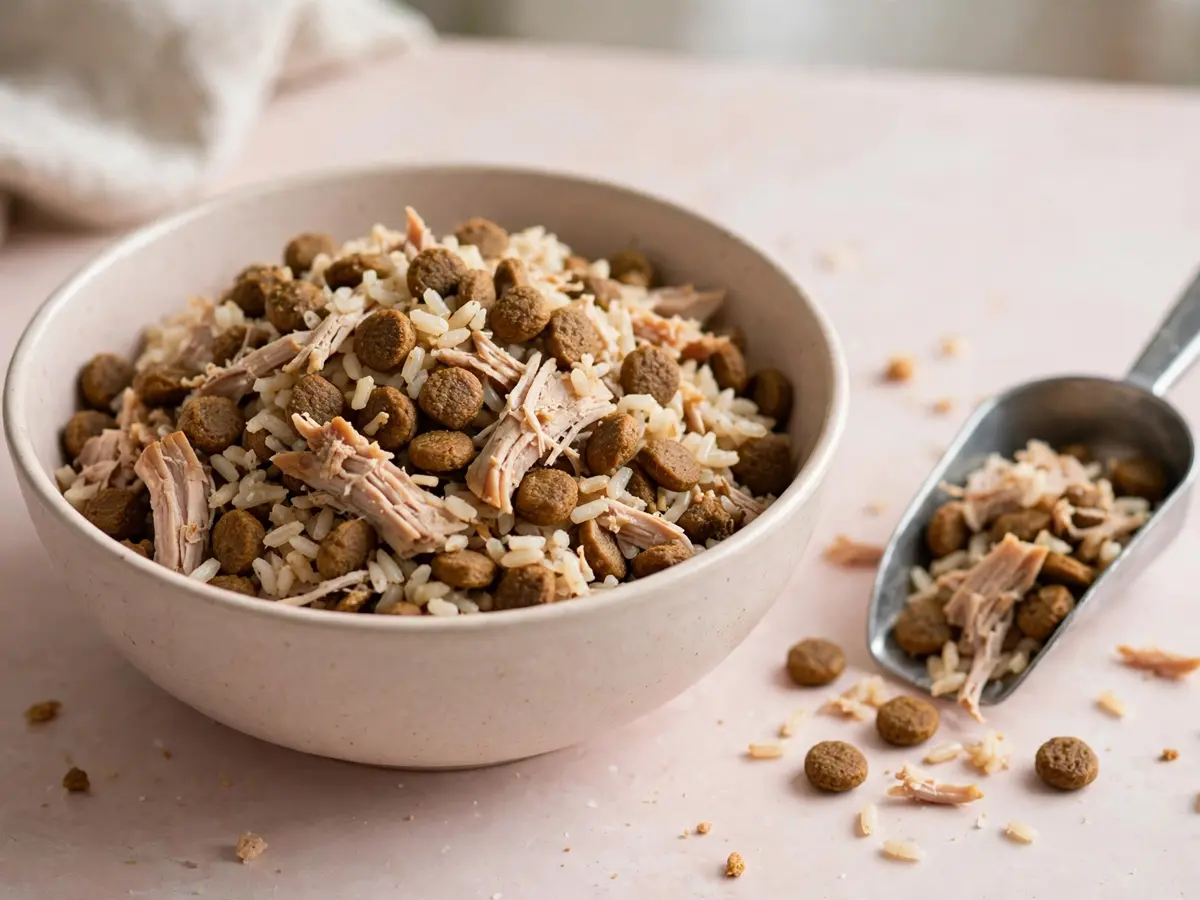
Portion the bowl
A quarter of the bowl for most adults, kibble as the other three quarters, and the topper mixed through rather than spooned on top. A dog who can eat the good part first and leave the rest has been handed a puzzle with one answer.
Start smaller than the quarter suggests. A small spoonful mixed through the first bowl tells you more than any table does, and a dog who leaves the kibble behind is telling you the ratio is too generous for that week.
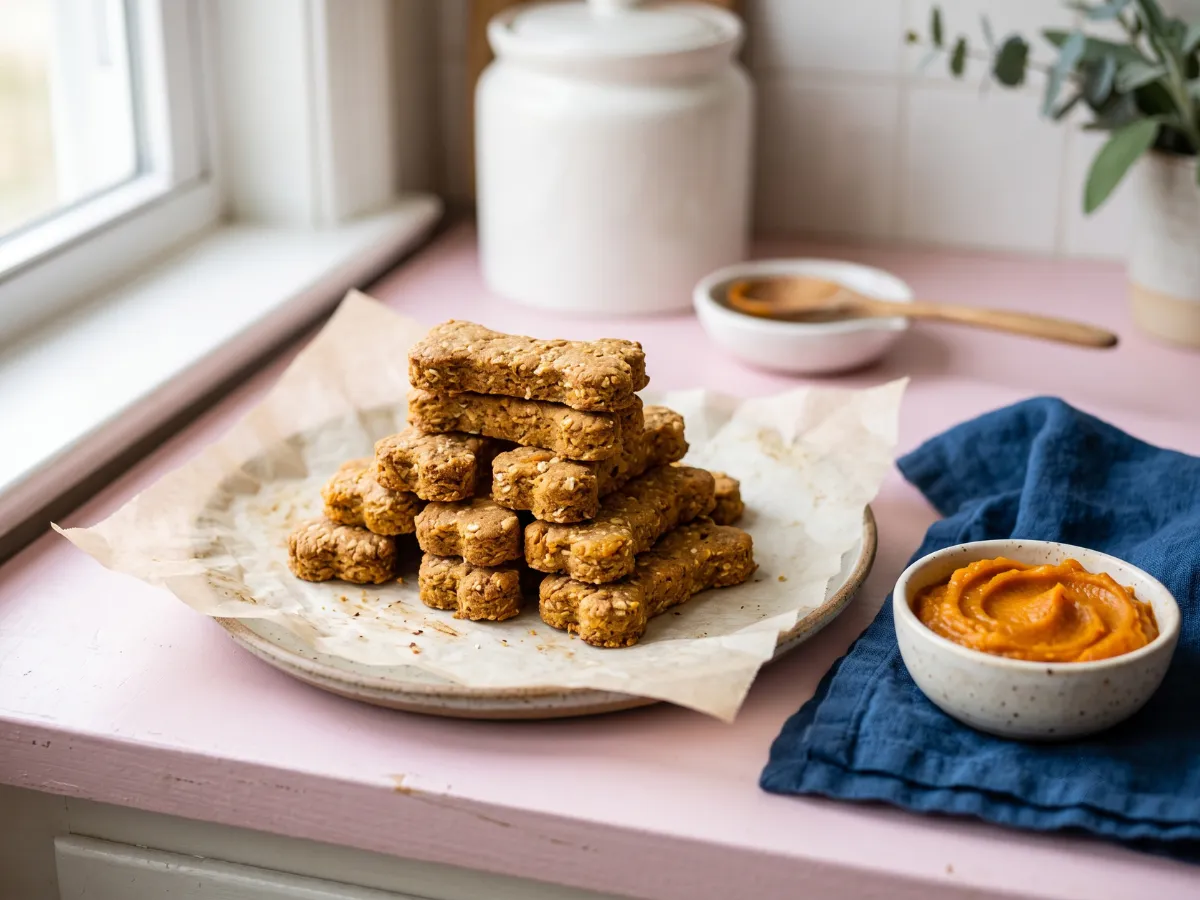
Between meals, treats should stay at no more than five percent of a dog’s daily calories, so keep the pieces small. The topper is part of dinner, and the biscuit after the walk is the extra bit. If you are baking this weekend anyway, our peanut butter and pumpkin dog treats are sized for exactly that budget.
Why it stays a topper
Every batch on this page is written as a topper for a reason, and the reason deserves its own paragraph. The majority of homemade pet-food recipes published in books and online, even those written by veterinarians, do not provide complete and balanced nutrition. A topper steps around that by design: the complete food is still in the bowl, and the homemade part is the quarter that makes dinner interesting.
If you want to go past a topper, go past it with a plan. For pet owners who prefer to feed home-prepared diets, a consult with a board-certified veterinary nutritionist is recommended. A full home-prepared diet is a different project from this one, and it starts in a nutritionist’s office rather than in a pot.
Puppies, seniors and dogs on a prescription diet get the vet conversation before the first spoon, every time. For informational purposes, consult your vet.
The twice-a-month rhythm
Two batches a month is the rhythm that fits a normal week: one cooling on the counter while you do something else, one in the freezer as the buffer. Cook on the day you are already home, not the day you are rushing, and buy the turkey on the day you cook it when you can.
The grocery list is short and it does not change: lean ground turkey, white rice, carrots, green beans. A bag of frozen green beans in the freezer door covers the week the store is out, and nothing else on the list needs a backup.
Freezer rotation is the only part that needs a system: new bags at the back, old bags at the front, a date on every one. And the rule that saves more batches than any label: if you would not eat it yourself, it does not go in the bowl.
When a batch goes wrong
Three things happen, and none of them needs a rescue.
Too wet: the rice took less water than usual or the lid went on before the steam was gone. Spoon off the loose liquid, keep it for the next bowl, and portion the rest as normal. Too dry: add a splash of warm water and stir it through while the batch is still warm.
Turkey shredded too fine: it broke down past the point of texture while browning. It still works, so mix it through the kibble rather than setting it on top, and break it up less next batch. A topper is forgiving, and that is the whole point of cooking it this way.
Cook-day checklist
- Lean ground turkey, cooked through with no pink left
- Drain the fat before the water and rice go in
- No onion, garlic, chives, seasoning or bones, ever
- Cool fully in a wide pan before portioning
- Two dated fridge tubs, the rest flat in freezer bags
- Topper a quarter of the bowl, kibble the rest
- Vet conversation first for puppies, seniors, prescription diets
Turkey and rice bowl questions
Is this a full meal or a topper?
A topper. Most of a pet's nutrition should still come from their regular diet, with treats as the extra bit. The turkey and rice is the quarter of the bowl that makes dinner interesting, and the kibble stays the main part. For informational purposes, consult your vet.
How long does a batch keep?
Homemade dog food keeps about three days in the refrigerator and a month or two in the freezer, depending on how it's sealed. Two dated tubs for the fridge week, the rest flat in freezer bags, and a bag that has been out all afternoon goes in the bin rather than back on the shelf.
Why can't I just cook for my dog full time?
The majority of homemade pet-food recipes published in books and online, even those written by veterinarians, do not provide complete and balanced nutrition. For pet owners who prefer to feed home-prepared diets, a consult with a board-certified veterinary nutritionist is recommended. Until that consult happens, the topper is the honest format.
Can I add garlic or onion for flavor?
Never. Onion, garlic and chives belong to the allium family and can damage red blood cells, so they stay out of every homemade batch. The batch is deliberately plain, and the smell of warm turkey is the flavor as far as the dog is concerned.
Can I swap the turkey for something else?
Small amounts of lean cooked chicken, turkey, beef or pork with no bones and no seasoning are fine to share. So the chicken version of the same idea is already on the site as our crockpot topper, and the pot method does not change. What never changes is the plain rule: no seasoning, no bones.
How much topper goes in the bowl?
A quarter of the bowl for most adults, mixed through rather than spooned on top. Between meals, treats should stay at no more than five percent of a dog's daily calories, so keep the pieces small. Puppies, seniors and dogs on a prescription diet get the vet conversation before the spoon.
What we use
What we use for topper days
A wide pot, lidded tubs, freezer bags and a marker cover the whole turkey topper routine, in one list.
See what we use →As an Amazon Associate we earn from qualifying purchases.
Save these on Pinterest
Pin the batch for cook day. The Dog Food collection holds the crockpot topper, the meal prep planner and the treat recipes that fit the same Sunday.
Keep the keep-out list beside the pot on cook day. The ASPCA people-foods list is the one we check before anything new goes in the pot.