 PawStyle Daily
Homemade Dog Treats & Meal Planning
Homemade Dog Food With Chicken and Rice Bowls
Chicken and rice is the bowl we all reach for, so it deserves a method instead of a guess: a breast poached plain, rice cooked in water and nothing else, and a fridge plan that decides what is dinner and what is a topper. This page builds the bowl step by step, then hands you the two lines to read before it becomes a routine. For informational purposes, consult your vet.
By PawStyle Daily · Updated 19 November 2026
Good to know: one pot of each · Poached plain, no seasoning · Batch split fridge and freezer.
What this bowl is, and what it is not
The honest place to start: this bowl shines as a rotation meal or a topper on the food your dog already eats, and the kibble stays the base of the week. The majority of homemade pet-food recipes published in books and online, even those written by veterinarians, do not provide complete and balanced nutrition. That line is not a scare, it is the reason the scoop stays small and the bag stays in the pantry.
Reading a label first is the habit that keeps the bowl honest. Our guide to how to read a dog food label walks the panel that decides what the kibble base is already providing.
The poach: plain chicken, start to shred
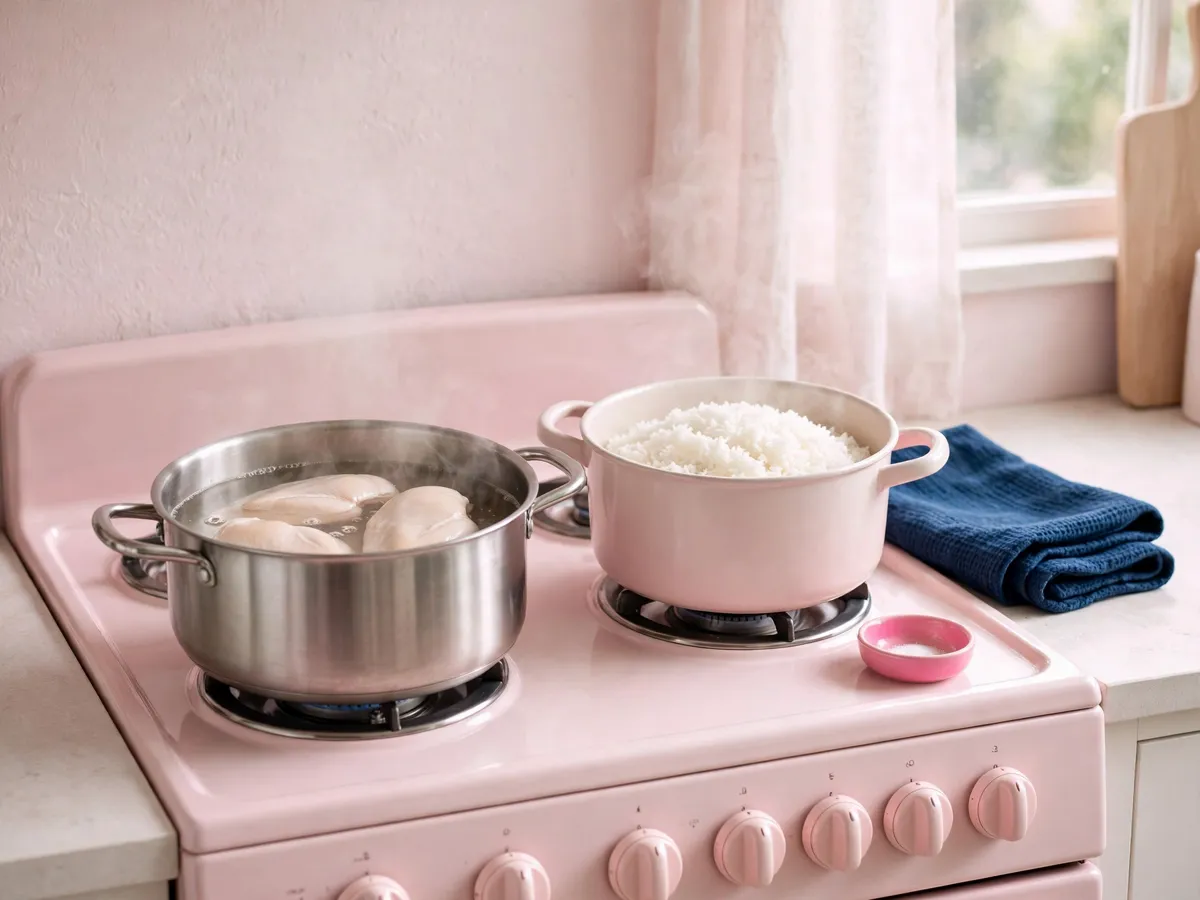
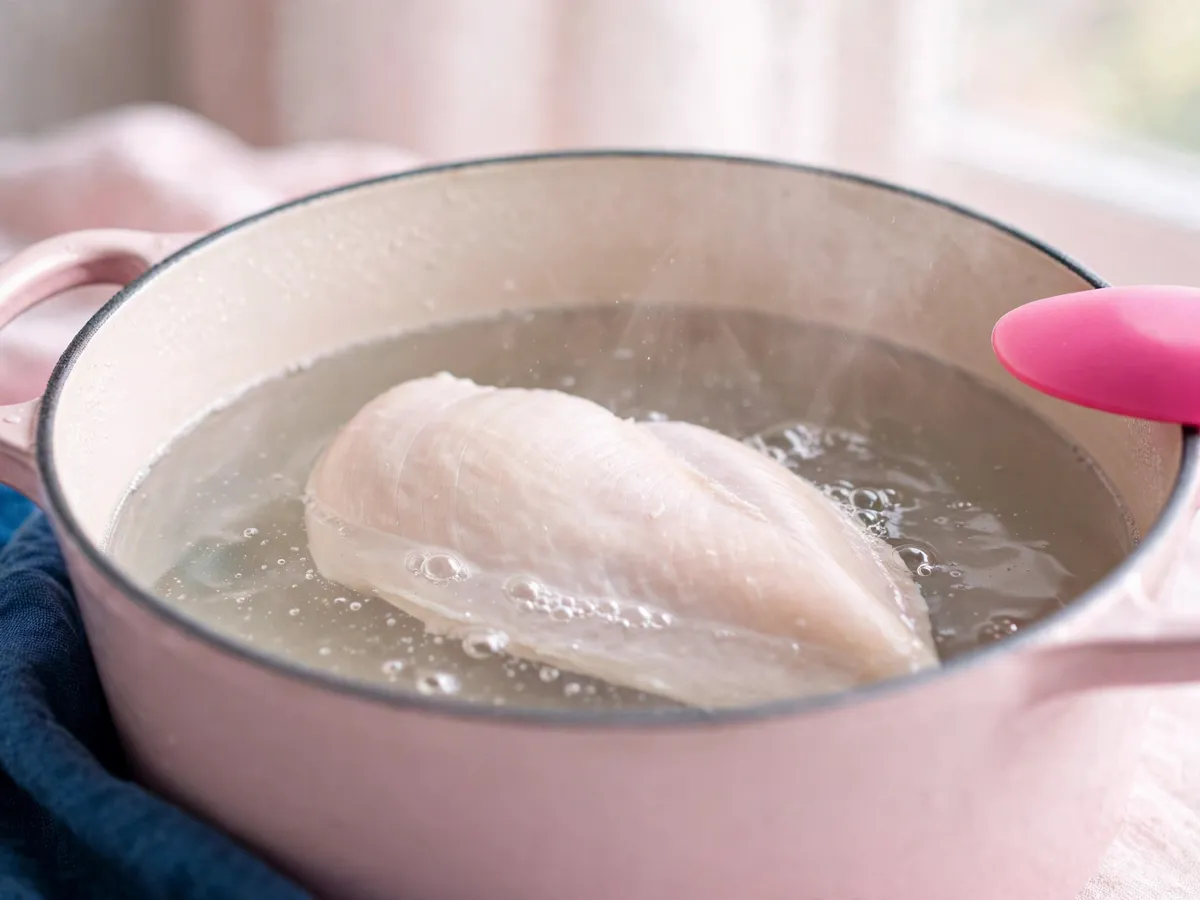
Poaching is the whole technique: submerge the breast in water, bring it up gently, and let it finish without ever seeing a pan of oil. No salt, no stock cube, no seasoning of any kind, because the seasoning aisle is exactly where a shared chicken stops being a dog-safe one. Small amounts of lean cooked chicken, turkey, beef or pork with no bones and no seasoning are fine to share. Chicken is simply the one that poaches best and shreds easiest.
Pull the breast onto a plate when it is done and let it cool until you can handle it, then shred with two forks along the grain. Save the poaching liquid in a jug: it is the free flavor the rice cooks in, and it carries no seasoning because the pot never got any.
The rice: white, plain, cooked soft
White rice earns its place by cooking soft and staying gentle. Rinse it until the water runs clear, cook it in the reserved poaching liquid or plain water, and skip every add-in: no butter, no salt, no bouillon. Rice cooked this way comes out in separate, fluffy grains, which is exactly what a mixed bowl wants.
Brown rice stays on the shelf for this bowl. It has its fans, but it takes longer to cook and some dogs find it harder to get through, so the white bag is the one that keeps the bowl simple. If your dog does well with it and your vet is happy, that is a conversation to have at the checkup, not a swap to make mid-batch.
Building the bowl
Assembly is the easy part once the two pots are done. Here is the order we build in:
- Shred the cooled chicken, following the grain so the pieces stay tidy.
- Fluff the rice with a fork and let both pots cool to room temperature before anything is mixed or lidded.
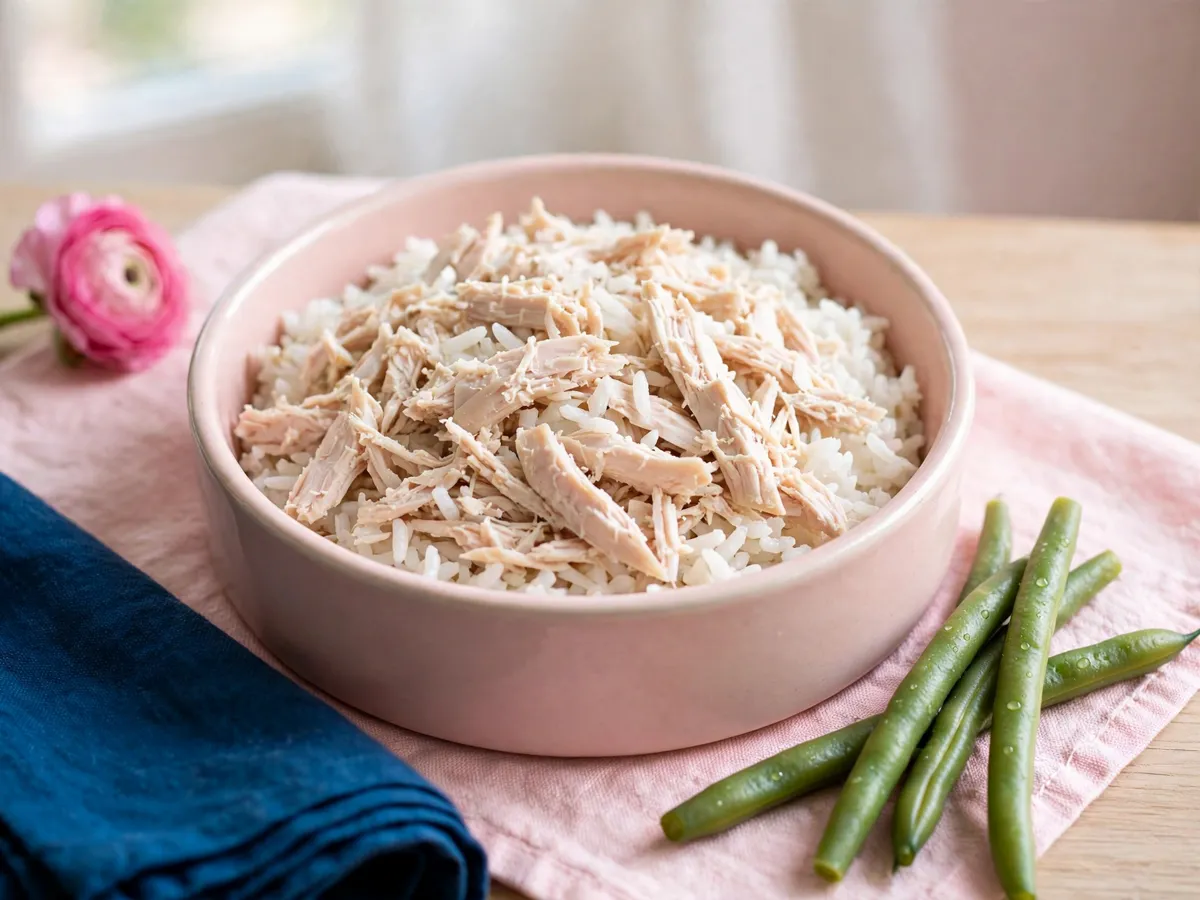
- Combine in the bowl at roughly half chicken, half rice, and adjust from there by what your dog actually finishes.
- Spoon the mix over the usual kibble base as a topper, or serve a full bowl on the days the plan calls for a rotation meal.
- Portion the rest into airtight containers while the mix is still cool, so the lids never trap warm steam.
Raw ingredients and cooked bones stay out of the plan
Two habits keep the chicken-and-rice routine safe in the kitchen. First, the meat in this bowl is cooked all the way through. Raw meat and raw eggs can carry salmonella and E. coli, and cooked bones can block a gut and need surgery. So the breast is boneless from the start, the carcass goes straight into the trash, and nothing raw from the prep board shares a spoon with the finished bowl.
Second, the scraps the pot produces get sorted honestly. Skin and fat trimmings go to the bin rather than the bowl, and any bone that shows up in a shred gets pulled before the container lids close. A batch built this way is a batch you can hand to the rest of the household without a briefing.
For the batch-cooking version of this same habit, our ground beef bowl guide runs the beef side of the rotation.
Storage: the three-day rule
The fridge math is fixed, so the batch plan writes itself. Homemade dog food keeps about three days in the refrigerator and a month or two in the freezer, depending on how it's sealed. That is the whole calendar: front-of-week tubs in the fridge, the back half frozen flat in sealed bags, and every lid labeled with what is inside and the day it went in.
Cool the pots to room temperature before anything is lidded, because warm food under a closed lid is the one mistake that shortens every batch. Anything that sat out through an afternoon goes to the bin rather than the fridge shelf, no matter how much of it there is. Our homemade dog food safety and storage page carries the full fridge-and-freezer routine if you batch every week.
The chicken and rice week
| Where it lives | What is in it | When it moves |
|---|---|---|
| Fridge, front row | Tubs for the first three days | Labeled with the day it went in |
| Freezer, flat bags | The rest of the batch, portioned | To the fridge the night before |
| Counter, cool jars | Baked treats, not this bowl | Weekly bake day only |
Cool first, lid second, label always: the three-day fridge rule only works on a batch that went in cold.
Before it becomes an every-day plan
The step that turns this from a topper habit into an every-day plan is a conversation, not a recipe swap. For pet owners who prefer to feed home-prepared diets, a consult with a board-certified veterinary nutritionist is recommended. That consult is also where questions like the brown-rice swap, the right portion for your dog, and how often a rotation meal fits the week get answers built around your dog instead of a blog.
Until that conversation happens, the bowl keeps its current job: topper spoonfuls over the kibble base, a rotation meal on the days the plan calls for one, and the bag still doing the heavy lifting. For informational purposes, consult your vet.
Questions about the chicken and rice bowl
Is chicken and rice a complete diet for my dog?
No. This bowl is a rotation or a topper, not a complete diet. The nutritionist consult in the section below belongs in front of any every-day plan.
Can I use brown rice instead of white?
White rice is easier on an upset stomach. Brown rice has more fiber but takes longer to cook and is harder for some dogs to digest.
How do I store the batch?
Cool it to room temperature, portion into airtight containers, and refrigerate for up to three days or freeze for a month or two.
What we use
Thermometers and storage tubs
A meat thermometer, airtight containers and flat freezer bags: the batch-day kit that makes the fridge plan easy.
See what we use →As an Amazon Associate we earn from qualifying purchases.
Save these on Pinterest
Pin the bowl for your next batch day. The Dog Food collection holds the storage guide, the ground beef rotation and the rest of the homemade shelf. For informational purposes, consult your vet.
When the stool itself is the problem rather than the routine, the the short bland reset for a runny-stool week page keeps the bowl plain and the vet line short.