 PawStyle Daily
Homemade Dog Treats & Meal Planning
Bland Diet for Puppies with Diarrhea: The Reset, Step by Step
A puppy with loose stool does not need a new diet. It needs a short break from the old one, and the break has a shape: two ingredients, cooked plain, measured in parts instead of grams, and ended the moment the stool firms up. This page owns that shape, starting with the signs that mean the puppy belongs with a veterinarian before anyone opens the fridge, then the bowl, the pots, the way back to the regular dish, and the cleanup. For informational purposes, consult your vet.
By PawStyle Daily · Updated 22 November 2026
Vet signs first, kitchen second | two ingredients only | parts, never grams | end it on firm stool | For informational purposes, consult your vet.
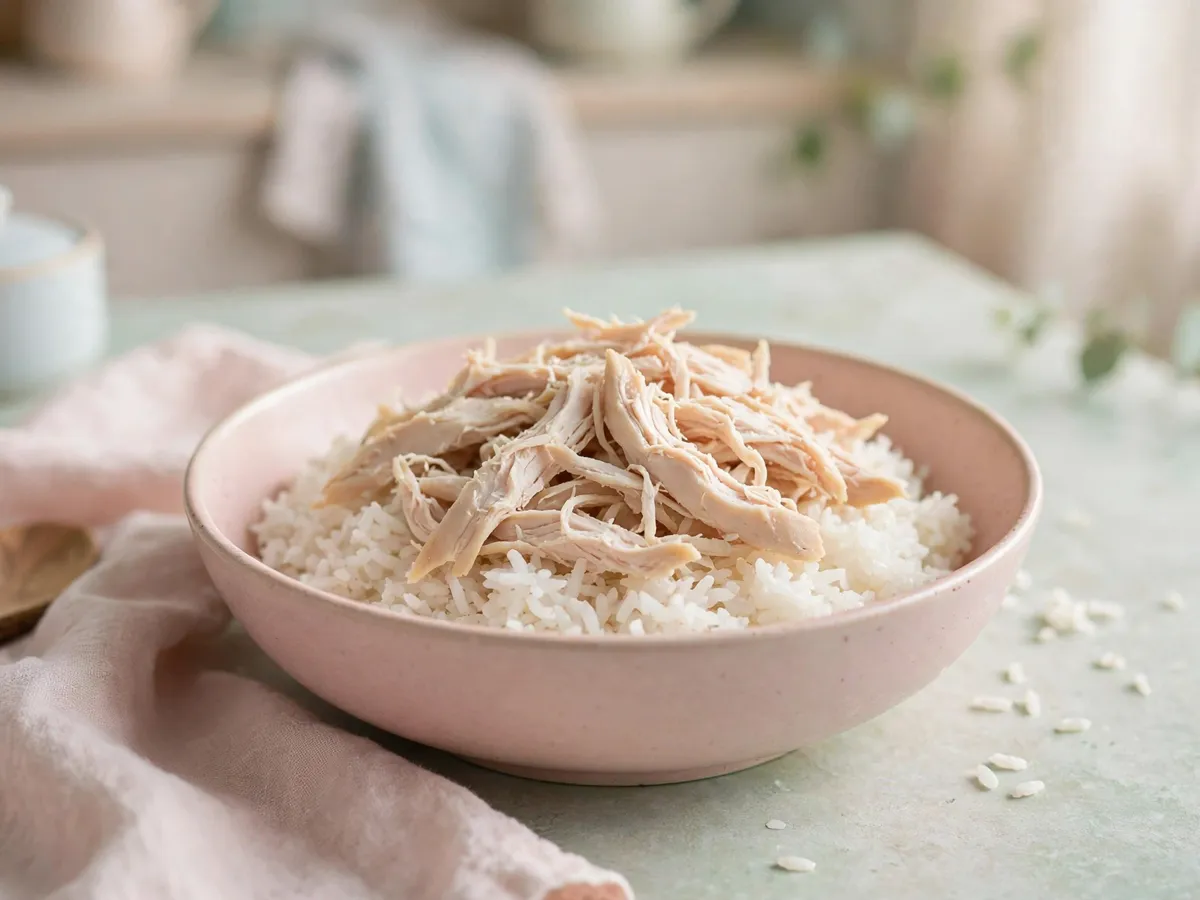
What a Bland Reset Actually Means
A reset is a pause, not a feeding style: one pot of plain chicken, one pot of white rice, and nothing else, because boring is the point. The every-day bowl rotates, tops and adds a vegetable, and all of that belongs elsewhere; a reset strips the dish back to two things the puppy has met before. For the additions that stay out of this break, see which vegetables go into a plain bowl.
Two lines separate the reset from the every-day cooking. The first is duration: a routine runs all year, and a reset is a short stretch that ends on a signal you can see in the stool rather than on a calendar. The second is variety: a routine rotates proteins, and the reset holds one protein and no vegetable at all.
Signs That Mean the Vet, Not the Kitchen
Read this section before the first pot goes on the stove. A reset is a decision about a bowl, and it is the right decision for a puppy that is otherwise itself: bright, drinking, playing, and standing in the yard wondering why you are cooking. Take the puppy to a veterinarian instead of to the rice bin when any of these shows up: blood or a slimy coating in the stool; black, tar-colored stool; vomiting alongside the loose stool; a belly that is tight or painful under a hand; a puppy that will not drink; pale gums; weight loss; a very young puppy still on its vaccinations, or one from a litter or shelter intake you cannot account for. Toy breeds sit lower on the tolerance scale than big dogs do, so a toy puppy with loose stool and a skipped meal is a vet visit, not a reset.
Puppies run small fluid reserves and lose them fast, and a household cannot tell an upset bowl from something that needs medicine by looking at the floor. Bring a photo of the stool and the bag if the puppy eats kibble. And the most common mistake here: a reset that has run and the stool is still loose is also a vet visit, not persistence. For informational purposes, consult your vet.
The Bowl: Two Ingredients and Nothing Else
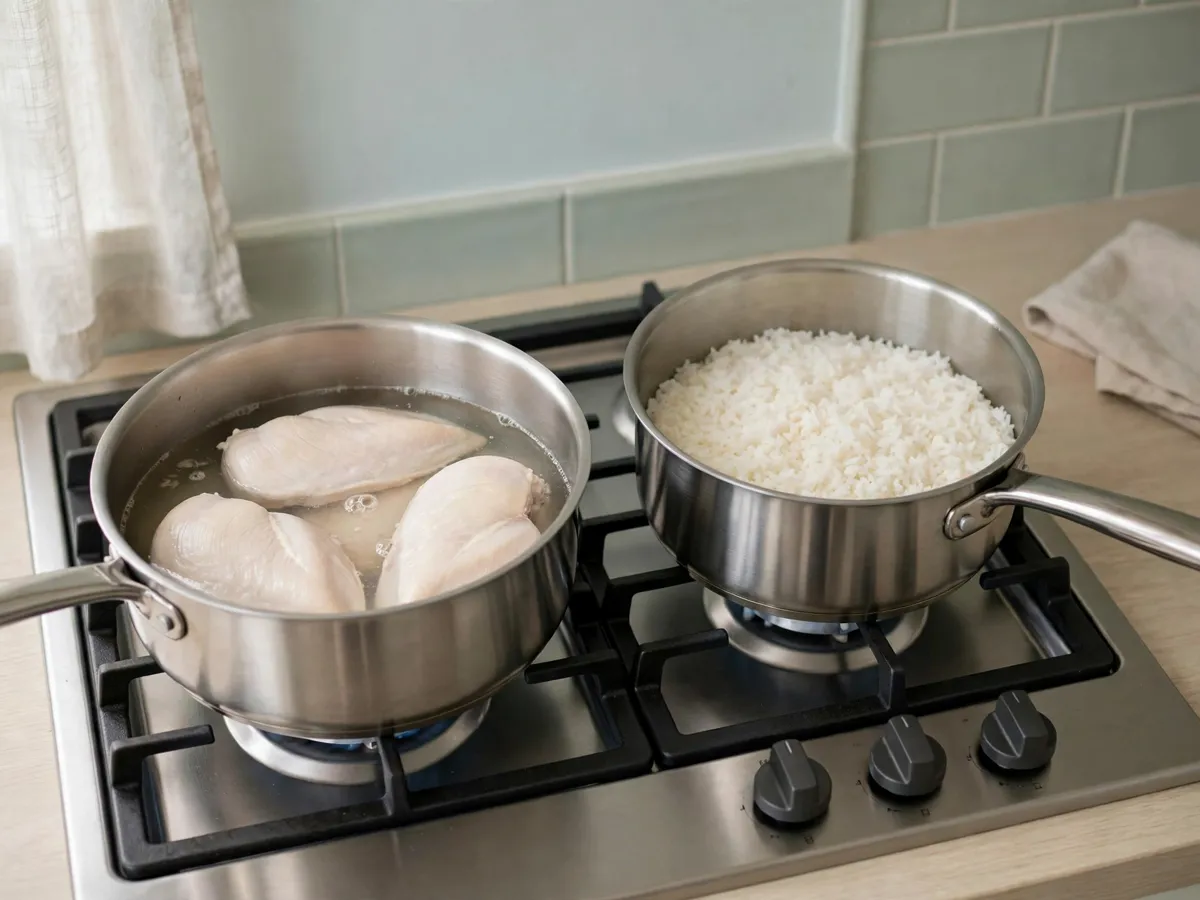
The ingredient list is short on purpose: boneless, skinless chicken breast, plain white rice, and water. The chicken is the part people get wrong, because the temptation is to buy the flavorful end of the counter, and thighs, wings and trim all carry more fat than a breast does; fat is the one thing a loose stool does not want to meet. So the plainest cut on the case is the one that goes in the pot. Nothing goes into either pot: no salt, no oil, no butter, no stock cube, no garlic powder, no supplement of any kind, because a seasoning cube is usually onion or garlic in disguise. The rice cooks in water, or in the liquid the chicken poached in, and that liquid is the only flavor the reset accepts.
White rice, not brown: brown keeps its bran, takes longer to cook and asks more of a puppy that is already off, while white rice rinses clean, cooks soft, and breaks into separate grains that mix evenly with shredded chicken. Pumpkin is the only optional item, and only as a spoonful stirred into the finished mix; which can to buy, and whether the usual kibble can share the bowl, are the two questions below.
Parts, Not Grams: How to Cook Each Pot
A gram figure has to be derived from the puppy's weight, the age and the rest of the day, and none of that is something to improvise while a stool is loose. So this page uses parts, a ratio rather than an amount: a part is whatever cup, mug or container you happen to hold, and the same container measures both sides.
The starting ratio is one part rice to two parts chicken by volume, cooked and shredded before you measure. Chicken leads because the rice is the filler here, not the meal, and some households end up at equal parts, which is also a working bowl. What matters is that the bowl is not mostly rice, which is what happens when a worried cook stretches one breast across a whole pot.
Cook the two pots separately. The chicken goes into cold water, comes up to a bare simmer, and finishes off the heat with the lid on; a breast that boils hard turns rubbery and shreds into threads nobody eats. Pull it out when it is firm all the way through and no pink remains in the thickest piece. The rice goes in its own pot, simmers covered, then rests off the heat before you fluff it with a fork. Two pots, not one, because a single pot steams the chicken in the rice water and you lose both the texture and the count of what went in. Strain the chicken pot and keep the liquid in a jug for the rice next time.
Shred the chicken with two forks along the grain once it is cool enough to hold, then fold it through the rice in a wide bowl rather than stacking it: a stacked bowl gets the rice picked out and the chicken left. Serve at room temperature, take the bowl up after a short sit, and split the day into several small servings rather than the usual two big meals. Leftovers go into a clean, lidded container in the fridge, labeled with what is inside. How long anything homemade keeps, how to freeze a batch, and how to handle the raw side of the same chicken are on the storage and cleanup page for homemade food.
Coming Off the Reset: Back to the Regular Bowl
The end of a reset is a signal, not a date. When the stool is firm enough to pick up cleanly, the plain bowl has done its job, and the job now is the way back out. Going straight from the reset to a full bowl of kibble is how households produce a second round, and the second round is always harder to read than the first.
Move in quarters across a few small steps: three parts plain bowl to one part the usual food, then half and half, then one part plain to three parts usual, and then the usual food stands alone. Hold each step until the stool stays firm through a full day of it, and if it softens, drop back one step rather than starting over.
Change one thing per step. If the puppy is due to move to an adult formula at the same time, that transition and the reset exit do not happen in the same week; switching a puppy back to its regular food runs it properly, one variable at a time. The same rule applies to everything else: no new topper, no vegetable, no baked treat, no scraps, no brand change while the stool is still settling. Read the bag you are going back to first; how to read the label on the bag covers it line by line.
Treats are the variable people forget. During a reset the treats stop, including the training kind, because a training day can hand a puppy more of the odd stuff than the meals do. Rewards go back in one at a time once the usual food stands alone and the stool holds for a full day of it.
The Reset Sheet, and Cleaning What It Touched
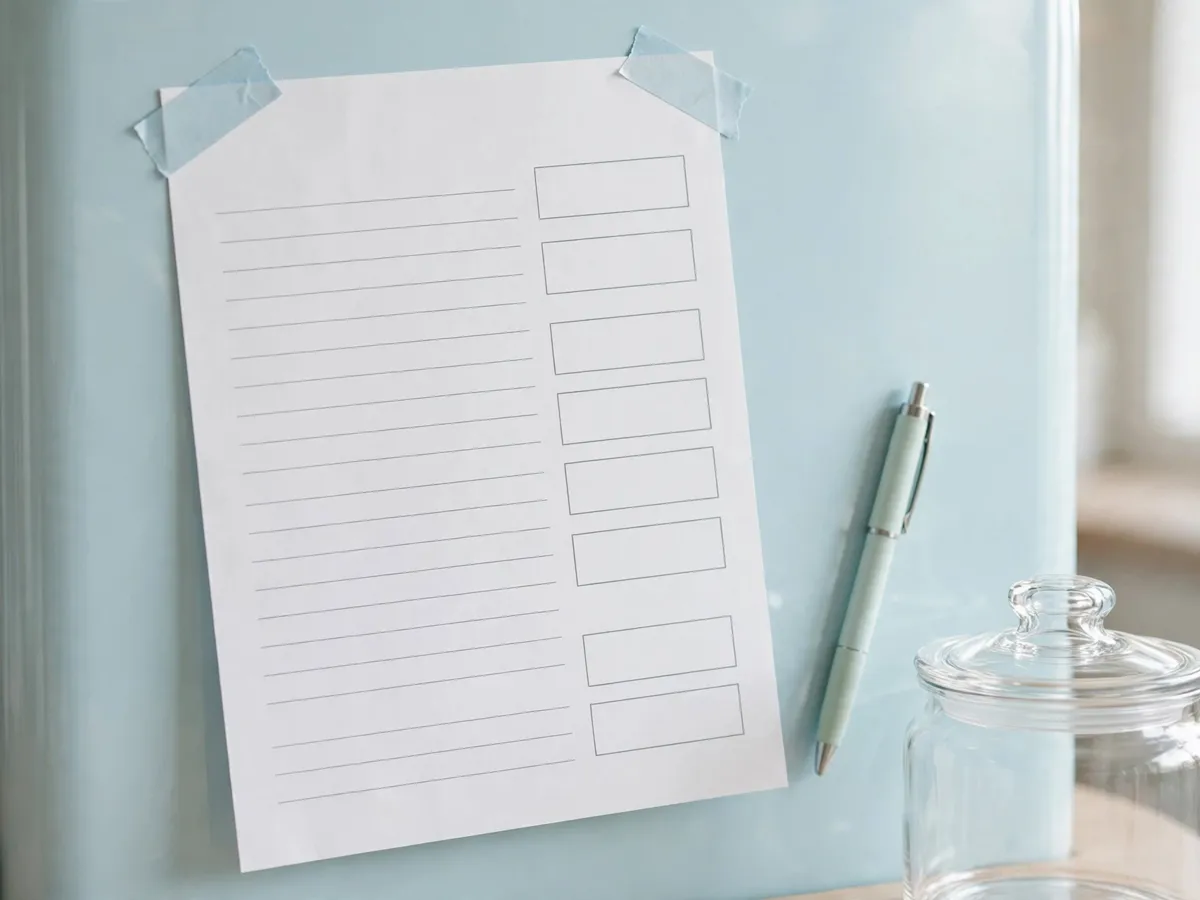
The reset sheet is one page on the refrigerator door with four columns: the dish, the time, the stool, and the note. The dish column holds what was actually in the bowl, including the spoon of pumpkin or the scrap the kid dropped, because the useful record is the true one. The stool column is one word: firm, soft, loose. Four lines a day is the whole task, and it is the artifact a veterinarian can read at a glance.
The cleanup half is not decoration. Loose stool carries whatever is in it, and a puppy that steps in it and then grooms a paw is eating the problem again. Wipe the floor with a plain cleaner, wash the bowl in hot water after every serving, and put the bed, the blanket and any rug it lay on through a wash. Wash your hands after the raw chicken, after every cleanup, and before anyone else's food is touched; the chicken that is fine for a puppy is not an item for a shared cutting board.
When the sheet shows firm stool through the coming-off steps and the usual bowl stands on its own, the reset is finished. Fold the sheet and keep it, and write the last line: what the puppy ate immediately before the loose stretch started. That line, read honestly off the fridge and the trash, is the one worth a minute of attention.
Bland reset questions
How long should the bland reset last?
Until the stool firms up, and not one bowl longer than that. Loose stool that is still loose after a short reset is a vet conversation, not a second reset. Once it is firm, the coming off section walks the regular food back in over several small steps instead of one full bowl.
Does pumpkin belong in the bowl?
Sometimes, and only as a small addition. Small amounts of plain canned pureed pumpkin (never pumpkin pie filling) can help bind loose stool, because pumpkin is high in soluble fiber. Pie filling is a different can: it carries sugar, spices and thickeners, so the plain puree is the only one that goes near the reset.
Can I add the usual kibble to the reset bowl?
No. The reset is the two ingredients and the broth they cooked in, with nothing sprinkled over it. The kibble goes back in during the coming off steps, once the stool is firm, and it returns as the base while the plain bowl shrinks. Mixing the two from the start makes the reset nothing.
Save the reset steps on Pinterest
Pin this for the next time the kitchen floor tells you something, and keep the sheet on the door so the whole household can read it. The Dog Food collection holds the every-day bowls, the storage rules and the label reading that come back after a reset ends. For informational purposes, consult your vet.