 PawStyle Daily
Homemade Dog Treats & Meal Planning
Homemade Dog Treat Substitutions for Flour, Eggs and Oats
The batch dies at the counter, not in the oven. The dough is mixed, the kitchen is wrecked, and the one jar the recipe needed is empty. Most households guess at that moment, get a tray of crumbs, and blame the recipe. The guess is what fails: every ingredient in a dog treat dough is doing a job, and a swap only works when the replacement takes over that job. This page covers the dry slot and the wet slot other than the binder. Wheat flour against oat, rice and chickpea flour. The egg. The milk. The oil or shortening. The leavening. What each one trades for, and what the crumb looks like afterwards. For informational purposes, consult your vet.
By PawStyle Daily · Updated 20 November 2026
Good to know: swap by job, never by name | one ingredient per batch | pull the tray by color | note the swap on the card.
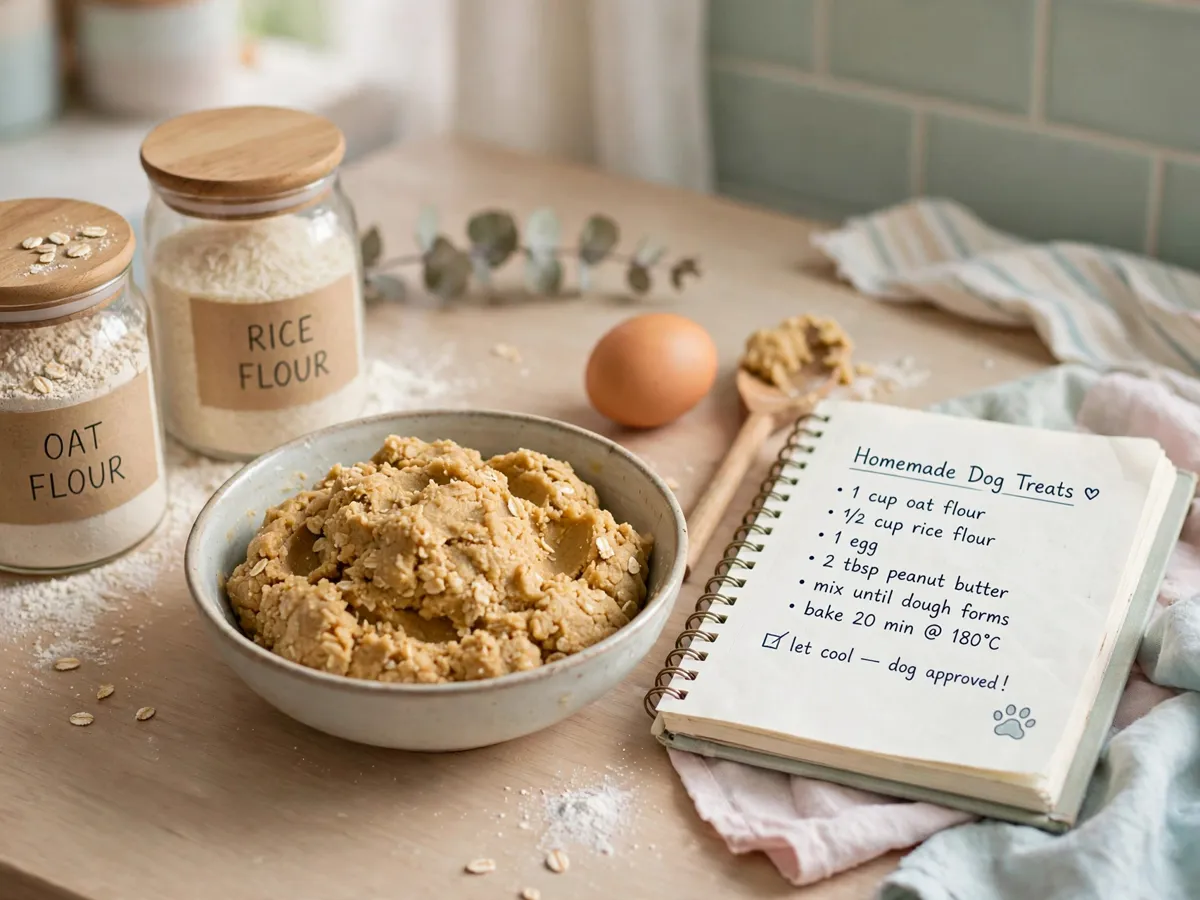
The empty jar, and the wrong way out of it
A dog treat dough is a short list, and every line earns its place. Flour builds the body. Egg holds and lifts. Milk carries the liquid. Fat keeps the crumb tender. Leavening opens it up. And the binder holds the batch together after the oven. Remove one line and the dough does not simply get smaller. It behaves differently, and the difference shows up at the pin, at the tray, and in the bite.
The instinct is to trade by name: no wheat flour, so reach for whatever bag is nearest and pour the same amount in. That is the move that produces a dough which will not roll, or a batch that spreads into one connected pancake. Names are not interchangeable and neither are amounts. Ask what the missing ingredient was doing, then pick the replacement that does that job out of what is in the cupboard.
One boundary: this page does not touch the binder. If the jar is the problem, the holding job and the smell job are answered on the no peanut butter dog treat recipes page, and nothing here repeats it. Settle the binder first, then come back for the rest of the shelf. Every swap below assumes a dough that already holds.
Read the job before you read the label
Six jobs run through almost every homemade treat dough, and a missing ingredient is only ever missing from one of them. Name the job and the replacement narrows to two or three candidates you probably own.
- Body. The flour carries the structure of the piece. Its swap changes how the dough rolls and how the crumb breaks.
- Hold and lift. The egg binds the batch and puffs it slightly. Its swap changes density more than flavor.
- Liquid. Milk pours in and carries a little sugar with the water. Its swap changes color at the base.
- Tenderness. Oil or shortening coats the flour and shortens the crumb. Its swap changes how long the piece stays soft.
- Lift without structure. Leavening opens the dough. Its swap needs an acid to work at all.
- The hold and the smell. That is the binder, and it lives on the page linked above.
Two of those lines are the ones people confuse. Egg and binder both hold, but the binder holds the finished piece after the oven while the egg binds the raw dough and adds a little air. Milk and oil both pour, but milk wets the flour and oil keeps it tender. Getting those four apart is most of what this page is for.
The dry slot: wheat flour and its three neighbors
Wheat flour is the only common treat flour whose protein builds a network when it is worked. That network is why a wheat dough rolls thin without cracking and why a cut bone keeps its shape. Oat, rice and chickpea flours build nothing, so each trades that structure for something else, and the trade is worth knowing before the bag opens.
Oat flour is the friendly first swap. It behaves like wheat with the backbone removed: the dough is softer, it sticks to the pin, and it spreads a little on the tray. Two moves fix it. Work it cold, straight from the fridge, so the fat stays firm and the dough stops flowing. And roll it between sheets of parchment rather than on a dusted board, since there is no extra flour to spare without drying the batch.
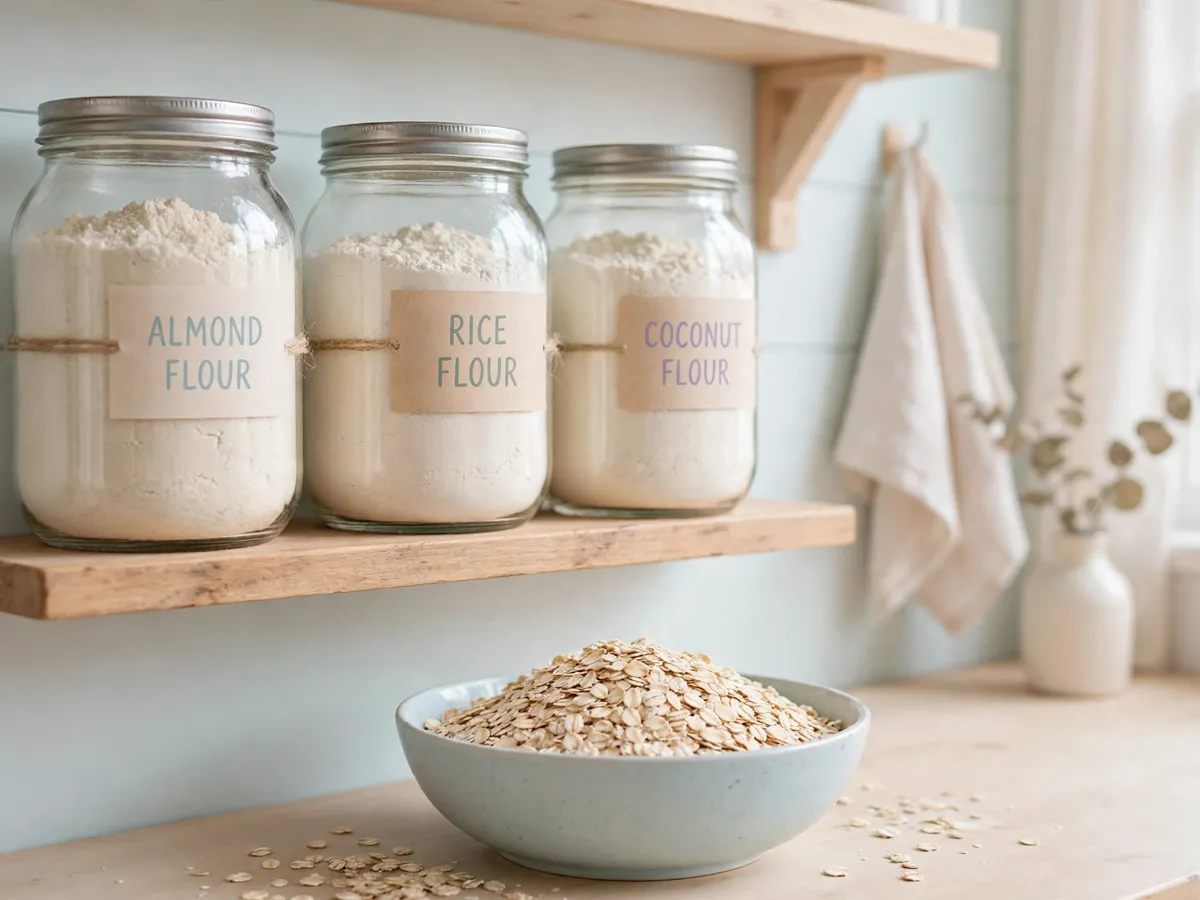
Rice flour is the pale one, and it is brittle on its own. It gives a clean snap and a light color, and it refuses to bend, so a straight rice dough cracks at every cut edge. Blend it rather than pouring it alone: half rice, half oat, and the oat carries the bend while the rice keeps the batch light and crisp. It is also the swap for a cupboard without oats.
Chickpea flour is the strongest of the three and the most forgiving of a wet hand. It binds better than rice or oat, so a chickpea blend holds a rolled shape further from wheat than the others do. It also tastes like something: savory, beany, and obvious in a small piece. Dogs tend to love it. Blend it in rather than running it alone, a spoonful at a time.
Amounts: swap flour for flour by the spoon, then adjust by feel rather than by the packet. Oat drinks less than wheat, so hold some liquid back on the first pour. Rice and chickpea drink more, so keep a splash within reach. The dough is ready when it holds together under a fingertip and leaves the bowl clean.
The wet slot: egg, milk, and the fat
No egg. Ground flax stirred into water and left until it thickens into a gel takes the binding half of the job, and it is the swap worth keeping in the cupboard for exactly this moment. What it does not do is the lifting, so an eggless batch comes out denser and flatter. Cut the pieces smaller rather than trying to force the rise back. A batch with no egg, no flax and nothing added runs drier and crumblier, which is fine for a spooned drop and hopeless for a rolled bone.
No milk. Water is the honest swap and it changes two things. The batch loses the small amount of sugar milk carries, so the base browns later and paler, and the crumb comes out a touch less tender since milk fat is not in the pour. Neither is a problem in a treat gone within a week. Any plant milk already in the fridge works at the same measure, with one rule: unsweetened and nothing flavored, because the extra is the part a dog treat does not need.
No oil or shortening. Melted butter is the swap with the best flavor and the shortest shelf, since it solidifies as it cools and gives a crumb that firms up in the jar. Shortening in place of oil does the opposite: it stays soft, so the piece keeps a tender edge longer. Skipping the fat entirely is legitimate when the dough already carries enough of it, and the result is a harder, crisper piece that snaps clean and keeps longer. Take a little of the liquid out in that version, because the fat was doing some of the moistening work too.
No leavening, or the wrong one. Powder needs nothing but liquid and heat. Soda needs an acid in the dough or it never fires, and it leaves a soapy, flat taste behind when there is none. So soda for powder only when the dough carries something sour, and then use less of it. Powder for soda is the safer direction: add a spoon more than the card called for, not less. A batch with neither comes out as a dense biscuit, which many dogs are perfectly glad to receive.
How the swap changes the bake, and the crumb
Every swap on this page moves the tray, and none moves it the same way. Oat flour dries faster than wheat, so the edges set while the middle is still pale. Rice keeps the color light and gives a snap rather than a crunch. Chickpea browns early at the base. An eggless dough spreads more and rises less. No fat means a harder piece that dries sooner. Soda instead of powder leaves the crumb tighter.
The practical consequence is one sentence long: watch the tray, not the clock. Pull a batch when the edges feel firm under a fingertip and the bases have taken color, and accept that the centers will read soft. They firm on the rack, and a treat pulled at that point finishes drying while it cools. A batch left in for the time on the packet comes out twice dry, and dryness in a dog treat is one-way.
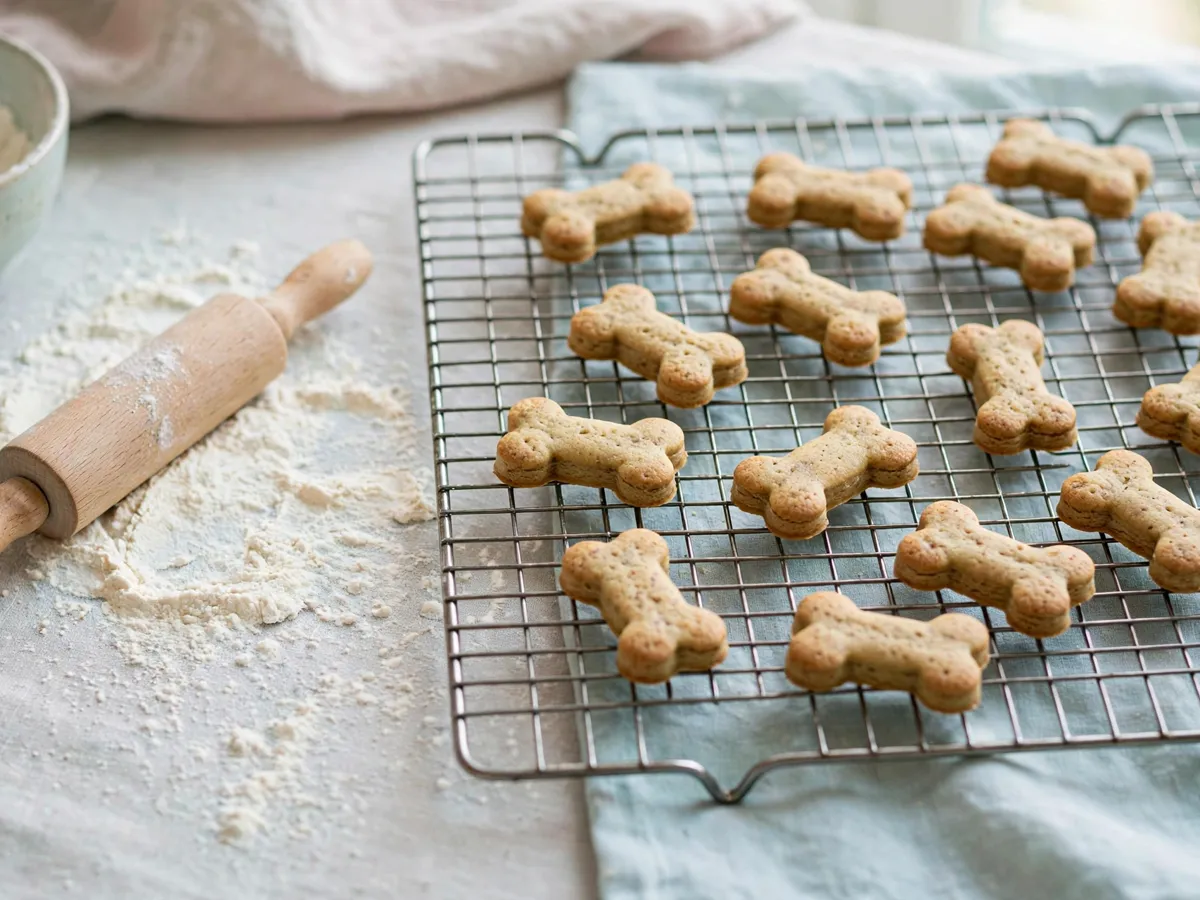
Cooling follows the logic of every other batch, with one addition for a swapped dough. Nothing goes into a jar warm, because trapped steam softens a crumb the oven just firmed, and an oat or rice batch is drier to begin with so it has less to give back. Let the rack finish the job, then an airtight jar and a flat bag in the freezer for what the jar will not hold.
The last step is the one nobody does. Write the swap on the card. Which flour, how much, what the dough felt like, where the tray came out. The next batch is a different kitchen and a different bag, and the note is what turns a lucky save into a repeatable one. For a dough designed around the swap rather than rescued by it, the blueberry oat dog treats page runs the oat route from the start.
Questions about swapping a treat ingredient
What if a recipe calls for peanut butter and I have none?
Peanut butter does two jobs at once: it holds the dough together and it carries the smell a dog is looking for. The holding job is answered on the no peanut butter page and this article does not repeat that list. Everything below assumes the binder is settled.
Does swapping the flour change the bake?
It changes the crumb. Oat, rice and chickpea flours dry out sooner than wheat does, so the same oven runs a tray to a harder edge and a browner base. Pull the tray by color rather than by the time printed on the packet.
How much of a recipe can I swap at one time?
One ingredient per batch. Change two and you cannot tell which one made the dough crumble on the pin, and the notes on the recipe card are the only record you will have next month.
Save these on Pinterest
Pin the six jobs before the next batch, so the empty jar becomes a decision instead of a panic. The Dog Food collection holds the recipe shelf, the binder page and the storage notes, and the swap card at the top of this article is the part worth keeping on the fridge door. For informational purposes, consult your vet.
The swap page reads the job each ingredient does; pumpkin swaps in the same dough is where that job gets a batch of its own.