 PawStyle Daily
Cat-Friendly Apartment Decor
Choosing Cat Litter: Clumping, Unscented, Fine
The pet aisle has a wall of litters and a wall of claims, and the boring answer is still the best one. A fine, sand-like, unscented clumping litter in a big open box, scooped daily and washed in soap and hot water, out-performs every scented layer and deodorizing gadget on that wall. This page walks the choice in order — material first, box second, routine third — so the corner of the flat that holds the box stays a corner you can walk past without noticing.
By PawStyle Daily · Updated 17 November 2026
Good to know: fine unscented clumping to start · open box where possible · soap and hot water · for informational purposes, consult your vet.
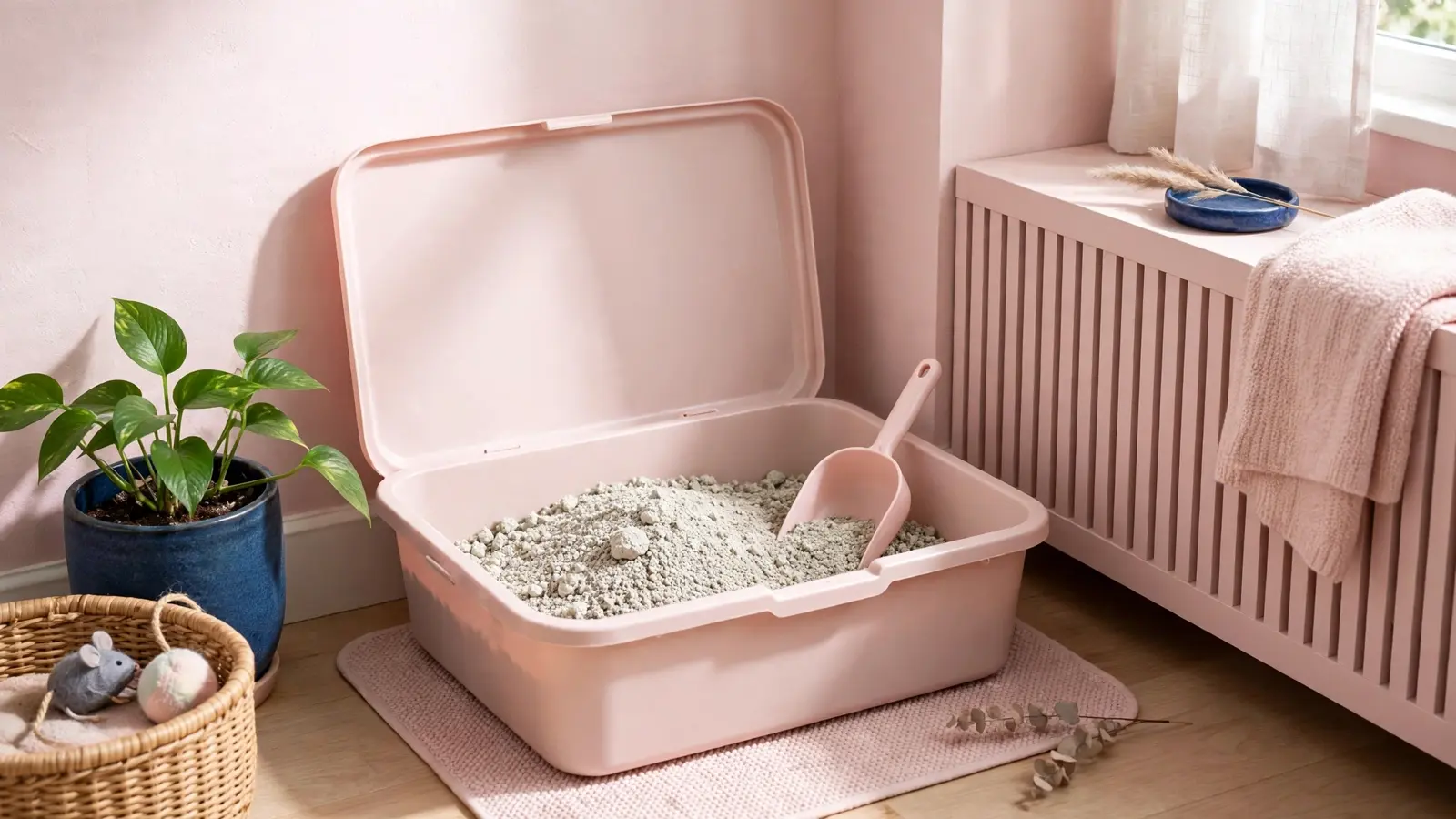
The starting point: fine, unscented, clumping
The litter should be a fine, sand-like, non-scented, clumping material, and liners, slotted grills and deodorizing powders are best avoided.
Each word in that sentence earns its place. Fine texture sits closest to the sand cats dig in by instinct, which is why a cat that rejects pellets and crystals will usually walk straight into a fine grain. Clumping turns waste into a solid you lift in one pass instead of raking the whole pan. No scent leaves the cat's nose out of the decision, and it keeps one smell from standing in for a clean box.
Track-out is the one complaint a fine grain earns honestly. A high-sided open box catches most of it, and a mat with deep grooves under the exit line catches the rest. If the trail still reaches the sofa, swap the mat for a larger one before you swap the litter.
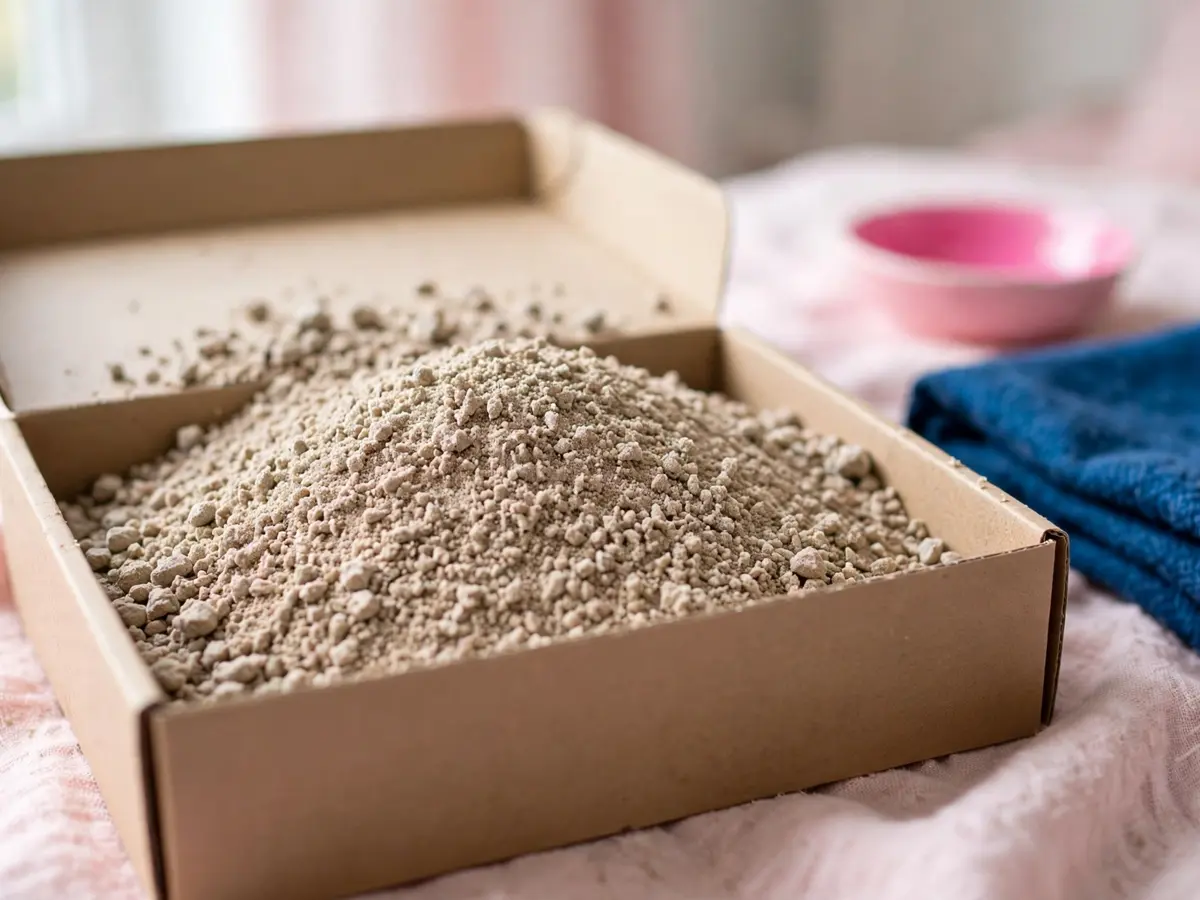
Why scented litter and deodorizers backfire
Cats often find aromatic litter and litter deodorizers offensive, and no product removes the need to clean the box.
That leaves the marketing with very little room. A perfume layer does not shorten the interval between scoops, and a cat that dislikes the smell of its own box starts looking for a quieter corner of the flat — usually the rug. The products sell comfort to the human nose, and the bill lands on the cat.
The trade is a bad one, because the alternative is free. A daily scoop and a monthly wash clear odor from the room without any fragrance at all, and the money saved on scent boosters buys the second box the household probably needed anyway.
Apartment note · Fragrance is not a cleaning step · The scoop is.
Box size, and open versus covered
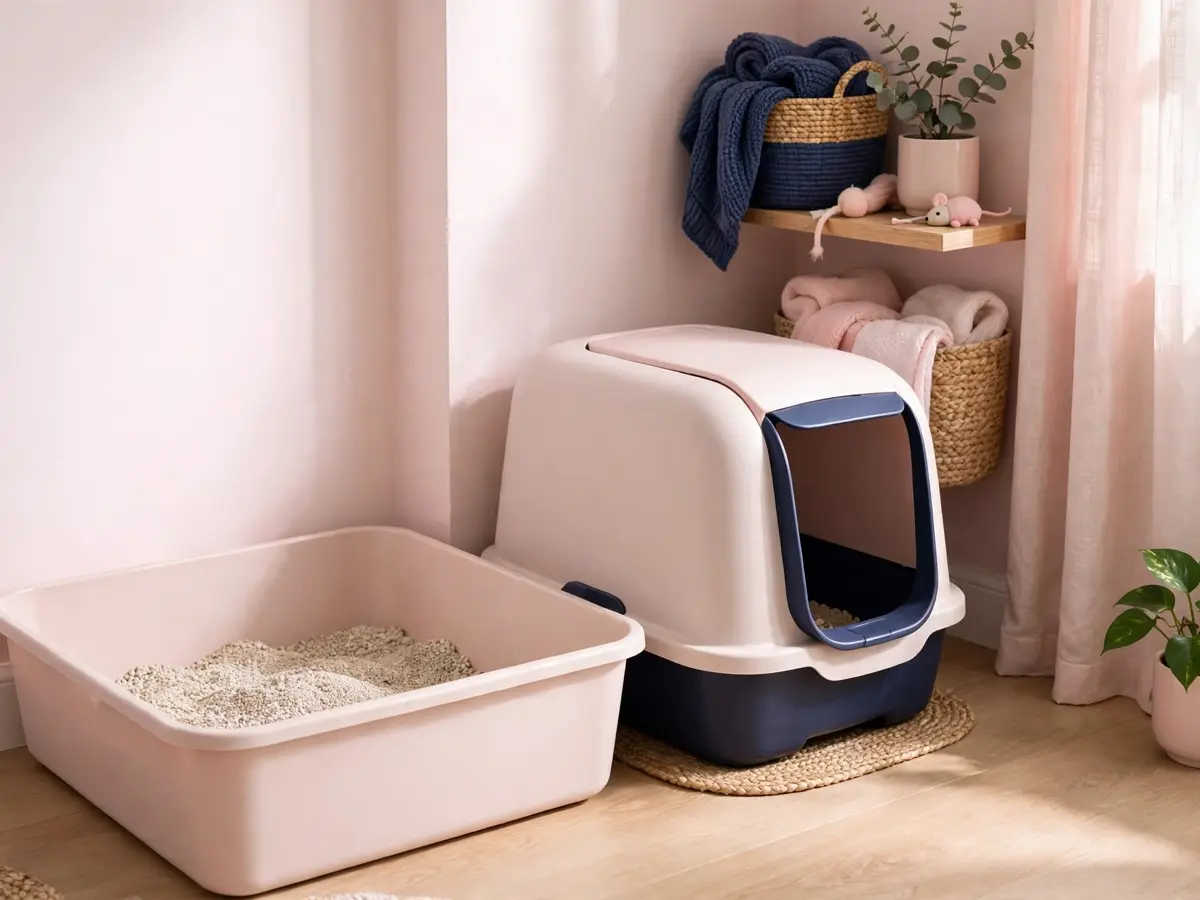
A rectangular box one and a half times the length of the cat from nose to base of tail is the recommendation, and bigger is better.
Measure the cat, not the shelf. The box that disappears neatly into a bench often turns out to be the size of the cat itself, which leaves no room to turn, dig and cover — the whole reason a cat uses a box in the first place. Depth matters too: a high side keeps fine grain inside where a shallow rim scatters it.
An open box is recommended where possible, because it is easier to monitor and scoop and it does not trap odors.
A covered box has a specific small-flat appeal — it hides the view and the dust — and a cat that already uses one well can keep it. Watch the door flap, keep the entry clear, and expect the covered pan to hold smell until wash day, because that is what a lid does. For the rest of us, the open pan wins on every practical count.
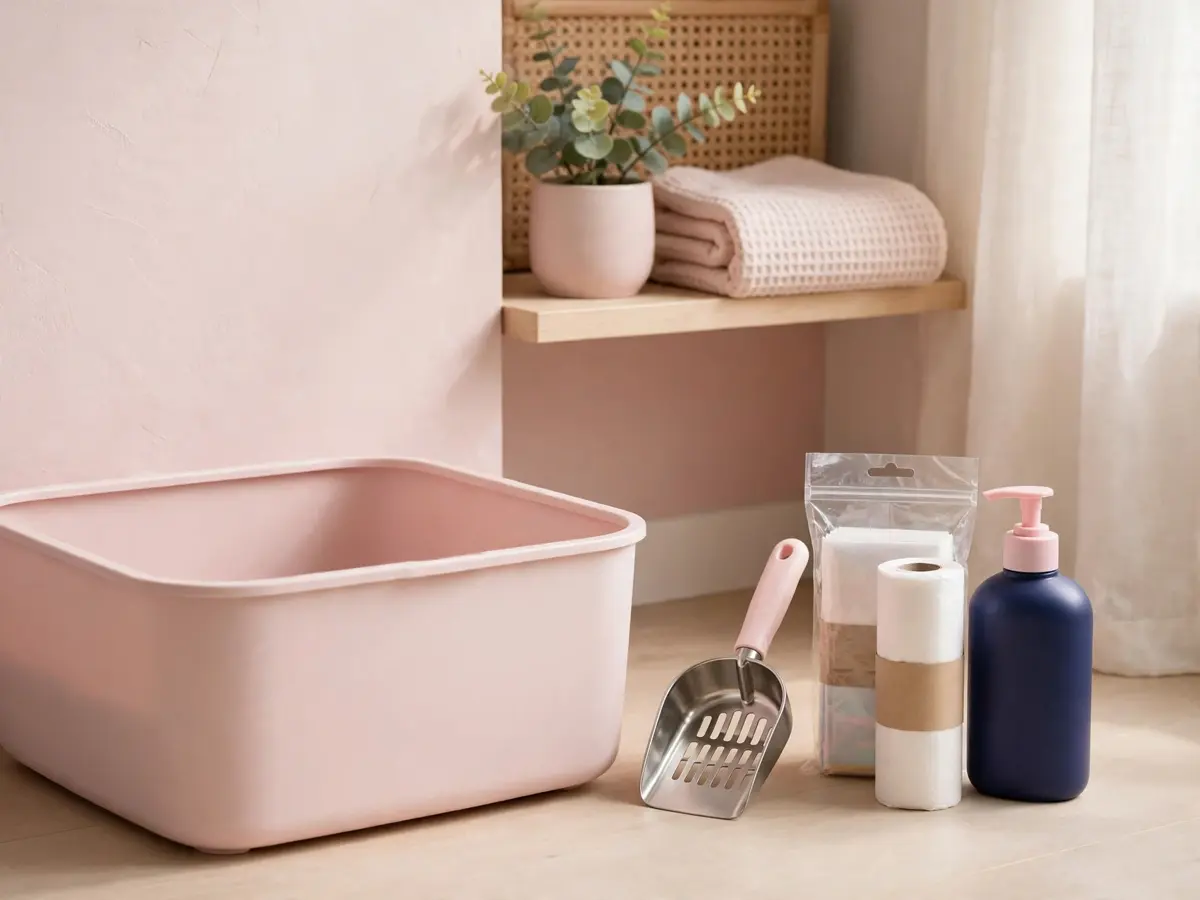
Soap and hot water, nothing else
Wash the box with soap and hot water only, and avoid strong chemicals or any ammonia-based product.
The strongest cleaner in the cupboard is the wrong one here. Residue from a harsh product clings to the plastic and meets the cat's nose at the exact spot you want it to want, and an ammonia-based product hands the box a smell the cat already associates with somewhere it should not go. Plain soap, hot water and a scrub brush do the whole job.
- Empty the litter into a waste bag and take it out.
- Wash the pan with soap and hot water in the bath or shower.
- Scrub the corners and the base, where the clumps bond hardest.
- Let it dry fully before refilling, so the fresh grain stays loose.
- Hang the scoop and restock the bags beside it.
Timing the wash is a habit rather than a rule: set it for the same Sunday as the bedsheet change and it happens. The interval between washes stretches and shrinks with the number of cats and the humidity of the flat — the reliable part is what you wash with, not the date on the calendar.
When the litter is not the problem
A change in box use is the cat telling the household something, and the first place to look is the setup: a new bag with a different grain, a box moved out of the quiet spot, a lid added last week, a plug-in air freshener by the door. Undo the newest change first and give it a few days.
If nothing changed, or the undo does not work, the next stop is the clinic. A cat that stops using its box needs a veterinarian, because house-soiling has its own veterinary guidelines. For informational purposes, consult your vet — this page is about litter, boxes and routine, and none of those three replaces an examination.
Litter changes and what they mean
| What changed | First check | Next step |
|---|---|---|
| New bag, new grain | Pour depth and dust level match the old one | Mix old and new over a week |
| Box moved or lid added | The cat still knows where the box is | Move it back, or offer two spots |
| Freshener or cleaner nearby | The corner smells different to the cat | Remove it and air the room |
| Nothing changed at all | Watch for other routine changes | Call your veterinarian |
One change at a time, and a few days between changes, is the honest way to read a cat's answer.
Litter choice questions
Which litter should I start with for a new cat?
The litter should be a fine, sand-like, non-scented, clumping material, and liners, slotted grills and deodorizing powders are best avoided. If the cat arrives with a litter it already uses, keep that one for the first weeks and make any change gradually.
Why does my flat still smell with scented litter?
Cats often find aromatic litter and litter deodorizers offensive, and no product removes the need to clean the box. The scent also layers over the problem instead of replacing the scoop, so the room smells of perfume and litter at the same time.
Is a covered box better for a small apartment?
An open box is recommended where possible, because it is easier to monitor and scoop and it does not trap odors. A covered box your cat already uses well can stay, as long as the entry stays clear and the scoop routine stays daily.
How do I wash the box?
Wash the box with soap and hot water only, and avoid strong chemicals or any ammonia-based product. Set it somewhere flat to dry, refill, and return the scoop to its hook so the next wash is just as short.
How big should the box be?
A rectangular box one and a half times the length of the cat from nose to base of tail is the recommendation, and bigger is better. Measure your cat rather than guessing — the pan that fits the shelf often does not fit the cat.
My cat suddenly stopped using the box. Is it the litter?
A cat that stops using its box needs a veterinarian, because house-soiling has its own veterinary guidelines. For informational purposes, consult your vet before treating a litter change as the whole answer.
Save these on Pinterest
Pin the litter checklist for the next shopping trip, and pair it with the litter box setup and cleaning guide, the hidden litter box ideas for small apartments and the rest of the cat-friendly apartment decor collection. For informational purposes, consult your vet.
Fine, unscented, clumping. A big open box. Soap and hot water. The rest of the aisle is marketing.