 PawStyle Daily
Cat-Friendly Apartment Decor
Pet-Safe Houseplants for Apartments
A green apartment and a curious cat are not opposites — they just need a layout. This page is the layout: plants displayed where paws do not reach, one hard rule about wires, a short check before any new plant crosses the threshold, and the display ideas that survive a cat who thinks every shelf is a challenge. Calm and practical, no panic lists.
By PawStyle Daily · Updated 17 November 2026
Good to know: every plant out of reach by design · labels read before plants come home · for informational purposes, consult your vet.
Know before you shop
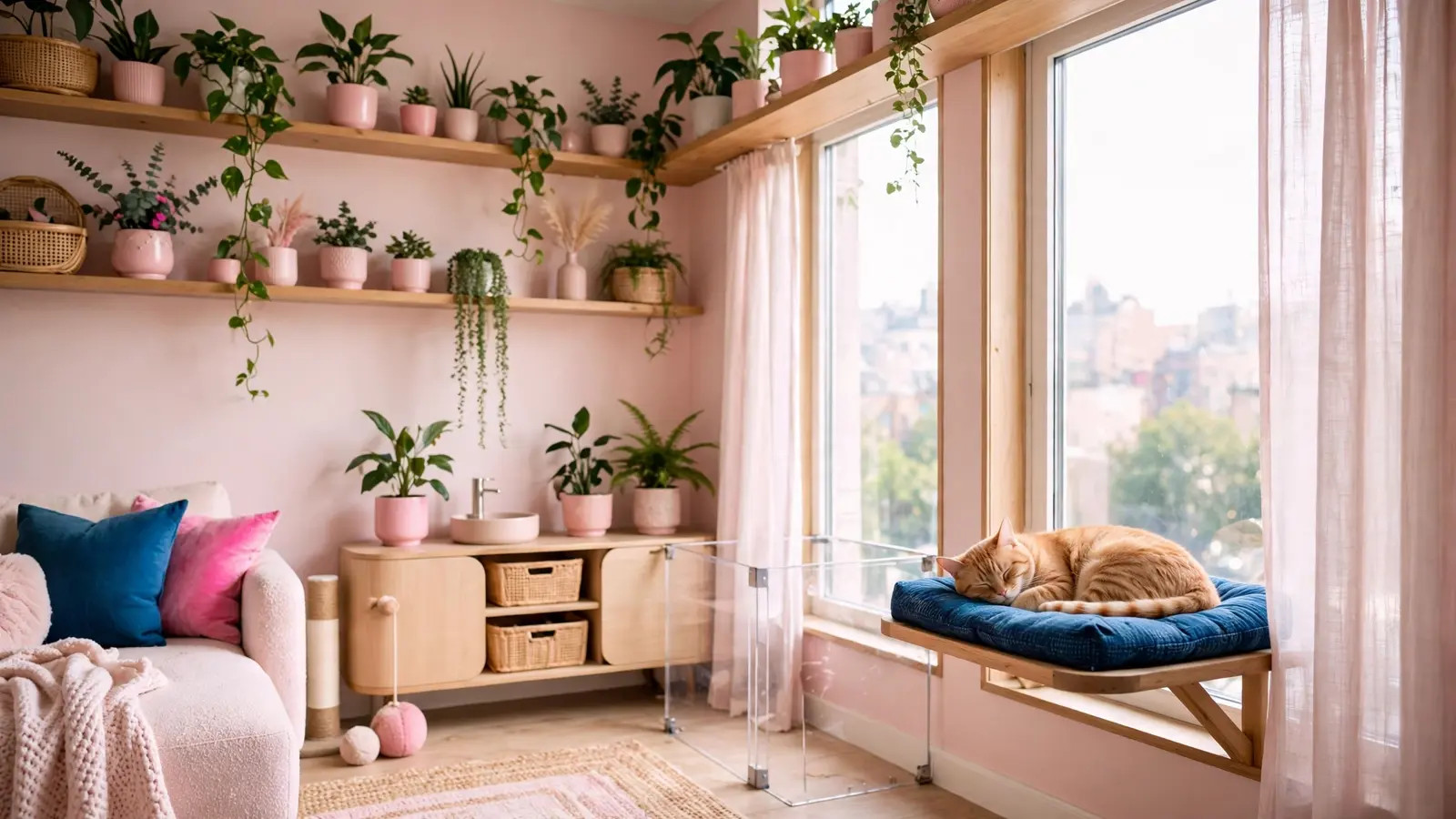
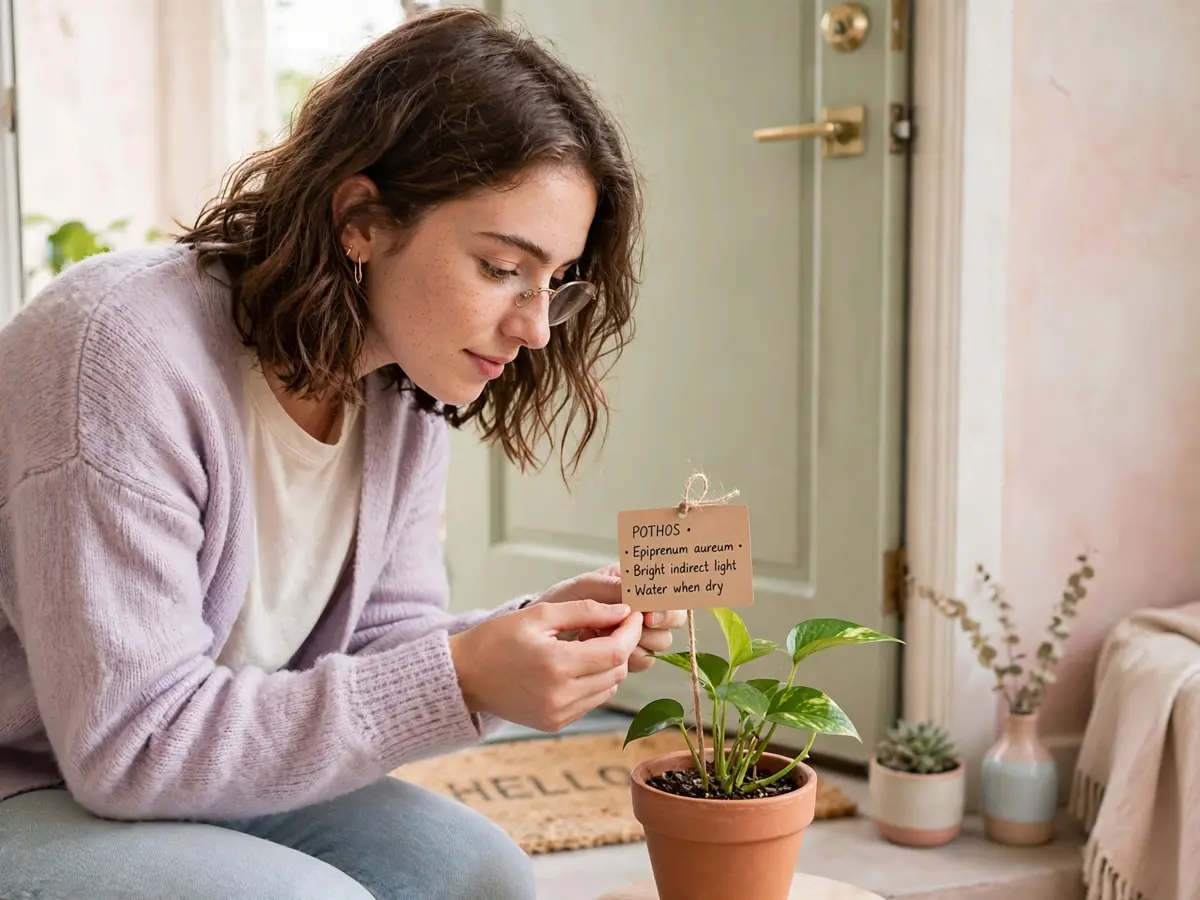
The useful habit is not memorizing a plant encyclopedia; it is three questions at the shop. Read the plant tag's botanical name, not just the pretty common name — common names repeat across very different plants. Check the care label for where it will live, because a plant that needs a low shelf is a plant that will meet the cat. And when a plant is a gift or a hand-me-down cutting with no label at all, treat it as unknown until identified.
One family is worth naming outright. Lilies are especially toxic to cats and can cause life-threatening kidney failure even in tiny amounts, and poinsettias, mistletoe and holly are toxic as well. No shelf strategy is needed for these — they simply stay out of a cat home, including as part of bouquets, which is the way most lilies actually arrive.
Displays a cat cannot ruin
Plant display by cat-proof level
| Display | Best plants for it | Cat-proof level |
|---|---|---|
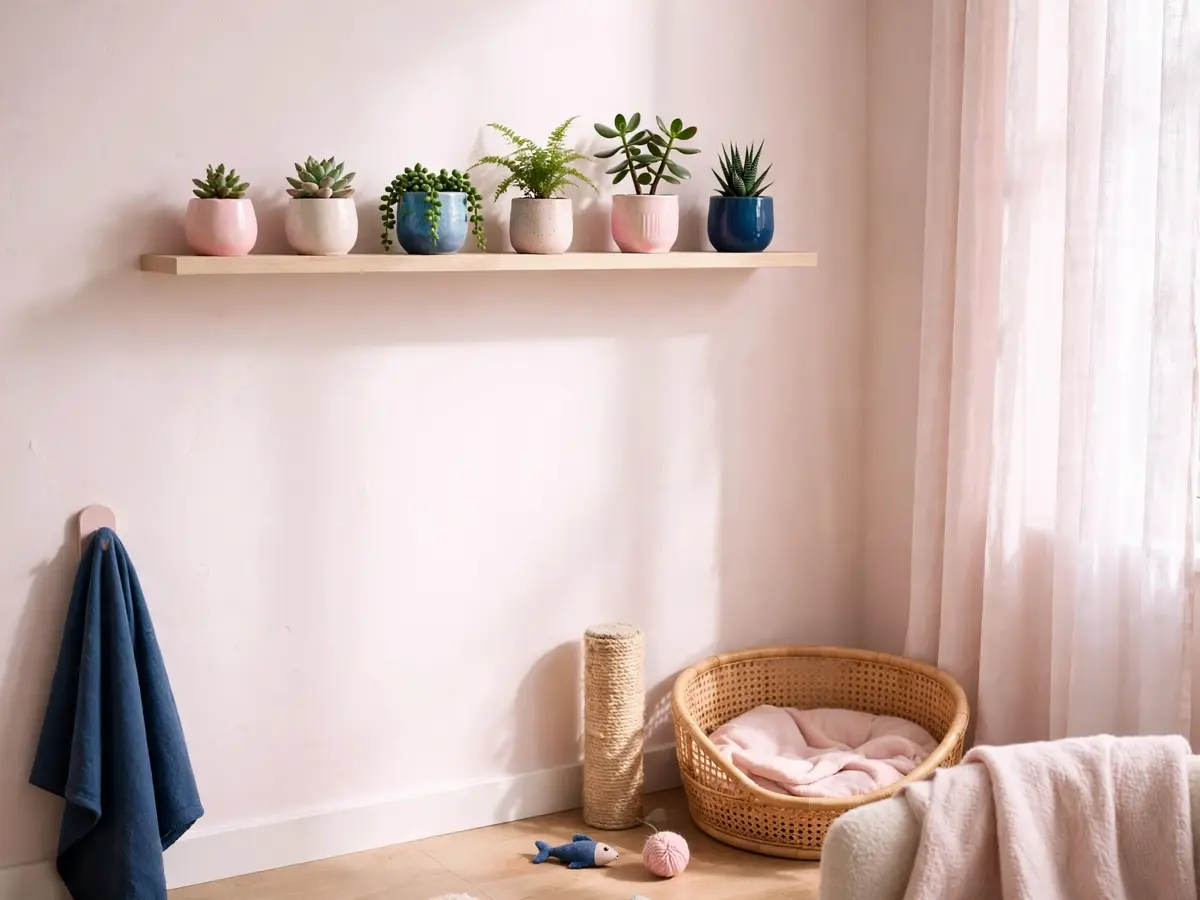
| High floating shelves | Trailing plants, small pots, propagation jars | Strong — above the jump line, out of the paw arc |
| Hanging planters on hooks | Anything that drapes: pothos-style trails, ferns | Strong — hung from ceiling hooks the cat cannot climb to |
| Closed cabinet greenhouse | Humidity lovers, propagation stations | Strongest — glass doors mean zero contact |
| Heavy floor pots | Large upright plants with woody stems | Situational — survives a rub, not a dedicated digger |
| Low tables and windowsills | Anything you are willing to lose or fake plants | Weak — this is the cat's furniture, not yours |
The jump line rule: if the cat can reach the shelf from the sofa, the counter or its own perch route, the shelf is not high. Map the launch points before you place anything.
Hanging planters and hooks
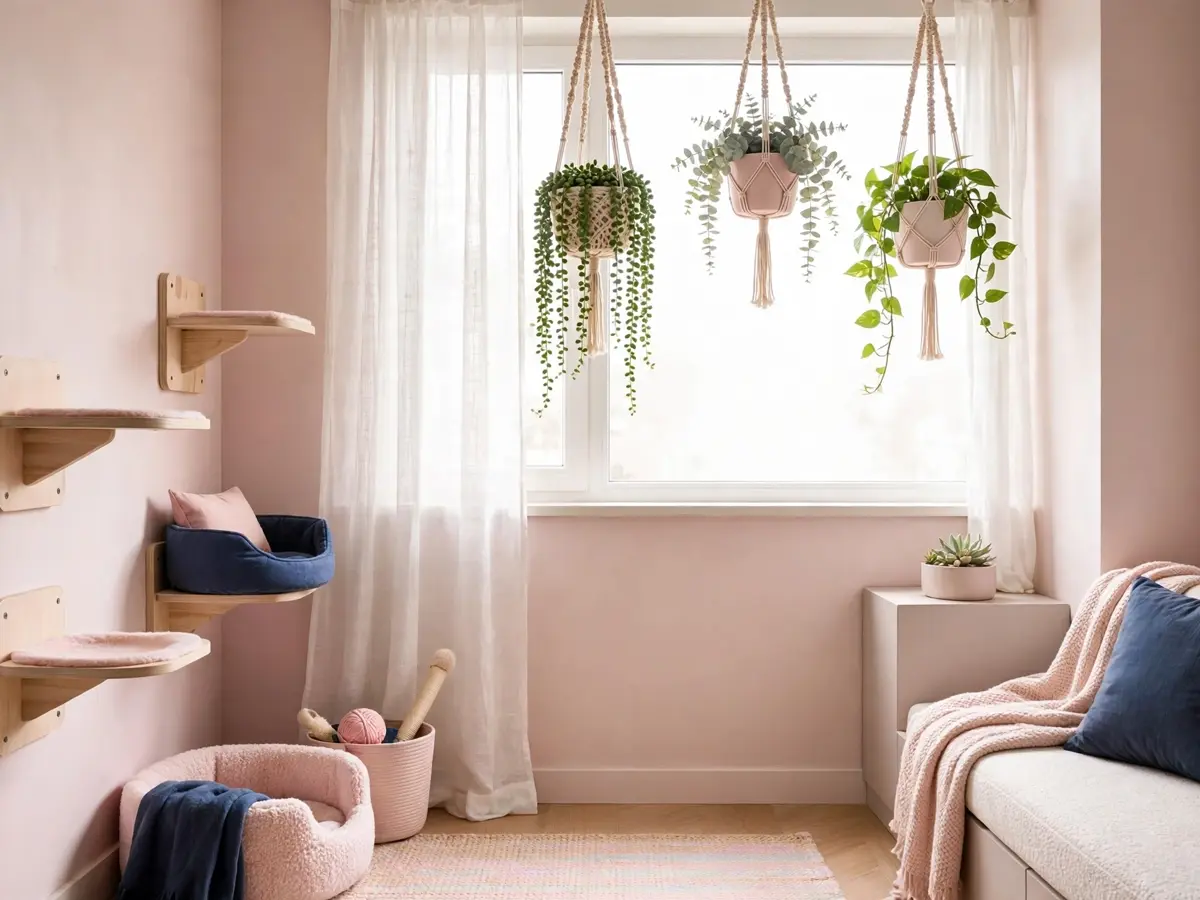
Hanging planters are the cat apartment's best friend: the plant drapes where you see it and the cat sees it too — from below, at a respectful distance. Hang them from ceiling hooks with proper anchors, keep at least a head of clearance above the tallest human in the house, and choose cords the cat cannot climb like a rope bridge. Macramé looks lovely and works like a ladder for a determined climber; a short chain or a smooth cord does not.
For watering day, a pulley hook or a watering wand keeps the routine honest — a planter that has to come down and go back up every week ends up living on the counter instead.
Grow lights and the wire rule
Winter windows mean grow lights, and grow lights mean cords. Keep electrical wires and batteries out of reach, because a wire can deliver a potentially lethal electrical shock. That single rule, applied with tape and clips, is the whole section:
- Run cords along the top edge of shelves with cord clips, never dangling where a tail or paw can catch them.
- Put power strips and timers in a cabinet, a drawer or a covered box — not loose on the floor under the plants.
- Choose shelf grow lights with short cords that reach a wall outlet directly, over daisy-chained extensions.
- Check batteries in clip-on and stick-on lights monthly; a loose battery is exactly the size a cat bats under the fridge and chases.
The winter sun map
Before placing anything, spend one Saturday watching where the light actually lands in winter — the window that blazed in July may be a shadow in December. Mark the bright hours for each window, put the light-hungry plants on the shelf in the best one, and let the cat have the second-best as its perch. The no-drill window perch guide covers the perch side; a cat with a sun spot of its own bothers the plant shelf far less.
The fake-plant peace treaty
Some corners are simply too tempting, and a quality fake plant ends the negotiation. Pick stiff-stemmed, heavyweight versions — the cheap wire-stemmed kind sheds plastic leaves a cat will find one by one. A fake olive tree by the sofa, a fake trailing vine on the low shelf, and the real collection living safely high: that is the arrangement that keeps everyone happy and nothing watered on the floor.
Pairs well with
The full pet-proofing sweep — wires, cords, windows, small objects — lives in the cat-proofing checklist. For the walls that plants leave empty, the printable cat wall art page hangs art no cat can water; and the seasonal side of plant safety — trees, holly, mistletoe — is covered in the cat-proof Christmas tree guide.
Pet-safe houseplant questions
Is there a list of houseplants cats can nibble?
Treat every plant as something to keep out of reach and check before bringing one home, rather than counting on a universal eat-anything list. Even a plant a cat can technically nibble can upset a stomach in quantity, and nursery plants are sometimes mislabeled. The calm habit: display high, read labels, and ask your vet about any plant you plan to keep within reach.
Which plants should never come into a cat home?
Lilies are especially toxic to cats and can cause life-threatening kidney failure even in tiny amounts, and poinsettias, mistletoe and holly are toxic as well. Those names are worth more than any shelf strategy: if a lily is in a bouquet, the whole bouquet stays outside or goes to a pet-free office.
How do I keep my cat out of the plants?
Height and spin. High shelves for trailing plants, hanging planters hung from hooks the cat cannot reach, and heavy pots that do not tip for anything at floor level. Give the cat something better in the same room — a perch by the window usually beats a pot on the floor for a cat's attention.
Are grow-light cords a pet hazard?
Keep electrical wires and batteries out of reach, because a wire can deliver a potentially lethal electrical shock. Tape cords along the shelf edge, use cord clips instead of loose hangs, and put timers and power strips inside a cabinet or a covered box rather than on the floor under the plants.
What about fake plants?
A good fake gives the same corner its green without any worry about nibbling — pick stiff-stemmed versions over cheap wire-stemmed ones that fray, and wash dust off leaves monthly. Fake plants also remove the watering schedule, which is its own small win in a small apartment.
Save the layout before the next plant haul
Pin this page beside the cat-proofing checklist and plan the next plant trip with the shelf map already drawn. The full apartment series lives in the cat-friendly home collection.
Lilies are especially toxic to cats and can cause life-threatening kidney failure even in tiny amounts, and poinsettias, mistletoe and holly are toxic as well. Keep electrical wires and batteries out of reach, because a wire can deliver a potentially lethal electrical shock. For informational purposes, consult your vet.
Every plant on the shelf map gets its own check, and the the money tree question page is the one the nursery sells fastest.