 PawStyle Daily
Cat-Friendly Apartment Decor
Cat-Proof Christmas Tree: 7 Safe Steps
Two Decembers ago, our tree went down at two in the morning. We heard the crash from the bedroom, found the stand tipped at an angle, one string of lights still glowing, and our tabby sitting in the middle of the wreckage with the most pleased face she has ever worn. Nothing was hurt except the ornaments and my sleep, and I spent the whole next morning on the floor with coffee, rethinking every choice that led there. This guide is that morning, written down so yours can go differently.
A tree is the most interesting object a cat has ever been given. It is tall, it moves when touched, it carries dangling strings, and it arrives in the apartment at the exact moment the apartment is already at its most exciting. Cat-proofing it is a seven-step job, and the steps go in the order that matters: the tree itself first, the water under it second, everything hanging on it third, then the plants, the snow globes, the cat’s own spots, and the wires. For informational purposes, consult your vet.
By PawStyle Daily · Updated 16 November 2026
Good to know: one afternoon before decorating · strap or fishing line, covered water, no tinsel · works for real and artificial trees.
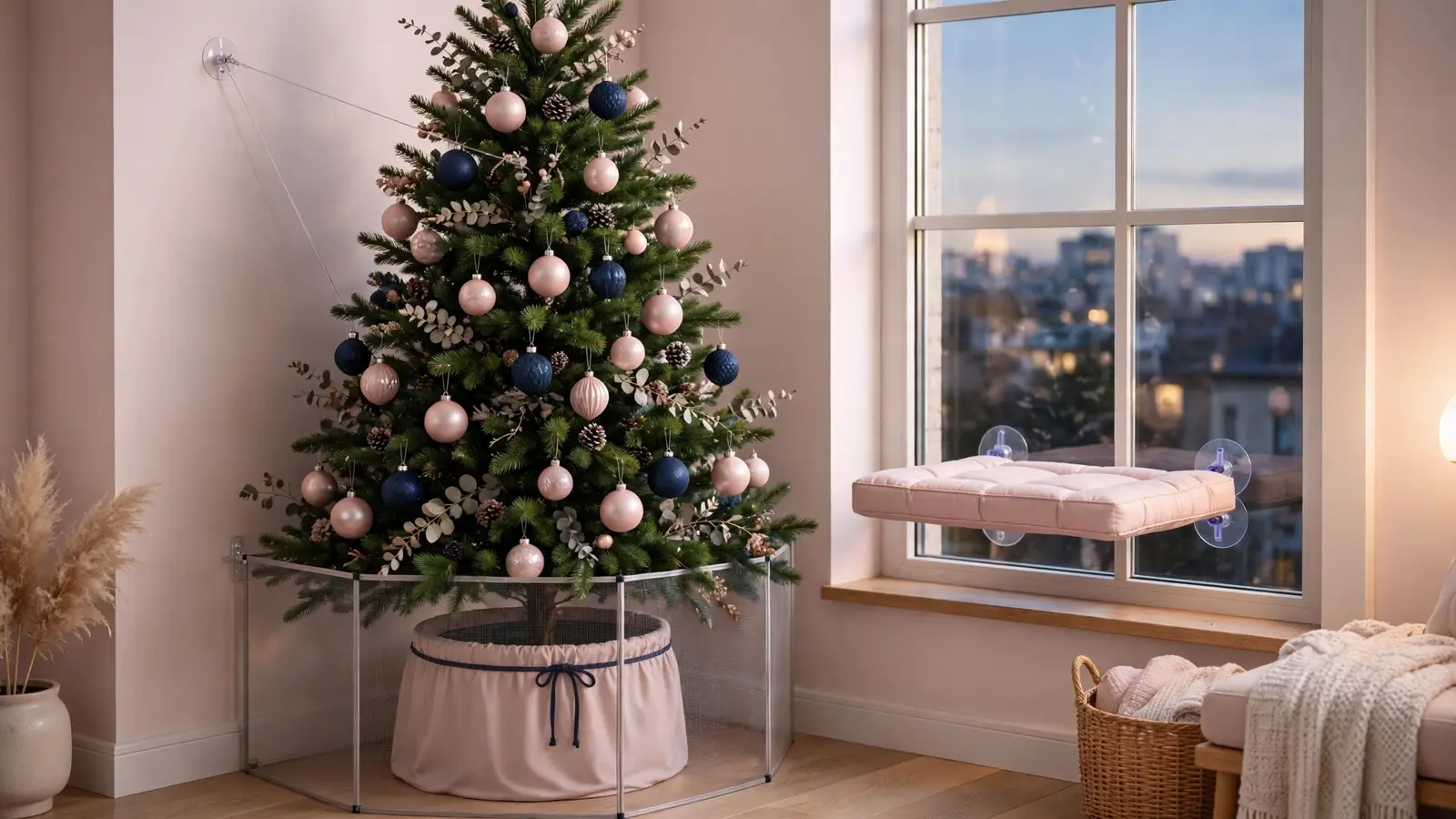
What the crash actually taught us
The stand that ships with most trees is built to hold a tree upright, and that is a different job from holding a tree upright while a cat climbs it. The failure is almost never one dramatic launch, either. It is a slow lean: a cat walks up the trunk, the stand tilts a few degrees, the water in the reservoir shifts, and by the second or third climb the whole thing has a favorite direction to fall.
So the work starts at the bottom and moves up. Every step below is something we now do before a single ornament goes on, because a tree that is already decorated is a tree nobody wants to take apart and rebuild on a December weeknight.
Pick the spot before you pick the tree. A corner with two walls behind the tree does half the anchoring for free, a spot away from the bookcase removes the launch pad, and a spot you can see from the sofa means the first climb happens while you are watching rather than while you are asleep.
Steps 1 and 2: stand it up, cover the water
A Christmas tree has to be tightly secured so it cannot tip over onto pets, and the tree water should be covered because it grows bacteria. That one sentence is the foundation of the whole setup, and it splits into two small jobs.
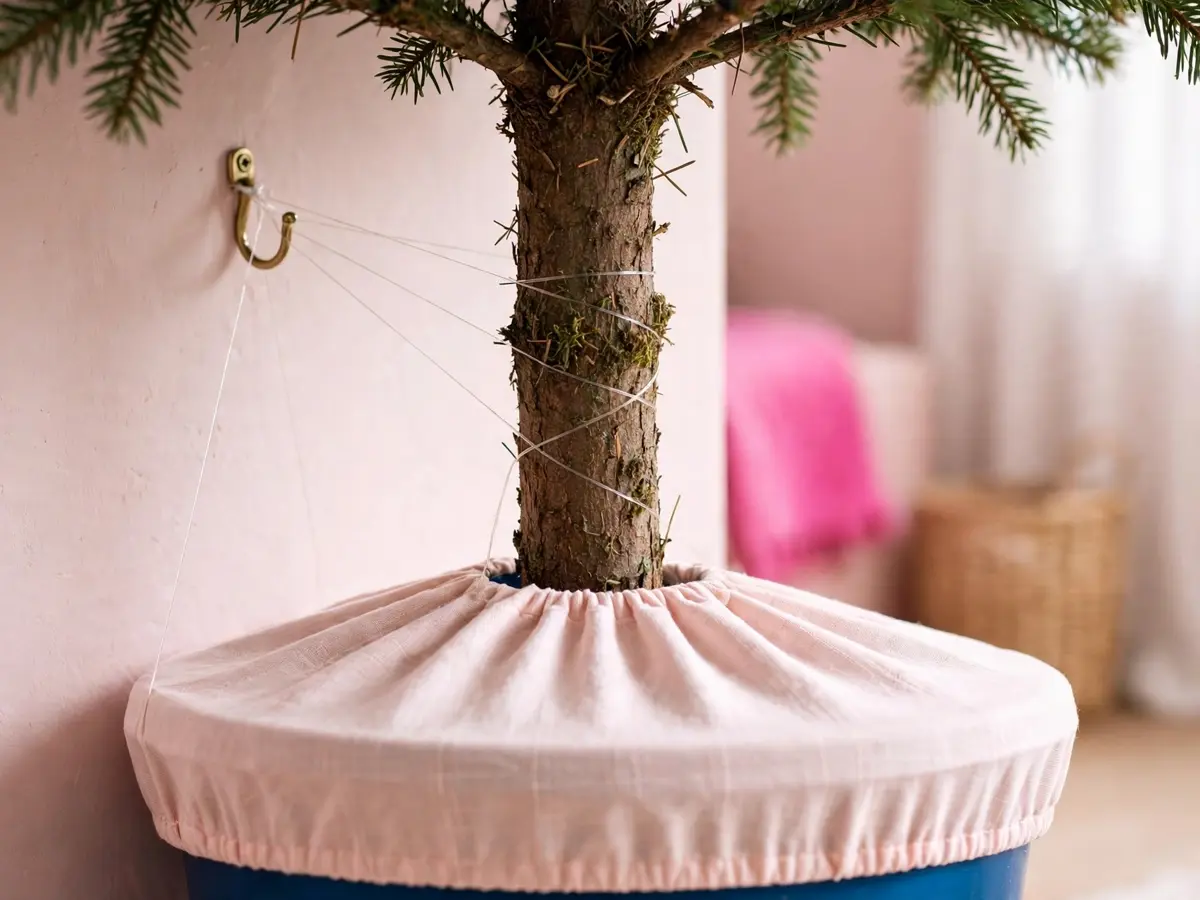
The anchor job: set the tree in the corner closest to where the cat likes to launch, then run a strap or a loop of fishing line from the trunk, up high, to a curtain-rod hook, a wall hook, or the window latch on either side. Two anchors beat one, and one anchor beats optimism. Check the strap after the first week, when the tree has settled and dried a little.
The water job: the reservoir under a real tree sits in the dark under a skirt, which is exactly the kind of still water a curious cat finds first. Use a stand with a covered reservoir, or wrap the open bowl in a layer of foil and set the skirt over it. Plain water only, skip anything the tree seller hands you to pour into the bowl, and lift the skirt corner to check the level every couple of days.
An artificial tree skips the water job entirely and keeps the anchor job, because a tree that never dries out can still wobble.
Step 3: the tinsel ban
Skip tinsel: swallowed tinsel can cause severe vomiting, an obstructed digestive tract, dehydration and possibly surgery. It is the one item on this list we do not negotiate with, because tinsel behaves like the best cat toy ever made right up until it is inside a cat. Swallowed tinsel is a same-day vet call, not a wait-and-see.
Thin ribbon curls, foil garland and angel hair sit in the same family: light, stringy, and interesting on the way down. If the sparkle is the look you are after, large matte ornaments, paper stars and a warm string of lights carry a lot of it, and none of it dangles at paw height. Popcorn and cranberry strings are food on a string, which is the most interesting object in the room, so they stay off a cat’s tree too.
Step 4: the holiday plant shelf
Lilies are especially toxic to cats and can cause life-threatening kidney failure even in tiny amounts, and poinsettias, mistletoe and holly are toxic as well. Mistletoe and holly can cause gastrointestinal upset and cardiovascular problems if a pet eats them.
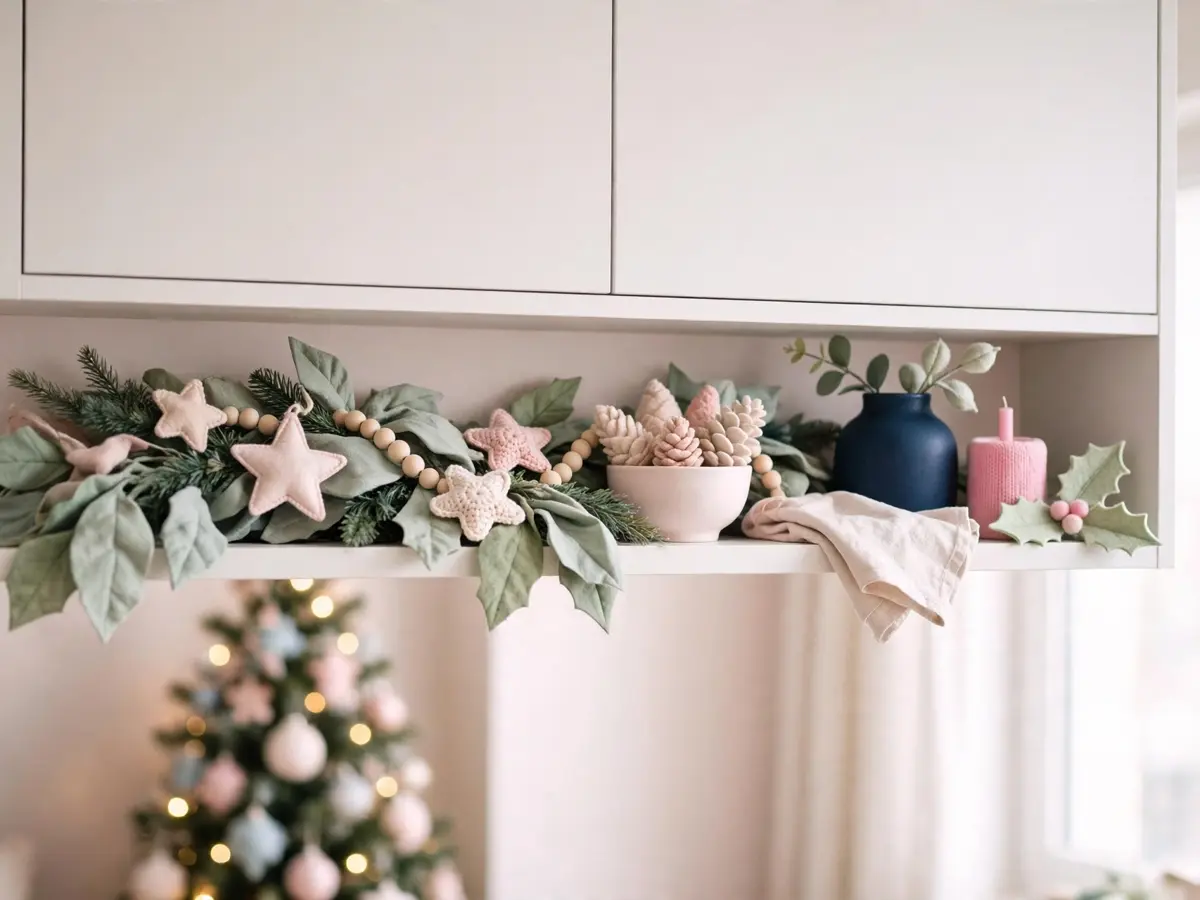
In practice that clears the whole fresh-greens category off the low tables. Fabric mistletoe and wooden holly carry the look without the worry, fresh bouquets live on the dining table or stay at the shop, and a plant you cannot name stays in its sleeve until you can. For the rest of the year, our year-round cat-proofing checklist covers the plant shelf, the cords and the windows, and December is the month it earns its keep.
Step 5: snow globes go behind glass
A broken snow globe releases ethylene glycol, the same chemical used in antifreeze, which is highly toxic to all pets. Glass, plus liquid, plus a cat that taps things off shelves to see what happens, is a combination that does not belong in the same room this month.
Snow globes live behind a closed cabinet door, on a shelf with a raised lip, or in their box until January. Felt and wooden versions exist, they photograph almost the same, and a shelf accident with one of those is a cleanup rather than an emergency drive to the clinic.
Step 6: give the cat somewhere better to be
Give each resource its own spot and let the cat choose: a minimum of two resting areas, two feeding areas and two toileting areas. December is the month to audit that list, because a cat with one good spot and a tree in the living room will pick the tree.
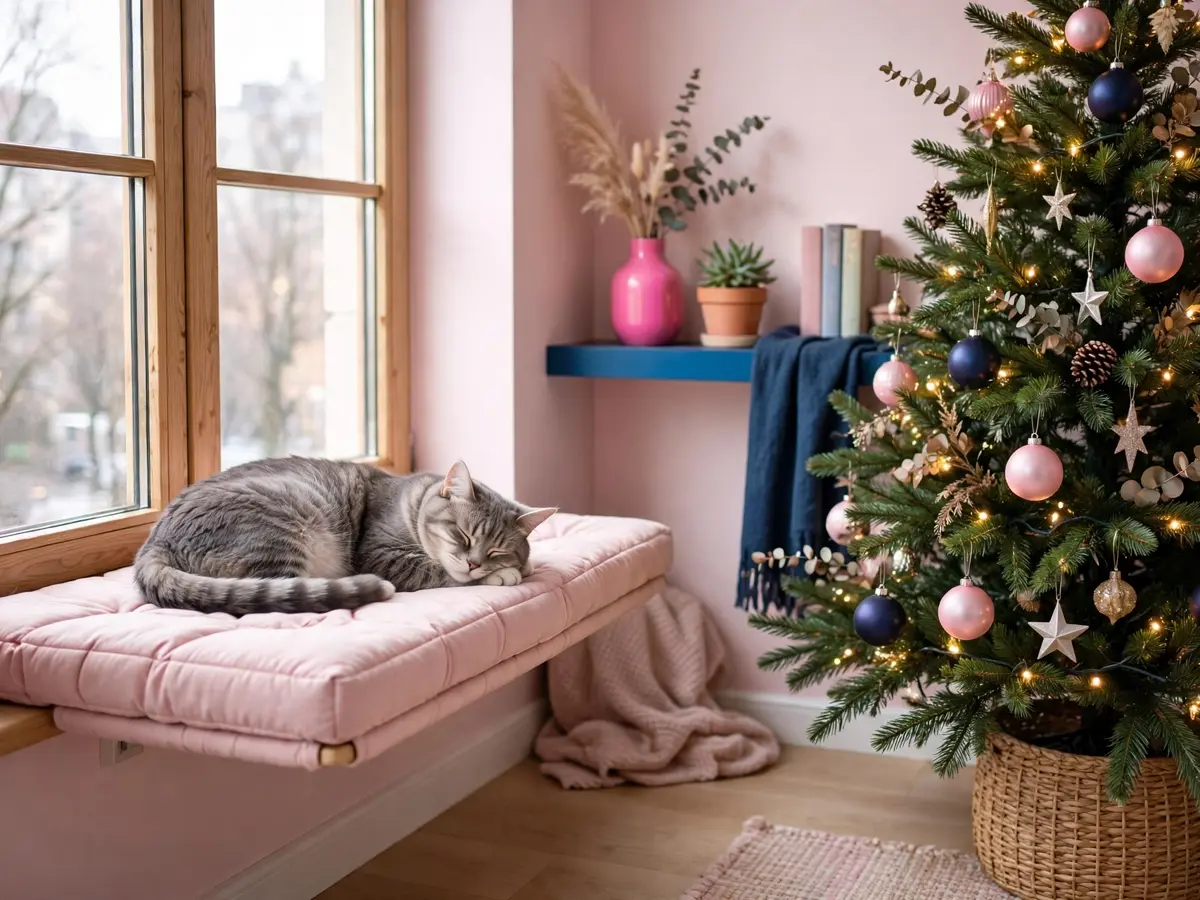
An ideal perch is elevated, with a padded cover, and an elevated area gives a cat vertical space to monitor its environment. Move the cat tree or the window perch to its best window for the season, the one with the most happening outside, and the tree stops being the only tall thing worth owning.
Indoor resting areas, such as a perch or a secluded surface, should include a spot where the cat can see outdoors. If the good window is on the far side of the tree, our no-drill window perch guide solves it in an afternoon.
The last piece is spent energy. Two short play sessions a day near the tree, before the evening zoom hours, use up the launch before the launch aims at the ornaments. Wand toys, never hands, and put the wand away when the session ends so it does not become an overnight project.
Step 7: wires, batteries and the timer
Keep electrical wires and batteries out of reach, because a wire can deliver a potentially lethal electrical shock. On a tree, that means the light strings get taped flat to the trunk every foot or so, the run to the outlet goes through a cord raceway along the baseboard, and the spare batteries live in a drawer instead of the ornament box.
Run the lights on a timer that switches off overnight, and unplug the whole string when the house empties for the day. A cat that has already chewed a cord is a same-day vet call, and the unplugging comes before the touching.
Where everything goes this year
| Item | Where it goes | If you already own it |
|---|---|---|
| Real mistletoe and holly | Left at the shop, or behind a closed door | Swap to fabric versions at height |
| Snow globes | Closed cabinet or a lipped shelf | Felt or wooden versions until January |
| Tinsel and thin garland | Stays in the box | Large matte ornaments and paper stars |
| Streamer-style tree toppers | Mid-tree baubles instead | Move the topper to a mantel out of reach |
| Light strings and cords | Taped to the trunk, raceway to the outlet | Timer off overnight, unplugged when out |
The why for every row sits in steps 1 through 7 above, in the same order.
The first night with the tree
Introduce the cat before the decorations go on, not after. Put the bare, anchored tree up and give the cat an evening with it: a sniff, a tap, one attempted climb you interrupt calmly, done. The tree becomes old news before it becomes covered in dangling toys.
Then decorate from the top down and leave the bottom third soft: shatterproof ornaments, nothing on long strings, nothing edible. The heirloom glass lives in its box this year or on the mantel, and every night ends with the lights off on a timer and the skirt corner lifted for a quick water check.
After that, the routine is a ten-second walk-by: strap taut, reservoir covered, cords flat, cat somewhere better. For informational purposes, consult your vet.
The whole tree setup, one list
- Tree in a corner, strapped or wired to two anchors
- Water covered: lidded reservoir or foil under the skirt
- Plain water only, level checked every couple of days
- Tinsel and thin garland stay in the box
- Lilies out of the apartment entirely, fresh mistletoe and holly behind glass
- Snow globes in a closed cabinet until January
- Two resting spots for the cat, one with a window view
- Light strings taped to the trunk, cords in a raceway
- Lights on a timer, unplugged when nobody is home
- Bottom third soft: shatterproof, nothing dangling, nothing edible
Christmas tree questions we get
How do I stop my cat from climbing the Christmas tree?
A Christmas tree has to be tightly secured so it cannot tip over onto pets, and the tree water should be covered because it grows bacteria. After that, the honest answer is that you make the tree boring and give the cat somewhere better: two resting spots, one of them at a good window, and short play sessions near the tree before the evening zoom. For informational purposes, consult your vet.
Is tinsel really worth the risk?
Skip tinsel: swallowed tinsel can cause severe vomiting, an obstructed digestive tract, dehydration and possibly surgery. Swallowed tinsel is a same-day vet call, not a wait-and-see. The sparkle it adds is not the part of the tree anyone remembers anyway.
Which holiday plants are the problem ones?
Lilies are especially toxic to cats and can cause life-threatening kidney failure even in tiny amounts, and poinsettias, mistletoe and holly are toxic as well. Mistletoe and holly can cause gastrointestinal upset and cardiovascular problems if a pet eats them. Fabric versions carry the look, and a bouquet you cannot name stays at the shop.
Are snow globes okay on a high shelf?
A broken snow globe releases ethylene glycol, the same chemical used in antifreeze, which is highly toxic to all pets. A high shelf lowers the odds and does not change the chemistry, so ours live behind a closed cabinet door until the tree comes down.
My cat already drank the tree water. What now?
Call your vet, and make the call before anything looks wrong rather than after. A Christmas tree has to be tightly secured so it cannot tip over onto pets, and the tree water should be covered because it grows bacteria, so cover the reservoir today and let your vet take it from there. For informational purposes, consult your vet.
Real tree or artificial when you have a cat?
Both work. A real tree adds the water job and drops needles a cat will absolutely taste-test; an artificial tree skips the water and keeps the strap job. Either way the tree gets anchored, the bottom third stays soft, and tinsel stays in the box.
What we use
What we use for tree season
Wall straps, covered tree stands, cord raceways and shatterproof ornaments, in one renter-friendly list.
See what we use →As an Amazon Associate we earn from qualifying purchases.
Save these on Pinterest
Pin this before you buy the tree. The Cat Home collection holds the checklist, the cardboard castle plans and the window perch builds.
Sources
The hazard rules on this page come from veterinary and veterinary publisher sources, not from our own head: