 PawStyle Daily
Cat-Friendly Apartment Decor
Money Tree and Cats: Pachira Aquatica and the Leaf Chewing
The money tree is the plant that shops put closest to the door: braided trunk, glossy hand-shaped leaves, a reputation for good fortune, and a price that makes it the default housewarming gift. Then it comes home, and the resident cat looks at it the way a cat looks at anything new and green. One plant, one question: can these two share a living room? This page answers it for the actual money tree, the Pachira aquatica, in four parts: the listing on the plant, what chewing still does, the placement that keeps both the tree and the cat happy, and the plants sold under money names that are something else entirely. The short version for the skimmers: the plant and the cat can stay, the chewing habit is still worth stopping, and the name on the pot matters more than most buyers realize.
By PawStyle Daily · Updated 23 November 2026
Good to know: the Pachira aquatica listing · what leaf chewing still does · cat proof placement · the lookalike plants · for informational purposes, consult your vet.
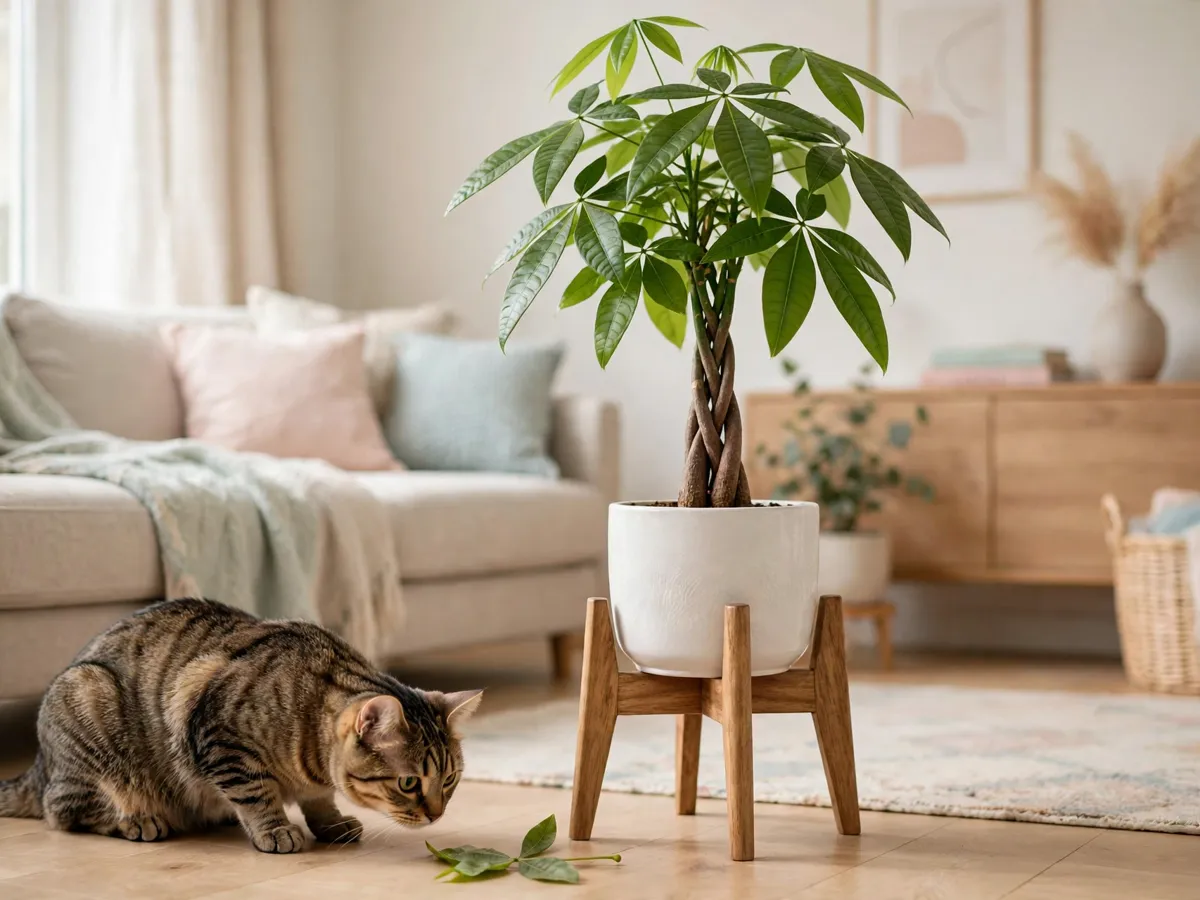
One Plant, One Question
Houseplant shopping with a cat in the house usually runs on rumor: somebody once said this one was bad, somebody else swears their cat eats everything and has never had a problem. A single plant page can end that with one lookup, because the question has a specific answer. The money tree is one species with one listing, not a family of plants, so the verdict fits in a sentence, and the rest of the page can spend its words on what owners actually do with the plant: where to put it, what to do when the cat samples it, and how to tell the real tree apart from the plants that borrow its name.
That name problem is why this page exists at all, honestly. The money tree sits next to plants called money plant, jade money tree, and golden pothos in the same shop row, and those are different species with very different listings. A cat owner who checks the wrong plant or buys the wrong pot ends up either needlessly afraid of the harmless one or wrongly relaxed about the one that needs a shelf. Sorting the names is half the safety work, and it takes about a minute at the store once you know what to look for on the tag.
The Listing for Pachira Aquatica
The verdict lives in the FAQ at the bottom of this page, stated once, exactly as the listing reads, with the scientific name attached. That is deliberate. A single sentence carrying the whole verdict is easier to check, easier to quote, and easier to keep accurate than a paragraph that paraphrases it three different ways, and the FAQ is where a worried owner scrolls first. Read it there, then come back: the rest of this section is about what the listing does and does not mean.
A listing is a catalog entry, not a promise about your individual cat. It records how the plant species is classified for cats and dogs, and that classification is the right starting point for a purchase decision. What it does not do is describe your cat, because no catalog can. Some cats ignore plants their whole lives, some sample once and move on, and some adopt a young money tree as a personal salad bar. The listing tells you the species; your cat tells you the rest, and the sections below are built around exactly that split.
One more framing note, because it matters for every plant in the house, not just this one: a good listing is a reason to relax about the species, never a reason to stop watching the animal. The healthy pattern with any houseplant and any cat is the same: bring the plant in, watch the first few days, see what the cat does, and act on what you see. For the full shelf of plants that share an apartment with cats, the pet safe houseplants for apartments page is the list-shaped companion to this single-plant one.
What Leaf Chewing Can Still Do
A listed plant and a cat that feels fine after a bite are not the same thing as a plant the cat should be eating, and the gap between those two is where most plant-and-cat confusion lives. Leaf material is leaf material: it is roughage a cat did not evolve to digest much of, and the stomach answers with the ordinary complaints, the drooling, the skipped meal, the quiet afternoon that follows a mouthful of something fibrous. The FAQ covers the specific symptoms and the line where a vet call takes over, so this section stays on the habit itself.
The habit has a reason worth understanding, because knowing it makes the fix obvious. Cats chew greenery for a short list of reasons: something new entered the territory and the mouth is how a cat investigates it, the leaves move in the draft from the vent and moving things get pounced, or the cat wants fresh grass and the tree is the only green thing within reach. Each reason has a different best answer, and none of them is the plant's fault, which is why the answer is rarely to throw the plant away.
The practical split for an owner: investigation chewing fades on its own once the plant stops being news, play chewing ends when the leaves stop moving like prey, and grass-seeking chewing moves somewhere else when the cat gets its own greens. All three answer to where the tree stands and what the cat has instead, the next section; the tag check for the money name impostors follows it. Watch the animal before buying anything, and if the chewing comes with the symptoms in the FAQ, the page stops and the phone starts.
Cat Proof Placement for a Money Tree
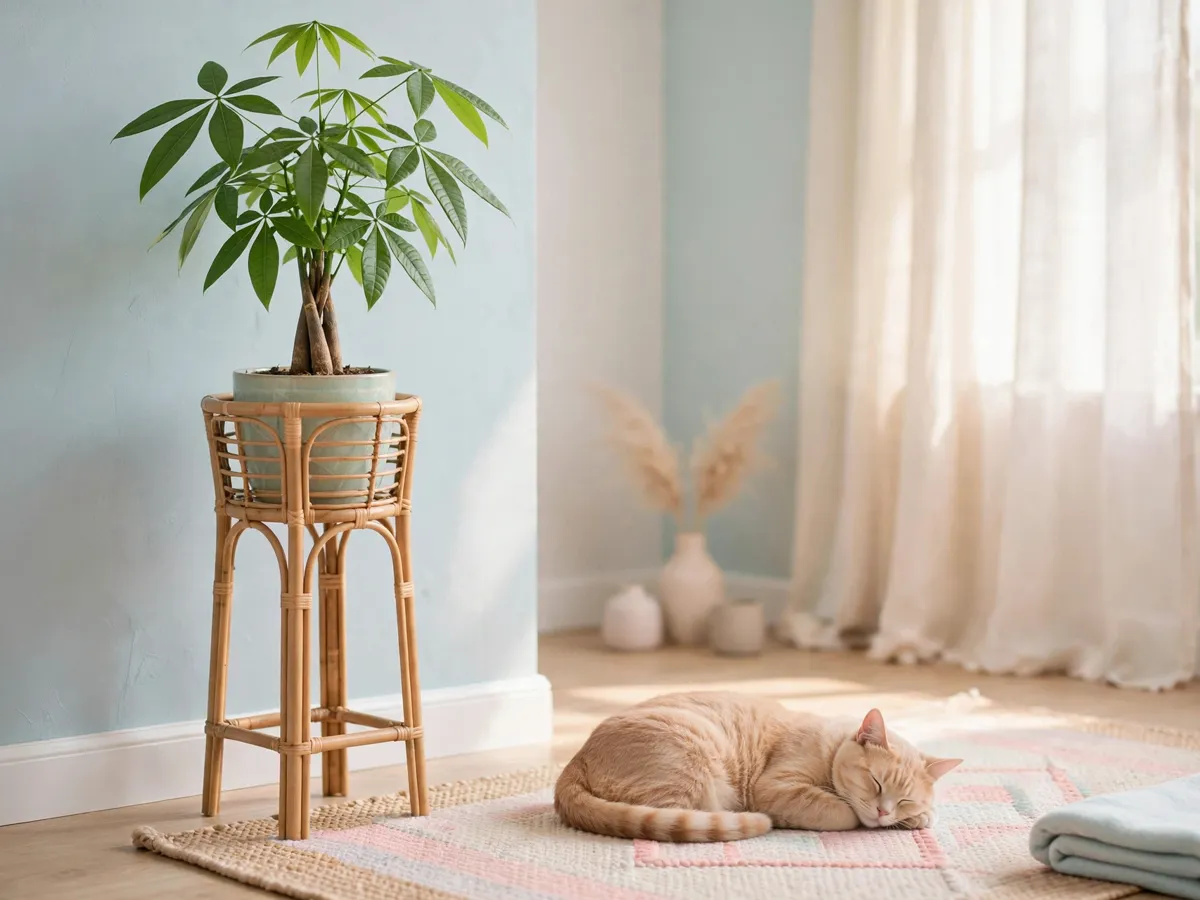
Placement is the whole game, because the money tree asks for two things at once: bright indirect light and a spot a cat cannot turn into a launch pad. The good news is those two overlap more than owners expect. A tall plant stand beside a curtained window hits both, and the stand itself does half the cat proofing: a cat can only reach what it can reach, and a plant on a sturdy tall stand, away from the sofa arm, the bookshelf and any mid-air runway, stops being reachable. The cat in the photo gets the sunny rug under the tree instead of the tree itself, which is the arrangement that works in real rooms.
The spots that fail are predictable: the coffee table in the middle of the action, the shelf one bounce away from the counter, the floor pot next to the cat tree. Anything at paw height is a toy, and anything the cat can land on from furniture is a jungle gym. When the plant has to stay low, the fixes are mechanical: a heavy ceramic pot so a push does not tip it, a pebble mulch layer so the soil is not a diggable bathroom, and a citrus peel or two tucked into the pot rim, which many cats walk away from. None of these are magic, and none need to be, because the stand does the real work.
Two closing rules keep the arrangement honest. First, a money tree that is being chewed through anyway, on any stand, in any room, is a money tree that needs to move rooms, not a bigger stand. Second, the cat that wants greens is a cat that should have greens, somewhere it is allowed to have them, because a cat with its own patch of cat grass has far less reason to hunt the houseplants. For the wider apartment pass, from cables to shelves to the plant corner itself, the cat proofing checklist page is the room-by-room walk-through, and the plant stand is just one line on it.
The Plants Sold Under the Money Name
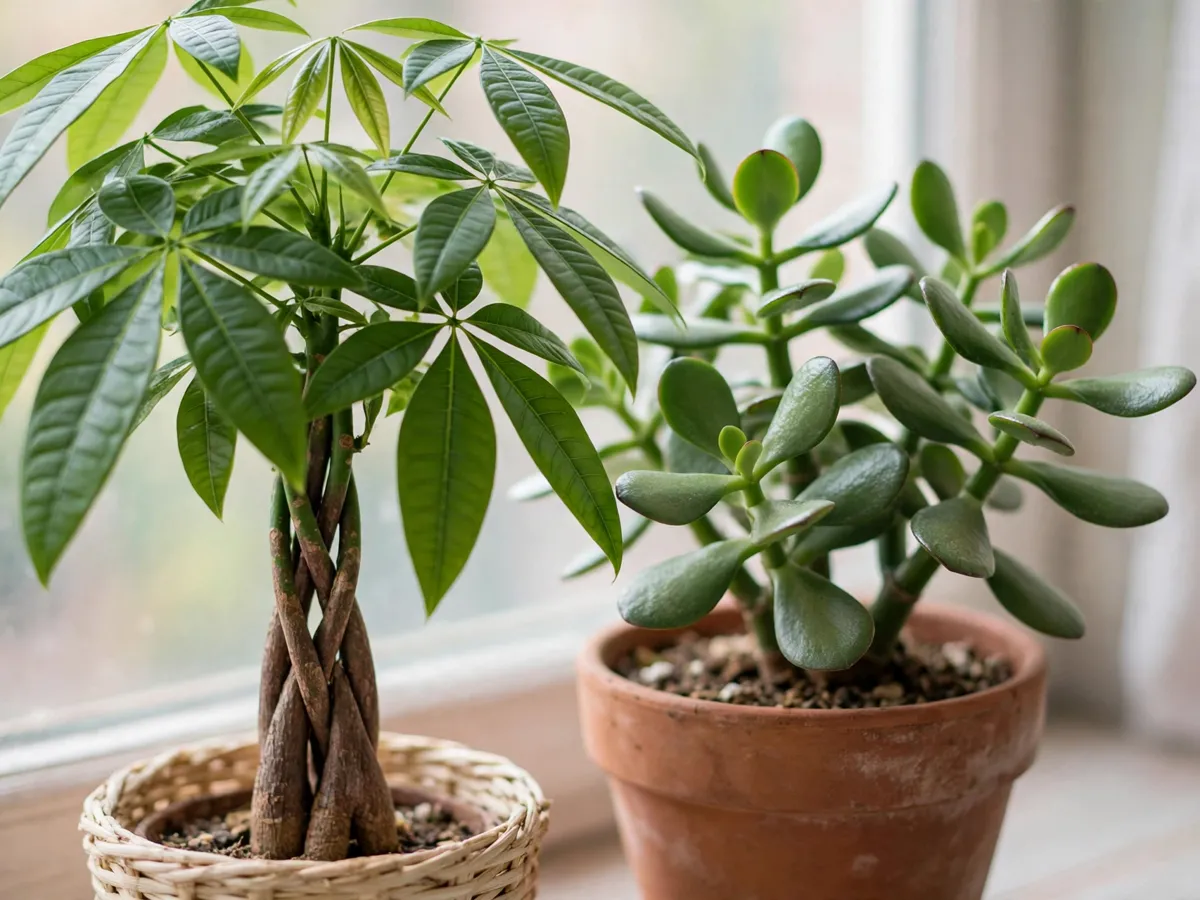
The money tree is Pachira aquatica, and the plant in the photo above next to it is a jade plant, which is not a money tree and does not carry the same listing. This is the section that earns its place in the buying trip: plant shops sell several species under a money name, and the cat owner who buys by the common name alone is buying a mystery. The habit that fixes it takes seconds: find the scientific name on the tag, match it to the plant you actually researched, and treat a pot with no tag as a question for the staff rather than a decision already made.
The two common name-borrowers to know on sight. Jade plants, sometimes labeled money tree or money plant for their coin shaped leaves, are a different species with a different listing for cats. Pothos, sold under names like golden pothos or devil's ivy and occasionally waved around as a money plant, is another one entirely. Neither belongs to the money tree conversation, and neither is the plant this page is about. The message is not fear, it is precision: check the tag, know which species you are carrying home, and the whole question of which plant the cat can reach answers itself.
If your taste runs past the money tree toward the small sculpted trees, the bonsai trees and cats page runs the same tag-checking discipline across that shelf, species by species, because bonsai labels are even more of a mixed bag than money labels.
Money tree and cats questions
Can I keep a money tree in a house with a cat?
The money tree (Pachira aquatica) is listed as non-toxic to cats and dogs, though a cat that chews the leaves can still have an upset stomach. The listing is the plant verdict, not a green light for grazing: keep the tree out of the reach that launches a cat, and give the cat its own greens to chew. Move the plant the moment the leaves become a toy.
What happens if my cat chews money tree leaves anyway?
A cat that chews the leaves can still have an upset stomach, the kind that shows up as drooling, a skipped meal or a quiet afternoon. The symptoms usually pass on their own, but call the vet if the cat stops eating, vomits more than once, or acts off past a day. Plant material can come back up stuck, so a cat that gags on a leaf goes in.
Is every plant sold as a money plant the same as a money tree?
No, and the names are the trap. The money tree is Pachira aquatica with the braided trunk, while some shops sell jade plants or pothos under a money plant name, and those are different plants with different listings. Check the scientific name on the tag before the pot comes home, and treat an unlabeled plant as a question, not a verdict. The houseplant list page sorts the common ones.
Save the Money Tree Sheet
Pin this page for the buying trip: the verdict sentence to check the tag against, the lookalike plants to tell apart on the shelf, and the placement rules that keep the tree and the cat in the same room without a standoff. The whole check takes about a minute at the store and saves the guesswork at home.
For informational purposes, consult your vet. A plant listing answers a shopping question; your veterinarian answers the one about the cat in front of you, especially after a chewing session that came with symptoms.