 PawStyle Daily
Cat-Friendly Apartment Decor
Cat Tree Living Room Placement That Fits the Room
A cat tree has to earn its footprint in the room everyone walks through: the perch wants the window, the post wants the sofa arm, and the whole thing has to look like it was invited. This page places the tree in the shared living room, from the corner anchor to the cord rule, and keeps one honest line in view: style the spot, and the cat decides if it is home. For informational purposes, consult your vet.
By PawStyle Daily · Updated 18 November 2026
Good to know: window side for the perch · Sofa arm for the post · Anchor anything that leans.
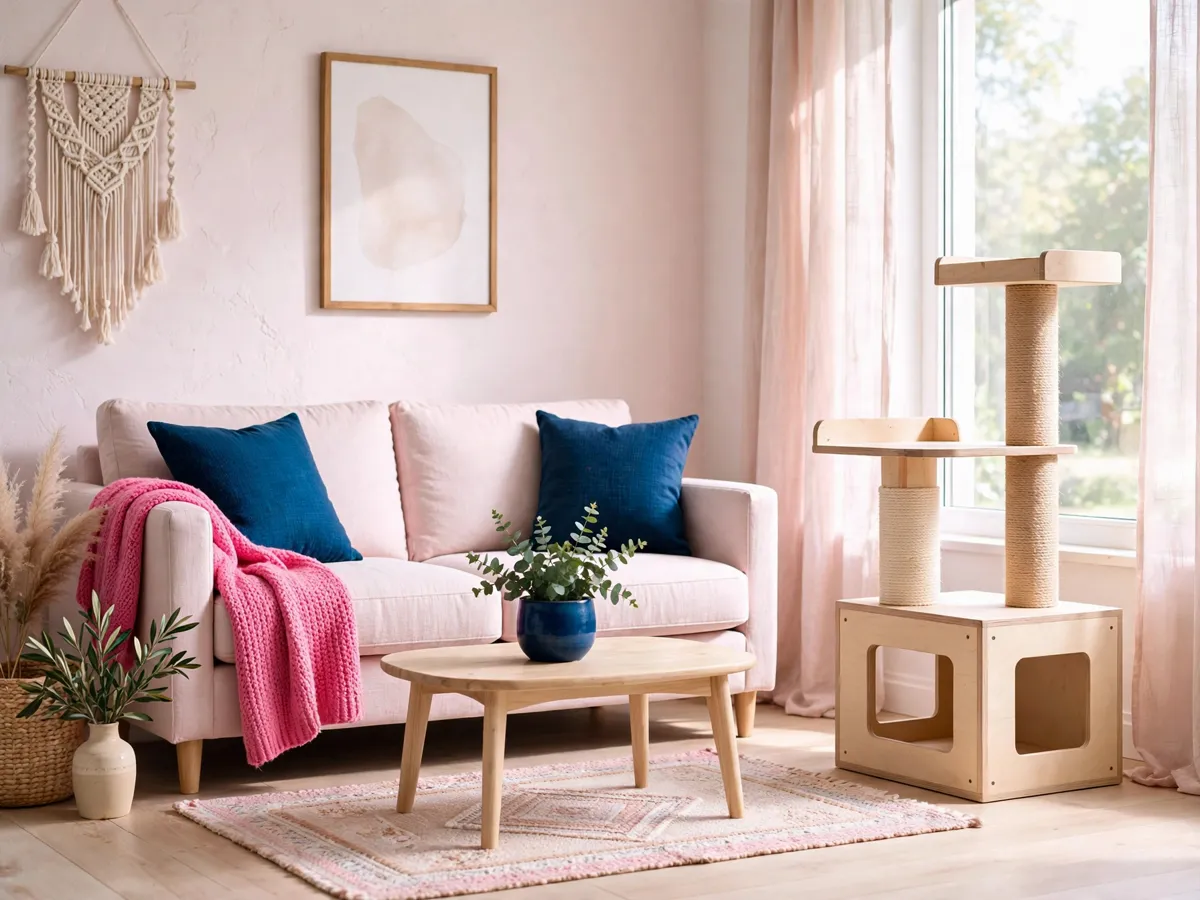
The living room is shared territory
The living room is the one room both species use all day, so the tree has to earn its footprint twice: once for the cat who wants the view, and once for the people who want the sofa back. The helpful part is that the same placement rules serve both, because the spot a cat naps in is usually the spot the room already needed filled.
Start by walking the room at cat height. The sightlines, the sun patches, and the door approach all read differently from down there, and the corner that looked empty from standing height is often the one the room was quietly saving.
Where the perch earns its spot
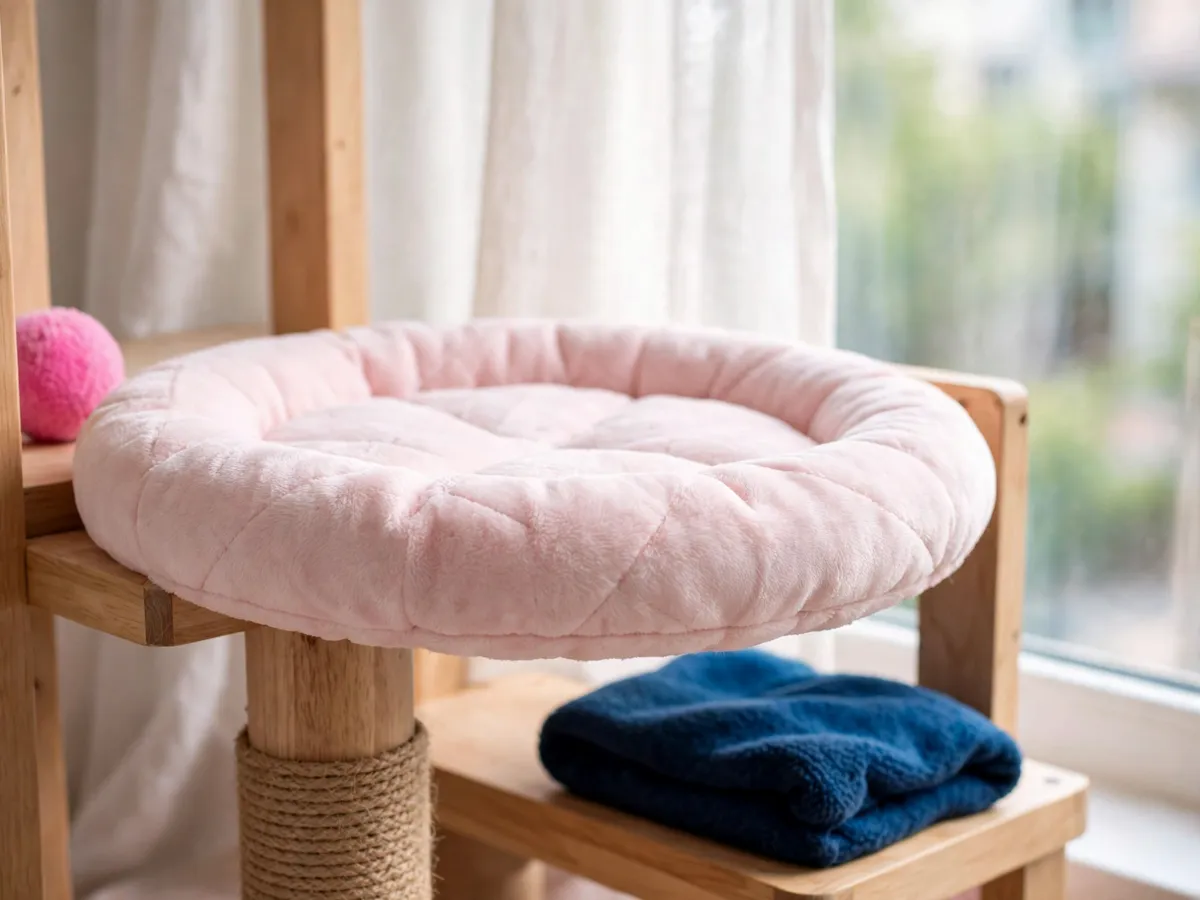
The perch is the part of the tree the room sees first, so give it the best view in the house. An ideal perch is elevated, with a padded cover, and an elevated area gives a cat vertical space to monitor its environment. In a living room that means the corner with the window sightline, a step back from the glass so the afternoon sun does not turn the pad into a pan.
Angle the perch toward the room rather than the wall. A cat who can watch the door, the window and the kitchen at the same time owns the room, and a cat that owns the room naps longer in it.
The window line
Indoor resting areas, such as a perch or a secluded surface, should include a spot where the cat can see outdoors. The window line is the one place in the living room where the cat agenda and the decor agenda agree, so put the perch inside it and let the glass do the entertaining.
The honest catch: style the spot and the cat decides. Some cats move in the first afternoon. Some inspect it for a week, sleep in the box it came in, and then move in anyway. Set the perch up properly, drape a familiar blanket over the pad, and let the blanket do the inviting.
Keeping the post busy
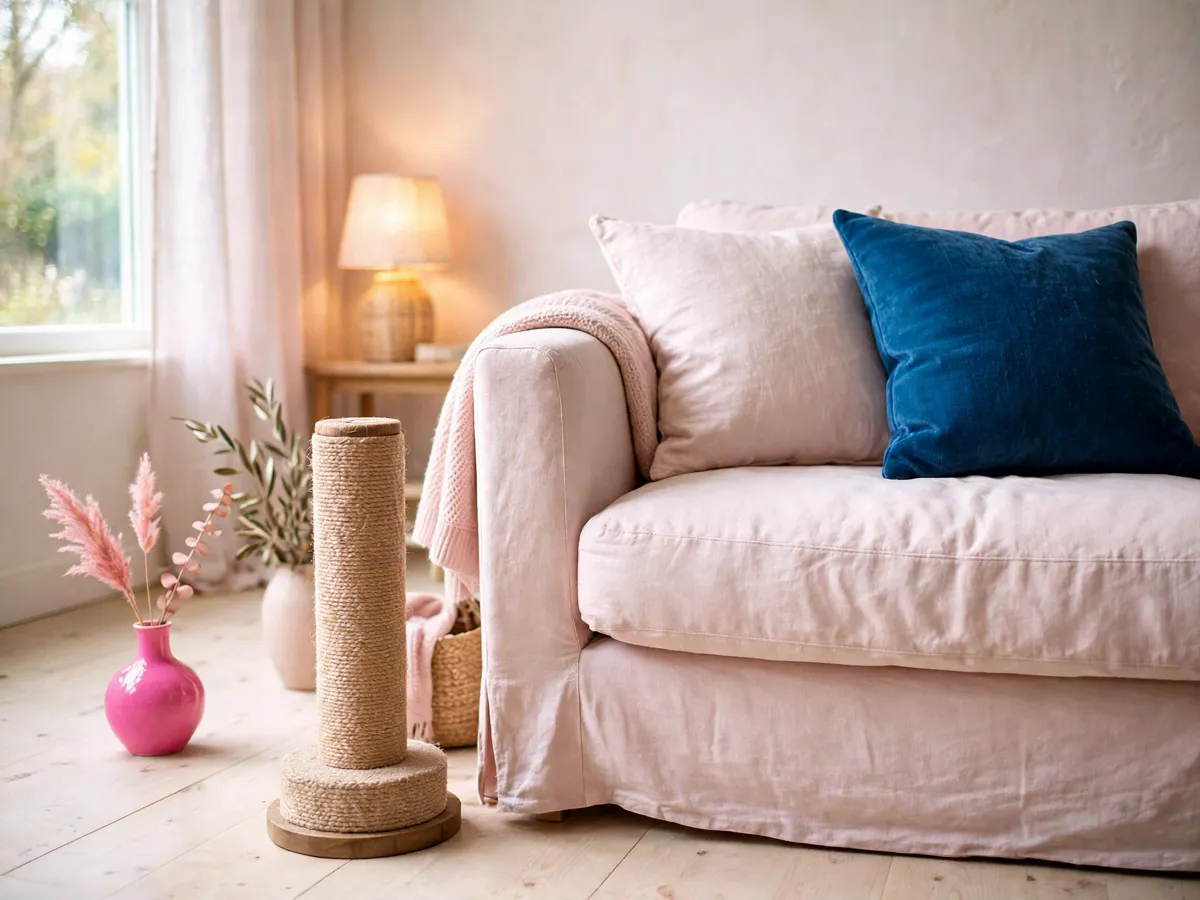
The scratching post earns its spot next to whatever the cat already scratches. Scratching areas can be a sisal-covered surface on an elevated perch or a scratching pad, and key resources should be available in multiple locations. In the living room that usually means the sofa arm, the doorway, and one more spot in the quiet corner.
Sisal in words: the wrap should feel tight and even, with no bald patches, and the base should take a firm shove without walking. A post that wobbles teaches the cat the sofa was the better offer all along, and the sofa rarely lets the lesson go.
Behind the sofa, beside the TV
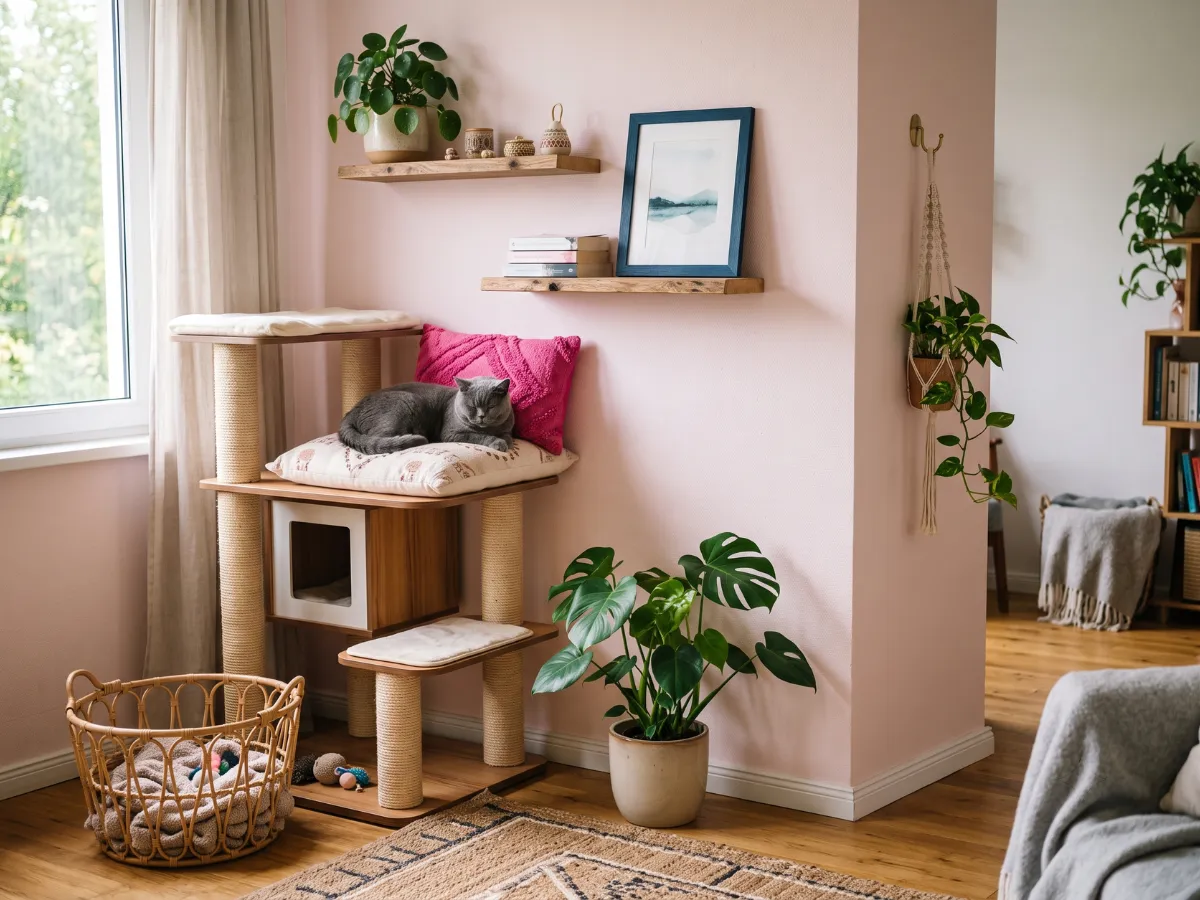
The tree anchors the room's quiet corner the way a lamp does: close to the wall, out of the walking line, and never leaning toward the electronics. The sofa-side anchor is the kindest host in the room because the sofa absorbs the wobble and the cat gets the room's best sightline from the top perch anyway.
The TV wall asks for clearance in words rather than a ruler: give the tree enough standing room that a landing never reaches the screen, and keep the same margin you would give a floor lamp that gets brushed on the way past. When the wall is crowded, the corner behind the sofa is the calmer anchor.
Cords, lamps and the wobbly shelf
Lamp cords run behind furniture rather than across the open floor the tree overlooks, the heavy vase on the ledge moves down to the shelf a tail cannot reach, and anything the tree leans against gets anchored to the wall. The living room reads calmer for it, and so does the cat.
A wobbly shelf is the one piece the room cannot dress around. Press every platform with a flat palm and listen for the rattle; a shelf that talks back gets its bracket tightened or its job given to a more grounded piece.
Low perches for the young and the old
For kittens and older cats with limited mobility, keep boxes, perches and shelves low or reachable by a ramp. The bottom platform of the tree is not the consolation prize; it is the spot a kitten and a senior cat share, and in a styled living room it is frequently the cutest thing in the corner.
A low perch by the window does the same job the tower does, without the climb. Pair it with the no-drill window perch for the rental-friendly version of the same view.
Small-room versions
A small living room does not skip the tree; it trades the tower for the pieces that fit. The wall-shelf ladder uses one free wall and zero floor, the single-post scratcher tucks beside the sofa, and the window sill does more work than its size suggests.
If the tree purchase itself is the open question, the aesthetic cat tree buying guide covers the specs, and the DIY wood shelf plans cover the build. The cat-proofing checklist handles the cords and the shelf rules for the rest of the apartment.
Questions about cat tree placement in the living room
Where should a cat tree go in a small living room?
The quiet corner with the best sightline. A tree earns the spot where it can see the window and the door without sitting in the walking path between them. Press it against a wall so the lean goes into something solid, and keep the door swing clear.
Will my cat actually use it?
The room gets a vote, but the cat gets the final one. A resting spot with a view of the outdoors is the strongest lure a tree has, so set the window side up properly and give it a week before judging. Some cats take the spot the moment the blanket smells like them.
Can I put it against the wall the TV is on?
Yes, with clearance in mind. The TV wall carries the cords, the lamp and the sound as well as the screen, so give the tree enough standing room that the wobble of a landing never reaches the electronics. When the wall is crowded, the sofa-side corner is the calmer anchor.
How do I stop the sofa scratching instead?
Place the post beside what the cat already marks. A sisal surface on a perch or a simple scratching pad both do the job, and more than one location is better than one perfect one. The post goes next to the sofa arm, not across the room from it.
Do older cats need a different tree?
Mostly lower. Kittens and older cats with limited mobility do best with boxes, perches and shelves kept low or reachable by a ramp. A low platform by the window does the same job the tall tower does, without the jump.
Place the tree in the shared room
Trees, sisal and anchors
Trees, sisal posts, wall anchors and the little extras that make a shared living room shared in peace.
See what we use →As an Amazon Associate we earn from qualifying purchases.
Save these on Pinterest
Pin the corner that fits your room: the window perch for the cats who watch, the sofa-side post for the cats who scratch, and the quiet-corner anchor for the room where everyone lands. The Cat-Friendly Home collection holds the full decor shelf. For informational purposes, consult your vet.
Sources
The perch and scratching rules on this page come from feline environmental needs guidelines, not from our own head: