 PawStyle Daily
DIY Cat Tree & Pet Crafts
How to Pick a Cat Tree That Looks Good in a Small Apartment
A cat tree earns its floor space when it fits the room first and the cat second: measure the wall and the window, pick from four small-space styles, feel the frame and the sisal before you pay, mount or weight it so it stands steady, then place it where the view does the inviting and finish with the printable checklist below. For informational purposes, consult your vet.
By PawStyle Daily · Updated 14 November 2026
Good to know: one afternoon to shop · Tape measure + stud finder · Anchor tall pieces; supervise new climbers.
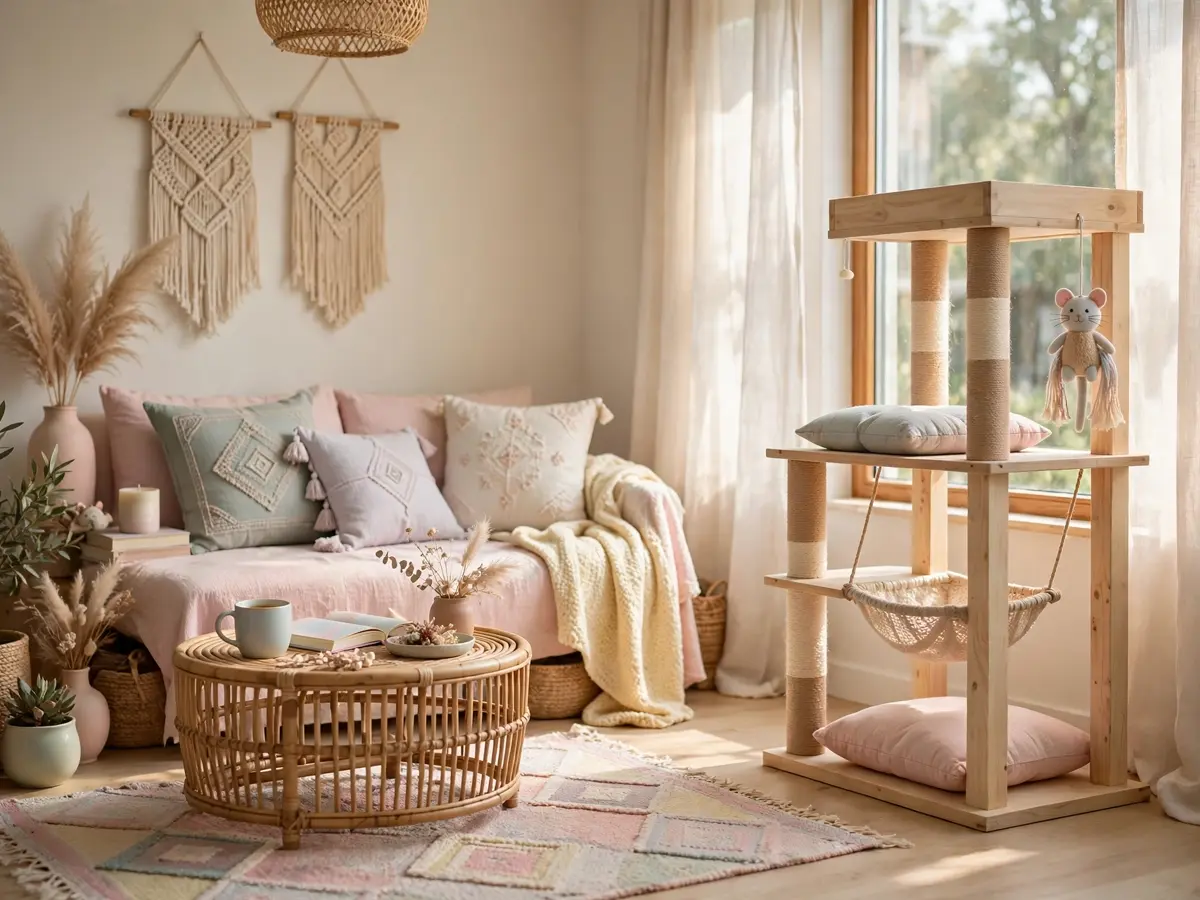
Start with the room, not the tree
A tree bought for the room you wish you had ends up listed for pickup within a month. Measure the room you actually live in first, then shop inside those numbers.
- Ceiling and wall height. Tape the height from floor to ceiling where the tower would stand, then mark the same height on the wall with masking tape and live with the line for a day. What looked slim online often reads tall in a 300sqft room.
- Floor footprint. Tape a square on the floor in the size of the base you are considering, and walk around it for two days. If you kick the tape, you would kick the tower.
- Window, door and noise. Note which wall holds the window, which way the door swings, and which wall carries the television or the street sound. The tree wants the window wall, clear of the door arc and off the loud wall.
- Box and bowls first. Sketch where the litter box and the food and water bowls already sit. Give each resource its own spot and let the cat choose: a minimum of two resting areas, two feeding areas and two toileting areas. The tree becomes one resting spot, while the box and the bowls keep their own corners across the room from it and from each other.
The four tree styles
Small rooms take four shapes of tree. Pick the shape that matches your walls and your lease before you fall for a colour.
Four cat tree styles for small rooms
| Style | Footprint | Best room | Watch-out |
|---|---|---|---|
| Slim floor tower | About 2x2 ft of floor | Rentals and first trees | Top platform must sit over the base |
| Floor-to-ceiling tension tower | One floor tile plus ceiling contact | Tall narrow rooms | Ceiling must be solid, re-check tension monthly |
| Wall-mounted ladder and shelf run | Zero floor space | Rooms with one free wall | Needs studs or rated anchors |
| Furniture-style wood and sisal tower | About 2x2 ft, reads as a side table | Living rooms where looks matter | Costs more, check sisal coverage before paying for looks |
Measure twice, order once: every style above assumes anchors rated for climbing weight.
Materials: what to touch before you buy
Frames decide how long the tree lasts. Solid wood posts and platforms cost more and hold their screws for years, while particleboard panels read fine at first and loosen at the joints sooner. Press the platform edge in the shop: a solid piece stays quiet, a hollow one flexes.
Columns decide where the scratching happens. Plan one scratching spot on the tree itself: scratching areas can be a sisal-covered surface on an elevated perch or a scratching pad, and key resources should be available in multiple locations. That means one sisal column on the tower plus a second pad across the room, rather than every scratch aimed at a single post.
Covers decide the laundry load. Plush covers photograph soft and pill under daily kneading, while tight-weave washable covers pull off, wash cool and dry flat. If you love the plush look, check that the cover unzips before you pay.
- Squeeze the sisal. The fibres should feel tight and even, with no bald patch where the wrap meets the post.
- Press the platform. Lean on the edge with a flat palm. It should not dip or creak.
- Smell the carpet. A strong shop smell means an airing-out day in a ventilated room before set-up day.
- Pull the cover. Zips or elastic mean washable. Stapled fabric means spot-clean only.
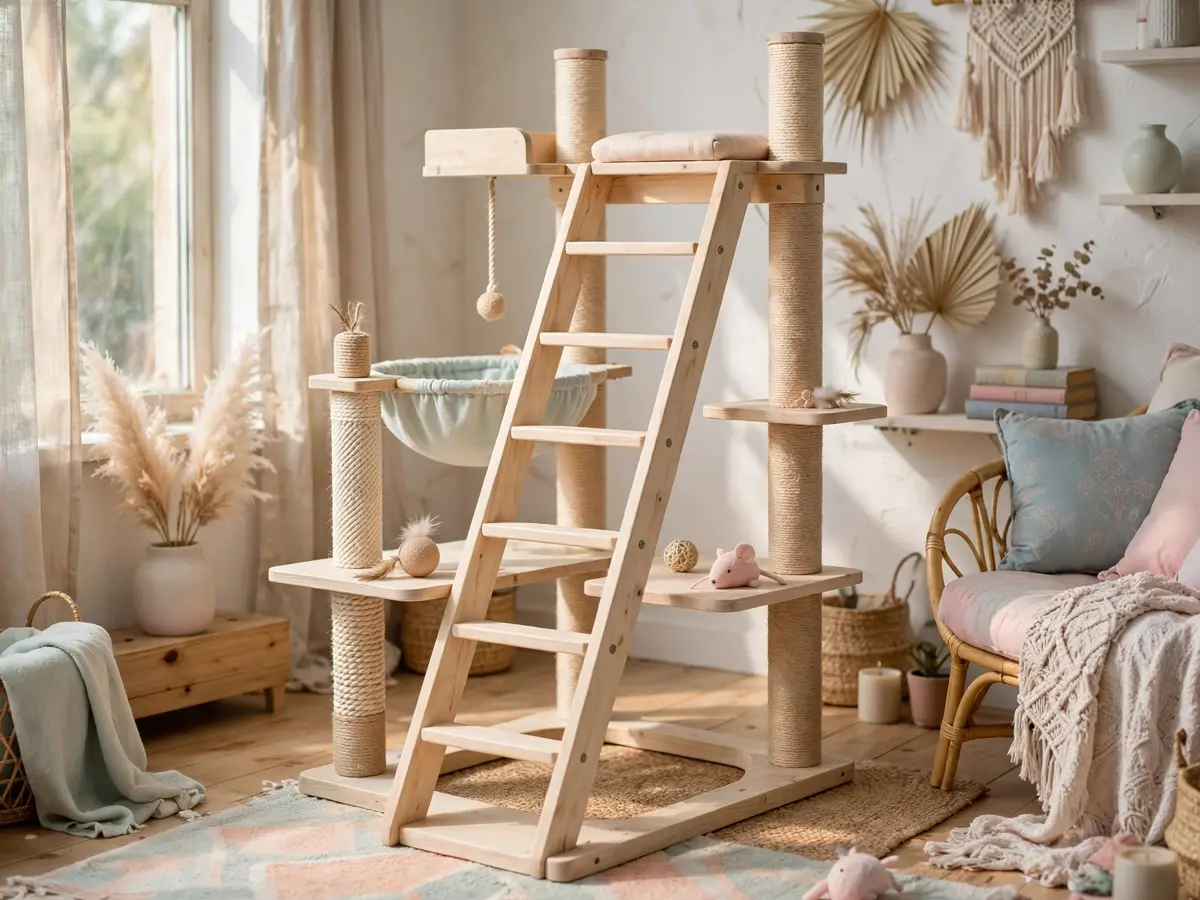
Height and stability
Height is only useful when the base can carry it. Choose a tower whose base is wider than its top, stand it against a wall, and keep the climbing weight over the base rather than the front edge.
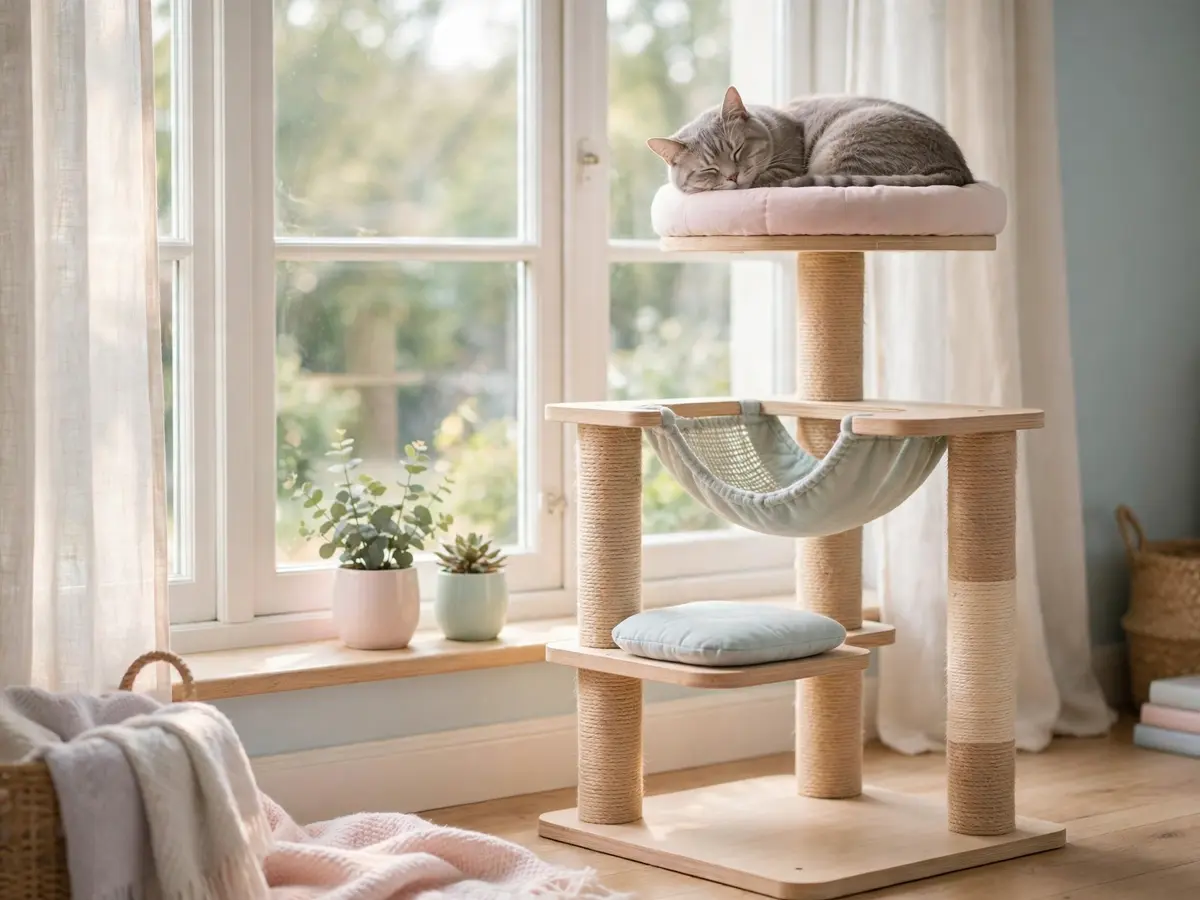
Set the nap spot at the top with the view in mind. An ideal perch is elevated, with a padded cover, and an elevated area gives a cat vertical space to monitor its environment. A padded platform at the top, facing the room or the glass, gets more naps than a bare board halfway up.
Match the climb to the cat using it. For kittens and older cats with limited mobility, keep boxes, perches and shelves low or reachable by a ramp. A low ramp or a step stool beside the tower keeps the top perch in reach without a big jump.
Test before the cat does. Set the tower, press the top platform with a flat palm and hold for a slow count of five, and watch the base edge for lift. Floor-to-ceiling models get the same test after the tension mount is set, then again a week later.
Placement that gets the tree used
A well-placed tower near a window collects naps. The same tower in a hallway collects dust. Put the tree a step back from the glass so the top perch faces the view, keep it clear of the door swing, and off the wall with the television.
The view is the point. Indoor resting areas, such as a perch or a secluded surface, should include a spot where the cat can see outdoors. Angle the top perch toward the glass and keep the sill clear so the watch stays open all day.
Keep the jobs apart. The box and the bowls stay in their own corners, away from the tower and from each other, so the resting spot never doubles as a dining room.
Pair this guide with our small apartment cat corner ideas to place the tower inside a full room plan, and see the DIY cardboard cat castle for the box-based route and the no-budget route before you spend.
Set-up day
Build in this order and the tower stands right the first time.
- Unpack in order. Lay out every post, platform and bolt, match them to the diagram, and set the hardware in a bowl so nothing rolls under the sofa.
- Build low to high. Fix the base first, add the scratching columns, then the platforms, finishing with the top perch.
- Tighten twice. Tighten every bolt once during the build, then go around a second time after the tower stands. Re-check after a week of climbing.
- Leave it empty for a day. Let the new piece sit in its spot before the invitations start.
- Add one familiar blanket. Drape a blanket from the usual sleeping spot over the perch, then step back and let the cat find it.
Maintenance rotation
A tower stays steady on four small jobs, each one short enough to fold into a weekend reset.
Cat tree maintenance rotation
| What to check | How often | What to use |
|---|---|---|
| Sisal columns | Monthly | Brush against the weave, rotate the post if the mount allows, lint-roll loose fibre |
| Covers and pads | Every two weeks | Pull off, shake out, wash cool, dry flat |
| Bolts and tension mounts | Monthly | Tighten every bolt, re-check ceiling contact, hand-press the top |
| Floor and crumbs under the tower | Weekly | Vacuum the base and the seams, wipe the tray |
Small jobs on rotation keep the tower steady and the room looking kept.
Common problems and the fix
Five problems show up in almost every small room, and none of them needs a new tower. Each one is fixed at the base or at the window.
Cat tree problems and fixes
| Problem | Likely cause | Fix |
|---|---|---|
| The tower wobbles when the cat lands | Base narrower than the top or bolts loosened | Move the weight over the base, tighten every bolt twice, and re-test with a hand press |
| The cat ignores the new tower | It faces a blank wall instead of the view | Turn the top perch toward the window, lower the climb, and leave it alone for a week |
| The cover pills after a month | Loose-weave fabric under daily kneading | Swap to a washable cover, brush weekly, and rotate pads between spots |
| The sisal shreds at one spot | One column takes every scratch | Add a second scratching pad across the room, brush the column, and rotate the post |
| The tower takes over the room | The tallest piece landed on the longest wall | Move it to the short wall by the window, and keep one vertical line per wall |
Test each fix with a hand press before the cat does it for you.
Cat tree checklist: copy before you buy
- Measure the ceiling and the wall footprint first
- Base wider than the top, weight over the base
- Sisal on at least one column, plus a second pad across the room
- Washable covers that pull off
- A ramp or step for kittens and older cats
- A top perch in view of the window
- Box and bowls in their own spots, away from the tower
Questions we get about buying a cat tree
How tall should a cat tree be in an apartment?
Tall enough for a top perch with a view, low enough that the base still rules. An ideal perch is elevated, with a padded cover, and an elevated area gives a cat vertical space to monitor its environment. For kittens and older cats with limited mobility, keep boxes, perches and shelves low or reachable by a ramp. For informational purposes, consult your vet.
Wood or carpet towers — which reads better in a small room?
Light solid wood reads as furniture and holds its screws longer, while full-carpet towers read bulkier and pill sooner under daily kneading. If you love the carpet look, pick a wood frame with carpet pads you can pull off and wash. Touch the frame edge in the shop: solid stays quiet when you press it.
Will my cat actually use a tree next to the window?
The window is the strongest lure a tower has. Indoor resting areas, such as a perch or a secluded surface, should include a spot where the cat can see outdoors. Set the top perch a step back from the glass, keep the sill clear, and leave the tower alone for a week before you judge it.
When is a wall-mounted ladder or shelf run better than a tower?
When the floor has nothing left to give. A ladder and two shelves use zero floor space and suit rentals with one free wall, as long as every bracket lands in a stud or a rated anchor. If the plaster crumbles or the wall is off-limits, stay freestanding instead.
How do I keep a cat tree steady?
Base wider than the top, tower against a wall, weight over the base, every bolt tightened twice. Press the top platform with a flat palm for a slow count of five: if the base edge lifts, move the tower or add the tension mount before the cat climbs it.
Is a cardboard castle enough to start?
For a young cat or a tight month, yes. Scratching areas can be a sisal-covered surface on an elevated perch or a scratching pad, and key resources should be available in multiple locations. A cardboard castle with a scratching pad covers the scratch and hide jobs while you save for the tower. Give each resource its own spot and let the cat choose: a minimum of two resting areas, two feeding areas and two toileting areas.
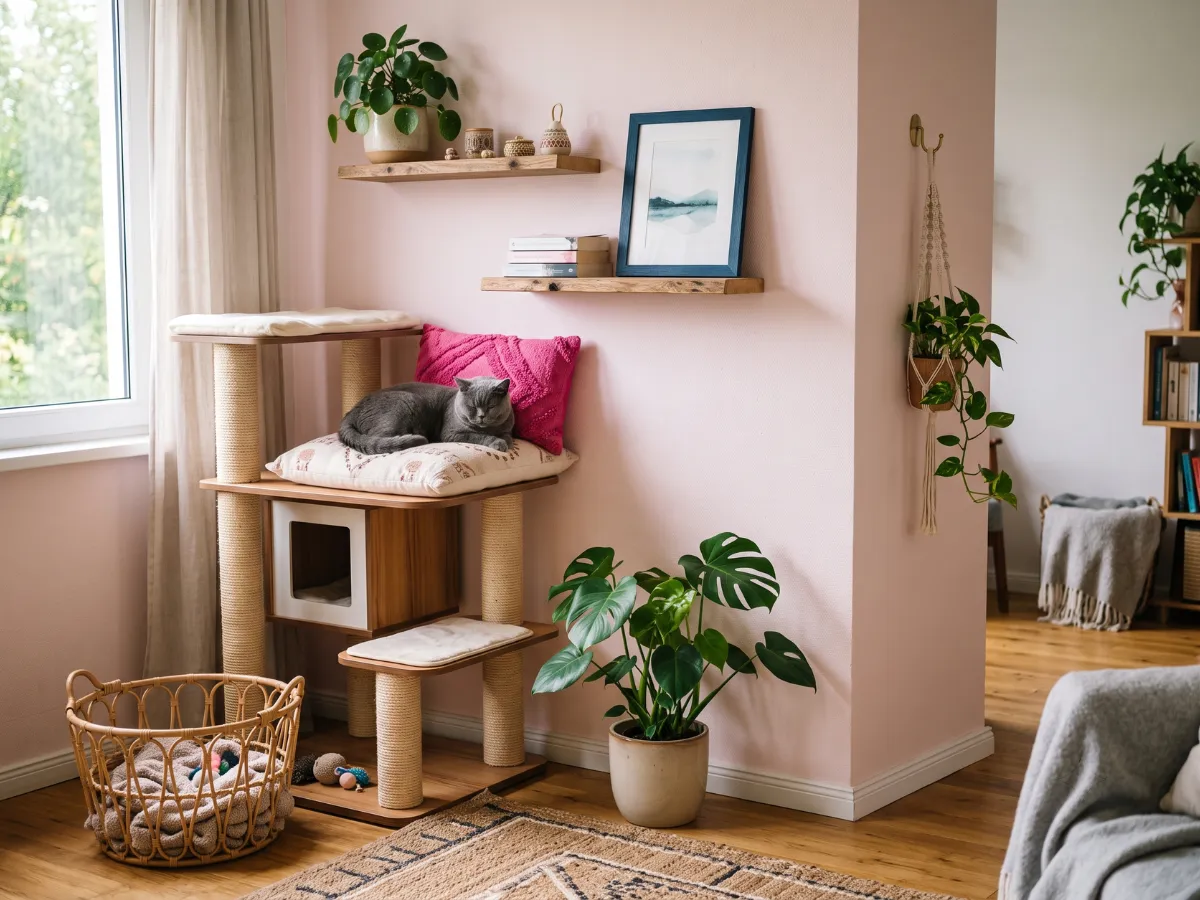
What we use
What we use for cat trees
Towers, sisal scratchers, wall shelves and the tools to mount them — picks in one list.
See what we use →As an Amazon Associate we earn from qualifying purchases.
Save these on Pinterest
Pin the tree shape that fits your floor plan. The Cat Home collection holds the corner, litter and DIY tree guides.
Sources
The placement and perch rules on this page come from feline environmental needs guidelines, not from our own head: