 PawStyle Daily
Cat-Friendly Home
Cat Tree for Large Cats: Platform Width, Post Strength, Weight
A large cat on a cat tree is a weight and a half of animal on top of a tall pole, and the tree either holds that weight or it wobbles. The cat tree market sells trees by height and by look, and a tall tree with a narrow base and thin posts looks fine until a Maine Coon hits the top platform at a run. This page walks through the four shape checks that actually decide whether a tree holds a big cat: platform depth, post thickness, base weight, and breed fit. Run all four on one frame before the cat does.
By PawStyle Daily · Updated 22 November 2026
Four checks on one frame · platform depth off the cat, not the box · the wobble test is the real weight rating · for informational purposes, consult your vet.
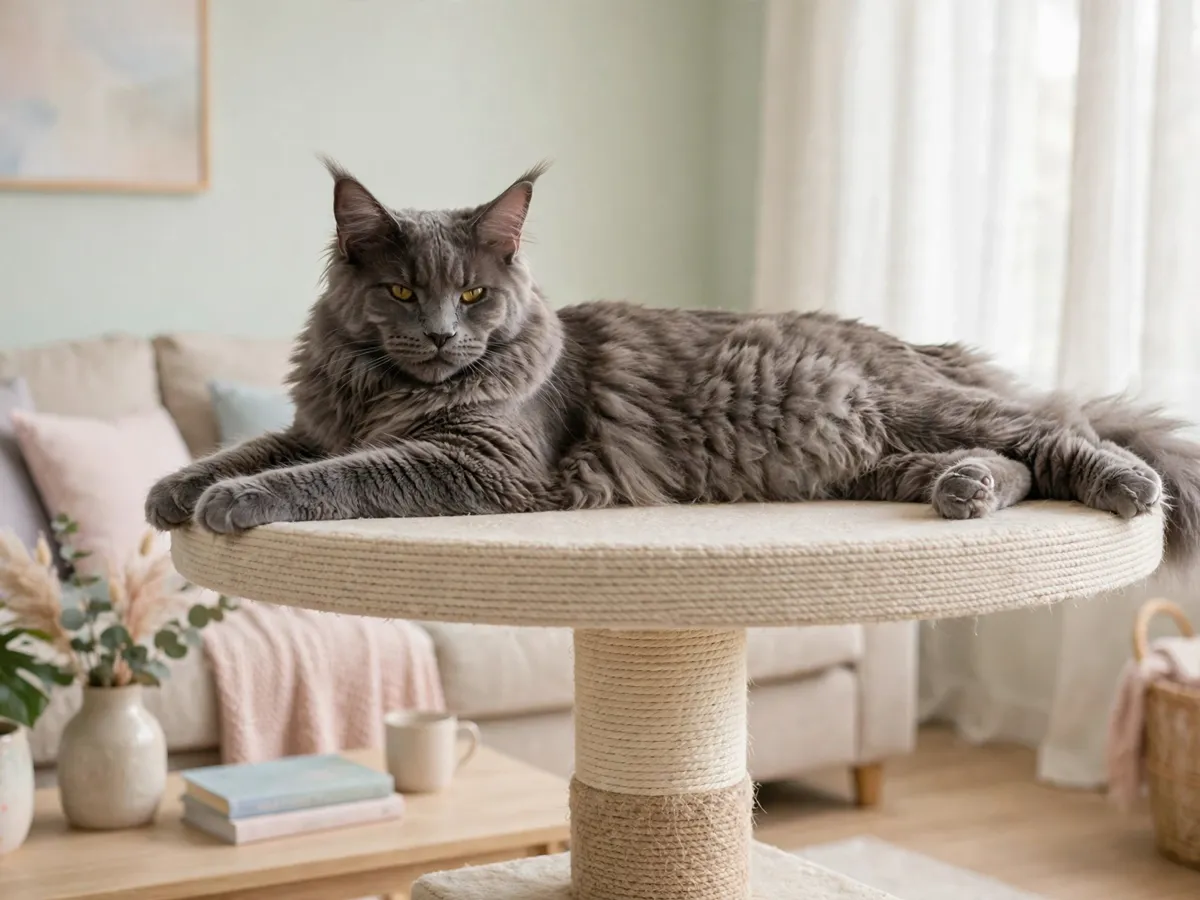
A Big Cat Needs a Tree Built for a Big Cat
A big cat is not just a cat that weighs more. A Maine Coon carries length as well as weight, a Bengal carries speed and leap, and a ragdoll goes limp the moment it decides the platform is home. The tree has to hold the animal at its most committed: the full stretch on the top perch, the leap onto the highest platform, the dead weight of a cat asleep sideways. A tree built for a small cat fails on all three the day the cat arrives.
The shape checks on this page read the frame off the cat, not off the spec sheet. The platform is deep enough when the cat lies down on it and no paw hangs off. The post is thick enough when the cat stretches full length and the wrap holds. The base is heavy enough when the cat leaps to the top and the base stays flat on the floor. The breed fit is right when the tree sits where the cat already spends its time. Run those four and the tree holds the cat it was bought for.
This page owns the four checks for a large cat on a tall frame. The breed detail lives on the breed pages: the Maine Coon cat tree guide covers the Maine Coon body and temperament on a tree, and the Bengal cat tree guide covers the Bengal leap and climb. Read this page for the frame checks, then read the breed page for the breed temperament.
The Four Shape Checks on One Frame
The four checks run in order, and each one rules out a failure the next check cannot catch. Platform depth rules out the tree the cat cannot lie down on. Post thickness rules out the tree the cat shreds past the wrap in a season. Base weight rules out the tree that tips when the cat leaps. Breed fit rules out the tree the cat ignores because it sits in the wrong corner of the room. Skip a check and the tree passes in the store and fails in the living room.
The order matters because a tall tree with a deep platform and a thick post still tips if the base is light, and a heavy tree with a deep platform still goes unused if the breed fit is wrong. The wobble test, covered below, catches the base weight on a tall frame, because the rating on the box is a number someone wrote and the wobble is a thing the floor does.
The checks read the cat, not the catalogue. The platform depth comes off the cat lying down, the post thickness comes off the cat stretching, the base weight comes off the cat leaping, and the breed fit comes off the cat the household already owns. A tree that passes all four on paper and fails one in the room is a tree that fails, and the room is where the cat lives.
Platform Depth and the Lie Down Test
The platform is the part the cat sleeps on, and the depth decides whether the cat sleeps on it or beside it. A large cat stretched out takes more length than a standard platform gives, and a cat that hangs a paw or a tail off the edge is a cat that shifts, then moves, then abandons the perch. The lie down test is the check: the cat lies flat, and the platform holds every paw and the tail. If any part of the cat hangs off, the platform is too shallow for that cat on that tree.
Read the depth off the cat, not off the box. The catalogue lists the platform in numbers, and the cat lists the platform in paws. A Maine Coon at full stretch is longer than the catalogue assumes, and a Bengal curled tight is shorter. The cat on the platform is the measurement that matters, because the cat decides whether the perch is a bed or a shelf.
The top perch is the one to check, because the top perch is where the large cat wants to be. A tree with a deep bottom platform and a shallow top perch sends the cat to the top and then drops it. Check the top perch first, and if the cat lies flat and stays, the tree passes the depth check on the platform that counts. The lower platforms can be shallower, because the cat uses them as steps, not as beds.
Post Thickness and the Sisal Wrap
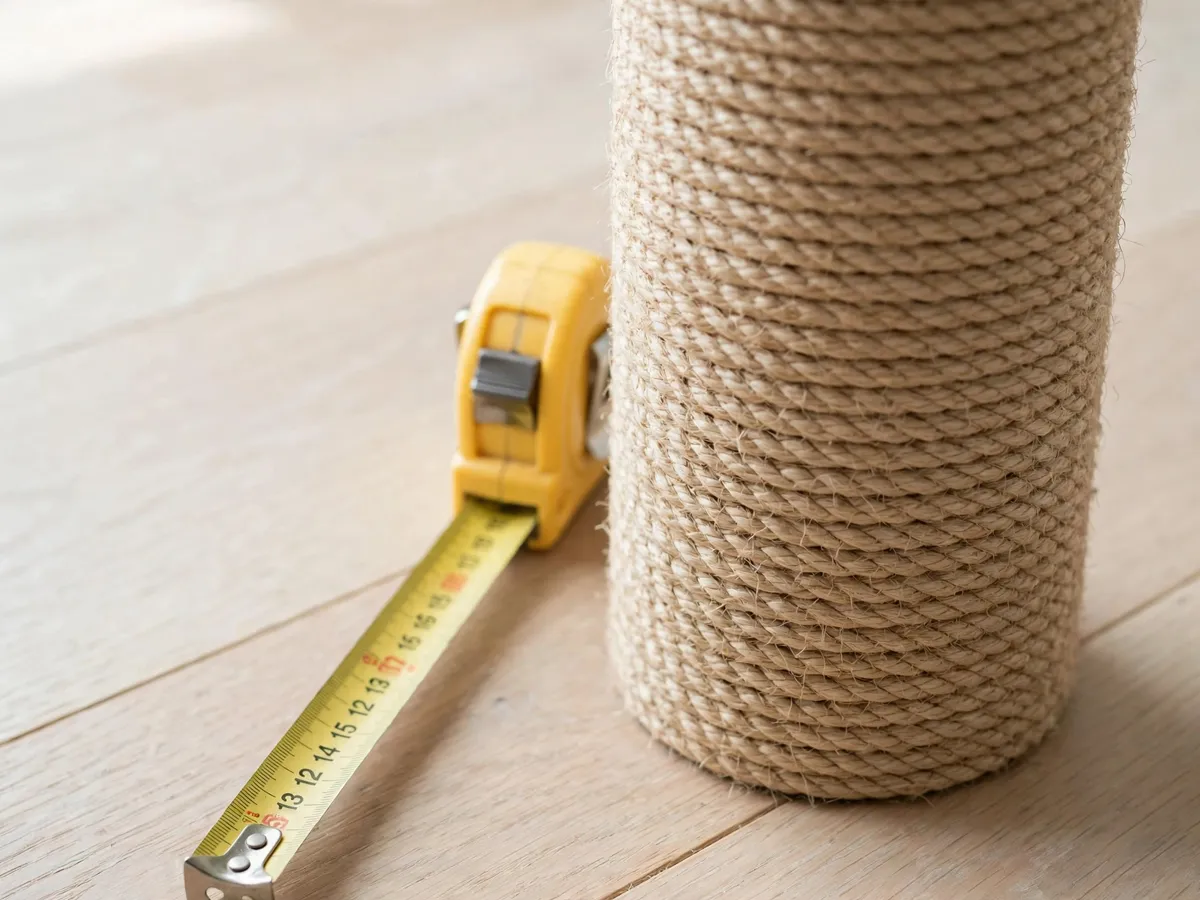
The post is the part the cat scratches, and the thickness decides whether the cat scratches it or shreds it. A thin post on a large cat tree flexes when a big cat digs in, and a flexing post pulls the wrap loose at the staple. A thick post holds steady under the full weight of a cat pulling sideways, and the wrap stays tight for seasons instead of weeks. The thickness check is simple: the post should be the kind a large cat can lean on without the post leaning back.
The sisal wrap is the scratching surface, and the wrap is the part that wears. A tight wrap, wound under tension and stapled at both ends, holds a large cat for a season of daily scratching. A loose wrap, wound without tension and stapled at one end, pulls free the first time a big cat digs in. Check the wrap by pressing a thumb into it: a wrap that gives under the thumb gives under the cat.
When the wrap wears through, the post underneath is the part that decides whether the tree gets a new wrap or a new post. A solid wood core takes a rewrap and keeps the tree in the room; a cardboard core does not. The cat tree post repair guide covers the rewrap and the core check, so this page leaves the repair there. The check here is the thickness and the wrap on the day the tree arrives, because a thin post with a loose wrap is a tree that fails before the cat breaks it in.
Base Weight and the Wobble Test
The base is the part that holds the tree up, and the weight is the part that decides whether the tree stands or tips. A tall tree with a light base is a lever: the cat at the top is the force, the base is the fulcrum, and the floor is where the tree lands. The wobble test is the check that catches a light base before the cat does. Press a hand against the top of the tree and push sideways, the way a large cat lands on it. A base that lifts on one corner is a base that lifts when the cat lands, and a tree that lifts when the cat lands is a tree that tips.
The weight rating on the box is the manufacturer line, and the wobble is the floor line. A tree rated for a heavy cat still wobbles if the base is narrow, because the rating is about the platform, not the base. The base weight is the number that holds the tree up, and the base footprint is the shape that keeps the tree from tipping. A wide, heavy base on a tall tree holds a large cat at the top; a narrow, light base on the same tree drops the cat.
A wall anchor is the backup, not the substitute. A wall anchor holds the top of the tree to the wall, and it catches the tree when the base is almost heavy enough. It does not replace a base that lifts on one corner, because the bracket takes the load the base should carry, and a bracket is not built for the full weight of a leaping cat. Run the wobble test first, add the wall anchor second.
Where Maine Coon and Bengal Fit on a Tall Unit
The breed fit is the check that decides whether the tree gets used, and it is the check the catalogue cannot make. A Maine Coon wants a tall tree with a deep top perch and thick posts, because the Maine Coon is long, heavy, and a stretcher. A Bengal wants a tall tree with multiple levels and a sturdy top, because the Bengal is fast, a leaper, and a climber. The same tall tree holds both, but the breed the household owns decides which platform the cat claims and which post the cat shreds.
The aesthetic is a separate decision, and it has its own page. The real wood cat tree options page covers the wood, the grain, and the finish, so this page leaves the look there. Run the checks first, pick the look second, and the tree holds the cat and fits the room.
Cat tree for large cats questions
What weight rating should a cat tree for a large cat carry?
Look for a base weight rating that names the cat it holds. A tree marketed for a large frame lists a pound ceiling on the spec sheet, and that number is the manufacturer line, not a promise the tree will not wobble. Load the top platform and watch the base. A base that lifts on one corner is too light for the cat, regardless of the label.
Where do the sisal post and the other resources go on a big cat tree?
Scratching areas can be a sisal-covered surface on an elevated perch or a scratching pad, and key resources should be available in multiple locations. On a tree for a large cat that means the sisal wrap on the thickest post, a pad at the base, and a scratch surface on the perch. Set the tree where the cat already scratches.
Can a tall cat tree work in a small apartment for a big cat?
A tall tree works when the base is wide enough to carry the height. The risk on a tall unit is not the ceiling but the base: a narrow base on a tall tree tips when a large cat leaps to the top. Choose a base footprint that fills the corner, and wall anchor the top, so the weight of the cat lands on the base, not the bracket.
Save the Shape Check Sheet
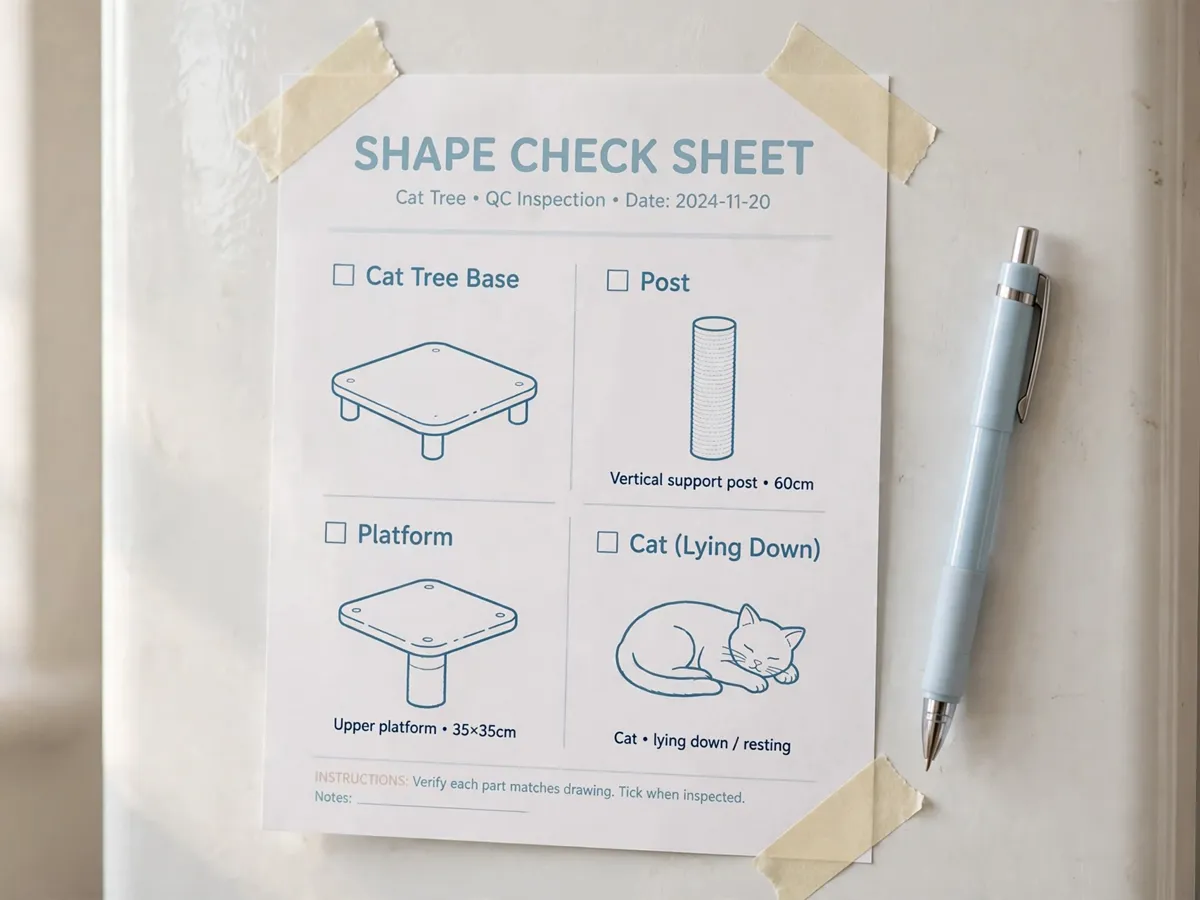
Pin this guide for the next tree shopping trip, and run the four checks on the frame in the store or on the frame in the room. The Cat-Friendly Home collection holds the breed pages, the wood options, and the post repair guide. For informational purposes, consult your vet.