 PawStyle Daily
Cat-Friendly Home
Replacing Cat Tree Posts: A Repair Guide
A cat tree is the tallest piece of furniture in the house that a cat is allowed to destroy, and the post is the part they destroy first. The sisal wrap frays, the bare wood shows through, and the wobble starts long before the platforms lose their grip. Most owners read the frayed post as the end of the tower. It is the start of a repair that costs an afternoon and a bag of rope, and the tower goes back to work the same week. This guide walks through reading the wear, measuring the column, rewinding the sisal, and reinforcing the base so a repaired tree stands like a new one.
By PawStyle Daily · Updated 20 November 2026
Good to know: match the diameter first · sisal under tension · check every joint while the tower is apart · for informational purposes only.
Why a post wears out and the tower does not have to
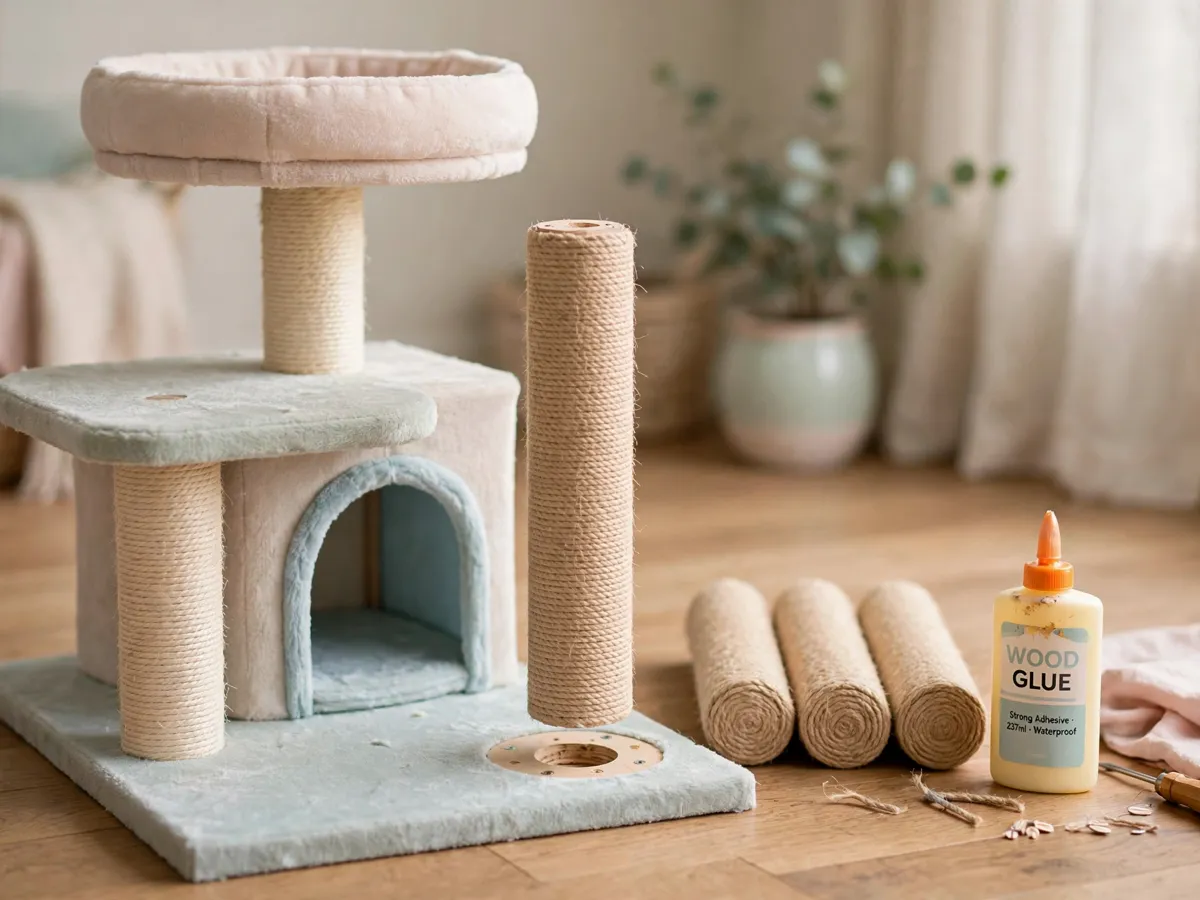
Sisal is a consumable surface. The post underneath is solid wood or a cardboard tube, and it lasts years beyond the wrap. The daily scratching load falls on the post because it is the vertical surface at claw height, while the platforms, the hideaways and the ramps see foot traffic but not the hook-and-pull of claws. A frayed post is a wrap that did its job and needs replacing, the way a sofa cushion needs reupholstering long before the frame needs replacing.
The second failure is the wobble. A tall tower on a small base works loose at the joints over months of jumping and leaning, and the post replacement is the right moment to tighten everything else. The repair is two projects in one afternoon: a new scratch surface and a tower that stands solid again. The sections below cover both, and the parts list is short: a replacement post or a roll of sisal rope, wood glue, a staple gun, and a handful of hardware for the base.
Reading the wear
Three checks tell you what the repair is. The first is the sisal itself: frayed loops, loose ends unravelling from the top, bald patches where the wood shows through. A post with most of its wrap still tight can be spot-repaired by rewinding the bare section. A post with broad bald patches or a wrap that pulls away from the wood needs a full rewrap, which is the same job with more rope.
The second check is the post integrity. Cracks in the wood, deep splinters at the top edge, or a post that shifts in its fitting when pushed side to side mean the post itself needs replacing, not just the wrap. A cracked post carries less load and the crack spreads under scratching. The third check is the tower stability: wobble at the base, play in the joints between levels, a column that leans. These tell you the repair is bigger than the post, and the reinforce section below covers the base and joints while the tower is apart.
Measure the column before you buy anything
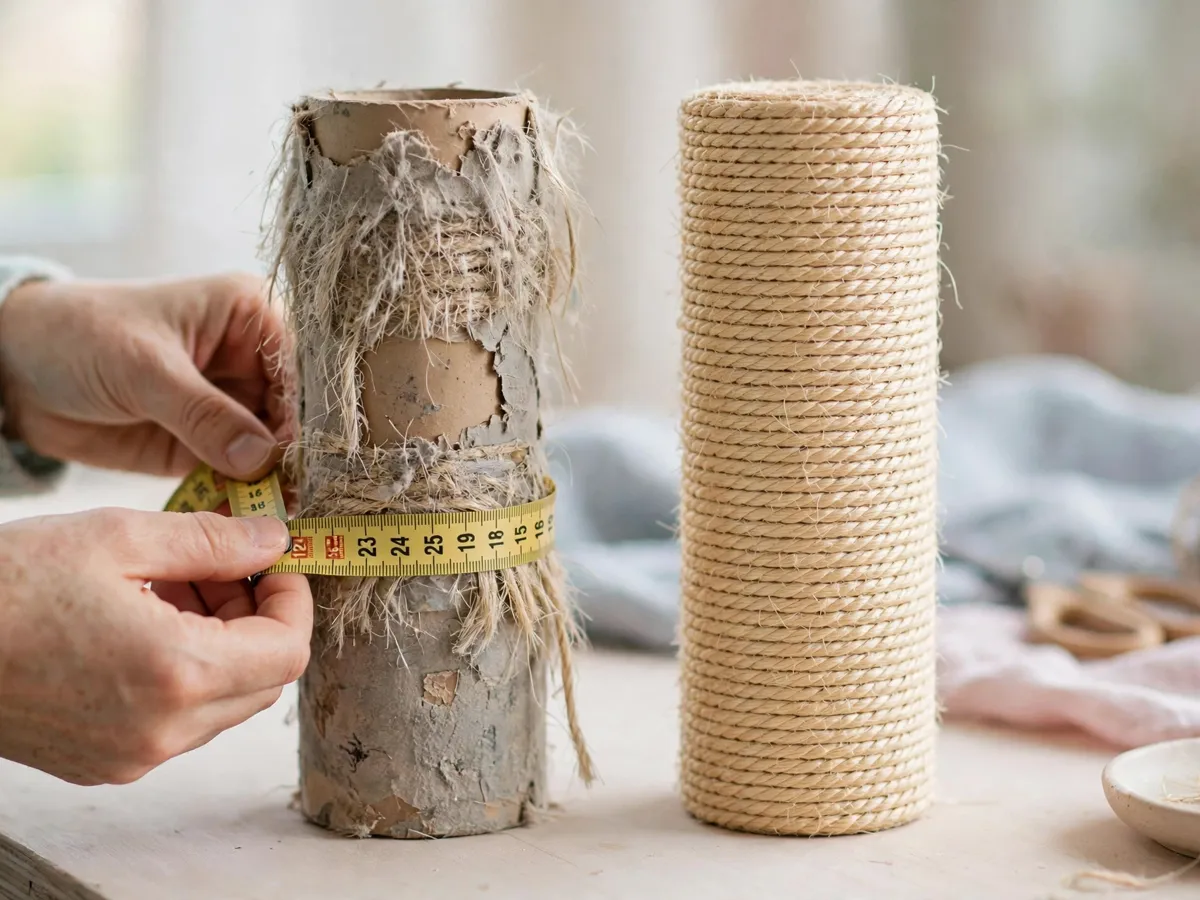
The diameter is the number that decides everything. Measure the bare wood, not the old sisal, because the wrap adds thickness and a post bought to match the wrapped diameter will not fit the fitting. A caliper gives the cleanest read, but a tape measure around the circumference and a quick division by pi works for a round post. Write the diameter down and carry it to the hardware store, because visual matching is how owners end up with a post that is close but not right.
Length is the second number: base to platform, including the tenon or threaded section that slots into the platform above. A post cut short leaves a gap; a post cut long pushes the platform off level. The fitting type is the third detail. Threaded posts screw into a metal insert in the platform, so count the threads per inch on the old post or bring it to the store. Glued posts pull out with a twist and a pull, and the replacement is a plain dowel of matching diameter glued back in. Bolted posts use a hex bolt through the platform into the post base, and the bolt size is the only number that matters. The brand-specific replacement post is the easiest path, and a cat tree buying guide lists which brands sell replacement parts directly.
Rewrapping with sisal rope

Strip the old sisal down to bare wood. Pull every staple, scrape the glue residue, and sand the surface smooth so the new rope lies flat. The rope is natural sisal, a thin gauge or a medium one, bought by the length from a hardware store or a marine supply shop. Thicker rope covers more area per loop but gaps more easily; thinner rope winds tighter but takes longer. Start at the base: staple the rope end to the wood, run a thin bead of wood glue along the first few centimetres, and wind the first loop tight against the base.
The winding is the whole job. Each loop sits flush against the previous one, pulled taut by feeding the rope from a spool or a ball that rolls freely. Gaps appear when the tension drops, and a gap is a spot where claws catch and the wrap unravels early. Keep winding until the post is covered to the top, then staple the final loop, trim the rope, and dab the cut end with wood glue so it does not fray. The glue sets in the time printed on the tube, usually a day to full strength, and the tower goes back together the next day. The rewrap is the same technique the DIY cat tree plans page uses on a fresh post.
Reinforcing the base and joints
The post is out, which means the tower is apart, which means every joint is accessible. Start at the base and work up. Threaded joints get tightened by hand or with a wrench on the hex fitting, and a loose thread that will not tighten needs a wrap of thread seal tape around the fitting before it goes back together. Glued joints that have worked loose get a fresh bead of wood glue before reassembly, and the clamp or strap that holds them while the glue sets is the same one that held the original joint on the day the tower was built.
The base is where tall towers fail. An L-bracket on each corner of the base, screwed into the floor platform and into the post, adds lateral rigidity that the original design did not have. For a tall tower, a wall strap is the single most effective addition: one end bolts to the top platform and the other anchors into a wall stud, and the wobble is gone for good. Carpet floors get a sheet of plywood under the base to spread the load, and the L-brackets bolt through the plywood. While the tower is apart, check the platform attachments: a platform that flexes under hand pressure needs a corner bracket, and a ramp that sags needs a support block under the low end. The pass is quick and it is the difference between a repaired tower and a solid one.
Cat tree post repair questions
Can a worn post be replaced instead of buying a new tower?
Most stacked towers use threaded or glued posts, so a matching diameter post and strong wood glue restores the column.
What causes sisal to fray so quickly?
Heavy scratching in one spot plus a loose wrap end. Rewinding under tension and gluing the end stops the unravelling.
How do I stop the tower wobbling after a repair?
Check every joint, tighten the threaded posts, and add a wall strap on tall towers. A fixed base matters more than the post itself.
Save this repair guide
Pin it for the weekend the sisal gives out, and keep the measurement rules handy for the hardware store run. The Cat-Friendly Home collection holds the buying guide, the DIY plans, and the placement notes that sit beside this repair.
For informational purposes only.