 PawStyle Daily
Cat-Friendly Home
Cat Tree for Maine Coons: Size and Strength Guide
A Maine Coon reads a cat tree differently from the average house cat. The platforms are not perches to balance on, they are places to lie across, and the posts take the kind of force that turns a standard tower into a sway test. Owners of big cats learn this the hard way: the tree that looked generous in the product photos arrives, the cat stretches out on the widest platform and hangs over both edges, and the tower retires within a season. This guide walks through the four checkpoints that separate a tree a big cat uses daily from one that gathers dust: the platform width, the post strength, the joints that take every landing, and the layout that earns daily climbs.
By PawStyle Daily · Updated 20 November 2026
Good to know: width before height · a post thicker than the old one · check the joints every month · for informational purposes only.
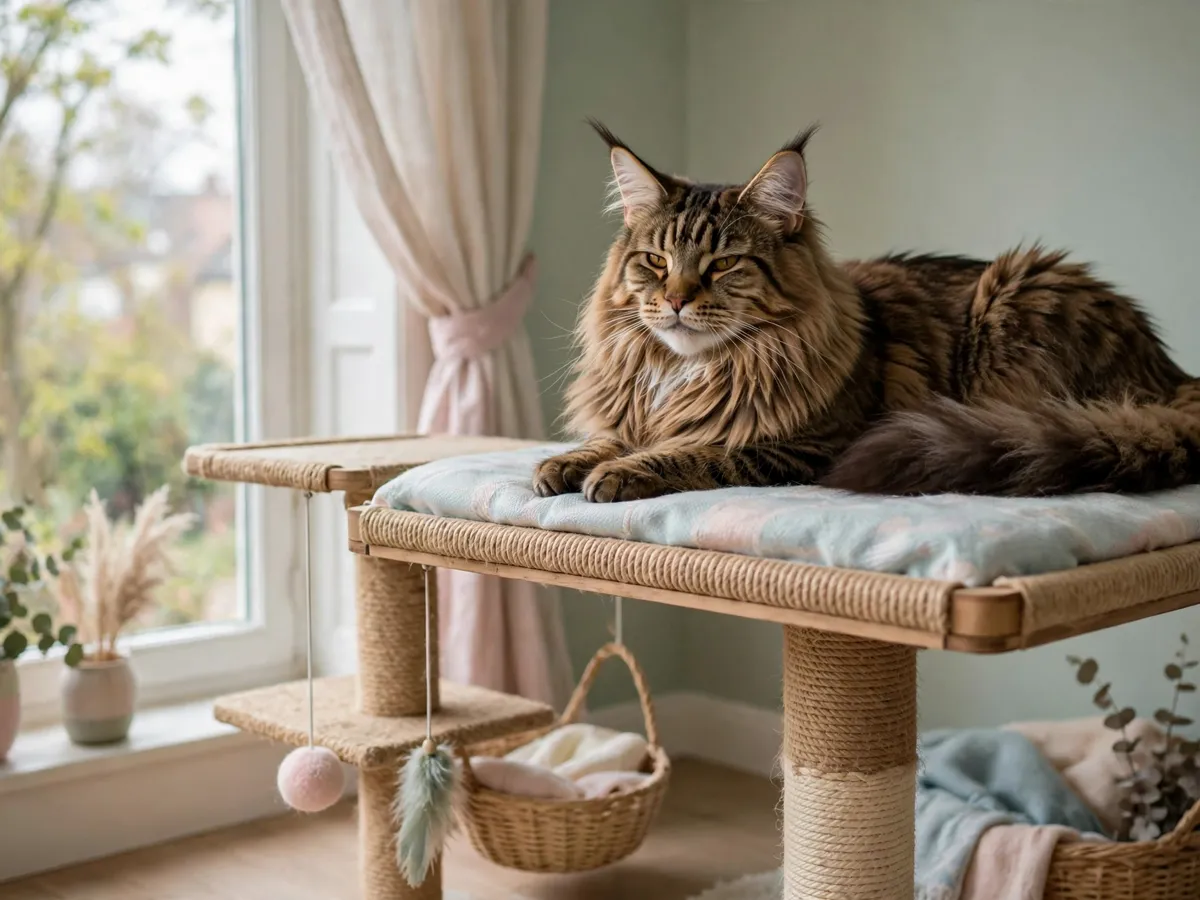
What a big cat asks of a tree
The difference is mechanical before it is visual. A big cat lands harder, sprawls wider and climbs with more force through the same four paws, so every part of the tower works at a higher load than its small-cat rating assumed. The platforms flex, the joints loosen at the post-to-platform fitting, the sisal unwinds from the top down, and the base rocks sideways on the landing the cat makes a dozen times a day. None of this shows in a product photo, which is why the checkpoints below matter more than the look of the tree.
The other difference is behavioral. A big cat that fits a tree uses it constantly, and a big cat that does not fit it ignores the tower completely and takes the bookshelf instead. Fit is the whole game: wide platforms to lie across, headroom between levels, posts placed where the cat actually climbs. The cat tree buying guide covers the shapes and price tiers room by room, so this page stays on the four things a large breed adds to that base.
Size: the platform rule in plain words
The working rule needs no numbers: a platform should be wider than the cat stretched out, nose to tail base. Lay the cat down on the floor, mark the span with your hand, and carry that span to the store or hold it against the listing photos. A platform the cat can curl on but not stretch on is a platform the cat visits and leaves. The top perch deserves the widest surface in the build, because the top is where a cat commits to a long rest, and a big cat committing to a narrow top is a big cat that migrates to the windowsill instead.
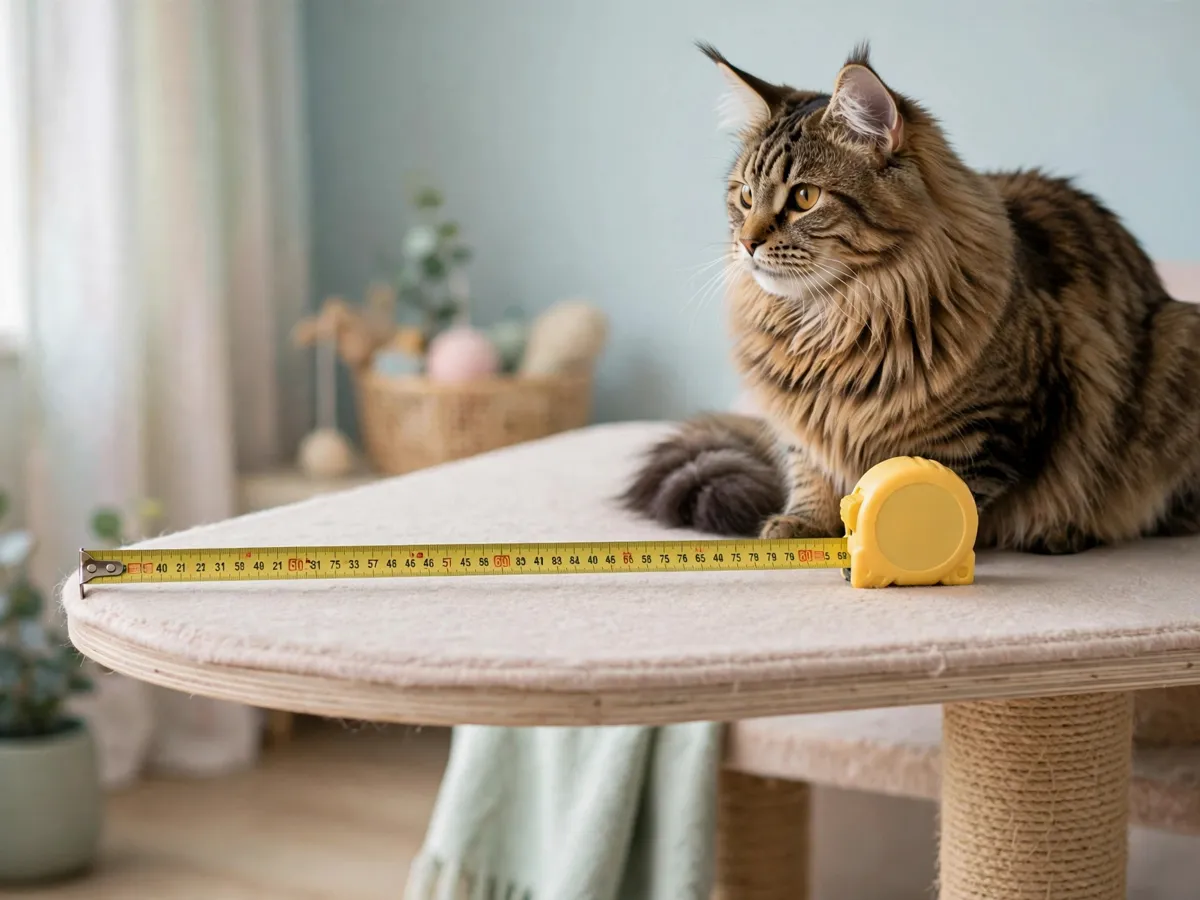
The same span test applies to every part the cat touches. The hideaway cube needs an interior the cat can turn around inside, not a cube sized for a kitten, and the entry hole needs enough clearance that a deep-chested cat enters without scraping. The steps and ramps between levels need a tread wider than the cat sitting, because a big cat descends a narrow step with its back paws hanging off the edge. And the gap between platforms matters as much as their width: a tall tower with cramped level spacing asks a long-bodied cat to fold through each transfer, and a cat asked to fold twice stops climbing. Wide, deep and roomy beats tall and busy for this breed, every time.
Strength: the posts and the base
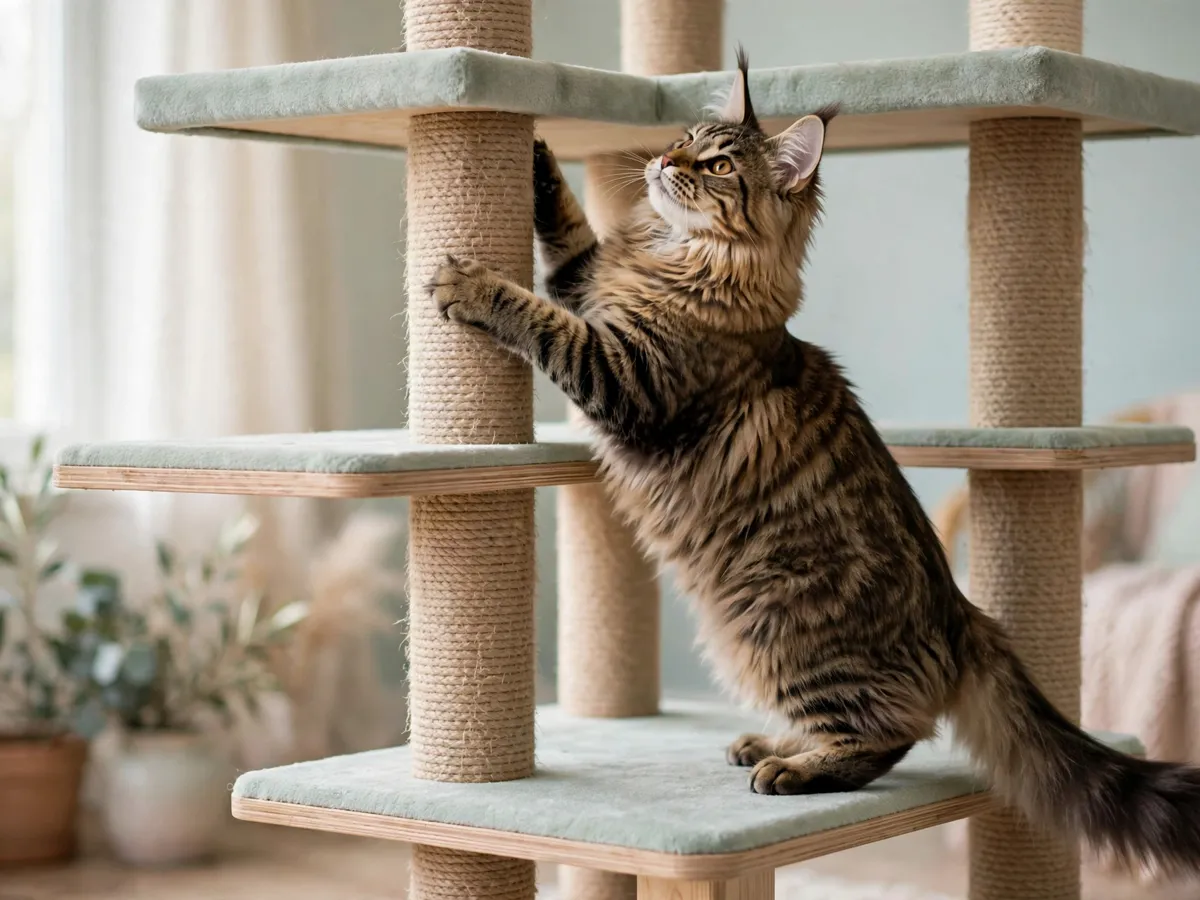
Post strength is a diameter story. The main climbing post on a big-cat tree should be visibly thicker than the posts on a standard build, thick enough that the cat grips the wrap with a full paw spread and the post still feels dense in the hand. The sisal itself should sit tight and dense, wound without visible gaps, because a big cat digs in with real force and a loose wrap unwinds from the top within weeks. If the listing does not state the post construction, the photos tell the story: a post that looks slim next to the platforms will slim further under a heavy climber.
The base carries everything above it. A heavy cat landing on a mid platform drives force down through the column into the base panel, and a light base lifts at the far edge on every landing, which is the rocking motion that turns a cat off a tower for good. Look for a base that sits low and wide with real mass to it, and platforms cut from ply rather than the thinnest particleboard, because thin platforms flex visibly when a big cat sprawls across them. The in-store test is simple: push the top of the tower sideways with one hand. Whatever wobble you produce with a hand, a cat produces more with a leap.
Joints: where towers fail first
The joints take every landing, every lean and every launch, so the joints are where a big-cat tower earns or loses its lifespan. The strongest builds carry the post through a metal threaded insert into the platform rather than a handful of staples, and the bracket hardware at each joint should look like furniture hardware, not packaging hardware. During assembly, tighten every fitting by hand and then check each one with a gentle sideways push. A joint that moves on day one moves more every week after.
Inspection is a monthly habit, not a one-time event. Work from the base upward: push each platform, watch the joint beneath it, and retighten anything that has developed play. The wrap gets checked in the same pass, because a lifted wrap end at a joint is where unraveling starts. When a joint does work loose or a post gives out on a tower the cat otherwise loves, the cat tree post repair guide covers the rewrap and the refit, and a repaired heavy-duty tower beats a new lightweight one in every way a big cat cares about.
Layout: height versus what gets used
The tallest tower in the room is not the one a big cat uses most. Height only earns its floor space when the tower below it is solid, because a cat that feels sway at the third level stops at the second, and a cat that stops at the second stops using the tower at all. A shorter build with wide platforms, dense posts and a heavy base gets more daily use than a tall slender one, and the daily use is the point. Wall anchoring earns its place on any tower above couch height: one strap from the top platform into a stud turns the whole column solid, and the difference shows in how the cat commits to the top perch.
Placement finishes the job. The used tower sits beside a window, because the top perch is a watching post and a watching post wants a view, and the mid platforms sit at transfer heights the cat reaches without a running start. A big cat approaching middle age takes the stairs version of every route, so the layouts with wide, close steps keep working for years after the leap-up routes retire. In a small apartment, one wide solid tower by the window beats two narrow ones in corners, and the floor space the tower claims comes back as shelf space the cat stops claiming.
Maine Coon cat tree questions
What platform size fits a maine coon?
A platform wider than the cat's full length when stretched out. Narrow shelves that fit a smaller cat leave a big cat balancing on the edge.
Which parts wear out first with a heavy cat?
The joints and the post wrap. Reinforced brackets and a thick sisal diameter hold up longer than standard lightweight builds.
Is taller always better for a big cat?
No. A shorter, sturdier tower gets used more than a tall one that sways. Stability decides whether the top perch becomes a favorite.
Save this big-cat tree guide
Pin it for the shopping trip, and run the span test before any checkout page gets a click. The Cat-Friendly Home collection holds the buying guide, the post repair walkthrough and the placement notes that sit beside this one.
For informational purposes only.
Maine coons are one corner of the big-cat question; the the heaviest jumpers and the tallest shelves get the same treatment from the other corner.