 PawStyle Daily
Cat-Friendly Apartment Decor
Cat Trees for Bengal Cats: Climb Height Picks
The average cat tree ends at the top of a post, and the average cat treats that as the destination. A bengal treats it as an insult. This breed runs the room from the ceiling down - the top of the doorframe first, the bookshelf second, the window frame third - and a climbing tower that stops below head height gets inspected once and ignored forever. Buying a tree for an athletic cat is mostly a height decision, and the rest is what that height demands: posts thick enough to take a hard landing, a base heavy enough to hold the bounce, and a placement that gives the cat somewhere to come down to. This page owns those picks.
By PawStyle Daily · Updated 20 November 2026
Several levels beat one tall post | thick sisal-wrapped posts take hard jumps | a wide, heavy base under the height | clear floor in front as the landing zone | the tree moves position now and then.
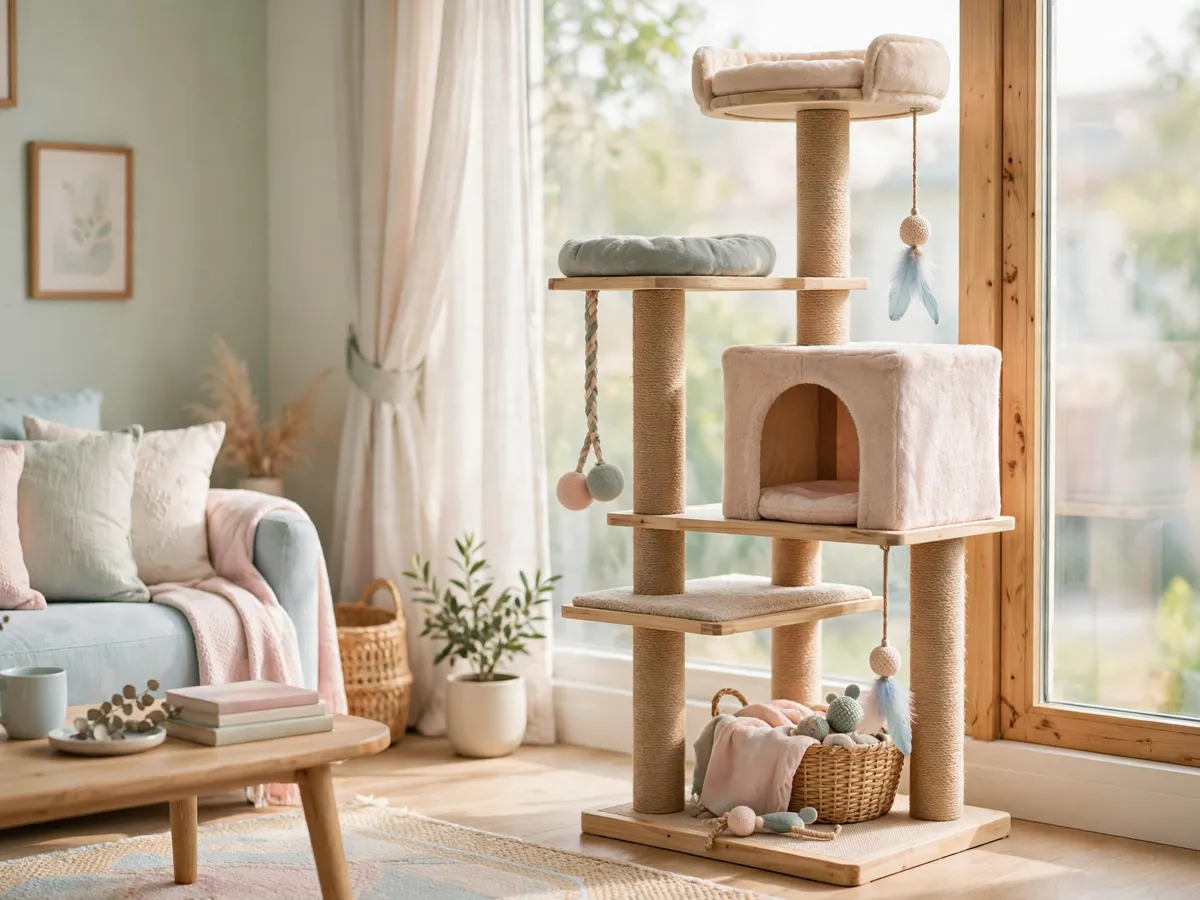
What an athletic cat wants from a tree
An athletic cat does not use a tree the way a laid-back cat does. The laid-back cat climbs for the nap spot and stays. The bengal climbs for the vantage point, then runs the route again - floor to shelf to perch to windowsill - because the vertical path is the entertainment. A tree built for lounging answers one need; a tree built for this breed answers the need to move through the room at speed, in the air, several times a day.
That changes what matters on the spec sheet. The top perch stops being a luxury and becomes the whole point: it should sit above the height a person reaches standing, so the cat looks down on the room rather than across it. The levels below it stop being decoration and become the steps of the route - each one close enough to the next for a running jump, far enough apart to make the jump count. And the surfaces stop being soft: a runner wants grip under every footfall, which is why sisal-wrapped posts and rough perches outwork plush tops in this house.
The general material comparison - what the frames are worth and how the surfaces stack up - lives on the cat tree buying guide. This page assumes that reading and goes one level deeper: what the picks look like when the cat using them launches rather than climbs.
Sizing the tree for real leap height
Height is bought in levels, not in inches. A single post that reaches the ceiling is a tightrope with no route onto it, and most athletic cats will not use it. The picks that work stack several perches - a low launch platform, a middle landing, a top lookout - so the cat climbs the tree the way it climbs a staircase. When the listing shows the perch count and the spacing, read it as a route map: three or four levels with staggered offsets beat two levels stacked straight up.
The top of the tree wants clearance above it, too. A perch parked under a low ceiling light becomes a ducking obstacle, and the cat abandons the last step of the route. The tall pick for a bengal is the one whose lookout sits high in the room but below whatever hangs overhead, with the wall behind it so the cat can spring off the vertical surface - a move this breed makes constantly and a move most trees make impossible.
Scale the tree to the cat's own reach, not to the room's look. A tree that ends at the height of a sofa back reads as another piece of furniture to a bengal; a tree that ends above the doorframe reads as the throne. When choosing between two listings of equal price, the taller route with more levels wins in this household, and the perches can be softened with blankets later - the height cannot be added after the box arrives.
Posts that take the hard jump
A landing from a full run puts force through the post that a lounging cat never produces, and the post is where that force shows up first. The thick sisal-wrapped column is the pick: more wood in the core, more rope on the surface, and both doing the same job - holding the cat's weight at speed without the flex a slim post carries. The flex is visible in the first week: a thin post sways when the cat lands, and a cat that trusts its footing will not jump onto a swaying thing twice.
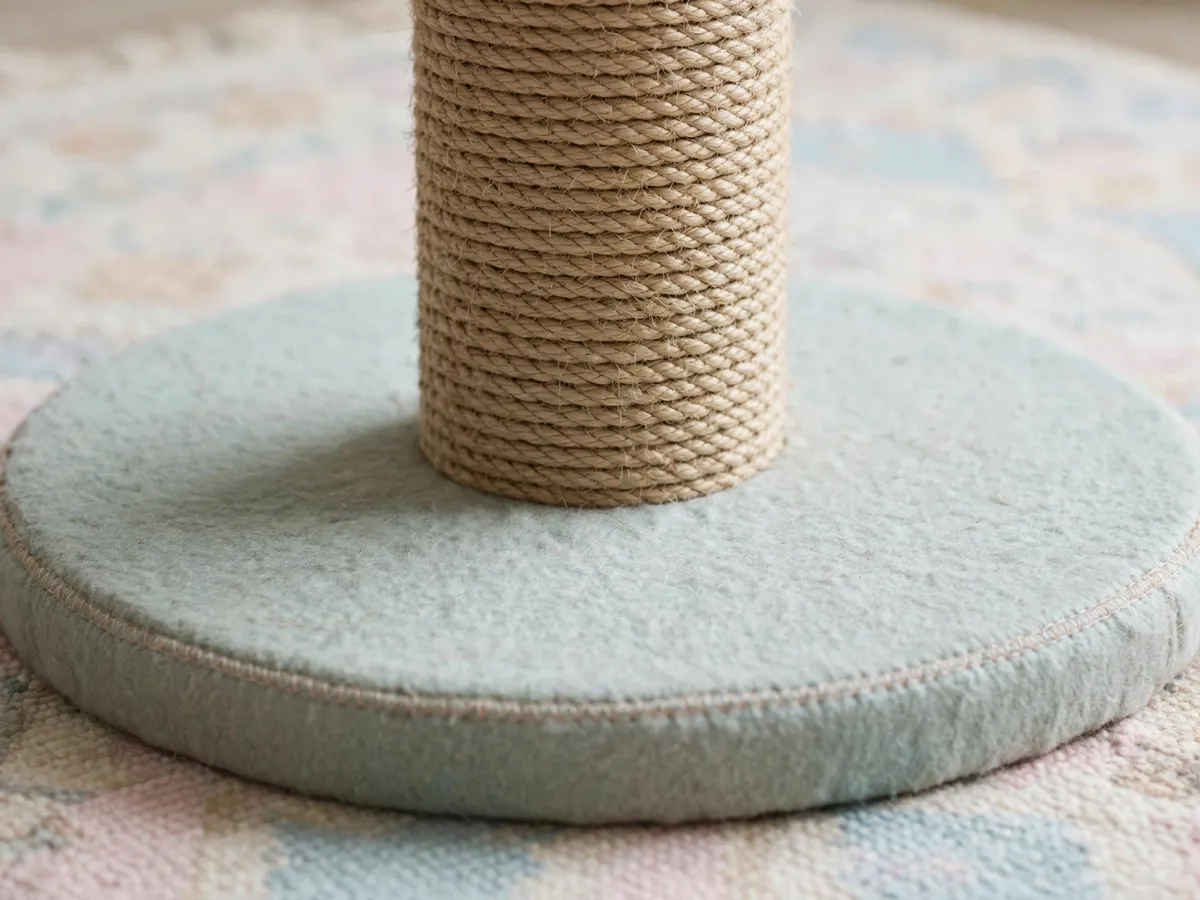
The base is the other half of the story. Height multiplies the tipping force, and a wide, heavy footprint is what keeps a tall tree standing when the jump comes in off-center - which, for this breed, is how the jump always comes in. The check at the store or in the unboxing is the shake test: hands on the top perch, a firm push, and a tree that rocks on its base is a tree that will end up anchored to a wall or returned. Weight alone is not the answer; weight spread across a broad plate is.
Sisal on the post earns double duty here. It is the scratching surface the cat will work at full stretch - the long, tall scratch that a low post never allows - and it is the grip under the claws mid-climb. A wrapped column gives the bengal both moves in one object, and the wear pattern after a month tells the household where the cat's day actually goes.
Turning the tree into a route
The tall tree is the anchor of the route, not the whole of it. Athletic cats travel walls - a shelf here, a perch there, the top of the sofa as the midpoint - and the household that wants the cat on the furniture-free path adds the shelf steps around the tower. The arrangement that reads best: the tree at one end of the wall, high wall shelves carrying the route along it, and the top of the sofa under the middle of the line as the soft stage. The cat gets a circuit; the room gets its floor back.

The spacing of the route follows the same logic as the tree's levels: gaps the cat clears at a run, not gaps that force a careful step. Shelves that alternate sides of the wall give the line its zigzag, the way the breed actually moves, and a single straight rail reads as a sidewalk the cat will abandon for the counter. The window at the end of the line is the destination that makes the whole circuit worth running - the route is a path to a view, and the view is the point.
Building shelves, mounting hardware, and plan drawings are their own project, and this page stays on the picking decision: the tree that anchors the route, the perch heights that connect to the wall line, and the one rule that keeps the circuit honest - every step of the journey has a next step, so the cat never has to come down to the floor mid-route unless it means to.
Placement for leap height
A tall tree fails or succeeds by where it stands. The wall behind it gives the spring-off surface and keeps the route from running into open room; the window beside it gives the destination; and the clear floor in front of it gives the landing. That last one is the placement rule most households skip - the tree parked nose-first into the armchair teaches the cat to come down off upholstery, and the armchair pays for it. A tall tree needs its landing zone the way a diving board needs its pool.
The position itself wants rotating, now and then. A bengal investigates the room on a schedule, and a tree parked in the same corner for months becomes part of the wallpaper - literally walked past. Shifting the tower a few steps along the wall, trading its spot with the shelf line's end, renews the route for no cost and no new purchase. The cats that seem to have quit their trees usually live with trees that never moved.
The other tall-furniture decision in this household is the litter station, and it follows the same logic: height clearance for a cat that enters at speed, a wall behind for the confident stride, and open floor in front instead of a tight alcove. The bengal litter box setup page walks that side, so the two biggest vertical pieces in the house - the tree and the box - get placed as one plan instead of two accidents.
Questions about cat trees for bengal cats
How tall should a cat tree be for a bengal?
Taller than the average pick. This breed climbs to the highest point in the room, so a tree with several levels beats a single post that ends at head height.
Does a scratching post on the tree satisfy a bengal?
A thick sisal post works as a target, but an athletic cat still wants more. Keep a separate post near the window and move the tree's position now and then.
Where is the best spot for a tall cat tree?
Against a wall with a window close by and clear floor in front. A tall tree needs a landing zone so the cat comes down to the floor instead of off into furniture.
Save these on Pinterest
Pin the height rules before the next tree ships to your door, or send the landing-zone rule to a friend whose bengal walks past a tower nobody rotates. The Cat-Friendly Apartment Decor collection holds the general buying guide, the litter setup walkthrough, the real-wood furniture picks, and the placement pages that finish the vertical room - so the athletic cat gets its ceiling and the household keeps its floor.
For informational purposes only.