 PawStyle Daily
Cat-Friendly Apartment Decor
Natural Wood Cat Trees That Look Like Real Branches
The beige carpet tower has been the tax every cat household pays for loving cats indoors. It stands in the prettiest corner of the room wearing felt and plastic, and no amount of styling hides what it is. The natural wood tree with real branch perches is the way out: a climbing piece that reads as furniture first - oak tones, honest grain, a perch that was once an actual branch - and only reveals its job on closer look. This page walks the materials that carry the furniture read, the stability details that separate a real climbing tree from a decorative one, the placement that lets it blend, and the care that keeps raw wood looking deliberate rather than unkempt.
By PawStyle Daily · Updated 20 November 2026
Solid wood over veneer · branches bolted through the post, not glued on the face · a wide footprint before a tall silhouette · plain linen and sisal, no carpet squares.
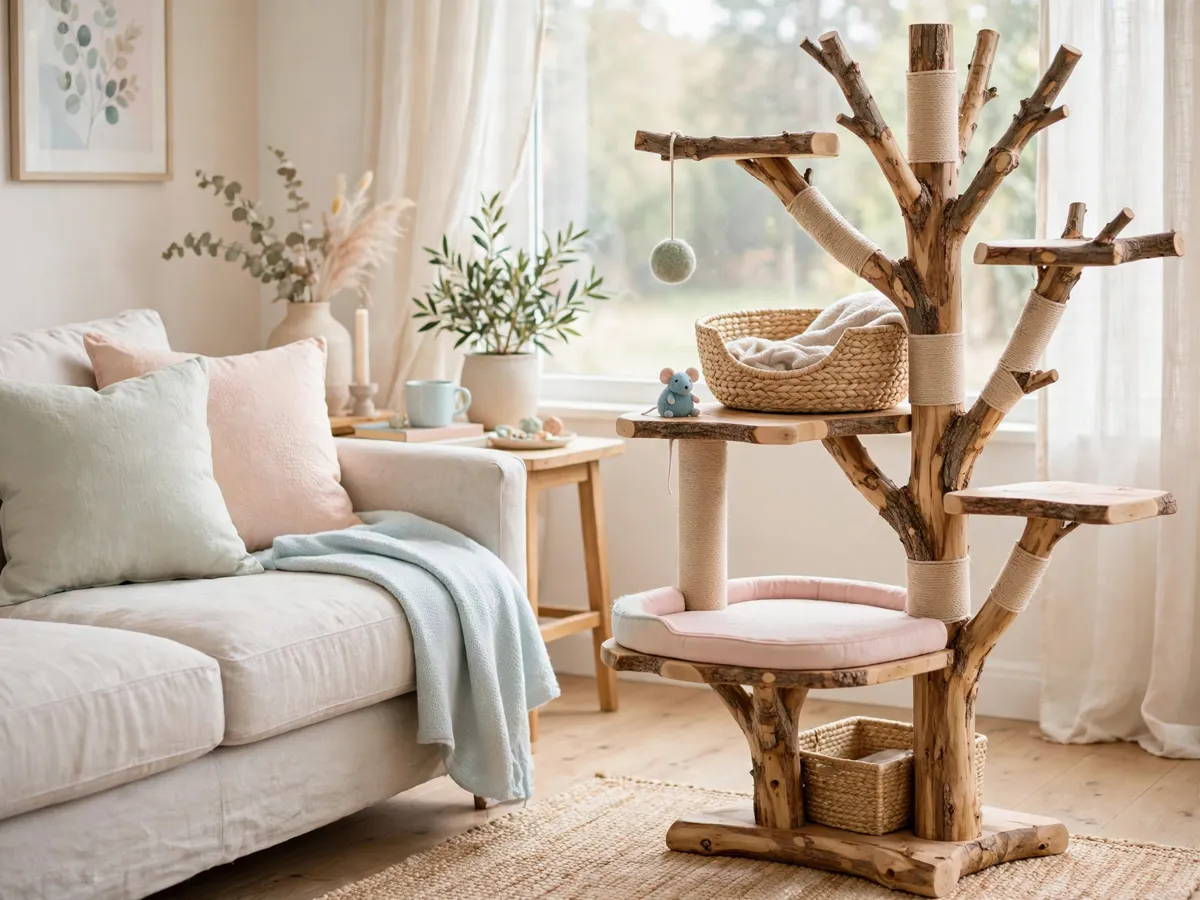
The end of the carpet-tower compromise
Cat furniture has traditionally solved one problem by creating another. The tower gives the cat height, scratching and a perch by the window, and it takes the room's aesthetic hostage in exchange: ivory felt, molded plastic steps, carpet squares fraying at the corners. Households that chose the tower did it because the cat needed it, then spent every guest visit apologising for the corner it occupies. The natural wood movement is the refusal of that trade.
What changed is the design vocabulary, not the biology. Trees built on solid wood posts, wrapped in sisal rope, and topped with real branch perches give the same climbing surfaces the carpet version gave - the vertical scratch, the high lookout, the enclosed rest spot - while reading as a sculptural piece of the room. The branch perch in particular closes the gap: nothing about a genuine piece of hardwood says pet product, because it is a piece of a tree. The cat experiences a vantage point; the household experiences a floor lamp's neighbour that belongs.
The buying decisions live on the cat tree buying guide, and the room-side decisions live on the cat tree placement in a living room page. This page owns the specific look: wood that reads as furniture, branches that hold a real cat, and the care that keeps the natural finish natural.
The materials that read as furniture
The post is the foundation of the read, and solid wood is the difference between furniture and prop. Pine posts with a clear or lightly smoked finish show grain and knots and age the way shelving does; birch plywood edges, when the maker seals them honestly, hold up in the same room. What breaks the illusion is a post wrapped in carpet or vinyl - the texture the eye files as institutional. Sisal rope wrapped in a tight spiral over the wood keeps the palette earthy and doubles as the scratching surface, so the functional part of the tree never has to advertise itself.
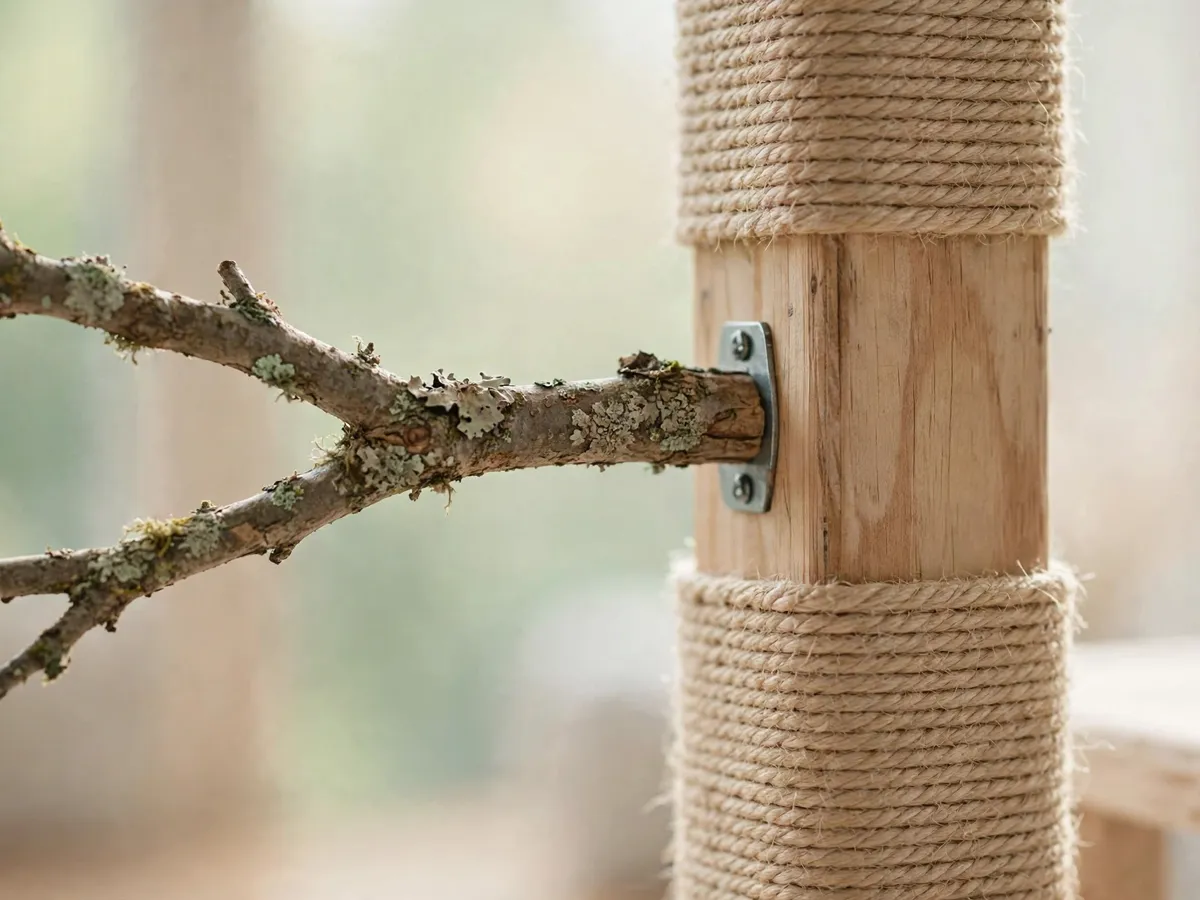
The perches are where "real branches" earns the name. A genuine limb, sanded smooth and bolted through the post, carries bark character on the underside and a flat walking pad on top - the look of a bird feeder's cousin, which is exactly the charm. The fake version exists too: a molded plastic branch skin over a hollow core, photographed beautifully, felted where the cat stands. The listing photos tell them apart under zoom - real branches have irregular taper, healed cut ends, and mounting hardware you can see; the skins repeat themselves.
Fabric choices finish the palette, and the rule is one word: match the room. Linen-look covers in oat, sand or pale grey tie the tree to a sofa or the curtains; a boucle in cream reads as deliberate design in a blush-and-wood apartment. What the furniture look cannot survive is the multicolour plush and the green carpet square, the two textures that announce pet aisle from across the room. The enclosed cubby, when the design has one, wants the same cover as the perch above it - a tree in one material family reads as one object rather than an assembly.
Stability details that separate climbing from decorating
A branch tree that wobbles fails twice: the cat stops using it, and the room keeps the furniture without the cat. The footprint is the first check, and it is the whole physics story - a wide base under a tall silhouette stands, a narrow base under the same height tips when a determined cat launches for the top perch. The listing's base dimensions matter more than the tower's height number, and the heaviest cat in the house gets to decide how wide is wide enough.
The branch mounting is the second check, and this is where the real-versus-decorative line lives. A branch bolted through the post - a lag screw or a threaded rod passing fully through the wood - carries a cat's full launch weight wherever it stands. A branch glued or pinned at the face, skin against the post with adhesive behind, is trim: beautiful, and not a climbing surface. The product questions that settle it are simple to ask: how is each branch attached, and what does the maker say about the joint under load.
The platform construction is the third check. Perches cut from solid board or a genuine limb hold their shape; honeycomb board behind a thin veneer bows at the edges after a season of launches. The joints deserve the same scrutiny as the branches - dowel-and-screw connections with cam locks the box includes tighten down over time and a monthly re-check keeps them snug, while friction-fit plastic connectors work for a low perch and announce themselves with a wobble on a high one. Wall anchoring is the last line for the taller silhouettes, and the hardware kit most makers include costs the price of one picture hung badly.
Placement that lets it blend
The natural wood tree earns its furniture read when the room speaks the same language. The corner near a window is the prime position - the branch perch faces the birds outside, the cat gets the view the design promised, and the vertical lines sit where a floor lamp or a bookshelf would, not in the middle of the walkway. Wood next to wood is the easy harmony: the tree beside an oak coffee table or a walnut shelf reads as a family of objects, and the room stops distinguishing pet from furnishing altogether.
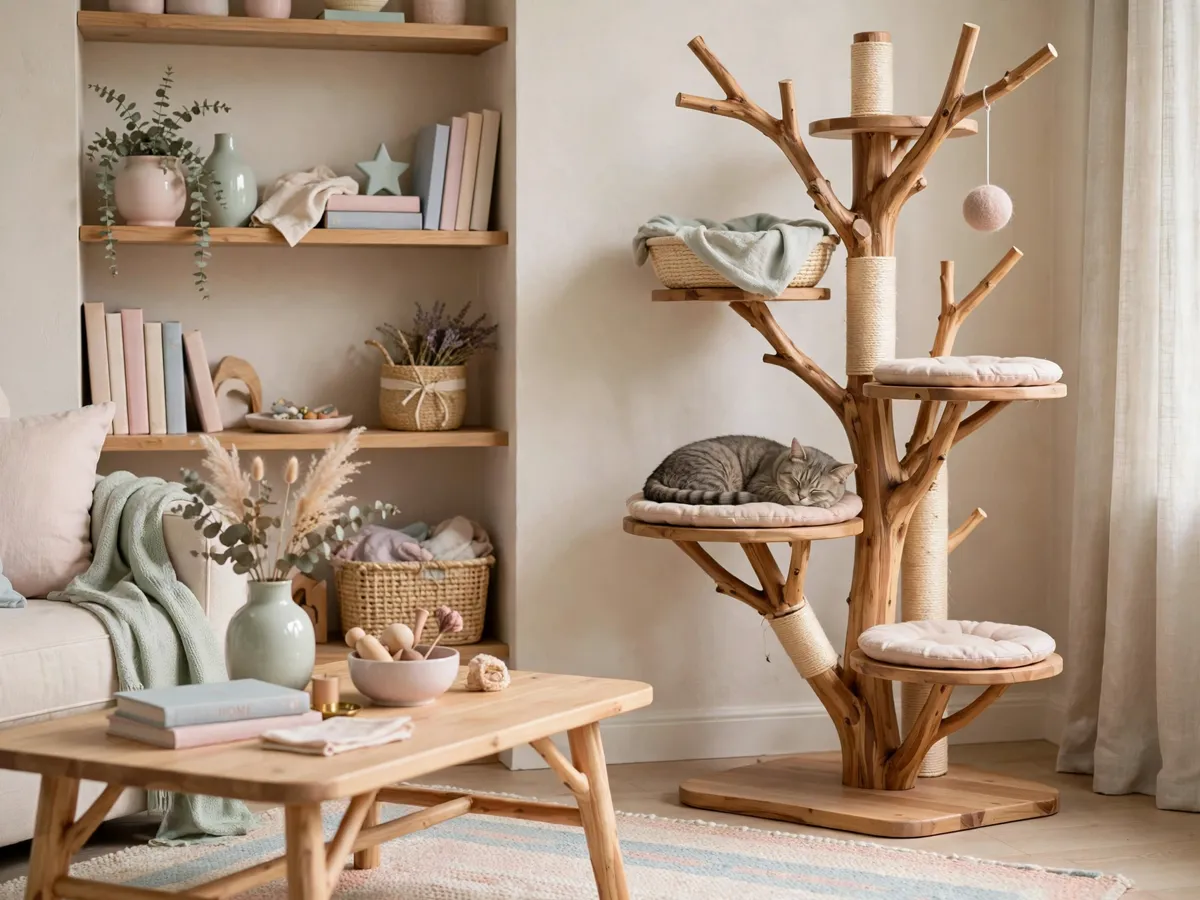
The small-apartment version of the same logic runs on height instead of floor area. A slim tree against the wall, its tallest perch level with the top of a bookcase, reads as part of the shelving story; the cat travels the wall and the room keeps its footprint. The corner where two walls meet is the other free position - the tree anchors the junction the way a plant would, and the perch nearest the ceiling becomes the lookout nobody apologises for.
The one placement rule that outlives the aesthetic is the route to the window. Cats use the high points along a path, not as a destination - the tree that sits beside the sill, with the sofa-arm route to it clear, gets used daily; the tree parked in the room's center gets inspected once and ignored. Blend the furniture look with the flight path and the household never has to choose between the two, which is the entire point of the natural wood movement.
Keeping raw wood looking deliberate
Natural finish means the wood shows its age, and the care is about directing that rather than fighting it. A dry cloth weekly lifts the dust off the perches; a light pass of the vacuum's brush end clears the fur from the sisal spiral where a cloth cannot reach. The branch ends - the cut faces of a real limb - want the occasional check for splitting, and a dab of the maker's finish oil, if the box included one, keeps the cut face from drying into cracks that read as neglect.
The sisal ages differently than the wood and in plain sight. A wrapped post takes claw work daily, and the fibres fray at the shoulders of the busiest zone - the sign the surface is doing its job, and also the sign the wrap will eventually need replacing. Makers who sell replacement rope or a re-wrap service turn that from a replacement decision into a maintenance one, which is worth the question at purchase time. The loose-thread trim with scissors, not pulled, keeps the spiral tidy between re-wraps.
The fur-and-fabric half of care matches the room's standard: the linen-look covers want the same brush the sofa gets, and a removable perch pad - when the design offers one - washes on the same cycle as the cushions beside it. The finished tree in a blush-and-wood apartment should look like the room's own piece with a resident on top, and the resident, not the furniture, is what makes it interesting from across the room.
Questions about natural wood cat trees
What makes a cat tree look like furniture instead of pet gear?
Real wood tones, plain lines and fabric that matches the room. Skip carpet-covered posts if the goal is a furniture look.
Are real branch perches sturdy enough for daily use?
Solid hardwood branches mounted through the post are sturdy; thin decorative branches that only face the outside are not the climbing surface.
Where does a natural wood tree fit best in a small room?
A corner near a window, where the vertical lines read as furniture and the cat still gets a view.
Save these on Pinterest
Pin the materials checklist before the next tower purchase, or send the mounting questions to a friend whose branch tree leans after one launch. The Cat-Friendly Apartment Decor collection holds the full buying guide, the living-room placement walkthrough, and the hidden-litter and gallery-wall ideas that finish the same room - so the cat gets the height and the room keeps its look.
For informational purposes only.
Materials matter twice as much when the passenger is heavy, and the real-wood trees that carry a big cat page is where that conversation starts.