 PawStyle Daily
Cat-Friendly Apartment Decor
Cat Litter Box Odor Control That Actually Works
The odor question is really a routine question wearing a fragrance hat. The pet-store aisle promises otherwise — powders, gels, filters, litters named after candles — but the plan that keeps a small apartment smelling like nothing at all is old, cheap and boring: scoop daily, wash on schedule, keep the scent out of the box, and place the whole thing where air does the moving for you. For informational purposes, consult your vet.
By PawStyle Daily · Updated 18 November 2026
Good to know: scoop daily, wash the box on schedule · unscented litter only · no deodorizer replaces the scoop.
Why odor control is a routine, not a product
The litter aisle sells the dream of the skipped step: a product that lets the cleaning lapse and quietly pays the difference. Cats do not live in that dream. To the most sensitive nose in the house, a box that is behind on its care announces itself long before it reaches you — and the consequences run in a circle. The smellier a box gets, the less a cat wants to use it, and the less it is used on its own terms, the worse the surrounding air gets. The way out is not a stronger fragrance. It is a schedule that never lets a backlog build in the first place.
There is a second reason routine beats product, and it is kinder than it sounds: cleaning on schedule is what makes every other purchase work better. Litter, box style, cabinet, mat, filter — all of it performs as designed on a clean, well-placed box, and underperforms on a neglected one. Buy the spray first and you have bought the same week again. Keep the routine and the shelf stops mattering much at all.
Scoop at least once a day
Remove waste from the litter box at least once a day, and wash the box every one to four weeks. That sentence is the spine of odor control: the daily scoop keeps smell from ever compounding, and the periodic wash resets the box itself, which holds onto odor in places a scoop never visits — the corners, the underside of the rim, the hairline scratches a plastic box collects over its life. Miss either half and the other half cannot compensate. A daily scoop over an old unwashed box stays one scent-event behind, and a monthly wash of a box scooped whenever is polishing a problem.
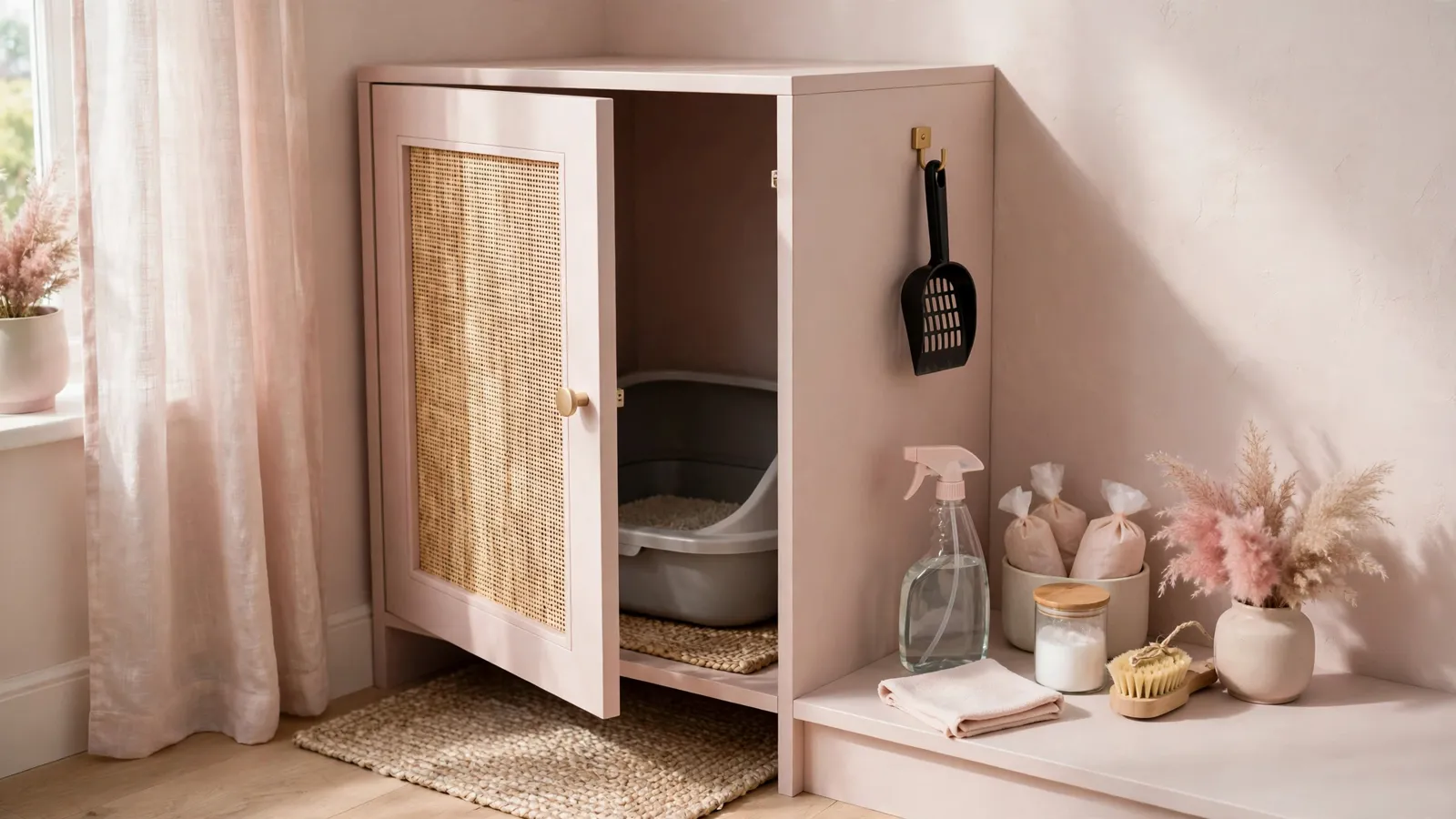
The scoop itself deserves a setup pass of its own, because a routine that stays within arm's reach is a routine that survives busy weeks: the scoop and bags live together right beside the box, the lidded bin is within arm’s reach, and the whole lap — scoop, tap, bag, tie — ends in one motion. Where the daily box care sits in the larger setup, the litter box 101 guide walks the full schedule.
Soap and hot water — and nothing else
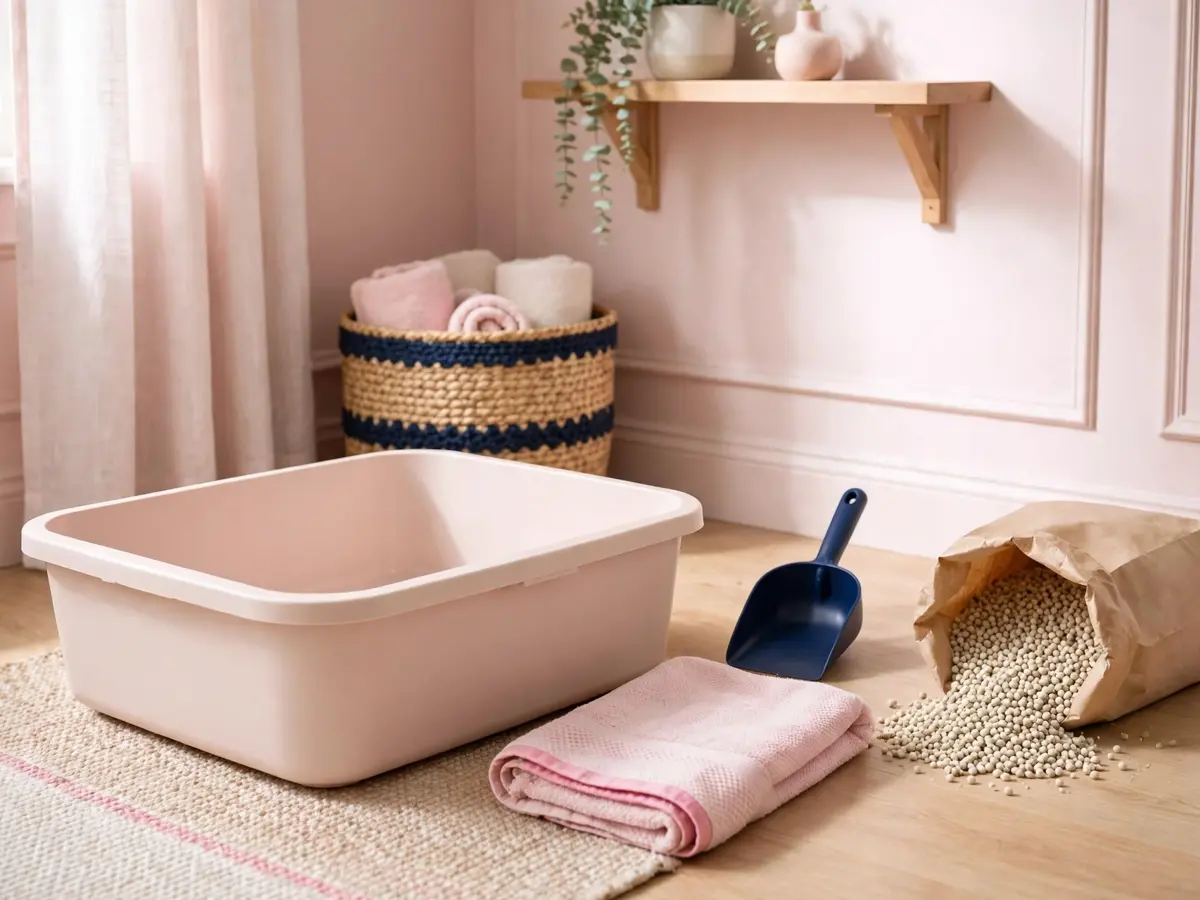
Wash the box with soap and hot water only, and avoid strong chemicals or any ammonia-based product. The ammonia warning deserves its own minute of attention, because urine sits on the ammonia family chemistry map — an ammonia-based cleaner can read as fresh marking to a cat, which is the exact opposite of what you opened the bottle for. A cat who reads the box as recently marked may be invited to refresh the message, and the cleaner becomes part of the odor problem it was bought to end.
The wash itself is as plain as it sounds: empty the box, soap, hot water, a sponge kept for this one job, a full dry before refilling. No disinfectant cocktail, no soak in anything you would not want a cat standing in. And when a box stays smelly after a proper wash — plastic holds odor in scratches no routine reaches — the honest fix is retirement, not another product.
The scent question: skip the perfume war
Before anyone adds a deodorizer, one line from the feline environmental-needs guidance does more than the whole fragrance aisle: cats often find aromatic litter and litter deodorizers offensive, and no product removes the need to clean the box. Both halves matter. The second half is the aisle’s big promise, disproven in a single line. The first half is the reason to care even if you never cared about the promise — to a cat, a heavily scented box is not fragrance, it is a wall. And a cat who finds the box offensive does not solve it quietly: the floor, the bath mat, the laundry pile, the rug by the door.
This settles the scent question in one move: unscented litter, cleaned on schedule, is the whole answer. If the box has been cleaned on schedule and still announces itself, the suspects are mechanical — a box due its wash, a covered box trapping air, a placement in a warm dead corner — and each is fixed by the routine and the floor plan, not by a stronger perfume. Where litter families differ, the unscented clumping guide compares them.
Where the box lives in a small apartment
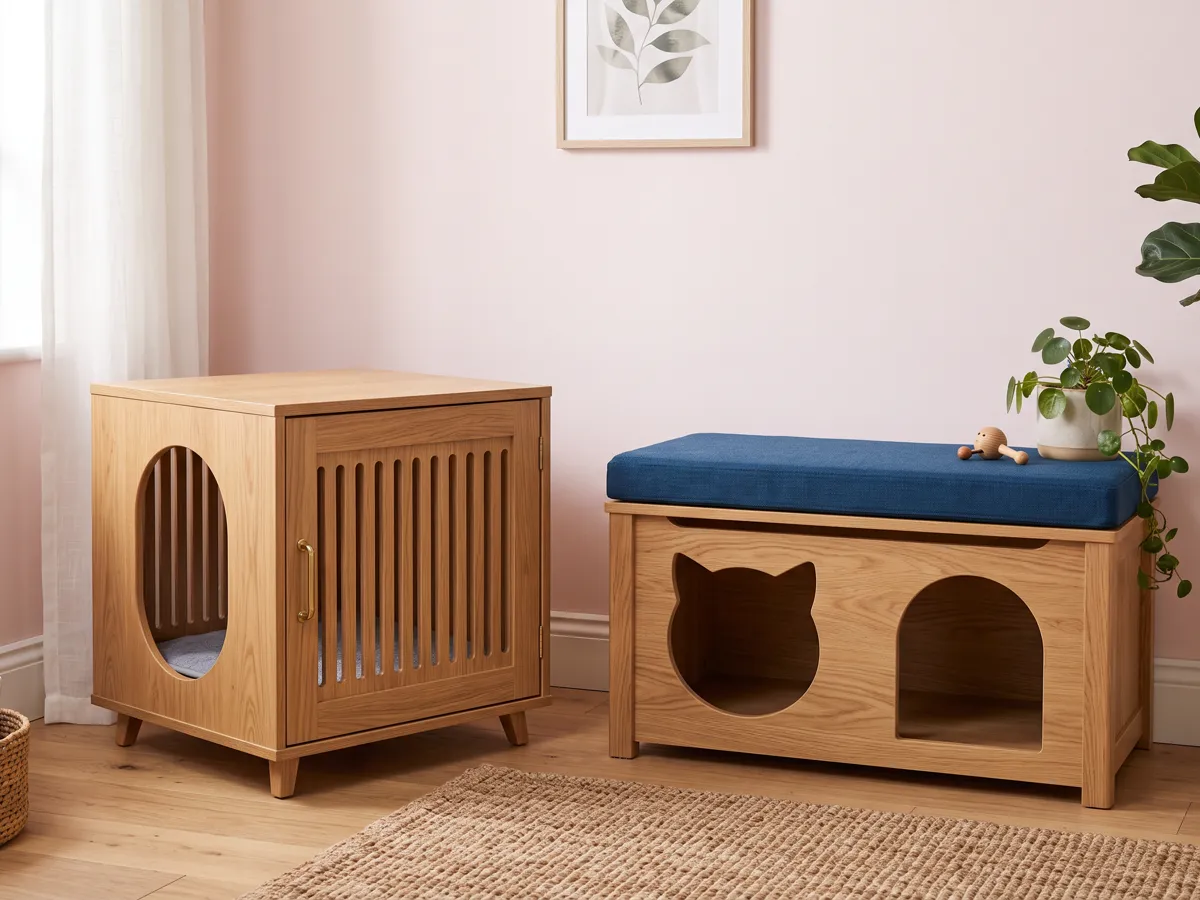
Bathroom, hallway corner, a quiet slice of the living room — all of it can work, if two conditions hold: the cat can reach the box without crossing the loudest part of the house, and you can reach it on a tired Tuesday night. The first condition is for the cat, who will not use a box anchored by the dryer thumping through its spin cycle; the second is for you, because a box that is annoying to get to will be under-scooped on busy weeks, and an under-scooped box is the odor problem all over again.
Ventilation is the underrated partner of the routine. A box in a small closed room with the door shut is a small closed room with a box in it; the same box near an air path — a bathroom with the fan, a corner the window crosses, a room that gets aired out on the weekend — reads calmer to human noses, and the cat gets a fresher corner too. What ventilation is not is a substitute for the scoop: moving air is a service to the routine, never a replacement for it.
The routine, written down
Odor control fits on a card by the box:
The litter box odor routine
| When | Do this | Why it works |
|---|---|---|
| Daily | Scoop at least once, top the litter back to depth, tie the bag into the lidded bin | Waste never gets a second day to compound into odor |
| Weekly | Wipe the rim and the floor around the box, check litter depth | The spill zone is where ambient smell actually lives |
| Every few weeks | Wash the box with soap and hot water, dry fully, refill | The box itself holds odor in corners and scratches; the wash resets it |
| Seasonally | Retire scratched boxes that still hold smell after a proper wash | Old plastic keeps odor no routine can wash out |
| Always | Unscented litter, no deodorizers, no ammonia cleaners | The cat’s nose is the customer here; perfume is not a cleaning method |
The rule under the table: the schedule is the product. Everything on the shelf only pays off on a box that is already cleaned on time.
Litter odor questions
How often should I scoop and wash the litter box?
Remove waste from the litter box at least once a day, and wash the box every one to four weeks. That is the whole engine of odor control — everything else on the shelf is a helper or a decoration. If the box is going longer between washes than that, no spray, filter or premium litter closes the gap, because the smell being fought is waste that has had time to work.
What should I wash the box with?
Wash the box with soap and hot water only, and avoid strong chemicals or any ammonia-based product. Ammonia is the trap on the shelf: urine is already ammonia-family chemistry, so an ammonia-based cleaner can signal freshly marked to a cat rather than clean, and the box lands right back in the problem column. Soap, hot water, a dedicated sponge, dry fully, done.
Should I use a scented litter or a deodorizer?
Careful here. Cats often find aromatic litter and litter deodorizers offensive, and no product removes the need to clean the box. Offensive does the quiet work in that sentence — what smells like clean laundry to you can smell like a wall of perfume to a nose that reads the world in parts per million, and an offended cat solves the problem by going somewhere else. Unscented, cleaned on schedule, beats perfumed and skipped.
Where should the box go in a small apartment?
Somewhere quiet and reachable — a place a cat can use without being ambushed, and a place you will actually walk to on a tired Tuesday. Ventilation does far more for you than perfume ever does for the cat: a box near an air path, or in a room that gets aired out, reads calmer than one sealed into a warm cabinet and left to ferment.
The litter station shelf
Tools that make the routine easy to repeat
A deep scoop, a lidded bin, a washable mat and unscented litter — the tools that keep the daily minute short and the wash day simple.
See the litter shelf →As an Amazon Associate we earn from qualifying purchases.
Save this for the next wash day
Pin the routine card before the next litter run. The Cat-Friendly Apartment collection holds the rest — from hidden-box setups to the corner that makes a small apartment work for a cat.
The odor control when the box is enclosed question is the one every enclosure buyer asks next, and there is a page for it.