 PawStyle Daily
Cat-Friendly Apartment Decor
Aesthetic Cat Corner Litter Box Cover Ideas
The litter corner can look like part of the room and still work like a litter corner. This page styles it twice: first the cover, from a plant-stand screen to a full cabinet, then the placement and the daily routine that decide whether the prettiest hide in the apartment actually gets used. For informational purposes, consult your vet.
By PawStyle Daily · Updated 19 November 2026
Good to know: cover second, spot first · Scoop runs the corner · One hand opens every hide.
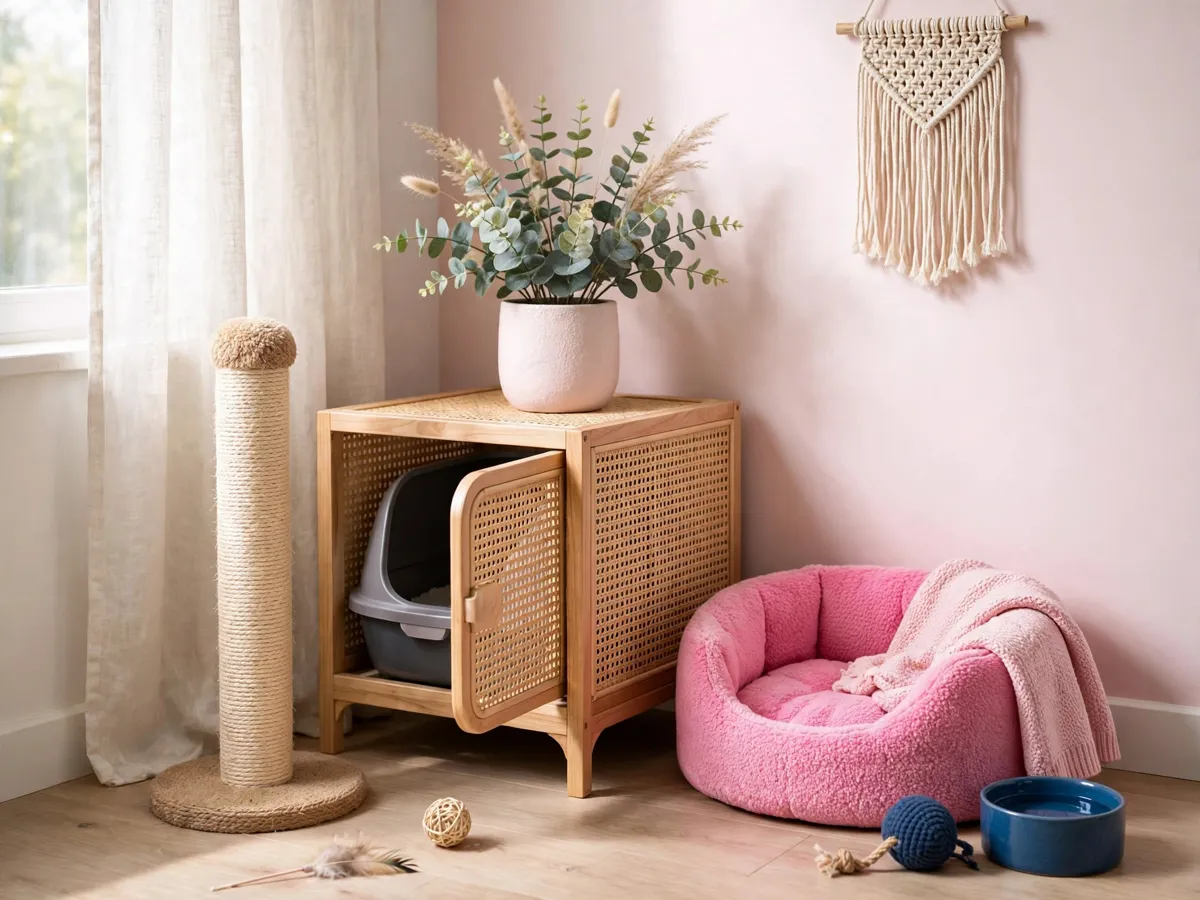
The corner gets styled twice
Most litter-corner projects start with the pretty part and stall on the practical part, so the order here is reversed. Placement and routine come first, the cover comes second, and the reason is simple: a hide you cannot reach into quickly is a hide that stops being scooped, and scooping is the thing that keeps the corner welcome to everyone in the apartment.
If the floor plan is still an open question, our small apartment cat corner guide maps the whole corner, box included, before a single piece of furniture moves.
Why the box rules the corner
The box carries a few fixed rules, and they are worth reading before the decor decisions, because the cover has to fit inside them rather than around them. A rectangular box one and a half times the length of the cat from nose to base of tail is the recommendation, and bigger is better. Measure your cat and buy for the number, not for the cabinet that caught your eye, because a box the cat has to curl up inside of is a box the cat starts shopping around to avoid.
The second fixed rule decides the whole aesthetic question. An open box is recommended where possible, because it is easier to monitor and scoop and it does not trap odors. Read that as a design brief rather than a ban. It means the best covers work around an open pan, screening it from the room without capping it, and the covers that fully enclose need to prove themselves with airflow and easy access before they earn the corner.
The cover ideas, ranked by how they open
Every idea below was sorted by the question that actually matters on a Tuesday night: how fast can you reach the pan with one hand? The table holds the ranking, and the notes after it hold the details that make or break each one.
Litter box covers for the aesthetic corner
| Cover | How it hides | How it opens |
|---|---|---|
| Plant stand with a skirt | The pan screened behind a fabric skirt | Lift the skirt on its hook, scoop, drop it back |
| Side-entry cabinet | The whole box behind a door | Open the door and scoop straight in, no lifting |
| Bench with a lift lid | Box and scoop together, seat on top | Lift the lid, set it against the wall, scoop |
| Curtained nook | A closet or shelf opening behind a curtain | Slide the curtain aside, scoop, slide it back |
Whichever cover wins, the test is the same: open it one-handed with the scoop already in your other hand.
A cover that passes the one-hand test keeps the routine alive, and a routine is what keeps the corner smelling like nothing at all. If your box situation needs the deep version, our hidden litter box guide builds the ventilated cabinet hides step by step.
The plant screen, the prettiest cover that still breathes
The plant-stand screen is the cover we recommend trying first in a small apartment, because it solves the aesthetic problem without enclosing the pan at all. A sturdy stand sits over the box, a fabric skirt on hooks screens the sides, and the top surface carries a trailing plant (real or faux, as long as any real one is cat-safe) that finishes the corner. The pan stays open above its rim, air moves, and the room sees a plant instead of a litter box.
Two details decide whether it works. The skirt needs a split, or a magnetic opening, so the cat walks through without dragging it; and the stand has to be heavy enough at the base that a cat popping out at speed never tips it. Both are quick fixes at build time, and both are the difference between a cover that lasts and one that gets kicked aside by Thursday.
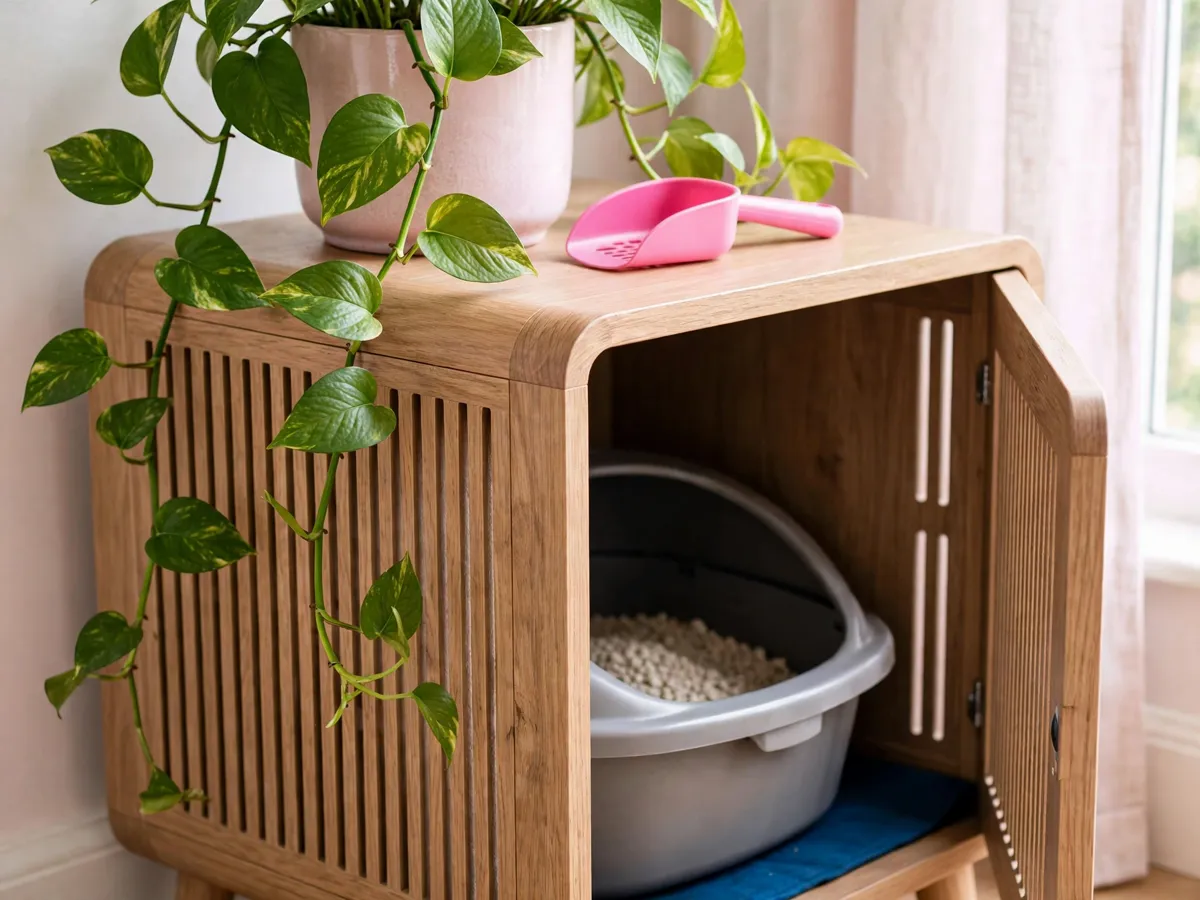
The box and the litter inside it
Whatever the cover, the pan itself stays boring on purpose: rectangular, generously sized, unfussy. Fine, unscented, clumping litter suits most cats and most noses in a small room, and the litter aisle question answers itself once you anchor on those three words. If you are standing in that aisle right now, our best clumping unscented litter page does the comparing for you.
Depth is a feel rather than a measurement: enough litter for a clump to form clear of the base, and enough room for the cat to dig down and cover. Top up on scoop days rather than dumping the whole pan, because a full change throws away litter that was still working and hands the cat a brand-new box to evaluate.
Placement: spacing the corner away from the bowls
The prettiest corner fails if the resources pile onto one spot. Keep the litter box away from the food and water bowls, and give each resource its own spot so the cat has a choice. In practice that usually means the feeding station lives on one wall of the kitchen path, and the litter corner claims a quiet stretch of a different wall, far enough that neither resource watches the other.
The choice principle scales to the whole apartment, and the guideline behind this page says it plainly. Give each resource its own spot and let the cat choose: a minimum of two resting areas, two feeding areas and two toileting areas. In a studio that reads as a bed by the window and a second pad by the sofa, a food bowl in the kitchen nook and a water station across the room, and a toileting spot on each side of the main walking path. The corner becomes aesthetic because it stops competing for space, not because it hid the competition.
Placement order · Spot before cover · Bowls on another wall
The daily scoop that keeps the corner aesthetic
Here is the least glamorous line on the page and the one that does the most work. Remove waste from the litter box at least once a day, and wash the box every one to four weeks. A cover can hide a pan from view; it cannot hide it from the nose, and the daily scoop is what keeps a hidden box genuinely fresh rather than just out of sight.
Make the scoop easy and it actually happens. Keep the scoop on a hook beside the corner, park a lidded waste bin within arm's reach, and run the same five steps at the same time each day: scoop, top up the litter, wipe the rim, close the cover, take the bag out. On wash day the pan comes out of the cover entirely, gets a soap-and-hot-water wash, and dries fully before it goes back, so the cabinet or the skirt never holds damp. For informational purposes, consult your vet.
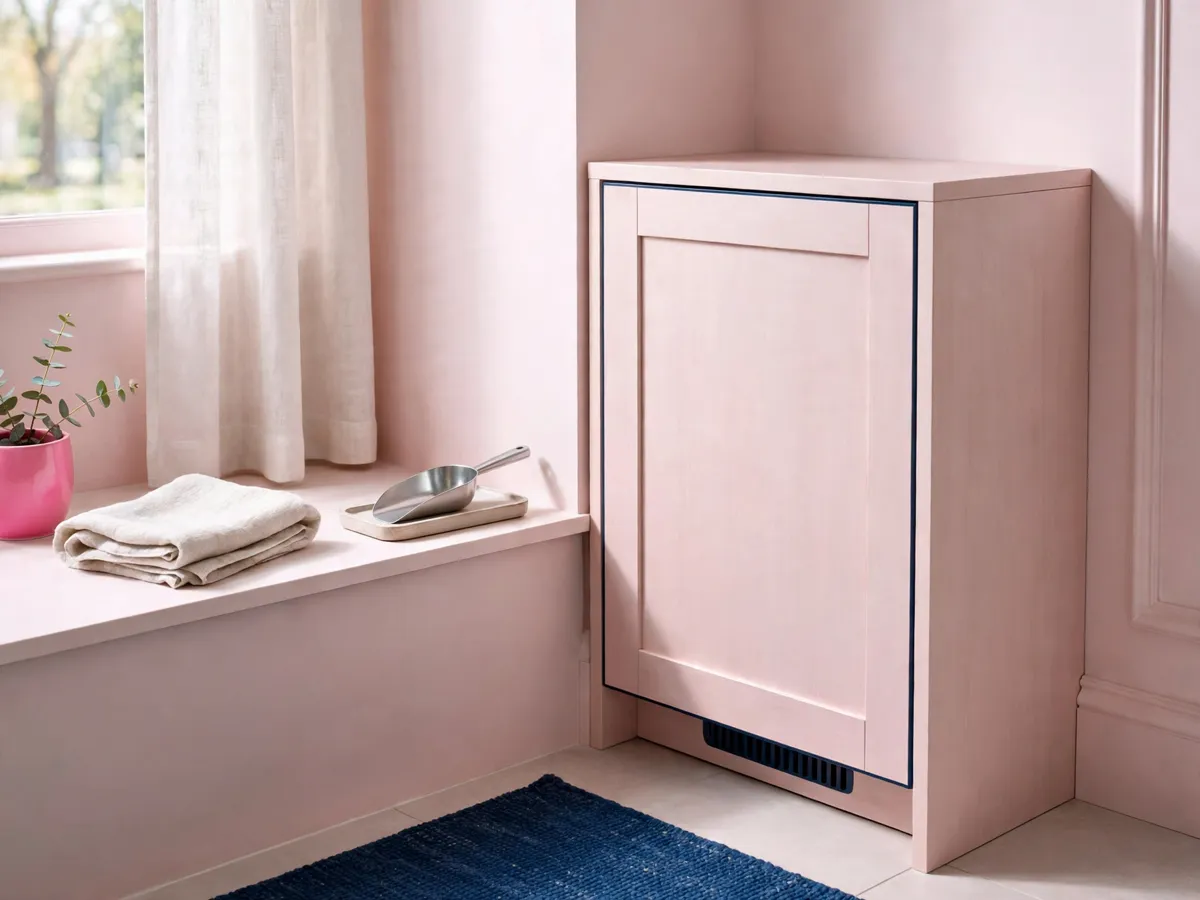
Questions about the litter corner
Will a covered box stop the smell?
A cover hides the box, but the scoop rule does the real work. Remove waste at least once a day and wash the box every one to four weeks.
Where should the litter box go?
Away from food and water bowls, in a quiet corner the cat can reach without passing through a high-traffic zone.
Can I put two litter boxes in the same corner?
Give each one its own spot rather than stacking them. The cat chooses between them, and choice is the point.
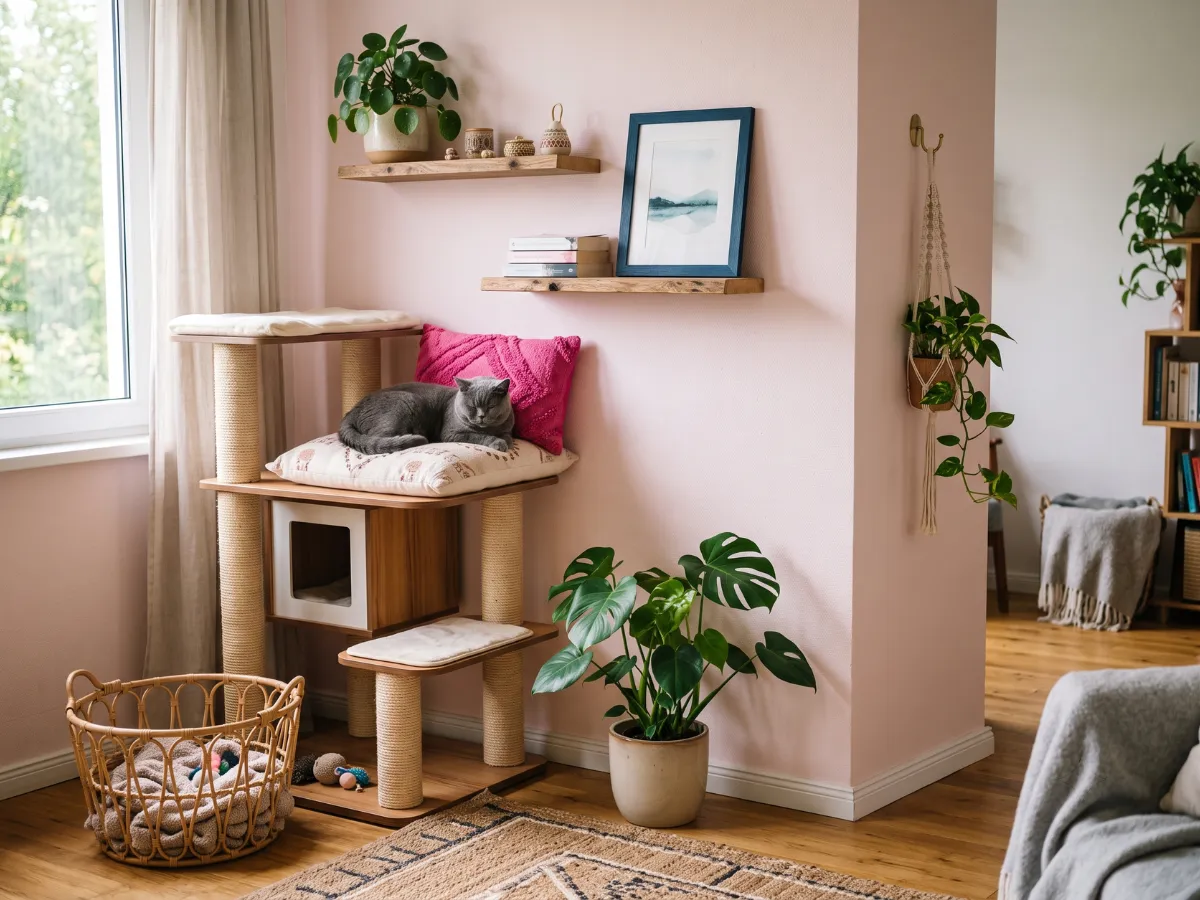
What we use
Boxes, scoops and plant stands
Generous boxes, a scoop that fits the hand, and the stands and skirts that turn the corner into furniture.
See what we use →As an Amazon Associate we earn from qualifying purchases.
Save these on Pinterest
Pin the cover that fits your corner: the plant screen for the open pan, the side-entry cabinet for the full hide. The Cat-Friendly Home collection holds the corner guide and the rest of the decor shelf. For informational purposes, consult your vet.
Sources
The box, placement and cleaning rules on this page come from feline veterinary guidelines, not from our own head:
A cover dresses the corner; the keep the dog out of the cat corner page is for the corner a dog keeps finding.