 PawStyle Daily
Puppy Training Tips
Slip Lead for Puppy Training: The Two Rings and the Fit
A slip lead is one loop of nylon and a fixed metal ring, and it is the quickest piece of handling equipment a puppy owner can buy. It is also the tool most often used for the wrong job and then blamed for it. This one is made for a short distance and a short time: the stretch from the car to the vet table, the groomer stand, the doorway you must cross once with a puppy who has learned to bolt. This page owns the two rings, the way the loop goes over a skull without a fight, the short hold, and the moment to put the lead away. The walk itself belongs to the loose-leash page on this site, and this one links there rather than repeating it.
By PawStyle Daily · Updated 20 November 2026
Good to know: the stop ring seats behind the widest part of the skull | bait forward through a wide loop, never down over the ears | a short hold in the hand, not a lead left on | back in the drawer when the job is done.
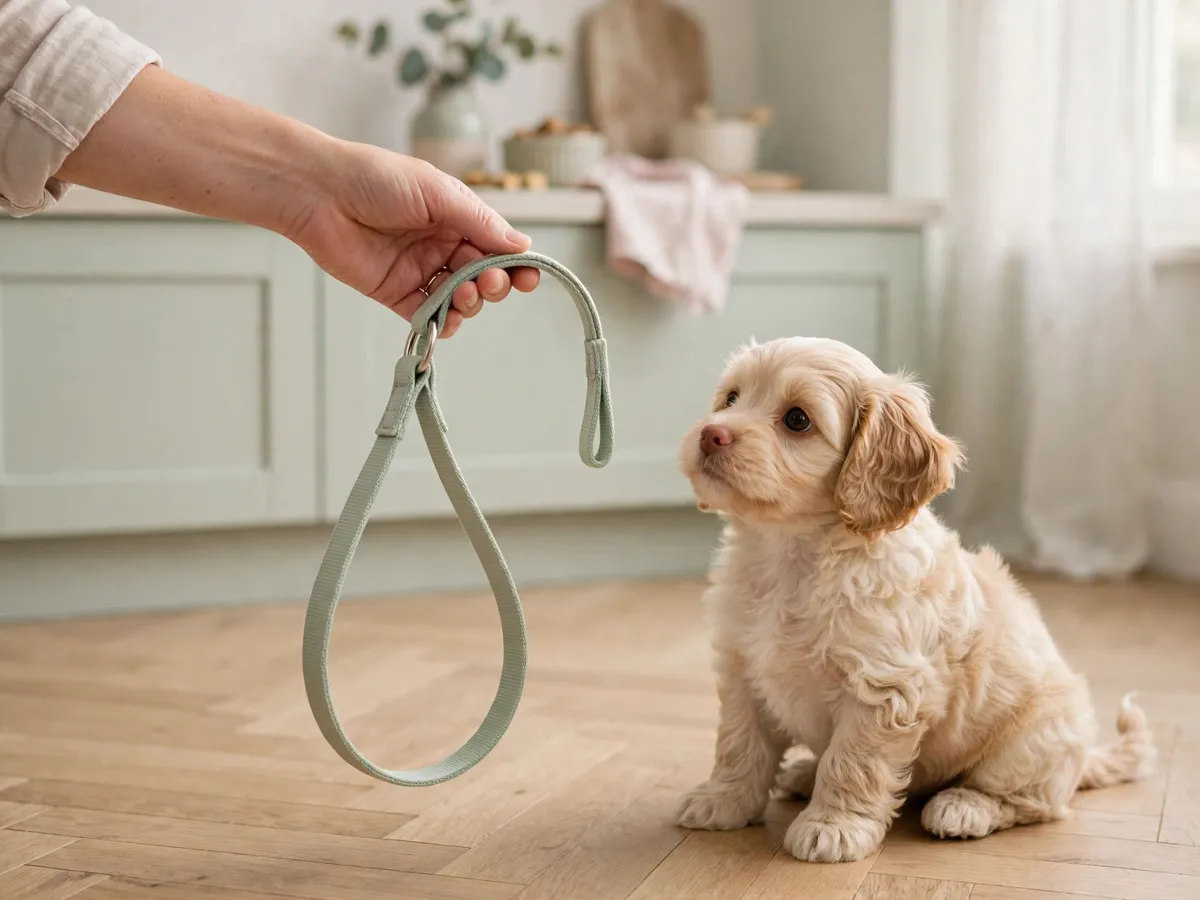
What a slip lead is built for
The design is three words long: a loop, a ring, no clasp. It opens, passes over the skull, and settles behind the widest point of the head. That is the whole mechanism, and it is why the tool is fast. Nobody fumbles with a buckle while a puppy squirms in a clinic hallway, and nobody loses a second hunting for a clasp that has rusted shut.
Speed is also the reason a slip lead stays a short-distance tool. A plain nylon lead has no release under load, so it is a line you hold rather than a line you leave. Every decision below follows from that one sentence: where the ring sits, how the loop goes on, how long the hold lasts, and where the lead lives once the appointment is over.
Most owners reach for it at the wrong moment: the first walk, the park, a whole morning in the yard. Those are jobs for a harness and a leash, and the clip question is settled on the front clip versus back clip harness page. A slip lead is the last tool in the bag rather than the first, and it earns its place exactly when you cannot spare a second to fasten something.
The stop ring and the running loop
Lay the lead on a table before you need it, in good light, and learn which end is which. One end carries a fixed metal ring: the stop. The other end is a free loop of webbing that slides closed when the line is drawn and opens again when the line goes slack. Push the running loop toward the stop and the whole circle narrows, and that narrowed circle is the one that has to pass over the skull.
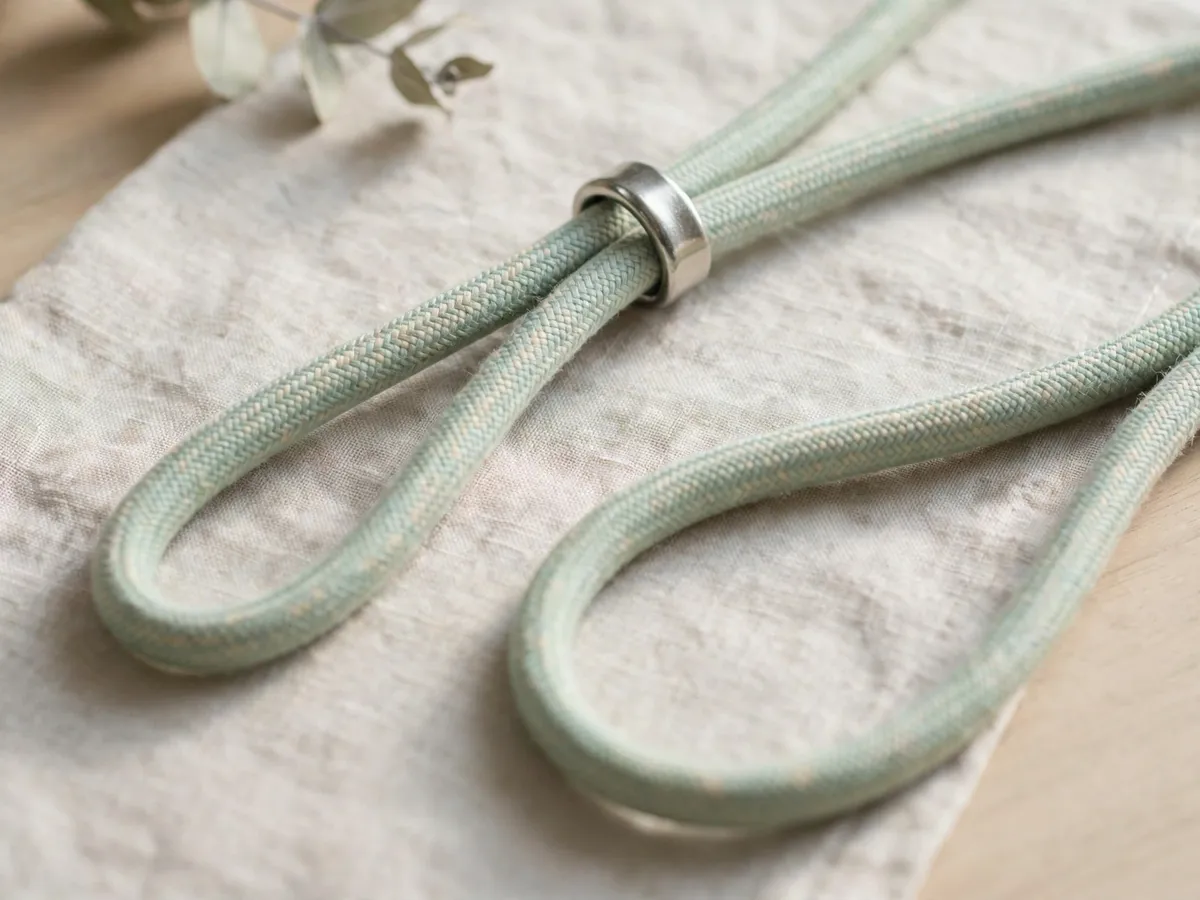
The stop is what makes this a slip lead instead of a bare rope. The loop can travel only so far, and the ring is where the travel ends, so the fit reads in one place: the stop seated behind the widest part of the skull, the loop lying flat on the neck below the ear line. If the loop can travel past the stop, the fit is wrong.
What you are reading is travel, not tightness. The loop closes when the line is drawn and opens when it is not, and the only hard point on the whole tool is the ring. A lead that backs out over the ears is not on the puppy, whatever it looks like from the side.
Two buying details are worth the attention. Wider webbing sits flatter on a short-coated puppy than a thin cord, and a padded loop stays put better through a clinic visit. Beyond that, skip the versions with extra rings, side grips and three positions; every added piece is something to think about while a puppy is thinking about running.
Getting the loop over a skull without a fight
Most slip lead fights are not about the lead. They are about a hand arriving over the head of a puppy that never agreed to it. Solve that once, in a quiet room, and the tool stops being an event for the rest of the dog’s life. The method is one swap: the puppy walks through the loop instead of having the loop put on it.
Bait forward, not down. Hold the loop wide at chest height, a step in front of the puppy, and let the puppy follow something it wants straight through the circle. The nose goes through first, the skull follows, and the free hand closes the loop behind the stop as the puppy steps out on the far side. Nothing is lifted over the ears and nothing drops onto the head from above.
Keep the circle wide until the head is clear. A loop that narrows early brushes the ears, and the ears are the reason most puppies pull back. Squeeze the webbing so the opening lies flat like a hoop, hold it there, and let the puppy take its own head through at its own speed.
Then make it boring. A handful of passes in a hallway, each one taken through the circle, and the loop becomes the thing that means come with me through here. Forcing the loop down teaches the opposite, and the fight starts before anybody reaches the door.
The short hold: vet table and groomer stand
On a table, the lead is not long. Take the slack into your hand so the loop lies flat and the line from the neck to your grip stays short. That distance does the work: a short hold tells a puppy where the edge of the platform is without anybody pulling, and it leaves nothing to step on or loop around a leg.
Stand rather than lean. The table is a small platform and a puppy’s instinct is to step off it, so the job is to be a steady wall at the shoulder. One hand holds the line and the other stays free for the puppy’s chest. The exam belongs to the clinic staff and standing still belongs to the puppy, and the slip lead is what keeps those two jobs from colliding.
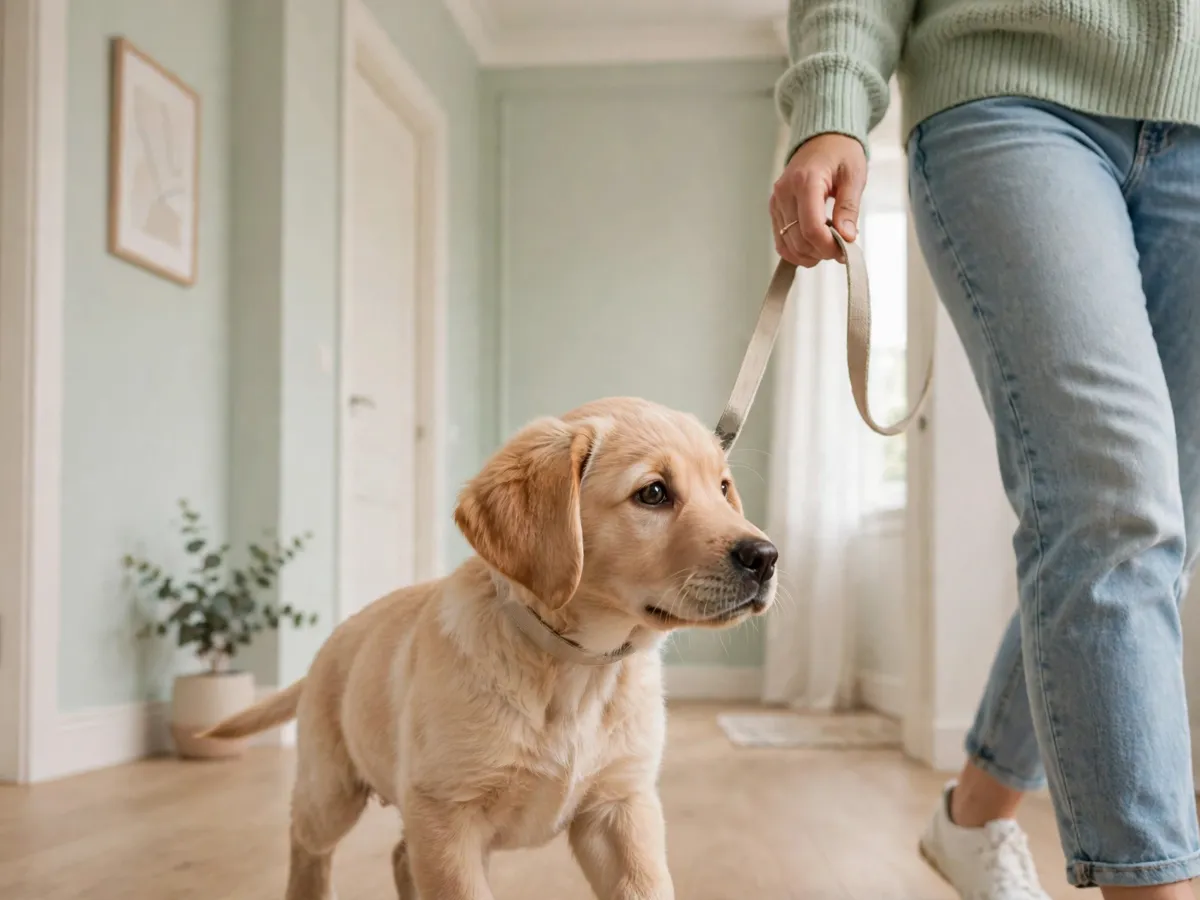
The same short hold covers every in-between moment: the elevator, the lobby, the groomer’s stand, the stretch of floor between the car and the door. Those are the shots a slip lead is bought for, and they share one shape - a few steps, a hand on the line, and a job at the end of them.
Say plainly what the tool is for, then end it. When the appointment finishes, the loop comes off and rides home in your hand rather than on the puppy. That one habit is the difference between a handling tool and a collar nobody meant to leave on.
When it goes back in the drawer
Anywhere a hand is not on the line. Left on at home, on a crate, in a fenced yard, across a long morning in the park: each of those is a loop that can catch on something, and the design has no release to sort it out. The drawer is where a slip lead lives between the appointments it was bought for, and that is not a demotion. It is the tool being used as designed.
The daily walk is different equipment and a different lesson. The loose leash walking page owns the leash length, the hallway drill, and where the reward sits. A puppy who pulls on a slip lead is telling you the tool is wrong for the job, not that the dog is wrong for the walk.
Keep the habit short in both directions. Rehearse the pass-through in a quiet hallway between visits so the loop never becomes strange, and keep each run brief enough that the puppy finishes it willing.
A tool used twice a month and practiced between appointments is a tool that works on the day it matters, which is usually a Tuesday morning in a clinic with cold light and a metal table.
Questions about slip lead handling
What is a slip lead actually for?
Control for a short distance and a short time: the vet table, the groomer stand, a doorway you must cross once. It is not a walking tool, and the loose-leash page is the one to read for the walk itself.
How do I get it over a puppy that hates head handling?
Bait forward through the loop with a treat rather than lifting it over the skull. A puppy that will take food through a circle today will stand still for one tomorrow, and forcing the loop down teaches the opposite.
Where does the stop ring sit?
Behind the widest part of the skull, so the lead cannot back out over the ears. If the loop can travel past the stop, the fit is wrong, and a lead that stays on the neck unattended is a lead you are not holding.
Save these on Pinterest
Pin the two rings before the next appointment, or send the pass-through method to a friend whose puppy turns into a noodle at the clinic door. The Puppy Training collection holds the leash pages, the crate nights, and the obedience basics that surround this one.
Stop ring behind the widest part of the skull, bait forward through a wide loop, a short hold in the hand, and the lead back in the drawer when the job is done.
For informational purposes, consult your vet.
Working a guardian breed adds mouth control and an arousal reset to everything here, which the guardian-breed training craft page walks through breed by breed.
The slip lead page ends at handling; service dog training basics picks up at what a working dog is trained to do.