 PawStyle Daily
Puppy Training Tips
Puppy Bell Training: the Door Signal in 5 Steps
A bell on the door is the cleanest cue a puppy can learn, and it is clean because it means exactly one thing: the door opens. The danger is not the bell. The danger is a bell that also means supper, play, attention, or let me see the cat on the porch. This page owns the bell and nothing else: where it hangs so it can only mean the door, the first paired reps that stitch the ring to the open, the rule that every ring gets answered, and the untraining of the false ring once the game turns into a tantrum. The potty training schedule owns the daily clock and the crate routine, and potty training while at work owns the midday gap. This page owns the single ring.
By PawStyle Daily · Updated 20 November 2026
Good to know: the bell means the door and nothing else | every ring gets answered | the first reps pair the ring to the open | a false ring is untrained, not punished.
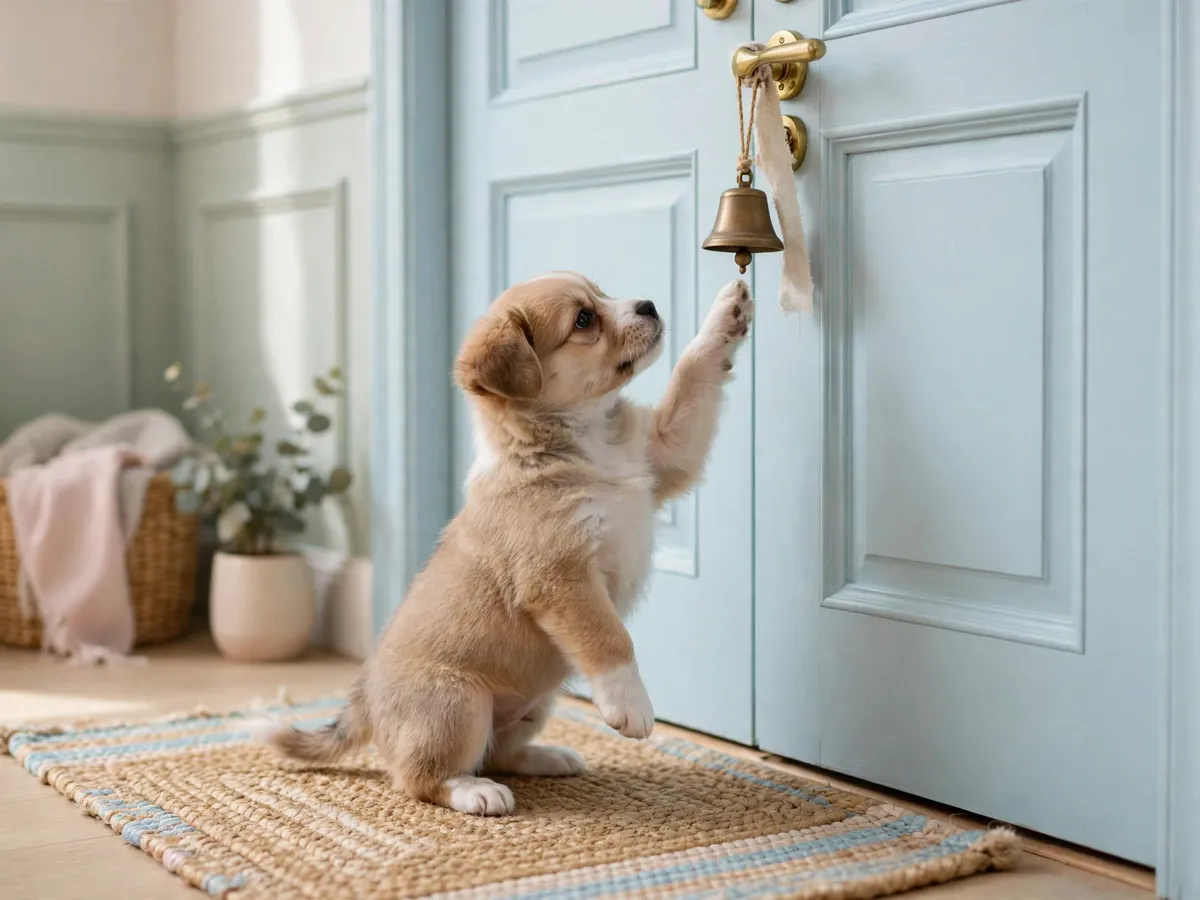
What the bell is, and what it is not
A doorbell for the dog sounds like a trick, and the trick part is real: a puppy that jingles a bell to go out is a small piece of theater that makes guests laugh. But the bell is not the trick. The bell is a word. It is the one sound the puppy can make that the household has agreed to answer with the same action every single time, and that agreement is the whole reason it works. A puppy that whines at the door learns that whining sometimes opens it and sometimes does not, because whining also means bored, lonely, and there is a squirrel. A bell has no other meaning, so the puppy cannot be wrong about what it is asking for.
That bet fails the moment the bell earns a second meaning. Ring for the door, then ring because the food bowl is empty, then ring because the cat walked past, and inside a stretch the bell means nothing the household will answer. The five steps below are really one rule in five moves: the bell touches the door, the door answers the bell, and nothing else ever does.
Where the bell hangs, and why that choice is the whole game
The bell hangs on the door itself, not on the frame beside it and not on a hook across the room. This is not a style call. The door is the thing that opens, so the bell is the thing the puppy touches to ask for the thing that opens. A bell on the frame teaches the puppy to nose the wall, which is a habit with no exit attached to it. A bell on a hook across the room teaches the puppy to run to a corner and back, which asks the household to translate a lap into a guess. The door is the answer, so the door is where the bell lives.
The height is the second half of the choice, and the height is the puppy. Hang the bell at the level a standing puppy reaches with the tip of the nose, not at the level a sitting puppy can bat with a paw. A nose-touch is a precise motion, and a paw-bat is a motion the puppy makes at every door, every cabinet and every passing ankle anyway, so a paw-bat carries noise a nose-touch does not. The nose is the instrument: it is what the puppy leads with at the door, and it is the part the household can see clearly enough to answer the instant it lands.
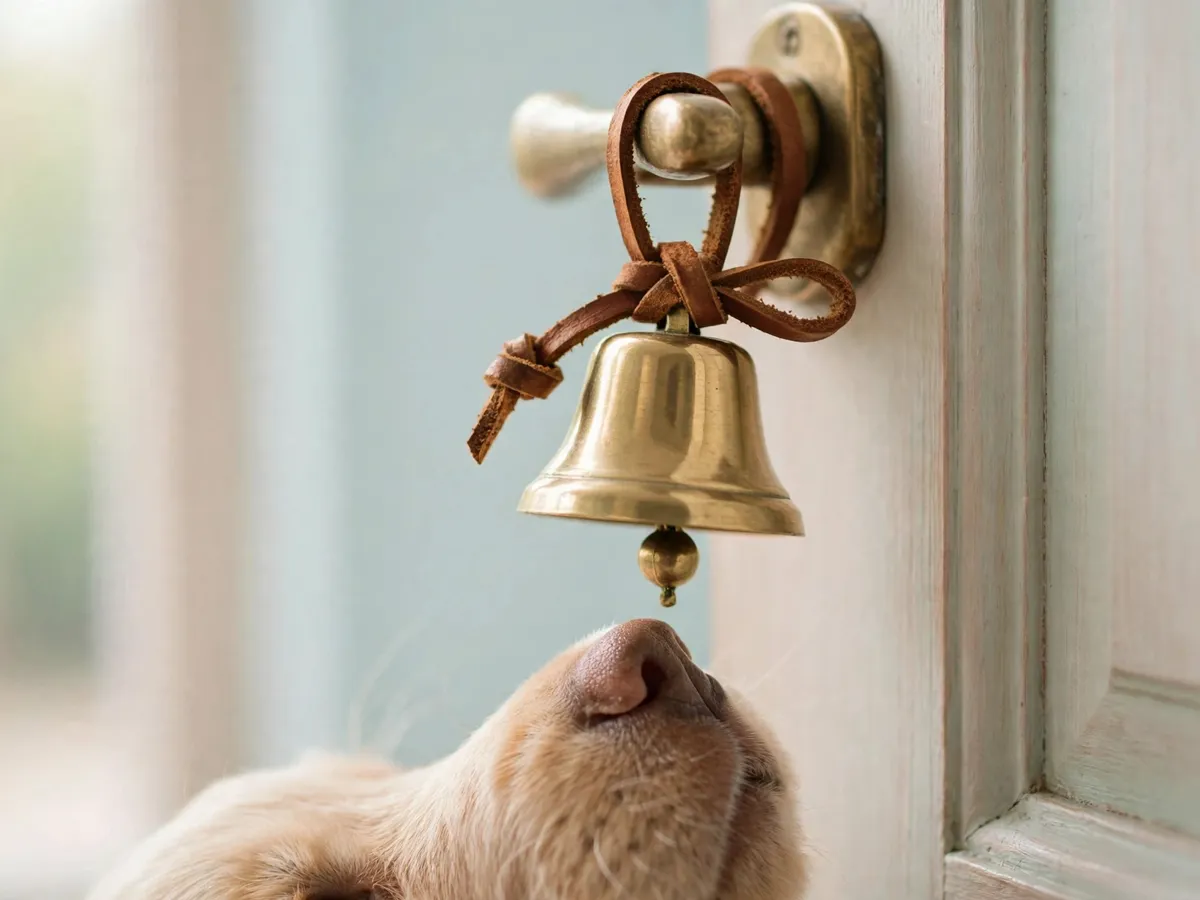
The bell itself can be a small brass bell on a leather cord, a cluster of sleigh bells on a ribbon, or a single flat service bell stuck to the door at nose height. The only requirement is that the sound carries across one room and no further, so a ring at the back door is not answered by accident from the kitchen. A bell the whole house can hear is a bell the whole house has to decode, and decoding is the habit that breaks cues.
The first paired reps: ring and open, in one motion
The first reps are not the puppy's reps. They are the household's. Before the puppy has any idea what the bell is, the household walks it to the door, touches the bell with the puppy's nose, and opens the door in the same breath. The puppy goes out. That is one rep, and the puppy did nothing but stand there. The point is that the bell and the open happen so close together that the puppy cannot tell them apart. The ring is the door. The door is the ring. There is no pause in between for the puppy to wonder whether the ring caused the open, because the household answers that question for it by making the two events one event.
Run the paired rep every time the puppy is about to go out, at the door the bell lives on, for a stretch of days. The puppy does not have to ring on its own yet. The only thing it is learning is that a certain sound is always followed by a certain opening, and that learning lands without any instruction at all, the same way a puppy learns that the rustle of a food bag means the bowl is coming.
The mistake to avoid is the pause. A household that rings the bell, then waits to see if the puppy looks at the door, then opens it, has taught the puppy that the bell is followed by a wait, which is the opposite of the lesson. If the household needs a moment to put shoes on or grab a leash, the bell does not ring until the door can open in the same motion. The ring is the trigger, not the preamble.
Answering every ring: the rule that makes the bell a word
Once the puppy begins to ring on its own, the household has one job: answer every ring with the door. Not most rings. Not rings that happen at convenient moments. Every ring. This is the step where most bell training breaks, and it breaks because the household starts editing. A ring at midnight is ignored because it is late. A ring during dinner is ignored because the household assumes it is a bid for attention. A ring right after the last trip out is ignored because surely the puppy cannot need to go again. Each ignored ring teaches the puppy that the bell is a gamble, and a gamble is not a cue.
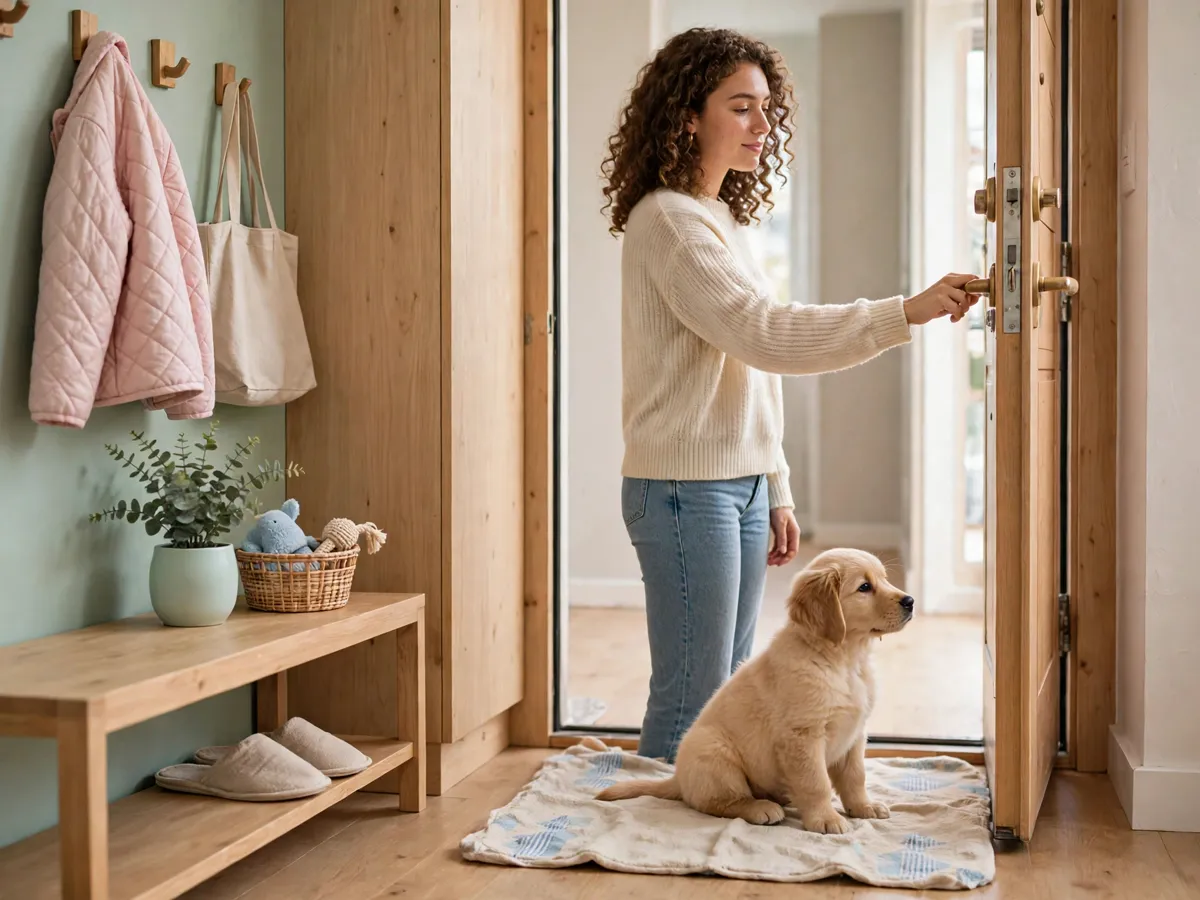
The rule is brutal and it is the point. If the puppy rings, the door opens. If the puppy rings and then sits on the step and stares at a leaf, the door opened anyway, and the puppy has learned that the bell opens the door whether or not anything happens after. That is the correct lesson. The bell does not promise the puppy will go. The bell promises the door will open. The household's only contract is with the door.
A washable mat beside the door is the one piece of gear that earns its place here. A puppy that rings and then has to stand on a cold floor while the household finds shoes is a puppy learning to ring and then pace, which adds motion to the cue. A mat gives the puppy a place to be while the door opens, and that place is still, which keeps the cue clean. The mat is not the cue. The bell is the cue.
Untraining the false ring: when the bell becomes a toy
The false ring is the bell's famous failure mode, and it arrives the day the puppy discovers that the bell is fun to hit. The puppy rings, the door opens, the puppy does not go out, the puppy rings again, and inside a stretch the bell is a toy that sometimes produces an open door and sometimes produces a laugh. The fix is not to punish the false ring. The fix is to return to the contract: every ring opens the door, and the door is the only thing any ring ever opens.
The untraining move is simple and it is the one most households refuse to do. When the bell rings, open the door. When the puppy does not go out, close the door. When the bell rings again, open the door again. Do not lecture, do not ask whether it really means it, do not wait for a sign. No attention, no play, no food, no praise. Just the door. A bell that only ever produces a door is a bell that stops being fun to ring for any reason other than wanting the door. The false ring dies of boredom, not of correction.
The one habit to break before it starts: do not let the bell open anything but the door. A household that lets the bell ring also open the treat cupboard, even once, has taught the puppy that the bell is a general purpose button, and the general purpose button is the thing that destroys the cue. If the household needs a cue for supper, that cue is a different sound, made at a different place, answered with a different thing.
Puppy bell training questions
Where should the bell hang for door training?
At the height a standing puppy reaches with the nose, on the door itself rather than the frame, so a ring means the door and nothing else.
Do I ring the bell for the puppy first?
Yes. Touch the bell with a paw, open the door in the same breath, and let the puppy go out. The link is made in one motion, not in a lecture.
What if the puppy rings the bell to play instead?
Answer every ring with the door, for a stretch. A puppy that learns the bell also opens the cupboard will have learned it badly, and the fix is to stop opening anything else.
Save this bell cue for the door
Pin the five-step bell cue before the first ring, and put it on the fridge where the leash hangs. The potty training schedule owns the daily clock and the crate routine, and potty training while at work owns the midday gap. This page owns the single ring at the door, and nothing else on the clock.
For informational purposes, consult your vet.
The bell owns the door, the clock owns the day, and the marking every trip on paper page owns the record both of them run on.