 PawStyle Daily
Puppy Training Tips
New Year Puppy Goals That Actually Stick
The New Year is the one where everyone sets goals, and most of them are gone by February. A puppy does not care about the calendar, but a puppy does care about routine, and the goals that stick are the ones that were already half in place before January first. This page is about three goals that earn their place in a puppy household: the same two meals at the same times, the weekly weigh-in written on paper, and the body check that says the routine is working without a scale. The goals are small, they are daily, and they are the ones that make the rest of the year easier because the puppy knows what to expect from the day.
By PawStyle Daily · Updated 19 November 2026
Good to know: two meals at set times · a weekly weigh-in on paper · a body condition check · the age shift from three meals to two.

Why puppy goals are different from people goals
People goals fail because they ask for a new habit from nothing. A puppy goal works when it attaches to something the puppy already does. The puppy already eats. The puppy already stands on the bathroom floor. The puppy already has a body the person can put their hands on. The New Year goals that stick are the ones that take those three things and give them a structure: the meals get a time, the bathroom floor gets a scale, and the body gets a weekly check that says the amount of food is the right amount.
The structure is the goal, not the outcome. The puppy that eats at the same time every day is a puppy whose digestion, energy and training window are all predictable, and predictability is the thing that makes the rest of the training easier. The weekly weigh-in is the thing that catches a growth spurt or a drop in appetite before either one becomes a problem. The body check is the thing that says the food amount is still the right one without waiting for the scale to say so. For informational purposes, consult your vet.
The full feeding routine sits on the puppy mealtime routine page, and this page picks up the three goals that turn that routine into a New Year habit the puppy carries into the spring.
Goal one: the same meals at the same times
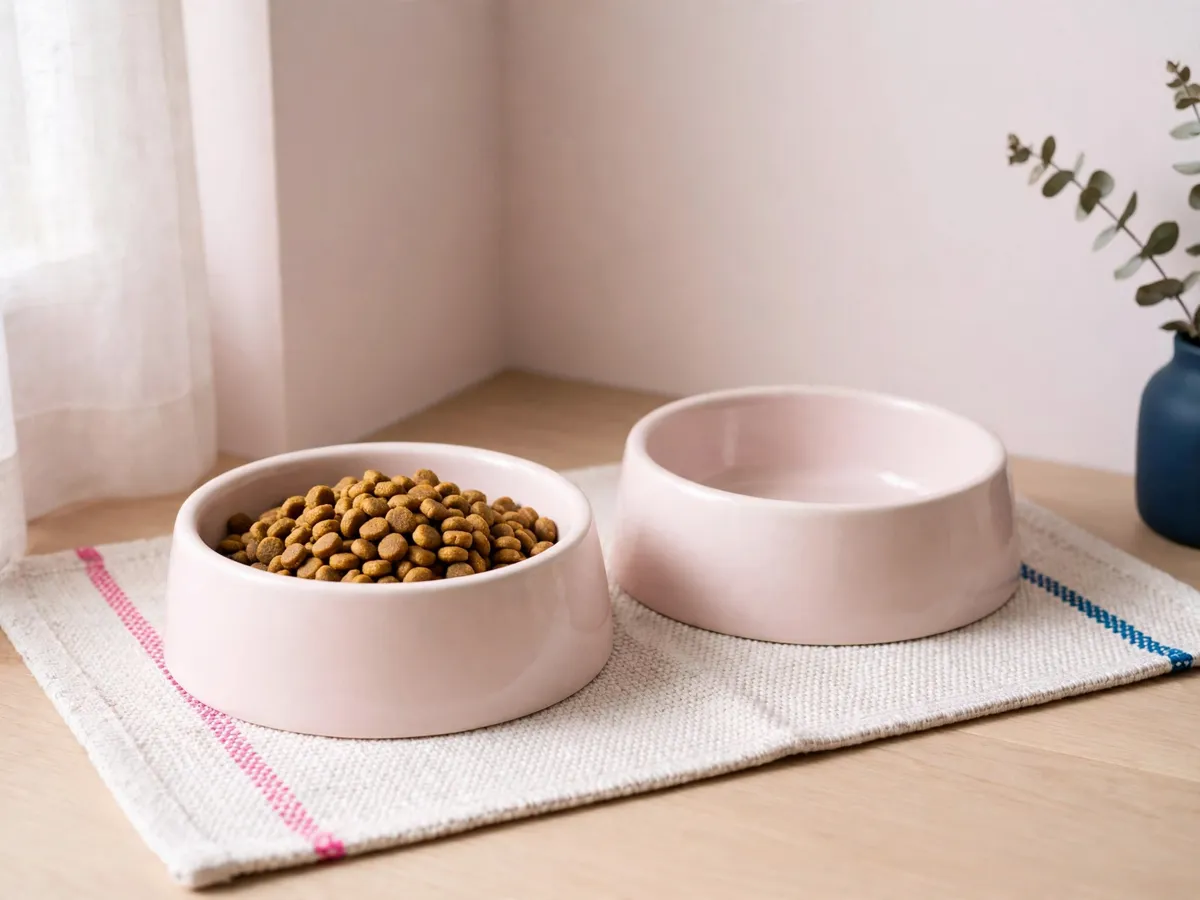
Feed at the same times daily. That is the whole goal, and it is the one that makes every other goal easier. The puppy that eats at seven and six knows that seven and six mean food, and the hours between are the hours the puppy is calm enough to train, sleep and play without the anxiety of not knowing when the next meal comes. The bowl goes down, the puppy eats, and the bowl comes up after the window closes, because the puppy that grazes all day is the puppy whose appetite and digestion are both unpredictable.
The number of meals follows the age of the puppy, not the preference of the household. Four feedings a day from 6 to 12 weeks, then three by 3 to 6 months and two after 6 months. The New Year goal for a young puppy is to hold the meal count the age calls for, and the goal for a puppy already past the shift is to land on two meals and keep them at the same times through the whole year. The shift is the one the puppy grows into, not the one the calendar imposes.
The two-meal routine is the one that carries through the year, and the puppy growth chart page is where the weekly numbers land, so the mealtime goal and the weight goal are both on the same page of the notebook.
Goal two: the weekly weigh-in on paper
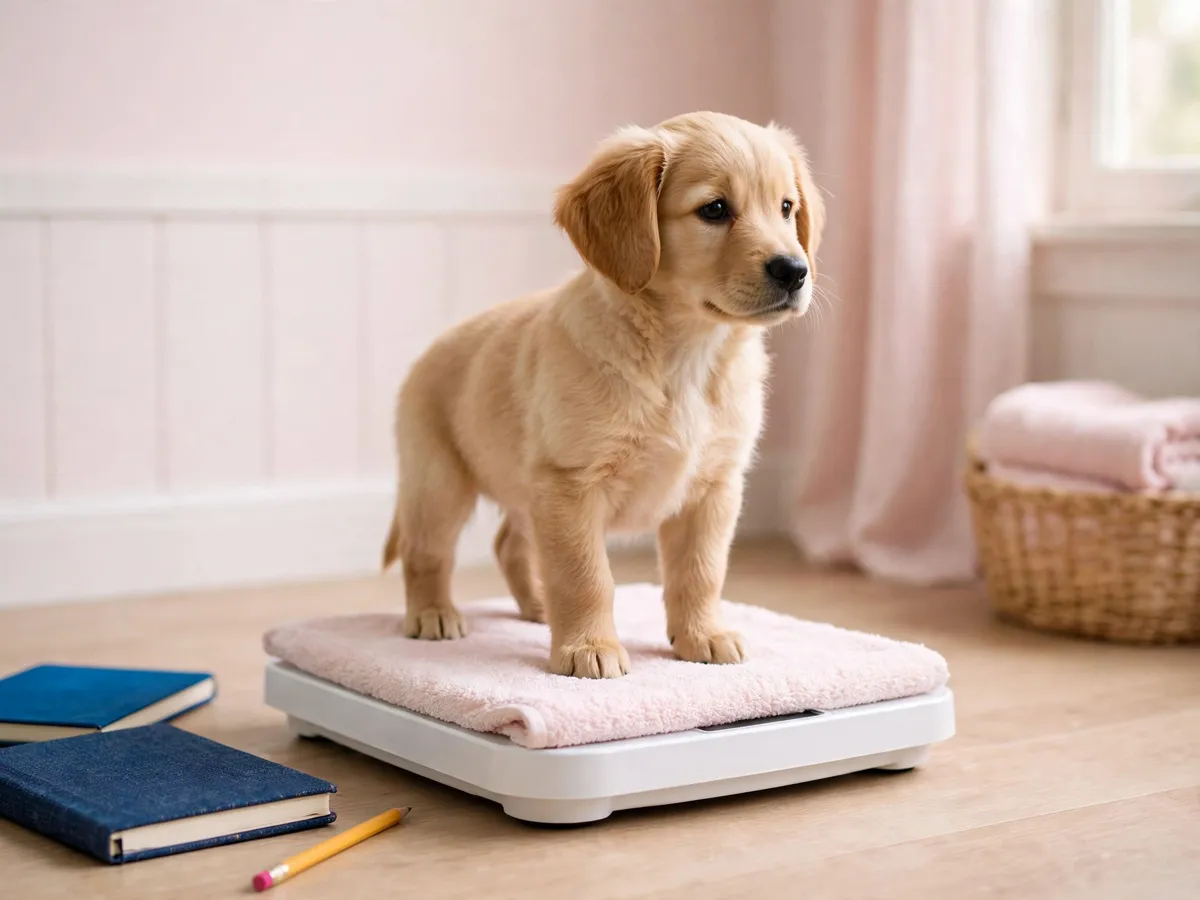
Weigh the puppy weekly and write the numbers down. That is the goal, and the paper is the part that makes it work. The number on the scale is one data point, and the page of numbers is the trend, and the trend is the thing that tells the household whether the food amount is still the right one. A single reading is a snapshot. Ten readings in a notebook are the story of the puppy growing, and the story is what the vet reads at the next visit.
The weigh-in is the same day, the same scale and the same time of day, ideally before the first meal so the puppy is empty and the number is honest. The notebook lives next to the scale, and the pencil lives in the notebook, because the weigh-in that is already set up is the one that gets done, and the one that starts with a hunt for the notebook is the one that gets skipped. The goal is the habit, and the habit is the notebook and the pencil in the same place every week.
The numbers tell the household when the food amount needs to move. A puppy that gains steadily is a puppy on the right amount. A puppy that stalls or drops is a puppy whose food amount or health needs a second look, and the notebook is the thing the vet reads to figure out which one it is. The weekly weigh-in is the goal that turns the rest of the year into a conversation with data, not a guess.
Goal three: the body condition check
At an ideal weight, a puppy has a waistline that curves in behind the rib cage, a tucked tummy, and ribs you can feel but not see. That is the body check, and it is the goal that does not need a scale. The hands tell the household what the number confirms, and the body check is the one that runs between weigh-ins, on the days the scale is not part of the morning. The check takes a moment: the hands run along the rib cage, the eyes look at the waistline from above, and the answer is whether the ribs are felt or seen.
The check is the one that catches the gap between the scale and the eye. A puppy that is growing fast can look thin and still be on the right amount, because the frame is outpacing the fill. A puppy that looks round can still have ribs the hands can feel, because the coat hides what the eye assumes. The body check is the thing that keeps the household from chasing the scale number and from trusting the photo, and it is the goal that says the routine is working without waiting for the weekly weigh-in to confirm it.
The full body check method sits on the puppy body condition rib check page, and the New Year goal is to run that check on the same day as the weigh-in, so the hands and the scale tell the same story on the same morning.
The routine that holds the three goals together
The three goals work because they share one morning. The weigh-in is before the first meal. The body check is right after the weigh-in, while the puppy is still on the bathroom floor. The first meal follows at the same time it always does. The notebook catches the weight, the hands catch the body condition, and the bowl catches the meal, and the whole routine takes the same time it takes to brush teeth. That is the goal that sticks: the one that is already part of the morning, not the one that asks for a new hour.
The routine also has a weekly shape. The weigh-in and the body check run once a week, on the same day, and the daily part is the two meals at the same times. The weekly goal is the notebook entry. The daily goal is the bowl on the mat at seven and six. The two together are the routine that makes the New Year different from last year, because last year the meals were at different times and the weight was a guess, and this year the meals are set and the weight is on paper.
The routine is also the thing that makes the vet visit easier. The notebook goes to the vet, the body check is the one the household already knows, and the meal times are the ones the vet asks about. For informational purposes, consult your vet.
Questions about New Year puppy goals
What are realistic New Year goals for a puppy?
Two meals at the same times, a weekly weigh-in on paper, and a body condition check. The goals that stick are the ones that fit the day you already have.
How often should I weigh my puppy?
Once a week, same day, same scale. Write the number down so the trend is visible, not just the last reading.
When do I drop from three meals to two?
The shift follows age, not the calendar. Three meals hold through the early months, and the move to two comes when the puppy is past the six-month mark.
The puppy routine starter kit
What we use for the morning routine
Two pastel bowls, a kitchen scale, a notebook and a pencil, the four things that hold the morning weigh-in and the two-meal routine.
See the starter kit →As an Amazon Associate we earn from qualifying purchases.
Save these on Pinterest
Pin the three goals for the first January with the puppy. The Puppy Training collection holds the feeding routine, the growth chart and the body condition check in one place, so the goals and the tools that go with them are on the same page.