 PawStyle Daily
Pet Loss & Memorial
Pet Memorial Stones: Choose, Word and Place
A memorial stone is the shape grief takes when it wants an address. Not a page in a scrapbook, not a folder of photos, but an object with weight that sits in one place and stays there through the seasons. Choosing one is a small project at a tender time, and this page walks it gently: the three kinds of stone and what each one says, the words that fit and the words that do not, and the placement ritual that turns a rock in a garden into a spot you can visit on an ordinary Tuesday for no reason at all.
By PawStyle Daily · Updated 24 November 2026
Good to know: a gentle guide, never a timeline · for informational purposes, consult your vet.
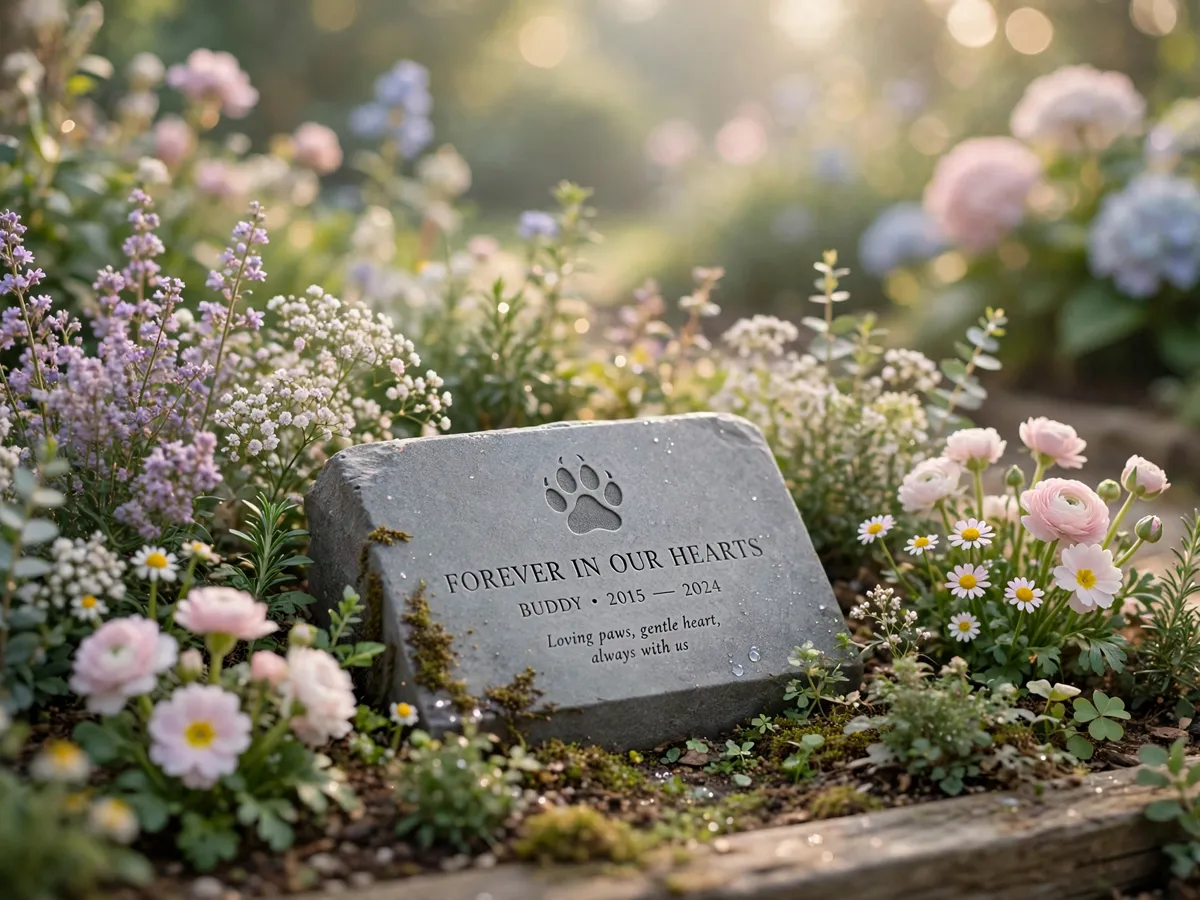
A Stone That Stays
The stone earns its place in a memorial by doing the one thing nothing else in the house does: it does not move. The collar gets put in a drawer, the photos migrate between albums and phones, the cushion the cat preferred eventually leaves the sofa. A stone set in the garden bed or on the shelf stays exactly where grief left it, and that stillness is the whole function. It is not a decoration for the home. It is a fixed point for the person living in it.
Because a stone is one object among several ways to remember, this page sits deliberately beside its siblings rather than above them. A stone joins a list that already has many entries, and nothing here suggests it should be the only one. What a stone offers that the other entries do not is weather: rain, frost and years, met and outlasted, which is the quietest promise a memorial can make.
Engraved, Painted or Left Natural
Three kinds of stone, three different statements. The engraved garden stone is formal and permanent, machine lettered or hand carved, and it says this is a marker that intends to outlast me. The painted river rock is personal and handmade, and it says this is a grief I worked through with my hands. The natural stone, chosen from a beach or a favorite walk and left blank, says the least and can mean the most, because the only person who knows why that stone is the stone is the person who chose it.
The honest choosing question is not which is best, it is which hands the project belongs to. The engraved stone arrives finished, which suits a season when making anything is too much. The painted rock is an afternoon of craft, which suits a grief that wants occupation. The natural stone is a walk, which suits a grief that wants weather. The painted river rock memorial page owns the craft route in detail, and the garden pour route, the concrete version that becomes a path, belongs to the DIY memorial stepping stones page.
The Words That Fit
Stone is a short medium. A name, the years, and one line that sounds like the animal: that is the whole budget that fits, and the line is the only part that needs writing. The test for it is speaking it out loud. A line that reads beautifully on a preview screen can turn to stone-cold marble in the mouth, and a line that sounds right said to the garden at dusk is the line that will still sound right in the years that follow. Keep the one you actually say.
The line that fits is usually specific. Our best girl, who waited at this door for fourteen years. He chose us. The office cat. The boss of the backyard. What does not fit is the generic, the forever in our hearts that belongs to a thousand stones and therefore to none of them, and the funny line that the animal would have judged. The wording is the last voice the animal gets, and the only person who knows that voice is the one who lived with it.
The Engraved Garden Stone
The engraved stone is the branch with decisions in it, so it gets its own read. The material: granite holds a letter for decades and ignores the weather, softer sandstones age gracefully but read softer, and slate takes a crisp line and splits along its own opinions. The lettering: deep carved lettering catches shadow and stays readable as the surface weathers, where surface etching can fade on the exposed face long before the stone itself is done.
The choosing sequence that keeps it gentle: settle the words before browsing the stones, because the catalog will happily supply words if none are arriving, and supplied words are the ones that read wrong a year later. Order the stone once the words survive being said out loud. And place it when it arrives rather than when it is perfect, because a memorial stone waiting in its box for the right weekend is a stone doing nothing for anyone. The engraving is finished work, and finished work wants a spot.
One honest note about ordering at a tender time: the engraver will send a proof, and the proof is the moment to slow down rather than the moment to hurry. Read the name letter by letter, read the dates, read the line. An extra day at the proof stage costs nothing and spares the error that cannot be undone, and engravers who do this work are used to the pauses. Nobody in that trade is confused about why the order matters, and most of them will hold a proof a little longer than the schedule strictly asks.
The Painted River Rock Route
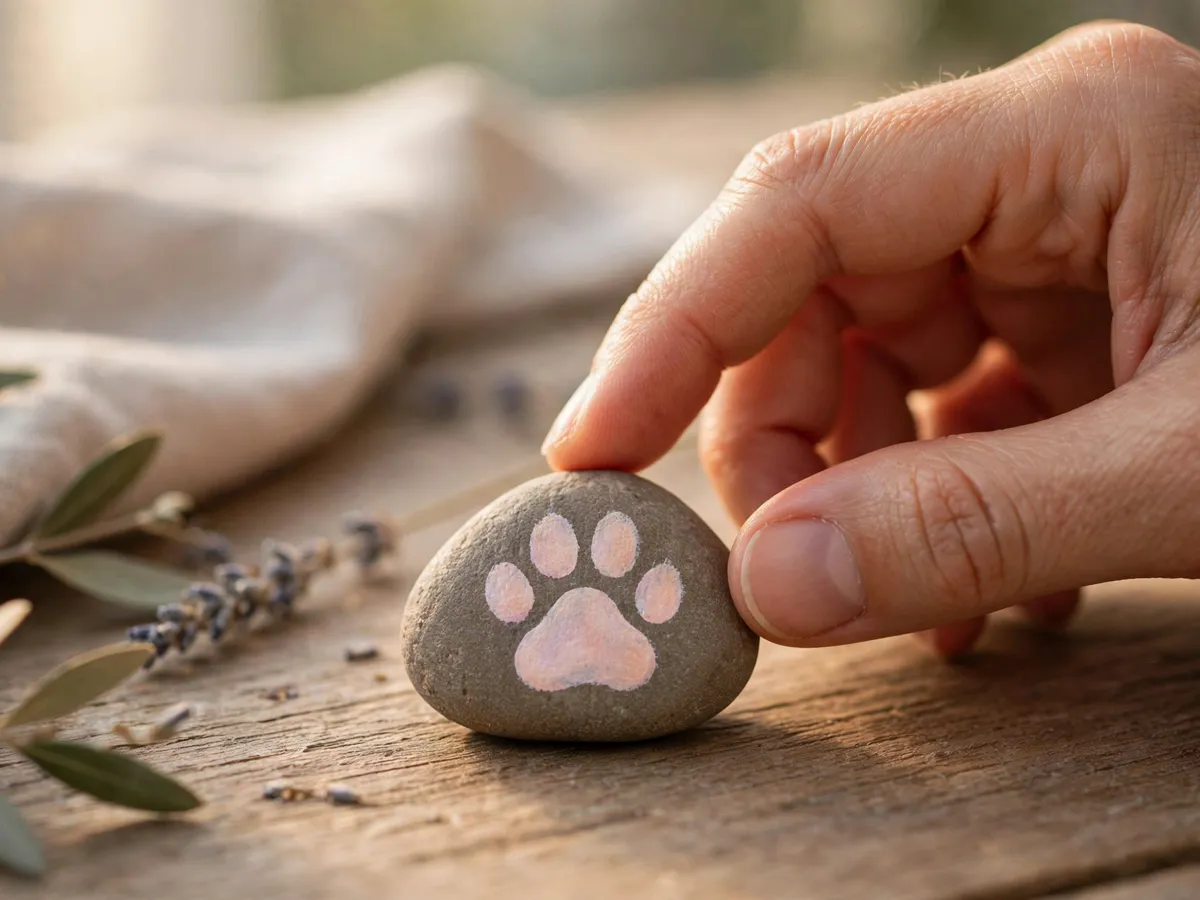
The painted rock is the branch where the making is the memorial. A palm sized river stone, a set of paint pens, a quiet afternoon: the process asks for nothing but attention, and attention is what a grieving hand often wants somewhere to go. The result is softer than an engraving in every sense, a mark that lives on the surface and asks to be indoors or in a sheltered spot, and that softness is the point. It is a handmade thing for a handmade grief.
The craft itself, the sealants and the pen choices and the painting sequence, is a full page of its own, and this one deliberately stops at the door of it. The painted river rock memorial page carries the how to end to end. What this page adds is the permission side: a painted rock does not need to be good. The wobbly paw print made on a hard evening is not a lesser memorial than a perfect one, and nobody is grading the brushwork on a stone that carries a name.
The Placement Ritual
Placement is where the stone becomes a place, and the only rule is the honest one: where you will actually stand. The garden bed the two of you shared. The spot by the door where the wait happened, every day, for years. The corner of the balcony that held the morning sun and the watch. A shelf indoors with the collar, where the stone is dry and the visits happen while passing. The plaque route, the wall mounted and brass sided shapes for when a stone is not the form, has its own page: the memorial plaque placement page owns that branch.
The ritual itself can be as small as carrying the stone to the spot and setting it down with both hands. Some people plant something beside it, which gives the spot a season and a reason to be tended. Some wait for a particular morning. The only placement that misses is the one chosen for how it photographs, because the camera is not the one visiting in February. Weather settles the rest: a sheltered placement keeps the lettering readable for years, and an exposed one lets the stone live the life the garden lives, which some grievers prefer and nobody has to.
The visits deserve a word too, because the stone is really for them. The first visits are heavy and the later ones are not, and nothing about the stone decides which is which. A spot that gets a passing glance most weeks and a long stand one evening in autumn is doing exactly what it was placed to do. There is no schedule to keep, no anniversary the stone is checking, and the quiet accumulation of ordinary visits is the memorial working the way it is supposed to work.
Pet memorial stone questions
Is it normal to grieve this hard over a pet?
Grief is a natural response to the loss of a pet, regardless of their age, size or species. A stone does not end the grief, and it is not meant to: it gives the feeling somewhere to live, a spot you can visit on a Tuesday for no reason at all. Some people place one right away, some wait a season, and both are the normal pace. There is no calendar for this.
What should I put on a pet memorial stone?
Memorializing a pet can include scattering ashes in a meaningful place, planting a tree or flowers, keeping an urn with a photo and collar, making a scrapbook, or writing a letter to the pet. A stone joins that list rather than replacing it. The words that fit are usually short: a name, the years, and one line that sounds like the animal. Keep the one you actually say out loud.
Where is the best place to put a pet memorial stone?
Where you will actually stand: the garden bed you shared, the spot by the door where the wait happened, the corner of a balcony, or indoors on a shelf with the collar. The plaque page covers wall and mounted options when a stone is not the shape, and the stepping stones page covers the pour your own garden path route. Weather seals the choice: a sheltered spot keeps the engraving readable for years.
Save the Memorial Stone Sheet
Keep this page for the moment it is needed, whenever that is. The Pet Loss & Memorial collection holds the rocks, the stepping stones and the gentle pages around them. A gentle gift if you need.