 PawStyle Daily
Pet Loss Memorial & Rainbow Bridge
Painted River Rock Pet Memorial: A DIY Garden Tribute
A painted rock is the smallest memorial a garden can hold, and for a lot of households it is the first one that feels possible. It asks for one stone, a few brushes and an afternoon, and it costs almost nothing, which matters when the weeks around a loss are already expensive in every direction. There is no ceremony to arrange and no order form to wait on: the stone is on the ground, the portrait comes from a photo on the phone, and the finished rock goes back outside where the pet used to lie in the sun. This page walks through picking the stone, painting on a curved mineral surface, sealing the work against weather, and placing it where it will actually be seen.
By PawStyle Daily · Updated 20 November 2026
Good to know: flat and smooth beats round · outdoor acrylics, not craft paint · two thin coats of sealer · no deadline on any of this.

Why a rock works when a frame does not
A frame lives where the house puts it, and the house puts it on a shelf nobody chooses to visit. A rock lives where the person chooses to put it: in the bed the cat slept in, beside the door the dog waited at, along the path walked a hundred times a week. The memorial moves outside and joins the routine instead of waiting on a wall. It also survives the weather without asking for attention, so a household that cannot face a project in the spring can set the stone down in October and find it still readable.
The craft is forgiving in a way the other memorial projects are not. A portrait that goes crooked can be painted over. A face that does not read can be simplified into a silhouette or reduced to the ears. And a household that never paints can start with the name and a paw, and add the portrait later or never. Nothing here has a right way to be done, and nothing here has a deadline. The pet memorial gifts and keepsakes page holds the indoor versions for anyone who wants the memory on a shelf rather than in the soil.
Choosing the stone
Shape decides how much of the portrait survives. A flat river rock with a smooth face gives the paint a plane to work on, and a fine grain keeps a line from feathering as the brush crosses it. A wide oval reads as a face; a rounder stone carries a name or a paw better than a likeness. The stone should be big enough that the portrait stays legible from a step away, roughly the span of a hand or wider, because a garden rock is read at walking distance and not at arm's length.
Avoid the rough ones. Lava rock, gravel and any stone with a pitted face swallow a fine brush line and turn a portrait into smudge. River stones sold in garden centres come in flat bags at low cost, and a bag of mixed sizes lets the household pick the best face rather than commit to the first stone. Two practical checks before buying: run a fingertip over the candidate face, and look at the stone from directly above rather than from the side, since the painting surface is the top face and the flat side that reads well in the hand can crown badly when it lies on soil.
Painting the portrait

Start with a clean, dry stone and a base coat. Wipe the face with rubbing alcohol to lift the garden film, then lay down two thin coats of white or cream acrylic as the ground, letting each coat dry fully before the next. The base coat is what makes the colours above it read: mineral stone is dark and thirsty, and paint over bare rock sinks and dulls. Once the ground is even, sketch the design in pencil, then block the large shapes before the small ones, and finish with the outline and the name in a fine liner brush.
Use outdoor acrylic paint rather than the craft acrylic sold in school supplies, and keep the palette small: the coat colour, one darker shade of it, a white, a black and one warm tone for the nose and ears. A portrait on a stone does not need detail, it needs the two or three marks that make this animal recognisable, usually the ear shape, the blaze on the face and the tail. If the likeness is not working, the honest simplification is a silhouette in one colour, which reads from further away than a soft attempt at a face. Lettering goes on last, and a fine liner brush with the paint thickened off the wet edge keeps the strokes from bleeding.
Sealing against weather
The sealer is the part that decides whether the rock lasts a season or a decade. Wait until the paint is fully dry through its whole depth, then lay on two thin coats of a clear exterior spray sealer, letting the first coat dry between passes rather than rushing into the second. Thin coats matter: a heavy coat pools at the edges of a river stone, dries tacky, and comes back cloudy. Hold the can well off the face and move steadily across the stone so no spot gets two passes worth of product.
Seal the whole stone, not only the painted face. The underside and the rim take up ground moisture, and a memorial that sits directly on soil fails at the back before it fails at the front. Work out of doors with the stone raised off the ground, and give the final coat a full day before the rock goes outside. The finish is worth refreshing on the same schedule each year, usually in the dry season, and a household that expects to revisit the stone can photograph the finished face first so the design survives even if a future coat does not.
Placing it in the garden
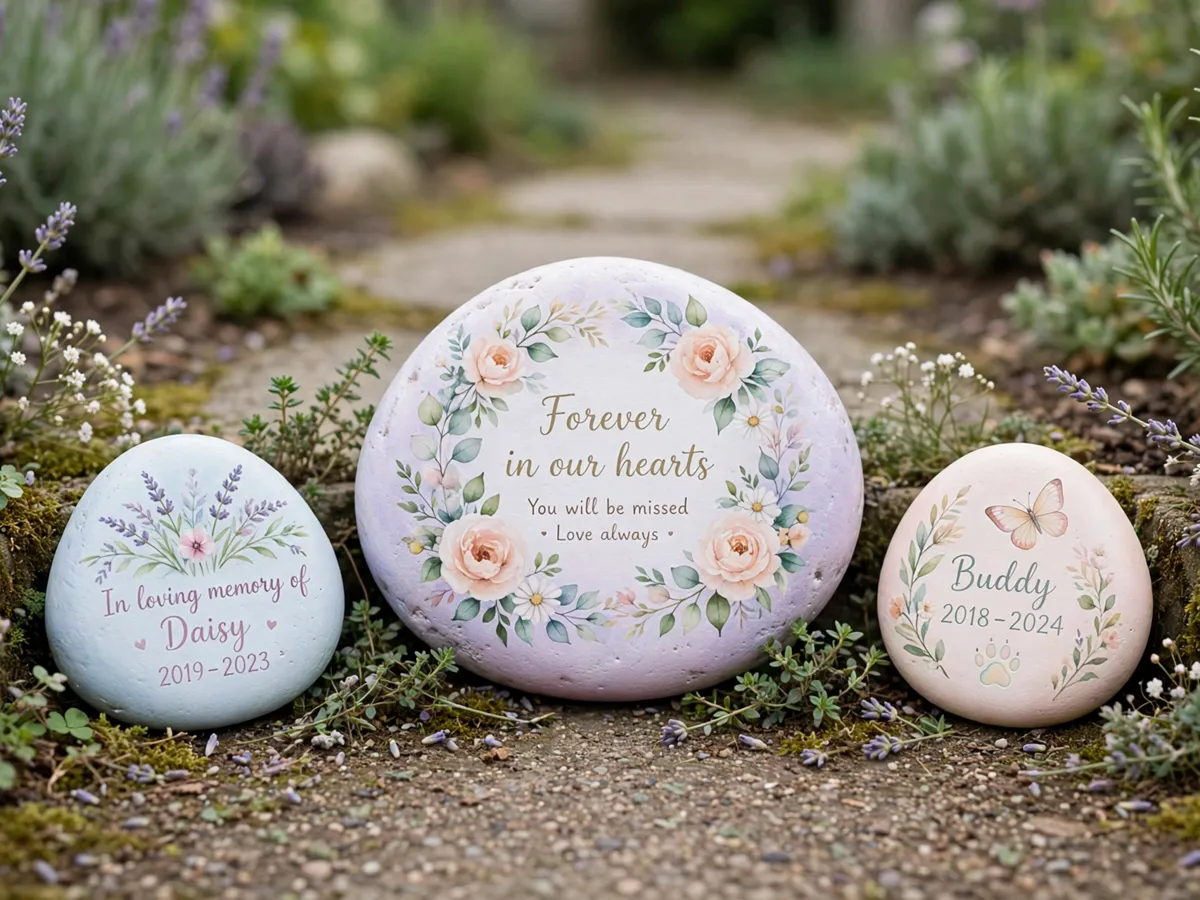
The best spot is the one already in the daily route. A path edge, the corner of the porch, the bed under the window the pet slept in: these get visited without planning, and a memorial that depends on a special trip to the garden gets skipped in the hard months. Set the stone so the face tilts slightly up toward the walking side rather than lying flat, since a flat face reads as a pattern from standing height and a tilted face reads as a portrait. A small mound of soil or a pebble under the back edge gets the angle right.
A group works better than one stone for a household with more than one pet, or one that wants the years alongside the name. A larger centre rock with the portrait and two smaller stones with the dates and a short line is a layout that stays legible from the path, and it leaves room for a third pet later. Anyone who wants the memorial sunk into the ground rather than resting on it should look at the DIY memorial stepping stones guide instead, since a stepping stone is cast to carry weight and a painted river rock is not.
Painted memorial rock questions
Which rocks work best for painting a portrait?
Flat, smooth river rocks with a fine grain. A wide oval fits a face portrait; a rounder stone suits a paw print or a name.
What paint survives outdoor weather?
Outdoor acrylics sealed with a clear weatherproof topcoat. The sealer matters more than the paint brand for a garden stone.
Where should a painted memorial rock sit in the garden?
Somewhere you pass daily, at path edges or beside a plant the pet used to rest near. Height at soil level keeps it readable.
Save this memorial rock guide
Pin it for the garden-centre run, and keep the stone rules handy for the afternoon the painting feels possible. The Pet Loss Memorial collection holds the indoor keepsakes, the candle set and the garden projects that sit beside this one.
For informational purposes only.