 PawStyle Daily
Pet Loss Memorial & Rainbow Bridge
Pet Memorial Plaques: where to mount one that stays
A plaque is the memorial that lives outside. It goes on a garden wall, a fence post, a sleeper at the bed edge, or the rail beside the back step, and it stays there through every season the house does not have to think about it. That is the whole appeal, and it is also the whole risk: a plaque that is fixed badly or cut shallowly stops saying anything within a year. This page owns three decisions and nothing else. The material, the depth of the engraving, and the fixing that holds it. The broader keepsake question sits on the memorial keepsake ideas page, and the painted stone is its own craft on the painted river rock memorial page.
By PawStyle Daily · Updated 20 November 2026
Good to know: choose the material before the wording | deep cut beats printed ink | mortar for the bed, screws for the timber | level is not optional.
What a plaque is, and what it has to survive
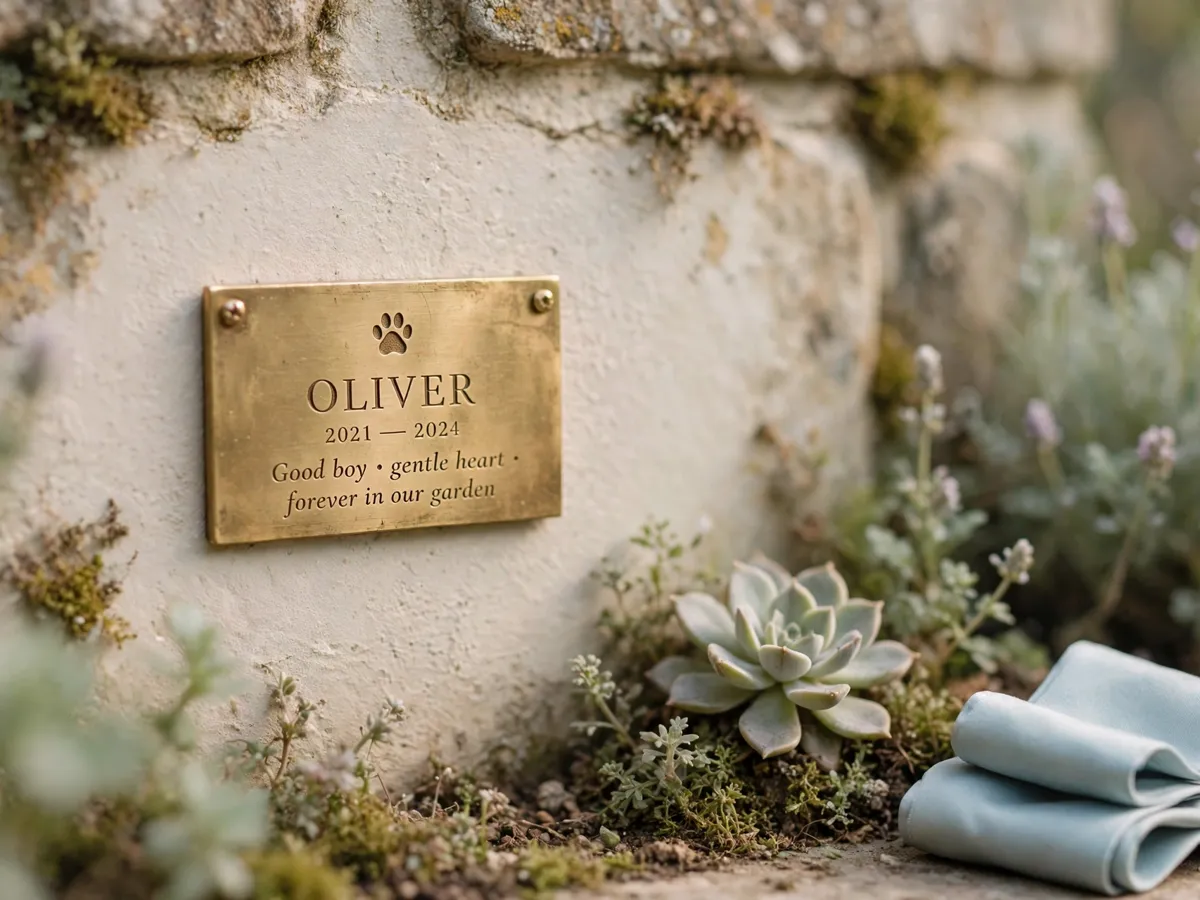
A plaque is not a framed photo with a metal back. It is a flat, fixed thing whose entire job is to be read at a glance by someone who is not standing still. It carries a name, usually the years, sometimes one short line, and it carries them from a walking pace. Everything else on this page follows from that. A placed object can be moved indoors when the weather turns; a fixed one has to take the weather as it comes.
Plaques rarely fail because the wording was wrong. They fail because the plate came off, tilted, filled with dirt, or went unread. Each is a mounting or material fault, and each is avoidable before a single letter is cut. The three decisions below are the whole of it: what the plate is made of, how deep the letters go, and what holds it to the ground or the wall.
Material: choose for how it ages, not how it resists
Brass is the default for good reason. It is soft enough to cut by hand, hard enough to hold an edge, and it ages in a way that reads as deliberate rather than as damage. Bronze behaves the same and arrives darker from the shop, so it suits a wall that is already brown. Neither needs a coating. A cut letter in brass stays legible as the surface around it dulls, because the dulling happens on the flat and the shadow stays in the cut. The only real fault is a shallow cut in a soft metal, which will wear smooth under a thumb over a stretch of years.
Slate is the other honest outdoor material. It is cut rather than cast, it holds a crisp deep edge, and it does not corrode. Its weakness is that it splits along its own layers, so any drilling happens before the plate is fixed and never into a face already loaded. Granite is harder still and takes a sandblasted letter that stays sharp, though it arrives heavy and usually wants a shop to work it. Marble is the material to think twice about, because rain wears its surface and blurs the letter edges from the outside in.
Wood reads warm and lasts badly outdoors unless it is treated and re-done, which turns a memorial into a chore; the paint or stain wants renewing and the end grain drinks. The rule underneath all of it is simpler than any ranking. Choose the material that ages visibly and honestly over the one that merely resists weather. A brass plate that dulls to a soft gold reads as a thing that has been there a while, which is precisely what a garden memorial should say. A plastic plate that stays bright reads as placed rather than fixed.
Engraving depth: the letter has to hold a shadow
Depth is the whole craft, and it is the part nobody photographs. A cut letter is a small valley, and a valley reads because it holds shadow. Rain, dew and grit all gather in it, and the gathering is what makes the letter visible from a standing height. A letter that is barely scratched holds nothing, so it reads only at an arm length and in good light, which is not how a garden gets used. Run a thumbnail across the finished letter. If the nail catches in the stroke, the cut will hold. If the nail slides over it, the letter is decoration rather than engraving.
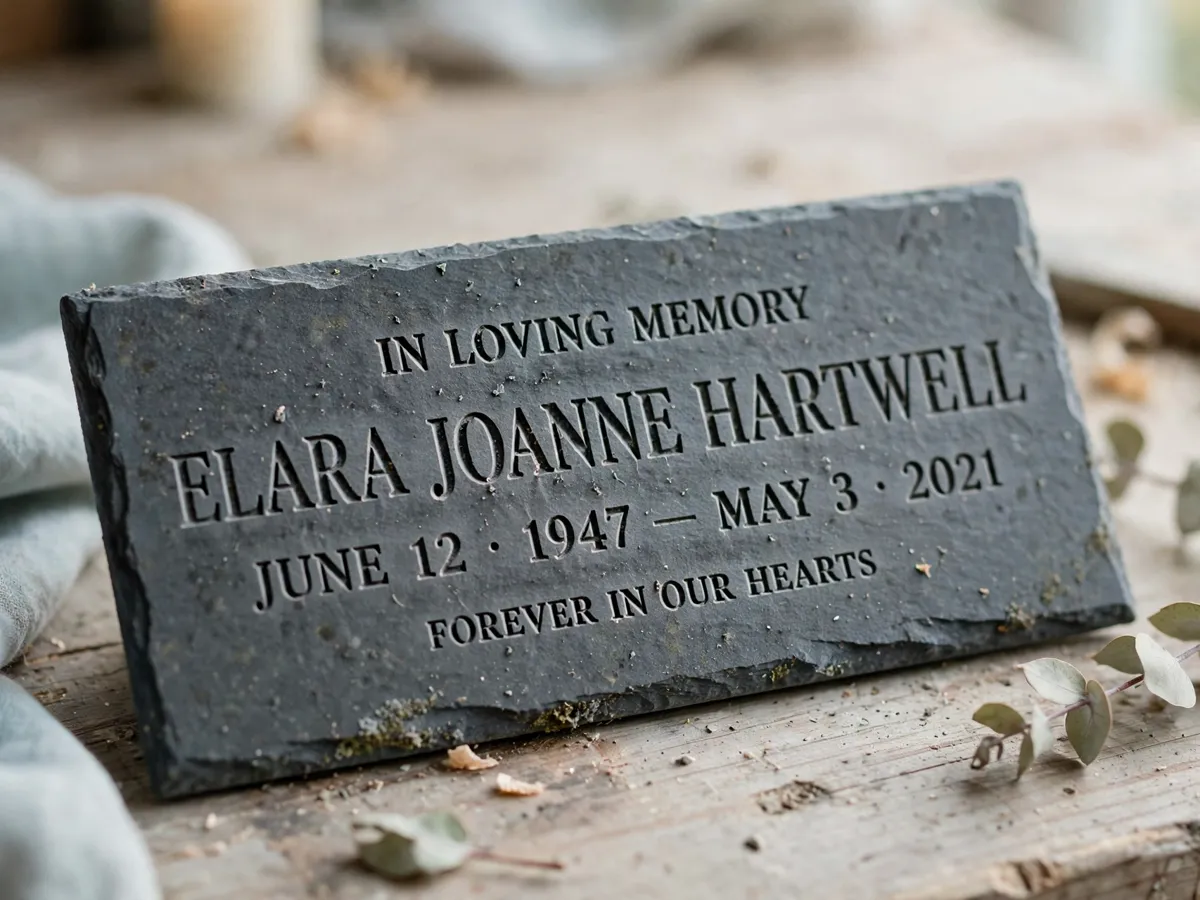
The tool matters less than the depth. A diamond point gives a crisp V, a hand chisel gives a softer U, and a router gives a flat floor under the letter. All three hold outdoors if they cut deep enough, and none of them hold if they do not. The enemy is the hairline serif, the thin script, and the crowded date line, because those fill with dirt within a season and read as a smudge rather than as a name. Generous letterspacing, a plain serif or a clean sans, and no border that squeezes the type.
Printed and laser-scorched lettering are the two shortcuts that fail fastest outdoors. Ink on metal washes off in the first rains, and a scorch is a discoloration rather than a valley, so it pales on a wall that takes the afternoon sun. Both are fine indoors behind glass, and neither belongs on a garden fixing. The wording itself wants less than people think: a name on one line and the years beneath is the whole inscription, and the spelling gets checked twice by two different people before the first cut, because a fixing cannot be redone the way a card can.
The fixing: mortar for the bed, screws for the timber
Mortar holds a plaque by hardening around its edges rather than by gripping a surface, so the bed does the work. Scrape the ground back to firm soil and set the plate down dry to mark its footprint. Mix the mortar stiff, damp enough to spread and dry enough to hold a ridge, because a wet puddle is the mistake that ruins the whole fixing. Scarify the bed with a trowel point, press the plate down until mortar squeezes at the rim, then level it with a straightedge laid across the face rather than judged by eye from above. Keep rain off until the mortar has set, and add a little more at the edges once the first hardness arrives.
Screws are the timber answer, for a fence, a post or a sleeper, and they are not the answer for a rendered wall. Render is a skin over block, and a screw in a skin works loose over a winter of frost. The fixing goes into the timber itself, pilot-drilled first so the face of the plate does not split, with two screws rather than one, because a single screw turns a plate into a hinge. Countersink the heads so they sit below the surface and nothing snags on them, and on a brass plate choose heads that disappear against the metal.
The two methods that do not hold are the adhesive pad and the nail. A pad grips a clean tile and lets go of a rough garden wall, since the dust in the texture beats the glue before the plate is even pressed home. A nail is a hinge, a hinge is a wobble, and a wobble is what cracks whatever holds the plate. Level is the part people skip and regret. A tilted plaque collects rain in its letters, rain in the letters invites the moss, and the moss fills the cut and erases the name from the inside out.
Where it goes, so it gets read rather than survived
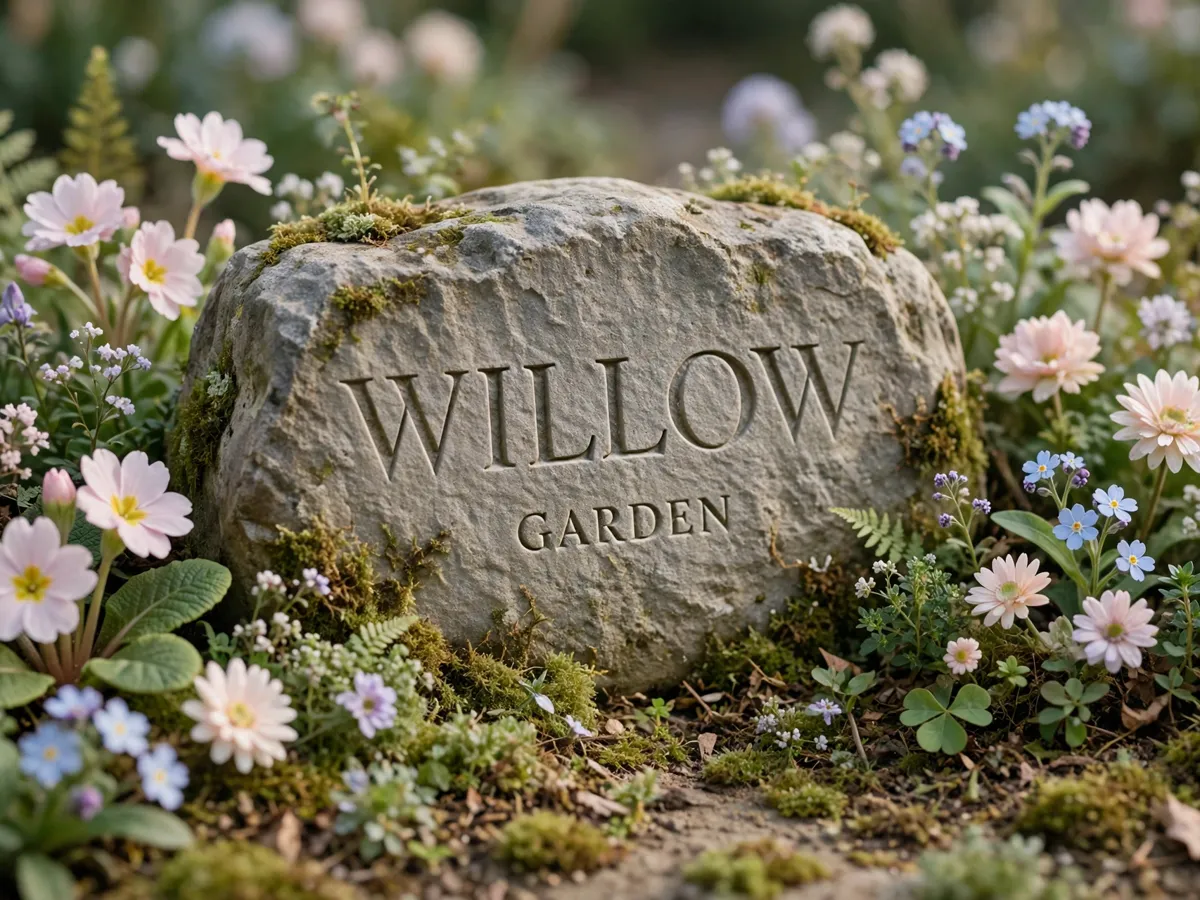
The best spot is on the line of a walk that already happens. A memorial reached by a detour gets visited a handful of times and then joins the garden furniture, while one set on the path to the shed or beside the back step gets read without any effort at all. The kitchen window counts double, because a plate seen daily costs nothing and asks for nothing. Glance height is the second half. A plate set flat at soil level is read by someone already bending, and a rail or the top of a low wall puts the name where the eye lands on its own.
Sun and shade each take something away. Full afternoon sun washes a shallow letter out and pales a printed name, while deep shade keeps the ground damp and invites the moss into the cut. Bright most of the day with a little shade is the honest middle, and it is also what decides the material: the wall that takes the sun wants the deep cut in metal, and the bed that stays damp wants the slate that will not soften. Planting goes around the plate rather than into it, because a climber given a season on a brass face will lift the edges and hide the letters in the same breath.
Two people belong in the plan even when they are not part of the grief. A plate on a shared fence wants a word with the neighbor before any screw goes in, and a plate set at a lawn edge wants to be known by whoever runs the mower along that strip, because a blade that finds a metal rim takes the rim, the blade, and the afternoon with it. Neither is a design question, and both decide whether a memorial stays or is quietly taken down.
Pet memorial plaque questions
Is a plaque better than a frame for a memorial?
For a garden, a stair rail, or a fence post, yes. A plaque is made to sit outside and be read at a glance, while a frame belongs indoors behind glass.
What engraving survives rain and sun?
Deep cut letters in brass or slate read longest. Painted or surface-scorched letters pale on a wall that takes the afternoon sun, so choose the material before the wording.
How do you fix a plaque so it stays put?
Set it on a level bed of mortar, or drive countersunk screws into a stud rather than into render alone. A stone that rocks under the weather will crack whatever holds it.
Save this for the day it is needed
Pin this quietly and keep it until a plate actually makes sense. There is no deadline here. The material, the depth of the cut, and the fixing will still be the same three decisions in a month, and a name does not have to be engraved the week it is missed. The memorial keepsake ideas page holds the gentler indoor options, and the painted river rock memorial page holds the smallest outdoor one. A gentle gift if you need one.