 PawStyle Daily
Best Pet Supplies & Gift Guide
Does Your Dog Need a Winter Coat?
Coats are the easy part to buy and the hard part to fit. This page says who actually needs one, how to size it with a tape measure instead of a tailor, how to get four boots onto a dog with opinions, and what comes off the moment you are back inside.
By PawStyle Daily · Updated 18 November 2026
Good to know: measure the dog, not the label · clothing never stays on an unsupervised dog · for informational purposes, consult your vet.
Who actually needs the layer
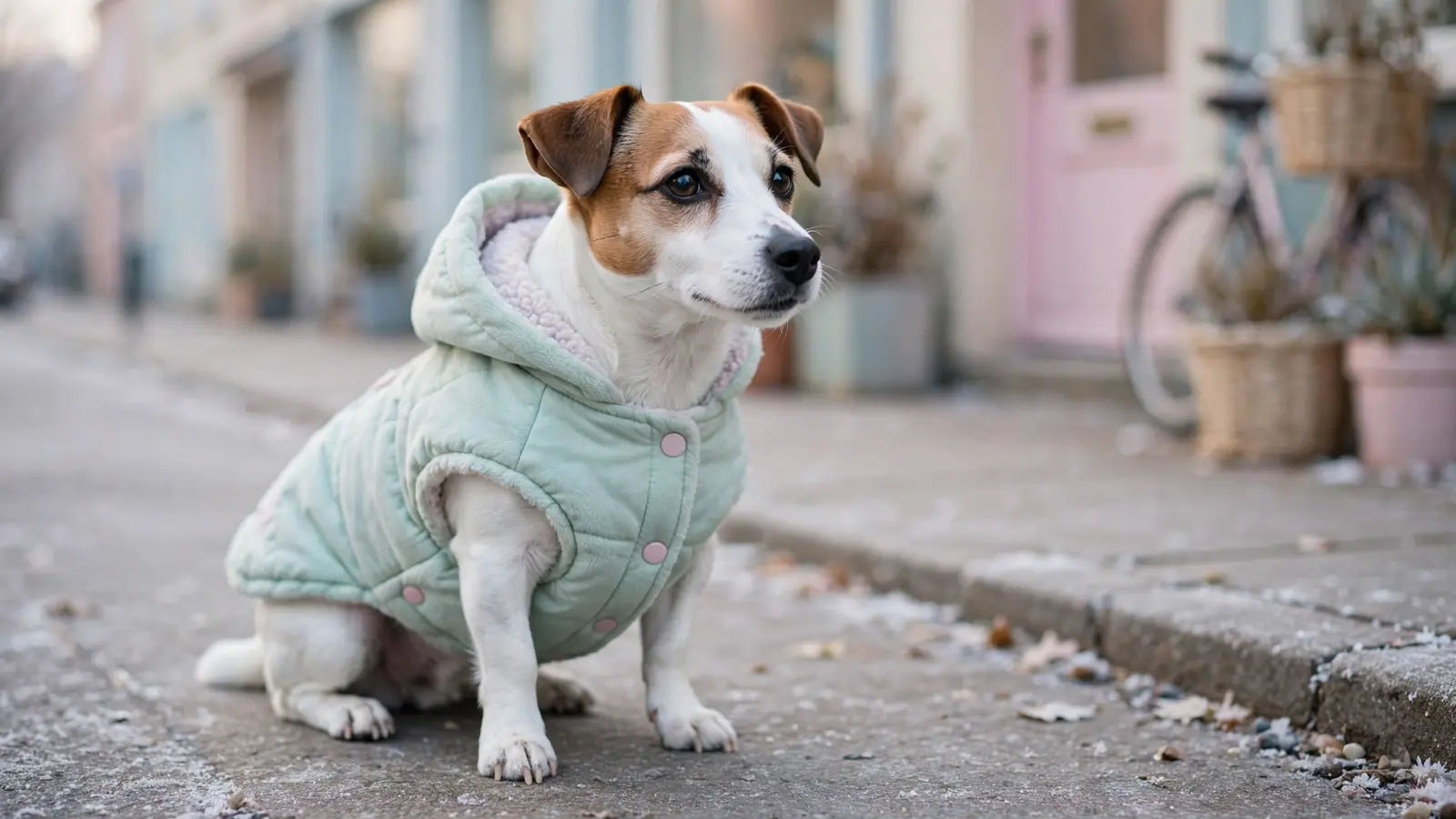
A winter coat, sweater and boots are the winter gear the AKC's chief veterinarian lists for short-coated breeds and older dogs, and clothing should never be left on an unattended dog. The list starts narrow, and it starts with the coat rather than the whole shelf.
- Short coat and little body fat: the classic customer, from slender hounds and French bulldogs to small terriers.
- Older or stiff dogs, who lose heat faster because they move slower and generate less of it on the walk.
- Small and low-slung dogs, whose belly runs along wet pavement instead of above it.
- Freshly clipped dogs in a cold month. A short summer cut is a coat-sized gap, whatever the breed chart says.
A thick double coat is insulation of its own. Watch the dog coming back inside rather than the calendar: one that returns steaming wore too much, and one that shakes off at the door wore too little.
Sizing it without a tailor
Every brand prints its own chart and none of them agree, so measure the dog and match that brand's chart. Never buy the size your friend's dog wears.
- Neck: around the base, where the collar sits. Snug, not tight.
- Chest: the widest part of the ribcage, just behind the front legs. This is the number most returns get wrong.
- Back: from the base of the neck to the root of the tail, with the dog standing straight.
- Keep all three in your phone. The next coat, and the harness that has to live with it, take a minute instead of an afternoon.
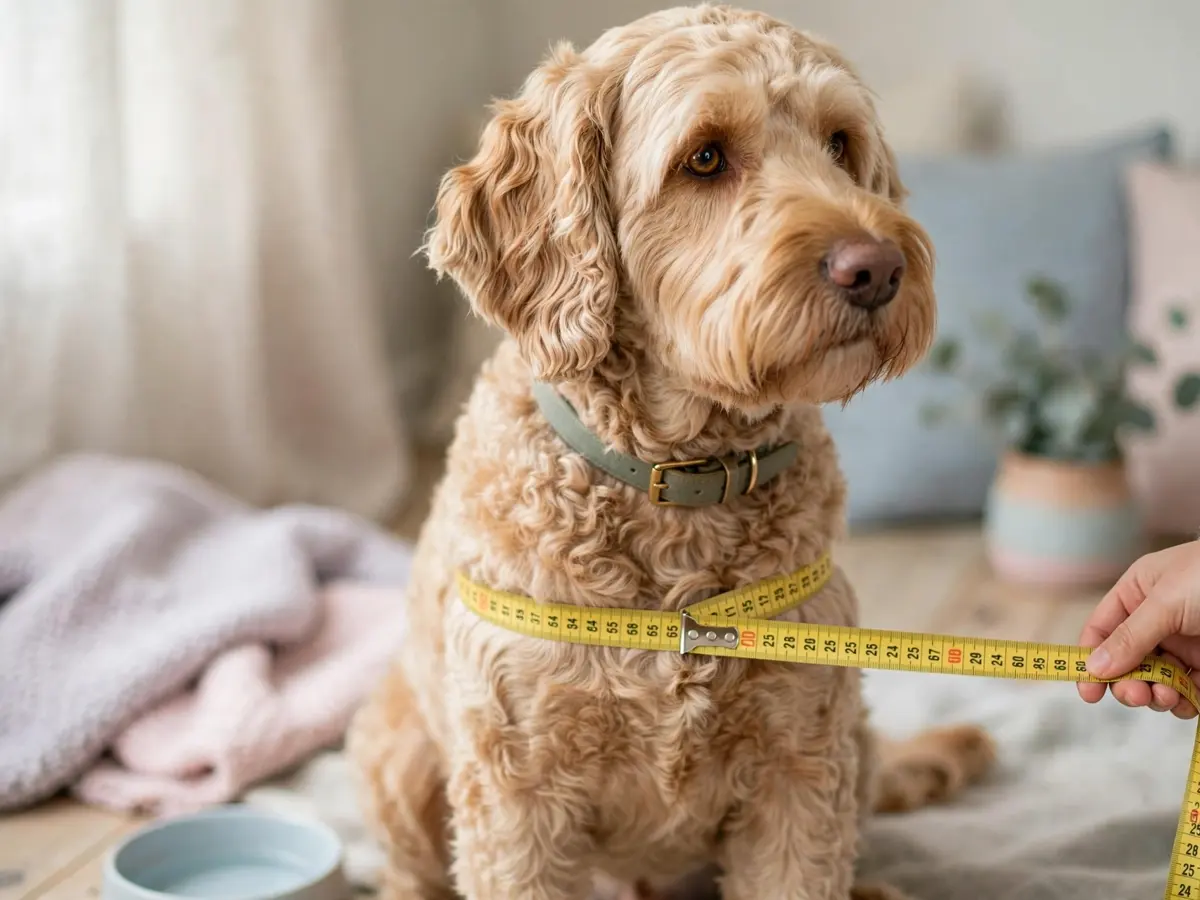
Then the fitting-room checks. The neck opening should go over the head without pulling an ear. The chest strap should sit behind the front legs with room for two fingers. The back hem should clear the tail, and nothing should touch the armpit, because a strap that rubs by the end of the walk is a strap the dog will object to next time.
Coat, sweater, snowsuit or boots alone
Four shapes of gear, four different jobs. Pick the smallest one that covers the dog in front of you.
Coverage, and what each one goes wrong at
| Gear | Covers | Fits this dog | Where it goes wrong |
|---|---|---|---|
| Coat with a chest strap | Back and chest, belly open | Short-coated walkers in wind and light rain | Rides up at the trot if the strap is loose |
| Knit sweater | Torso, little belly cover | Door-to-car dogs and older dogs at home | Too loose it drags, too tight it stops the shoulder |
| Full snowsuit | Back, chest, belly and hind legs | Small dogs in deep, wet slush | Overheats on a mild day, and seams rub the shoulder |
| Boots alone | Pads and ankles | Salt, ice crust and rough pavement | One boot disappears at the first corner if the strap gives |
Buy the coverage the dog needs, not the fullest one the shelf offers.
Getting four boots on without a fight
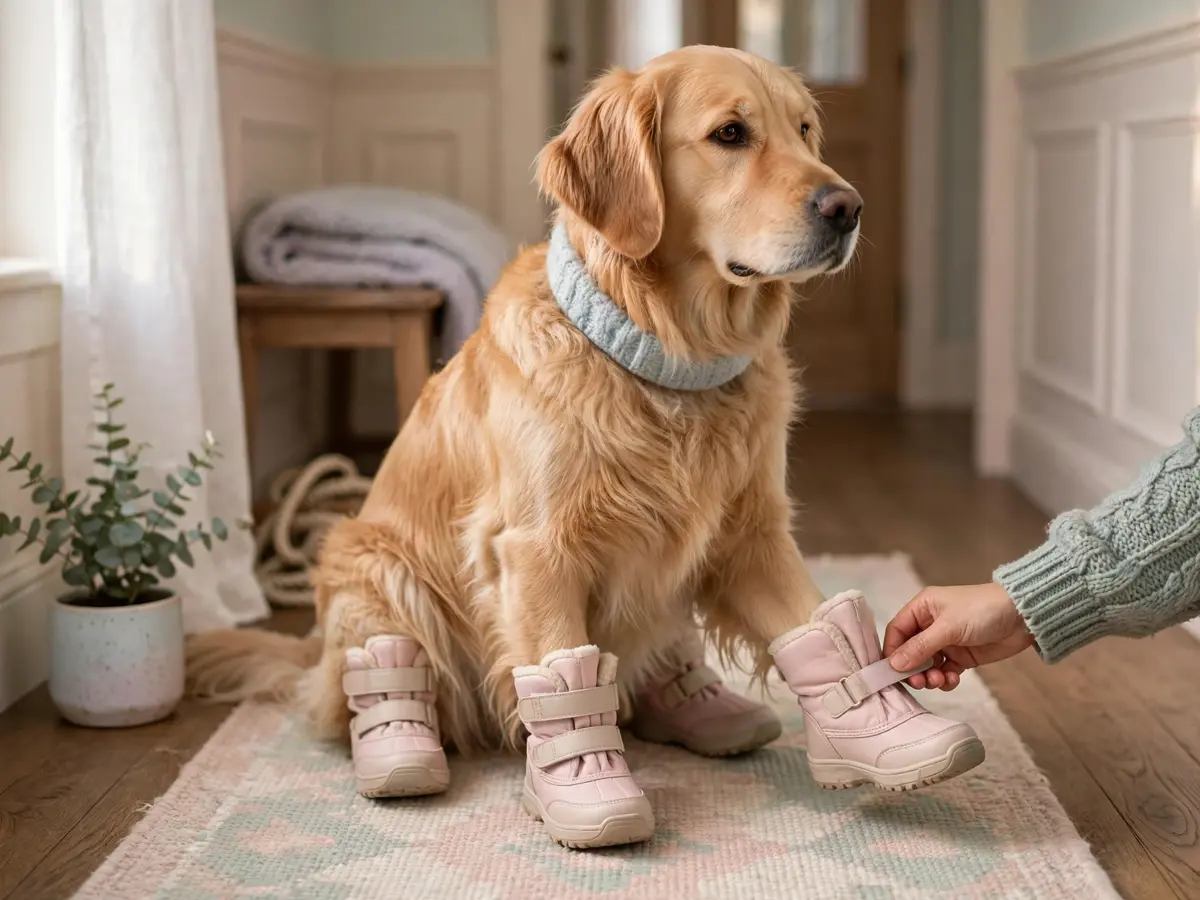
Feet carry most of a dog's information about the ground, and a boot mutes that. Build the habit while it is still mild outside:
- Fit first. A boot that twists at the ankle comes off, and a dog that has lost one will argue about the next three.
- Dry paws before the boots go on. Grit inside a boot defeats it.
- One boot indoors, for the length of a treat. Then two, then the front pair, then all four on a hallway walk.
- Strap above the ankle joint with a finger of give. Circulation matters more than grip.
- Check the boots at the door: a strap that slid, or a rubbed spot at the heel, means the size is wrong rather than the dog difficult.
- Keep a spare in your coat pocket. Losing one halfway is ordinary.
What the cold does, coat or no coat
A dog is at risk of frostbite once the temperature falls below 32 degrees Fahrenheit. That is the line to plan the route around, and it reads the same for a dressed dog as for an undressed one.
A dog can start developing frostbite in as little as 30 minutes outdoors in extreme cold. Half an hour in biting wind is not a long walk with a layer on; it is a quick circle and back to the door. Ears, tail tips and pads carry the least cover, so they are the parts to look at once you are inside.
A coat belongs to comfort, and the clock belongs to the weather. Keep them in different columns and you will never over-dress a dog or over-walk one.
The coming-in routine
Half the value of the gear is what happens in the hallway:
- Boots off, then the coat. Lay both on the mat rather than the floor.
- Towel the belly, the groin and between the pads. Salt and slush sit there all evening otherwise.
- Hang the coat to dry. Putting a damp one back on the next morning cools the dog instead of warming it.
- Look at the pads and the ear tips while you towel. Pale, hard or cracked skin is a conversation for the veterinarian, not a jar from the shelf.
- Warm room, no hairdryer, no radiator. A blanket and a rest do the job quietly.

Rules that stop gear becoming a problem
- Clothing never stays on an unsupervised dog, and never stays on indoors once the walk is over.
- Weekly chew check: a dangling toggle, a loose strap or a split seam is a hazard rather than a style detail.
- Harness before coat, always the same order. A layer that has to be pulled over a badly fitted harness rubs all winter.
- Re-fit everything when the dog changes shape. Winter coats hide a weight change, and older dogs change shape.
- One layer is enough on most days. Two is a sign the first one is the wrong one.
If the harness and the coat fight at the door, the harness sizing and fit guide settles it before you buy another layer, and the walk length guide sets how long the dressed walk should last.
Winter coat and boot questions
Does a husky need a winter coat?
Usually not for warmth, and a layer over a thick double coat traps heat the moment the day turns mild. The test is the dog rather than the breed chart: one that stands at the door shivering on a wet evening wants a dry layer, and one that rolls in the snow does not.
How do I know the coat fits?
Three checks in this order: the neck opening goes over the head without pulling an ear, the chest strap sits behind the front legs without pinching, and the back hem clears the tail so nothing catches when the dog squats. Fail one of the three and it is the wrong cut, not a training problem.
Coat on in the car, or off?
Off in the car and off at the door. Clothing comes off whenever the dog is indoors or unsupervised, and a damp coat comes off before the dog lies down so the skin underneath can dry.
Do boots really stay on?
Some do and some do not, and the difference is fit plus patience. One boot, one treat, one walk around the hallway. A dog that has never worn anything on its feet will not accept a full set on the first attempt, and forcing it teaches the dog to fight the routine.
Is a coat enough for a very cold morning?
A layer changes comfort on the way, not the clock. The cold wording quoted on this page is about time spent outdoors, and a dressed dog still spends that time outdoors, so the short route, the towel and the warm room afterwards do the real work.
What if my dog hates wearing anything?
Try a knit sweater with less structure, put it on for the length of a photo, and build from there. Some dogs never come around, and for those the answer is a shorter route rather than a fight at the front door.
Save these on Pinterest
Pin the fit checks next to the boot routine, then pair them with the dark winter walk page for the visibility half of the same trip. The rest of the gear shelf lives on the pet supplies and gift guide board page.
Measure the dog, dress the small part that needs it, towel at the door. For informational purposes, consult your vet.