 PawStyle Daily
Homemade Dog Treats & Meal Planning
Salmon Sweet Potato Dog Treats (Homemade)
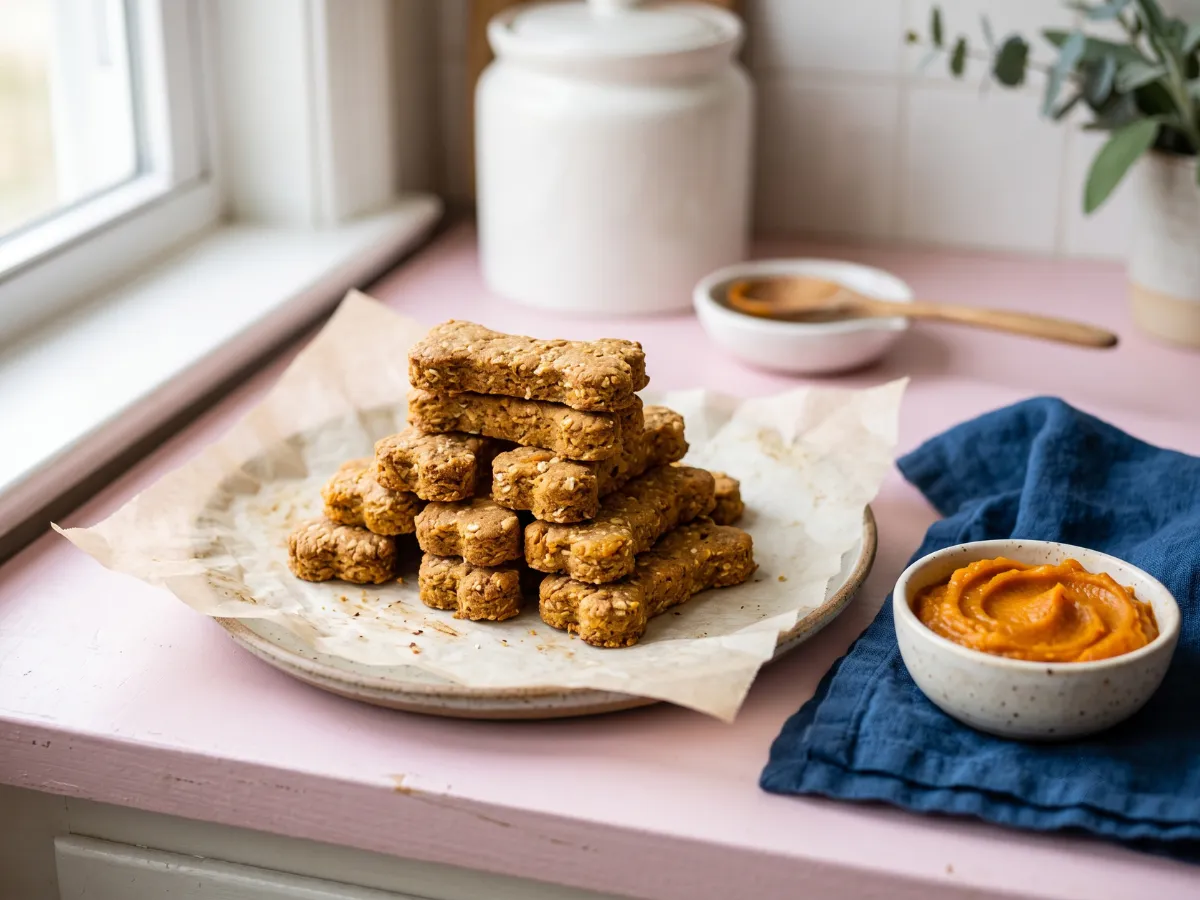
Salmon sweet potato treats are the savory batch of the treat jar: cooked boneless salmon, mashed sweet potato and oats, folded into a soft dough and baked into small bites. The fish is always cooked, always plain, and always checked twice for bones before it meets the bowl.
By PawStyle Daily · Updated 16 November 2026
Good to know: 20 minutes + a short bake · Cooked, boneless, no seasoning · For informational purposes, consult your vet.
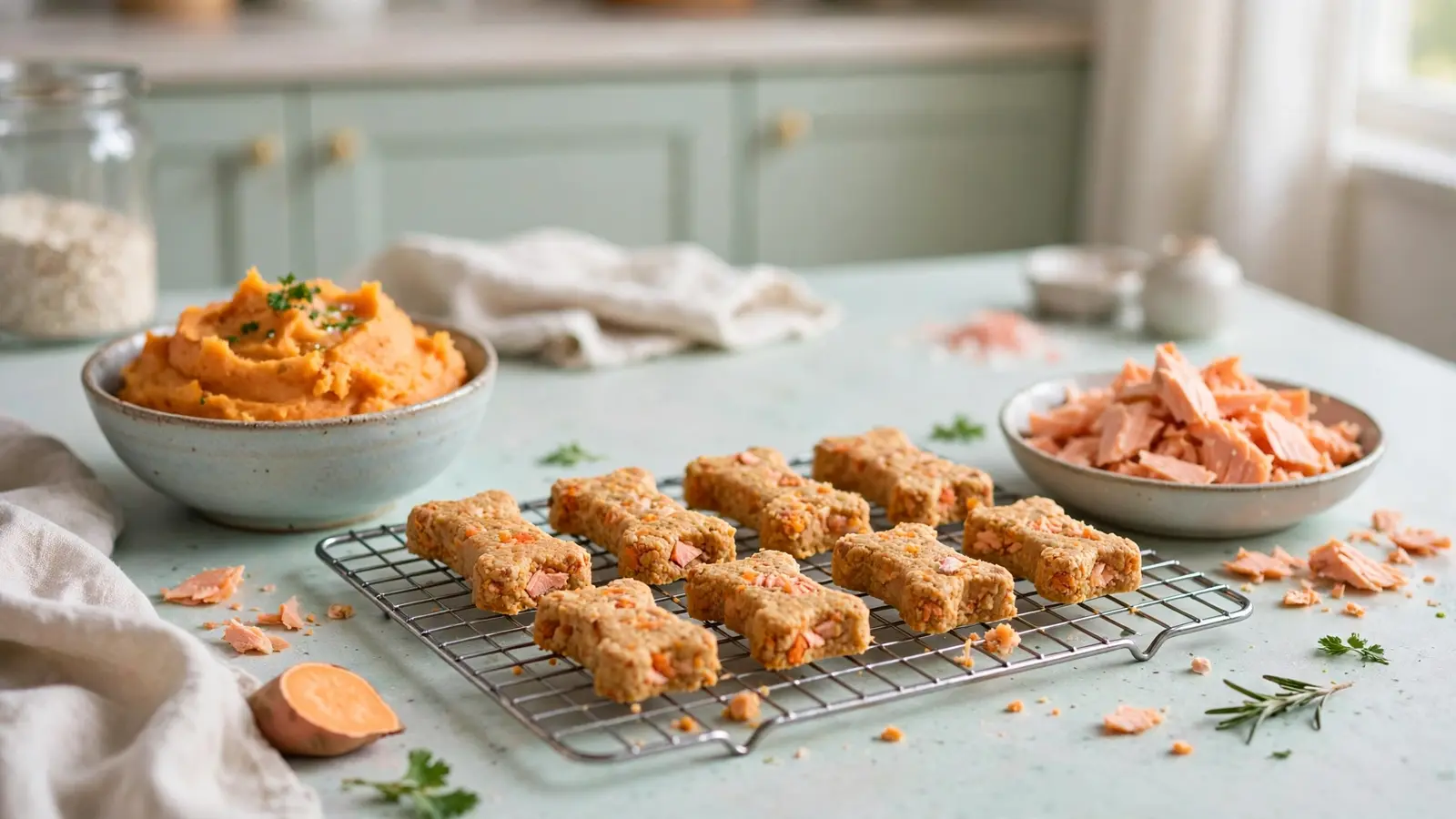
Safety first: cooked, boneless, plain
Raw meat and raw eggs can carry salmonella and E. coli, and cooked bones can block a gut and need surgery. So the salmon rule is short: cooked through, no bones, no seasoning — every time. Treats should stay at no more than five percent of a dog's daily calories, so keep the pieces small. For informational purposes, consult your vet before changing treats for puppies, seniors, or dogs with allergies.
Small amounts of lean cooked chicken, turkey, beef or pork with no bones and no seasoning are fine to share, and salmon joins that list only in its cooked, plain, boneless form. Introduce the first salmon treat as a half portion, and stop if stools loosen.
The five salmon bakes at a glance
Salmon sweet potato treat lineup
| Recipe | Hands-on time | Storage |
|---|---|---|
| Classic salmon bites | 20 minutes | Fridge 3 days |
| Training dots | 25 minutes | Fridge door bag |
| Sweet-potato-only rounds | 15 minutes | Fridge 3 days |
| Frozen salmon buttons | 10 minutes | Freezer, dated bag |
| Freezer batch | 30 minutes | Freezer 2 months; label the date |
Every row starts from cooked boneless fish and the pea-size rule.
Before you bake: the counter setup
Salmon day is one bowl, one fork, one baking tray and parchment, plus two forks for flaking and a shallow dish under anything that drips. Sweet potato goes in the oven first, or the microwave if that is your kitchen, and the fish cooks while it cools.
The bone check is its own step, not a glance. Flake the cooked salmon with two forks on a flat plate, then run your fingers through the flakes twice. Pin bones hide in the middle of a fillet, and they are the reason this step never gets skipped. Plain leftovers work here: no salt, no butter, no seasoning of any kind touched them.
We bake on parchment, cool on the same tray, and bag the bites only once they are dry to the touch. Fish batches go into dated flat bags rather than open tubs, because the smell travels.
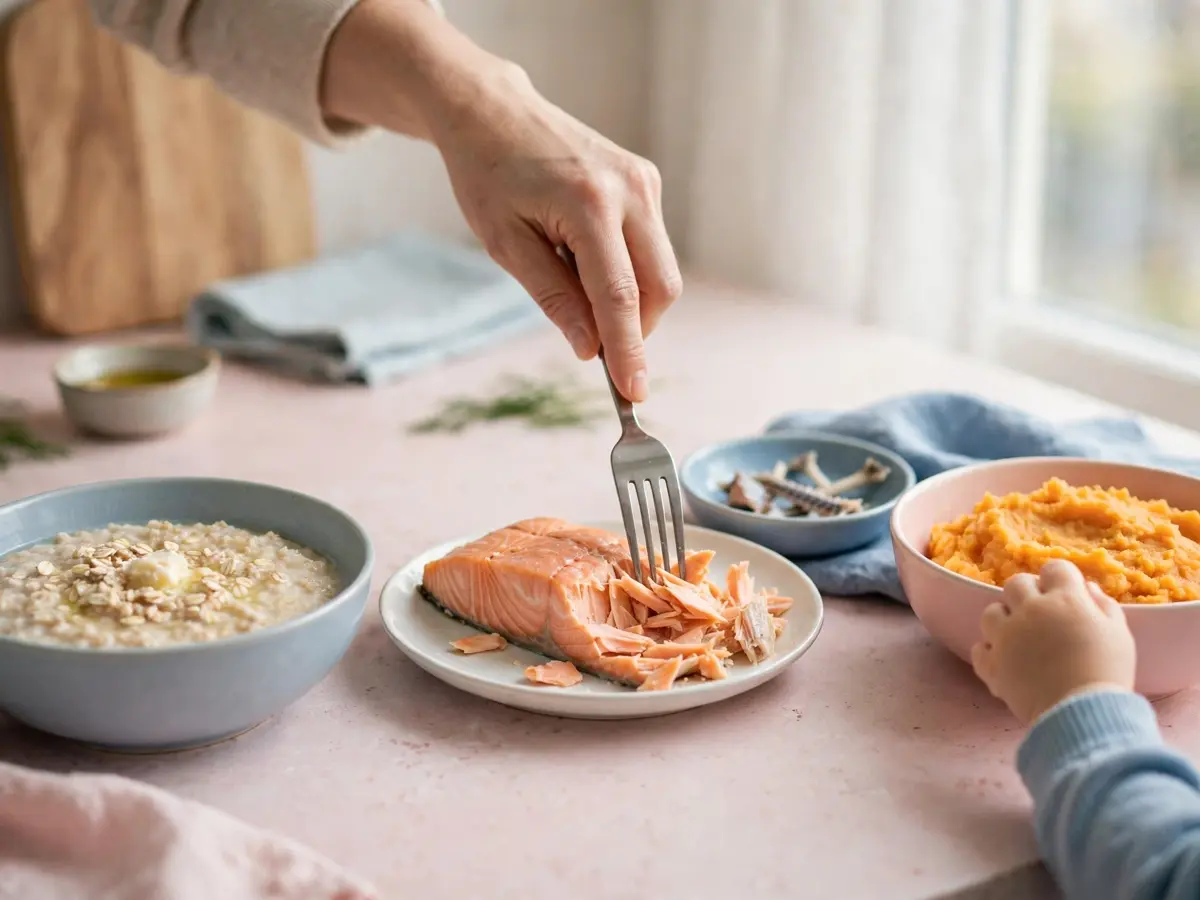
1. Classic salmon sweet potato bites
One cup of cooked boneless salmon, one cup of mashed sweet potato, one cup of oats. Flake and check the fish, mash the sweet potato smooth, fold everything into a soft dough, roll into small bites and bake until the edges are dry. Soft in the middle, chewy at the edge, and the sweet potato holds the fish together so the dough never feels greasy.
Any breed · 20 minutes + a short bake · Salmon, sweet potato, oats · Pea-size for training, grape-size for a big dog.
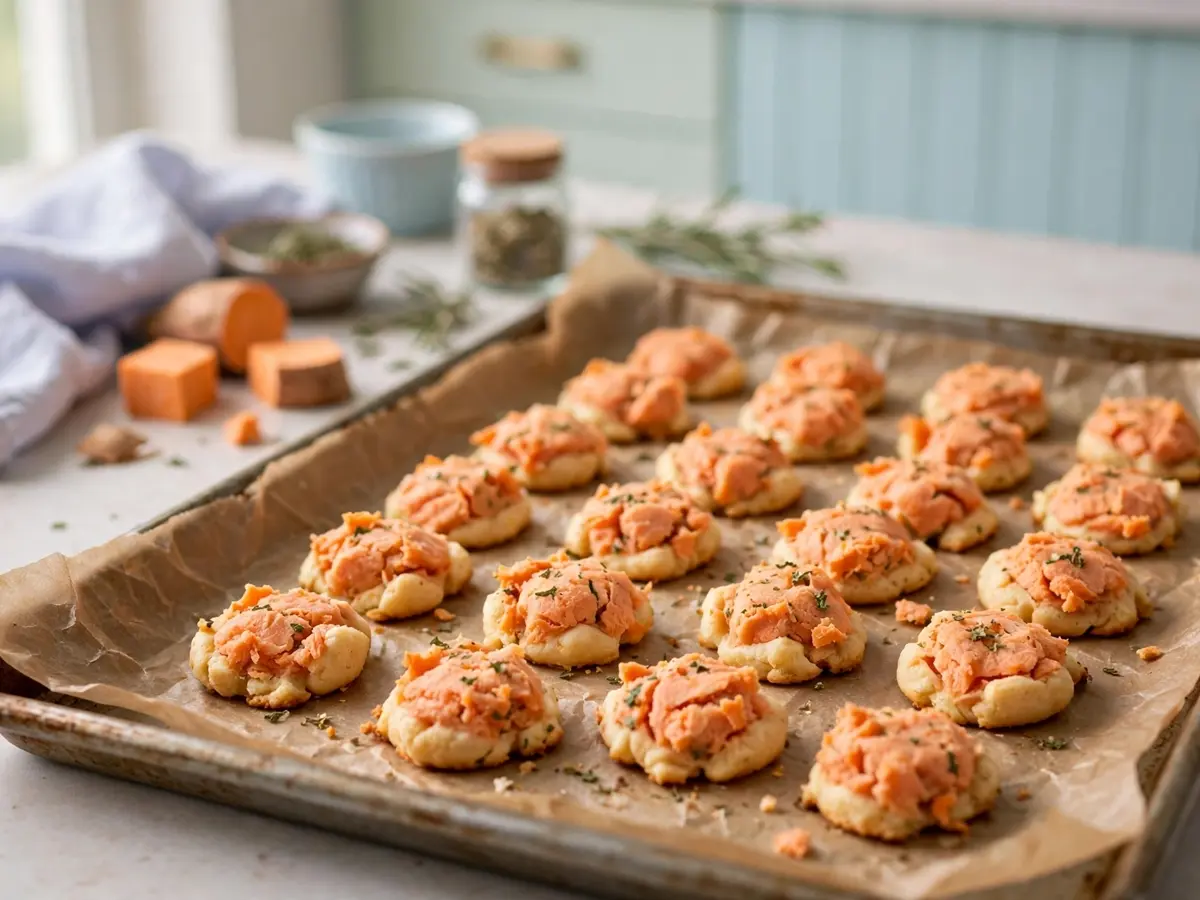
2. Training dots, the size that earns the session
Same dough, rolled smaller and flattened a little. A flat pea-size dot sits in a palm without rolling off and breaks in half cleanly, so one batch covers many reps. Fish carries a smell that keeps attention indoors, which makes these dots the high-value reward for a hard session.
For the peanut-butter jar version of a training week, the no-bake peanut butter treats page sizes the same portions without the oven.
Training · 25 minutes rolling · Classic dough, pea-size · A few dots per session, not a handful.
3. Sweet-potato-only rounds
The fish-free version of the batch: mashed sweet potato and oats, pressed into rounds and baked until the edges dry. It uses the same dough skill and the same tray, and it gives the household a second flavor without a second shopping trip.
Fish-free · 15 minutes · Sweet potato, oats · Fridge 3 days.
4. Frozen salmon buttons
Mash cooked boneless salmon with sweet potato, press into silicone molds, freeze until firm. A cool summer reward that portions itself by the mold — one button per session for a small dog, two for a large one. These leave the freezer only in a cooler bag.
Any breed · 10 minutes + freeze · Salmon, sweet potato, silicone molds · Frozen buttons keep in a dated bag.
5. Freezer batch for busy weeks
Double the classic recipe, bake the bites, cool fully, then bag flat with the date. Homemade dog food keeps about three days in the refrigerator and a month or two in the freezer, depending on how it's sealed — so write the date on the bag and pull the next day's portion the night before.
One Sunday batch covers two weeks of training. It slots into the weekly dog meal prep planner as the treat column of the prep session.
Meal prep · 30 minutes · Double batch, freezer bags · Oldest bag at the front.
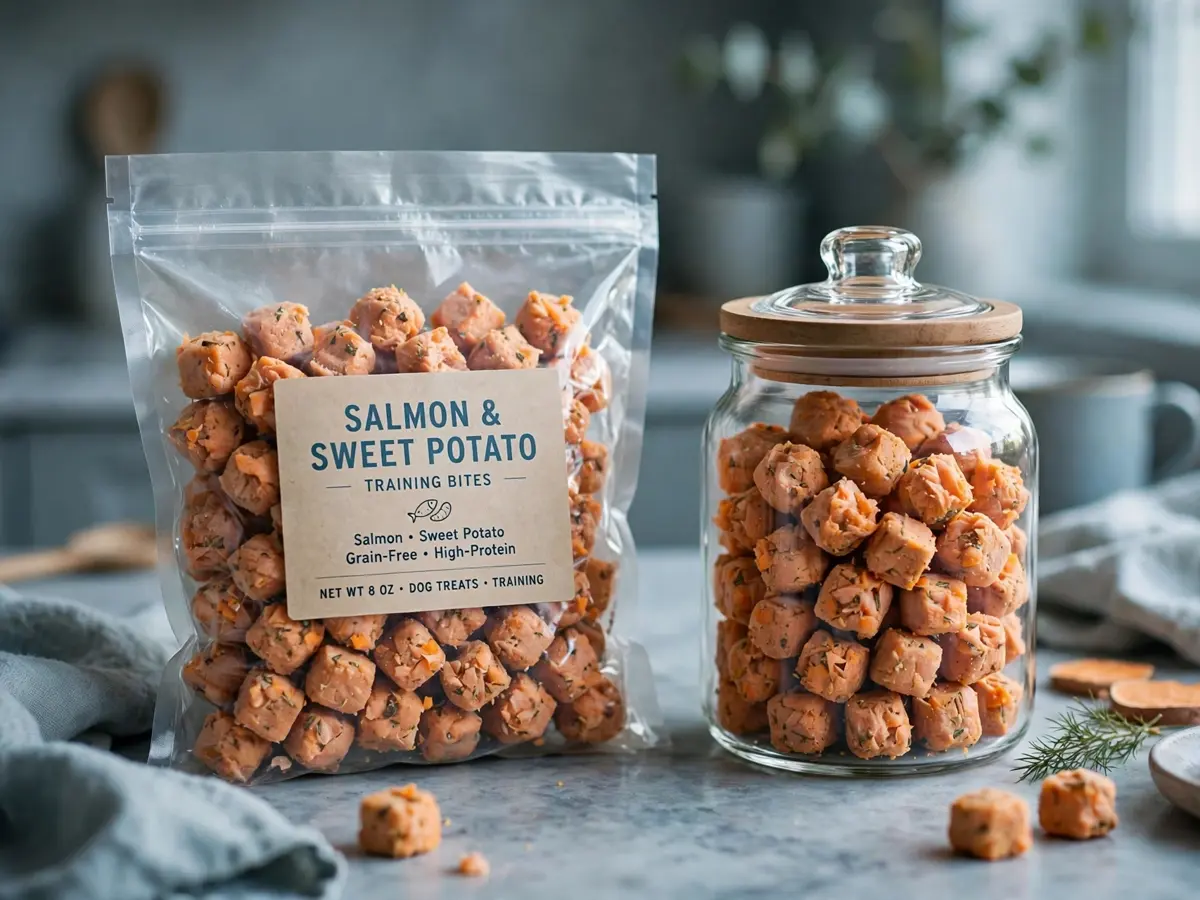
Texture fixes before anything goes in the oven
Salmon dough fails in four predictable places, and every fix stays inside the same bowl.
What goes wrong and what to do
| Problem | Why it happens | Fix |
|---|---|---|
| Too wet to roll | A watery sweet potato or under-drained fish | Fold in oats one spoon at a time, and let the bowl rest a few minutes before judging it |
| Too dry to hold together | Old oats or an over-baked sweet potato | Mash in a spoon of sweet potato, not water, and re-roll |
| The bites spread flat | Warm dough went onto the tray | Chill the tray of bites for ten minutes before the oven |
| Fish smell on the hands | Flaking done in a hurry | Cold water and a spoon of baking soda on the hands, then re-roll with damp palms |
A fish batch is softer than a fruit batch by nature, so judge the dough after a rest, not before.
Storage: fridge, freezer, and the smell
Homemade dog food keeps about three days in the refrigerator and a month or two in the freezer, depending on how it's sealed. For a fish batch the sealing part matters twice as much: pressed-flat bags with the air out, the date written on, and the bag inside a lidded container if the freezer shares space with people food.
Thaw in the fridge overnight, not on the counter, and never serve a treat microwave-hot. Counter: nothing fish-based stays out, not for an hour, not for a session. The treat bag goes back in the fridge door the moment the session ends.
How much, and how small
Most of a pet's nutrition should still come from their regular diet, with treats as the extra bit. That one idea decides portion size: the smaller the piece, the more often the bag opens without a training session becoming a second dinner.
For a small dog, the standard is a pea-size piece; for a larger dog, a grape-size piece is one reward. Fish batches get the same rule as any other treat jar, and a dog who gulps gets the piece halved again.
We keep a small tub of dots in the fridge door and the bigger bags in the freezer. Two containers, two jobs, and no guessing at the counter with a hungry dog watching every move.
Buying the fish without overthinking it
Plain fillets, frozen plain fillets, or plain canned fish with water are the three easy starts. What the label must not carry: salt, smoke, seasoning, or a sauce. A smaller fillet is a better first batch than a family pack: you are testing, not stocking the freezer.
Leftover plain cooked salmon from your own dinner works, with one condition: nothing touched it. No salt, no butter, no oil with flavor, no herbs. A fillet cooked plain on purpose beats a leftover you have to guess about.
The crockpot method for plain cooked meat lives in the crockpot chicken topper guide, and the same no-bones, no-seasoning rule applies here.
Treats are the extra bit, and here is the honest part
Every recipe on this page is a treat, not a diet. The honest version of that: the majority of homemade pet-food recipes published in books and online, even those written by veterinarians, do not provide complete and balanced nutrition. A treat dodges that problem by design, because it is a small extra beside a complete food rather than the food itself.
If you are moving toward a home-prepared diet rather than a treat jar, plan the whole bowl first. If your dog is skipping the regular meal, that is a conversation for your vet rather than a recipe change.
Salmon batch checklist: copy this before you bake
- Fish cooked through, plain, no salt, no seasoning
- Flaked and finger-checked for bones, twice
- Pea-size for training, grape-size for a big dog
- Bake until the edges are dry; cool fully before bagging
- Fridge 3 days; freezer bag dated, oldest at the front
- One new ingredient at a time; watch stools 24 hours
- Treats max five percent of daily calories
- Supervised chewing; fresh water always nearby
Questions we get about salmon treats
Can dogs have salmon in a treat?
Small amounts of lean cooked chicken, turkey, beef or pork with no bones and no seasoning are fine to share, and cooked boneless salmon sits in the same family: cooked, plain, no bones, no seasoning. Raw meat and raw eggs can carry salmonella and E. coli, and cooked bones can block a gut and need surgery — so the fish is always cooked and always flaked and checked.
Why no bones, ever?
Raw meat and raw eggs can carry salmonella and E. coli, and cooked bones can block a gut and need surgery. Flake the cooked salmon with two forks and run your fingers through it twice before it meets the dough.
How many salmon treats is too many?
Treats should stay at no more than five percent of a dog's daily calories, so keep the pieces small. Most of a pet's nutrition should still come from their regular diet, with treats as the extra bit.
How do I store the batch?
Homemade dog food keeps about three days in the refrigerator and a month or two in the freezer, depending on how it's sealed. Fish batches especially go in dated flat bags, because a fish smell in an open tub takes over the fridge.
Can I use canned salmon instead?
Yes, with two checks: read the label for salt and seasoning, and drain it well before flaking. Plain fish and water is the ingredient list you want. Then the same bone-check applies: run your fingers through the flakes twice.
Can a salmon treat replace a meal?
No. Most of a pet's nutrition should still come from their regular diet, with treats as the extra bit. The majority of homemade pet-food recipes published in books and online, even those written by veterinarians, do not provide complete and balanced nutrition, so a treat stays a small extra beside a complete food.
What we use
What we use for salmon sweet potato treats
Silicone molds, parchment and airtight freezer bags — the three staples that keep a fish batch portioned, dated and smell-contained.
See what we use →As an Amazon Associate we earn from qualifying purchases.
Save these on Pinterest
Pin the batch that fits your week — baked bites for training, frozen buttons for summer. The Dog Food collection holds the meal-prep and crockpot guides.
Raw meat and raw eggs can carry salmonella and E. coli, and cooked bones can block a gut and need surgery. Treats should stay at no more than five percent of a dog's daily calories: the ASPCA people-foods list.