 PawStyle Daily
Homemade Dog Treats & Meal Planning
French Bulldog Bowls and Treat Picks
A french bulldog is a compact dog with a big appetite and a short face that can gulp air with every bite. The bowl, the portion, and the treat jar all need to match that frame. The plan on this page keeps the meals small and spaced, the dish slow, and the treats inside a budget so the bowl does the work and the body keeps its shape. For informational purposes, consult your vet.
By PawStyle Daily · Updated 19 November 2026
Good to know: two meals a day · a slow-feeder bowl · treats stay the small share · switch food over a few days.
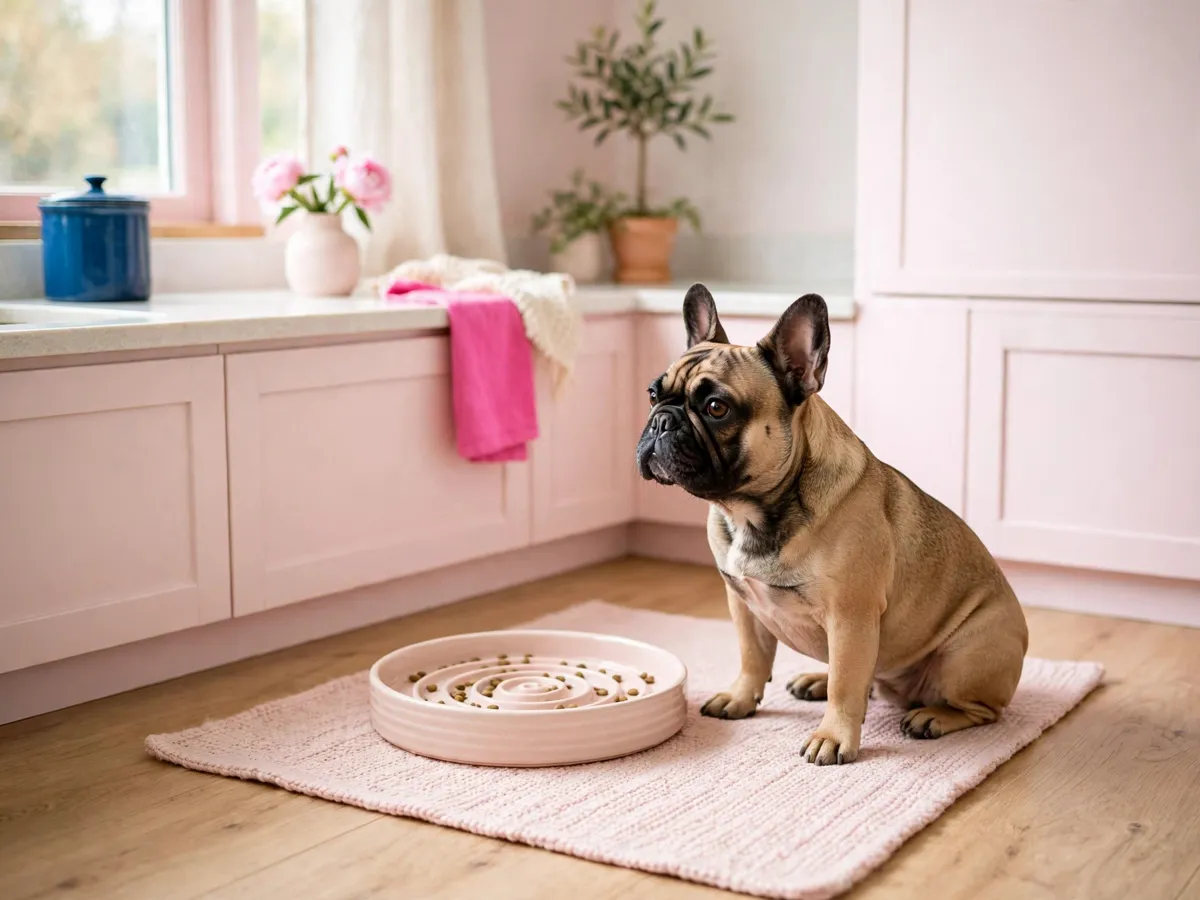
A compact frame asks for a compact bowl
A french bulldog carries a lot of weight on a short, wide body. The feeding setup has to respect that shape: a shallow bowl, a mat that stops the slide, and a portion sized to the dog in front of you rather than to the breed average. A frenchie who eats from a deep dish works harder for each bite and swallows more air along the way, and a flat-faced breed that gulps air is a breed that does better with a slower, smaller meal.
The whole approach on this page comes down to four moves: pick a slow dish, split the day into two meals, hold the treats to a budget, and read the bag before you pour. None of it is hard, and all of it is easier than undoing a gulping habit. If you want the label side of the bowl first, our how to read a dog food label walks the bag panel line by line.
The bowl that slows the gulp
A slow-feeder bowl is the single biggest upgrade for a flat-faced eater. The grooves spread the kibble out so the dog chases each piece instead of hoovering the lot, and the slower pace means less air swallowed with every mouthful. Pick a shallow dish with wide grooves rather than a deep one with narrow channels, because a short muzzle reaches a shallow groove and struggles with a deep one.
The mat under the bowl matters as much as the bowl does. A non-slip mat keeps the dish from sliding across the kitchen tile when a frenchie leans in, and a mat that catches the dribble keeps the floor dry and the chin clean. Wash the mat on the same day as the food containers, so the corner stays a clean corner.
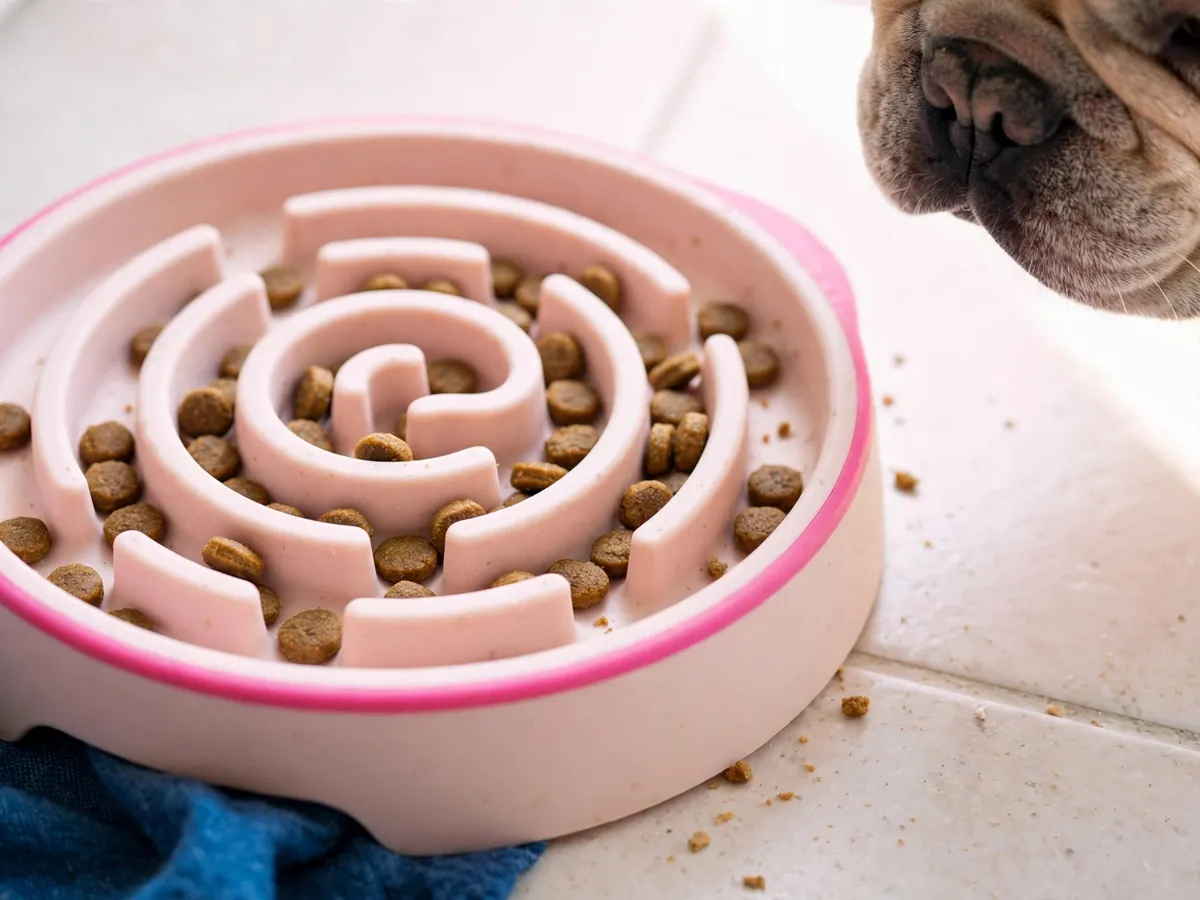
Portion for the frame in front of you
A french bulldog is not a golden, and the number on the bag is a starting point rather than a rule. The chart on the side of the bag gives a range for a dog of a given weight, and the right number for your frenchie sits inside that range, tuned by body condition. A dog who is filling out a little too much drops a quarter cup; a dog who is at target weight stays there.
Split the day into two meals rather than one. A single big meal asks a small stomach to do a lot at once, and two smaller meals keep the pace steady and the gulping down. Feed at the same two times each day so the routine is a habit the dog can set a clock by, and a missed meal is obvious instead of invisible.
The bowl setup for a french bulldog
| Piece | What it does | What to look for |
|---|---|---|
| Slow-feeder bowl | Spreads the kibble so the dog eats slower | Shallow dish, wide grooves, a flat-faced reach |
| Non-slip mat | Stops the bowl sliding on the tile | A size that catches the dribble, washable surface |
| Measure cup | Keeps the portion the same each day | The same cup every time, not a handful |
| Treat dish | Holds the day's treat budget in one spot | Small, on the counter, filled once a day |
The amount in the bowl comes from the bag chart and your vet, sized to this dog rather than to the breed.
The slow dish and the spaced meal
A flat-faced breed can gulp air with every bite, and the setup that limits gulping air is the setup that earns its keep. The slow-feeder bowl is the first half of that setup, and the spaced meal is the second. Two meals a day, a few hours apart, keeps the stomach from a single heavy load and gives the dog a calm pace at both ends of the day.
A frenchie who eats too fast, then runs for the door, is a frenchie asking for trouble. Keep a quiet half-hour after each meal before any walk or play, so the food settles and the air stays where it should. The bowl and the walk are on the same daily note, and the note is calm rather than chaotic.
Treats stay the small share
Treats should stay at no more than five percent of a dog's daily calories, so keep the pieces small. The five percent line is the whole rule, and it is the rule a compact frame feels first, because a few extra treat calories show up on a frenchie faster than on a larger dog.
The easiest way to hold the line is a small dish on the counter, filled once in the morning. When the dish is empty, the day's treats are done, and the training session is already covered. Cut a training piece to the size of a pea so the same handful lasts a whole session and the walk home.
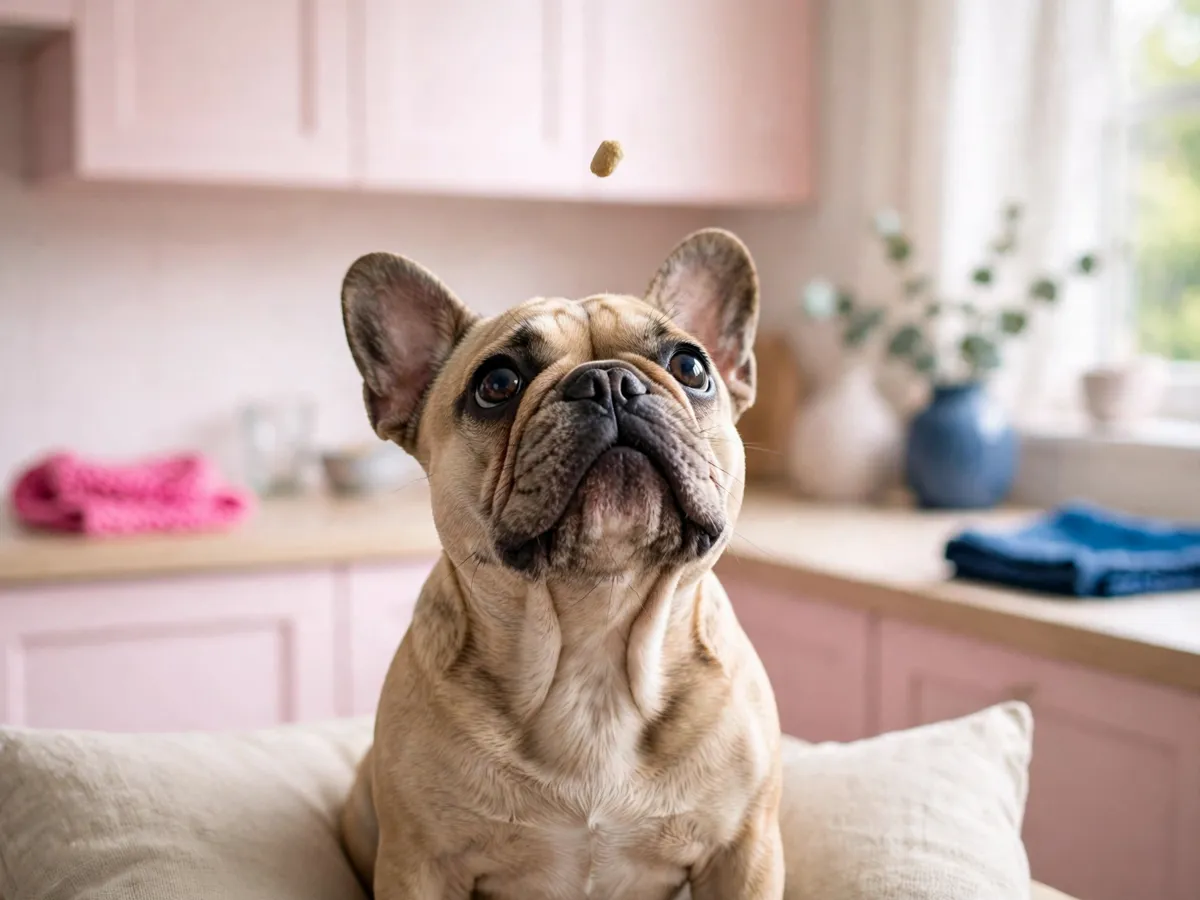
The protein that travels from your plate
Small amounts of lean cooked chicken, turkey, beef or pork with no bones and no seasoning are fine to share. That line is the whole rule for the plate-to-bowl handoff, and it is the rule that turns a sunday roast into a training reward without a second thought.
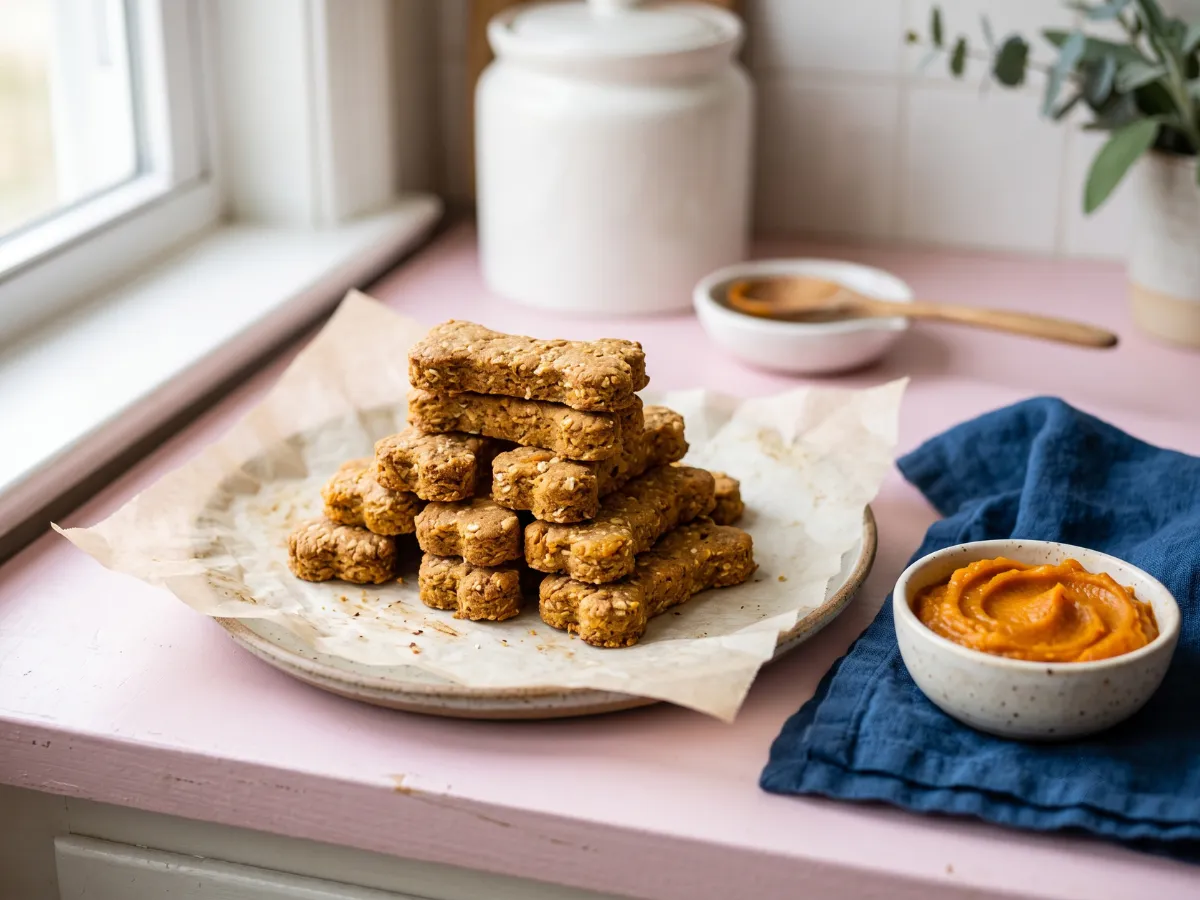
The word lean does the work in that sentence. A frenchie carries weight easily, so the share is the leaner grind, not the fat trim, and the portion is a few small pieces, not a second dinner. No bones, no salt, no garlic, no onion, and the treat dish still holds the count. For a soft treat that already follows these rules, our healthy pumpkin treats are single-ingredient and easy on a sensitive eater.
Switching food without upsetting the bowl
Puppies need a complete and balanced diet made for growth, and adult food arrives gradually when they are ready for it. The puppy bag carries the balance a growing body needs, and the move to the adult bag is a transition rather than a swap, so the stomach and the routine both adjust.
Switch the food over a few days, not in one meal. Mix a little of the new food into the old on the first day, add a little more on the second, and reach the full new portion by the end of the week. A gradual switch keeps the stool steady and the appetite calm, and a frenchie with a settled stomach is a frenchie who keeps their shape. For the storage side of the new bag, our homemade dog food safety and storage covers the fridge and freezer windows.
French bulldog bowl and treat questions
How much should I feed my french bulldog?
Start with the daily amount on the bag, split into two meals, and adjust by body condition. Your vet can confirm the exact number for your dog's weight and activity.
Are french bulldogs prone to bloating?
They are a flat-faced breed that can gulp air. A slow-feeder bowl and smaller, spaced meals slow down the intake. Talk to your vet about bloat signs.
What treats are safe for a french bulldog?
Tiny pieces of plain cooked chicken or single-ingredient soft treats cut small. Keep all treats within the five percent daily budget.
The frenchie drawer
Slow bowl, measure cup and a treat pouch
A shallow slow-feeder dish, a non-slip mat, the same measure cup every day, and a small treat pouch that holds the five percent budget — the drawer a frenchie bowl lives in.
See the frenchie drawer →As an Amazon Associate we earn from qualifying purchases.
Save these on Pinterest
Pin the frenchie bowl setup for the next restock, then pair it with the how to read a dog food label page and the healthy pumpkin treats. The dog food and treats collection holds the rest of the bowl, the bag and the treat jar.
For informational purposes, consult your vet.