 PawStyle Daily
Homemade Dog Treats & Meal Planning
Brushing a Dog's Teeth at Home: The Routine
Two minutes, a fingertip, and a tube of paste the dog actually likes: that is the whole job, and almost nobody is shown it. This page is the showing. The paste rule first, because it is the one owners get wrong on day one. Then the first two weeks in four moves, the frequency question answered honestly, and the limits of a chew toy stated plainly instead of sold.
By PawStyle Daily · Updated 18 November 2026
Good to know: pet paste only, never human paste · start with a fingertip, not a brush · two minutes on most days · for informational purposes, consult your vet.
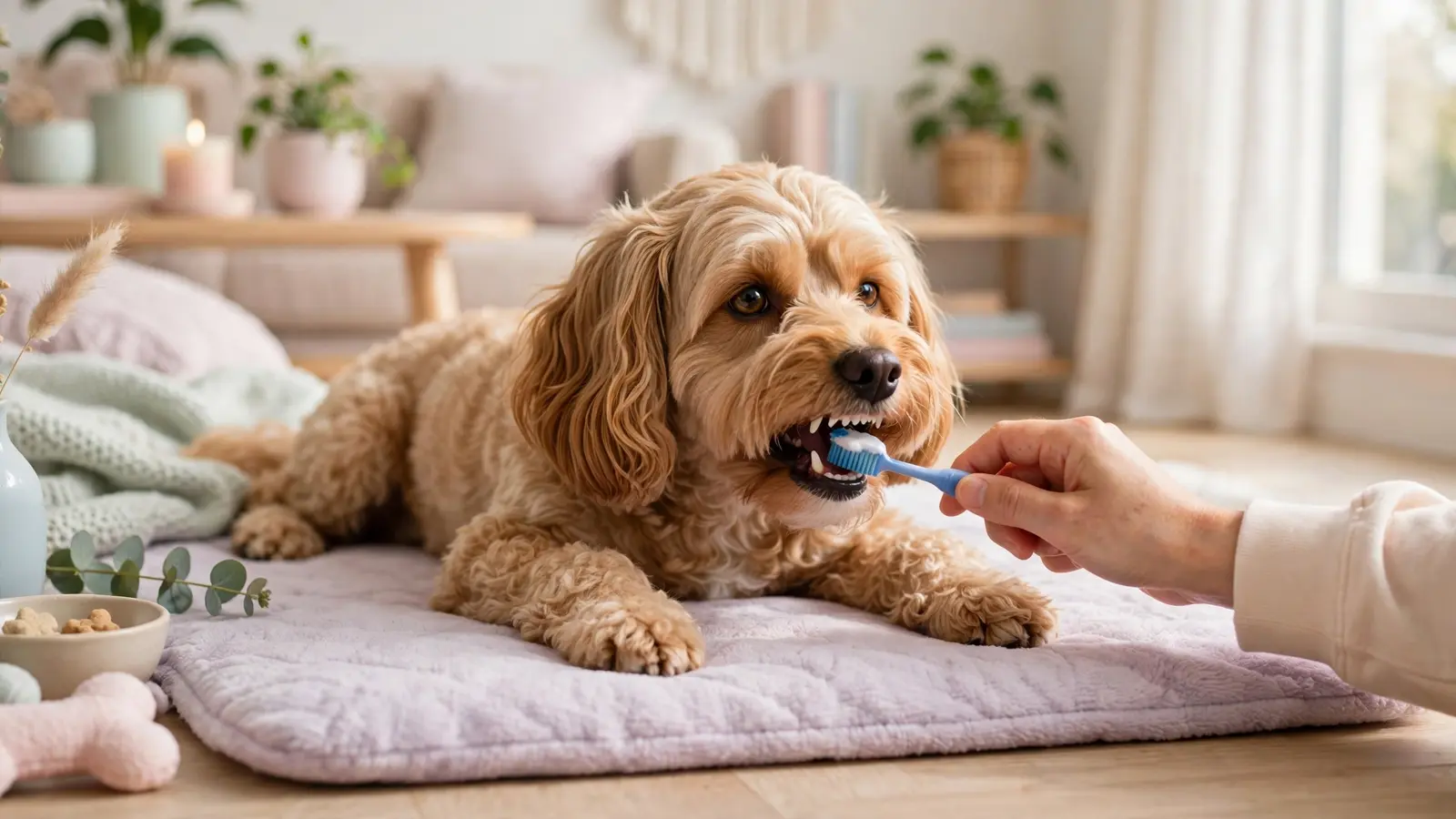
Why the routine earns a spot in the day
Bad breath is not the problem; it is the announcement. Plaque sits on the teeth, hardens, and the gum line above it changes shape over months. None of that is visible in a bright kitchen, which is how it runs for years before anyone looks.
The American Veterinary Medical Association reports that 80% of dogs show signs of periodontal disease as early as age three.
Brushing is the part an owner controls: the brush, the paste, and two minutes on a mat. Everything past that — the scaling, the polishing, the tooth that has to come out — belongs to a clinic and a sedation. The routine below is the daily half of the job.
The paste rule: human toothpaste stays in the bathroom
Human toothpaste can contain xylitol and fluoride, which a dog may swallow, so it is not the paste to brush with.
A dog does not rinse and does not spit. Whatever goes on the brush ends up swallowed, so the paste has to be one meant to be eaten. Pet toothpaste comes in poultry, beef, malt and peanut butter, and the tube has one job: to make the brush worth opening.
Pick the flavour the dog will lick off a fingertip, and the first week stops being a fight. There is no scoring to win here. A paste the dog eats beats a paste with better words printed on it.
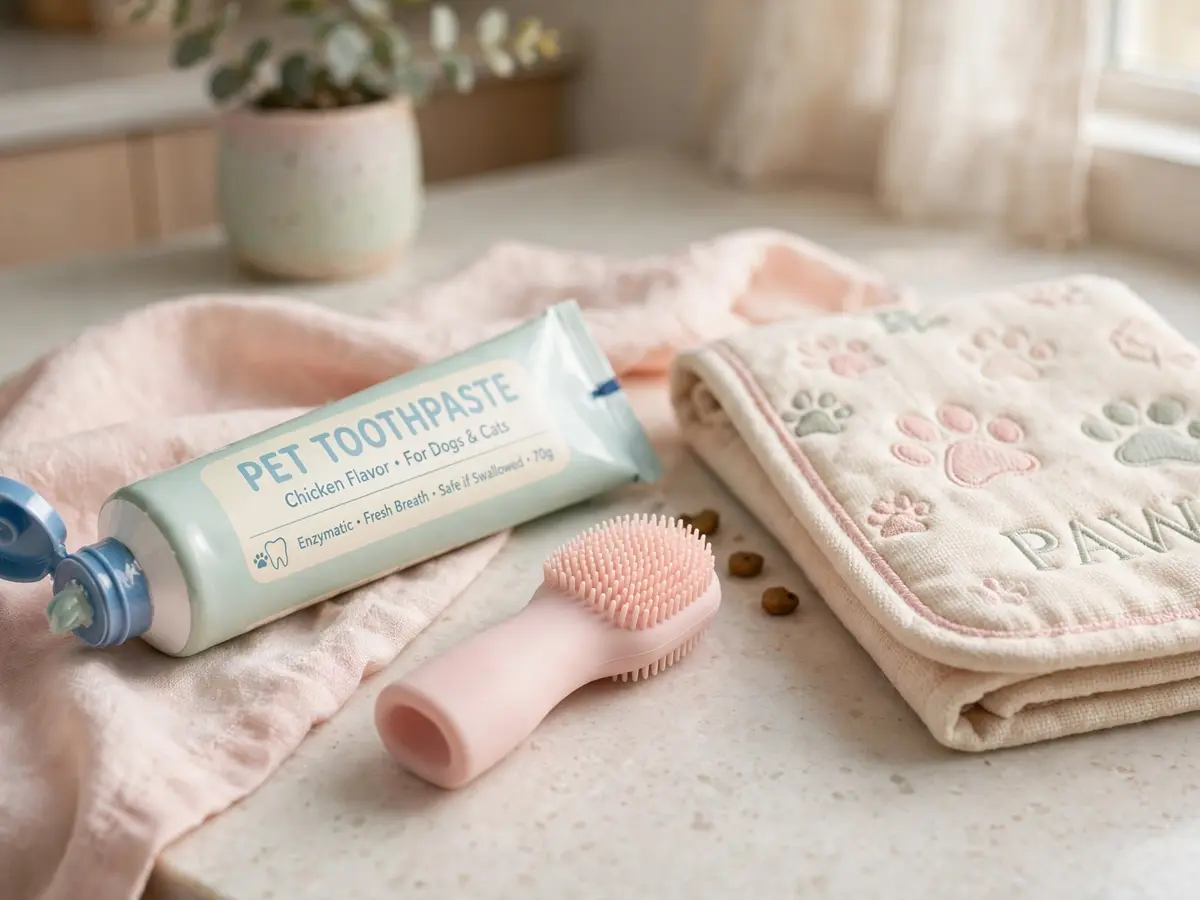
What the routine needs
- A finger brush, or a small soft toothbrush made for dogs. The finger brush wins the opening week, because the bristles sit on the hand that already smells like dinner.
- Pet toothpaste in a flavour the dog licks.
- A towel under the mat, for the paste that runs down the chin.
- Two quiet minutes at the same hour. Most people slot it between the evening walk and lights-out, when the dog is already slow.
- One small reward at the end, counted against the day's food rather than added to it.
That is the entire kit. Nothing electric, nothing with a refill cartridge, and no bone on the floor standing in for the brush.
The first two weeks, in four moves
Four moves, in order, and the first two of them are not brushing yet. A dog has to accept a hand in its mouth before a brush goes in, and that is taught in slices small enough that the dog never files it under something bad.
- Touch the muzzle. Hold a fingertip near the lips, lift one lip for a second, let go. Twice a day for a few days. No brush, no paste, no ask beyond that.
- Let the dog taste the paste. One smear off a fingertip, once a day. This is the move where most dogs decide whether the whole project is tolerable.
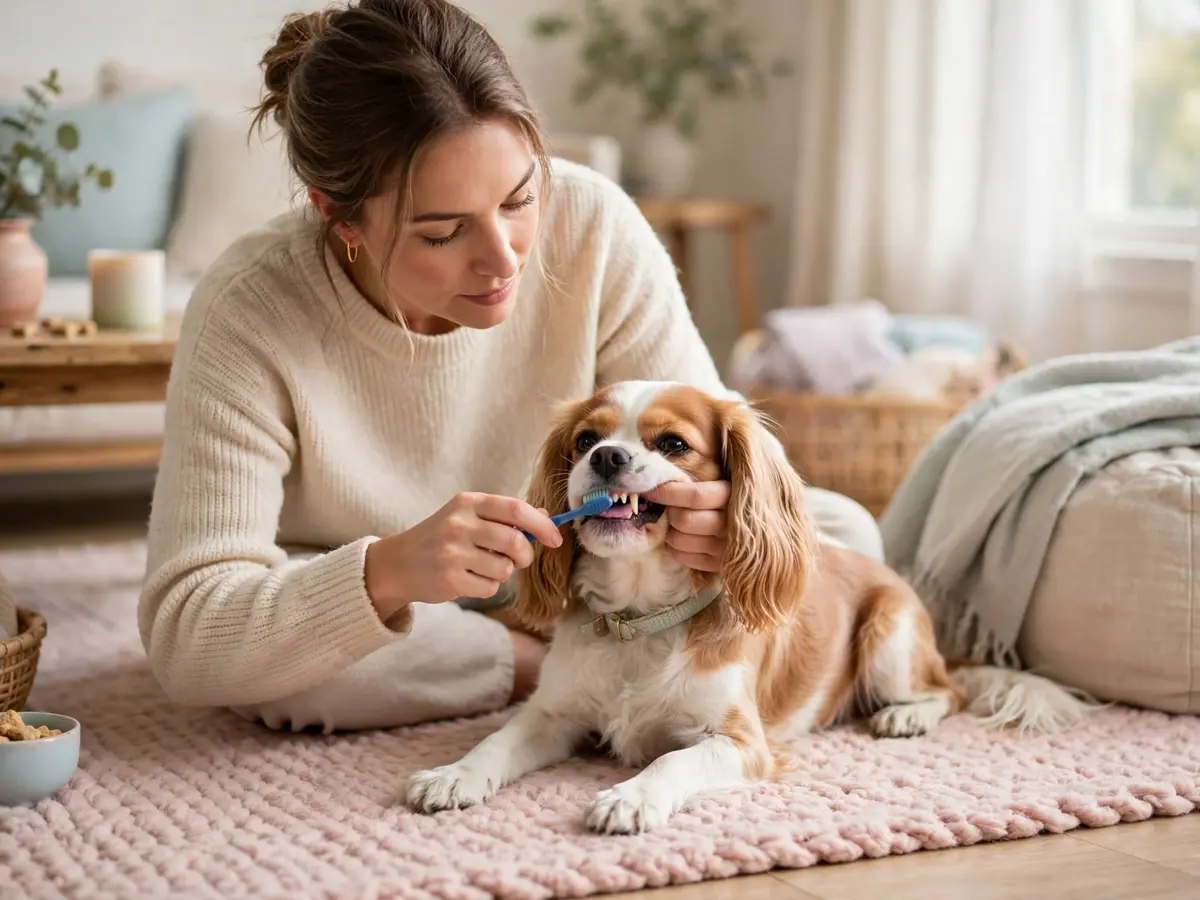
- Brush the front teeth only. Paste on the finger brush, one or two teeth per side, lip lifted, chin held, then done. Ten seconds counts as a success.
- Grow to a full session. Both sides, the back teeth joined in, two minutes, then the reward and the walk.
Move on when the current step is boring, not when the calendar says so. A dog that pins its ears back at move two stays at move two for another week, and that week is not lost time.
The two weeks at a glance
| Move | What you do | It is done when |
|---|---|---|
| Touch the muzzle | Lift one lip for a second, twice a day | The lip goes up without a head turn |
| Taste the paste | One smear off a fingertip, daily | The tongue takes it before the finger pulls away |
| Front teeth | Finger brush, one or two teeth per side | Ten calm seconds on both sides |
| Full session | Both sides, back teeth in, two minutes | The dog stays on the mat |
| Keeping it | Daily, or every other day at the least | It is a routine now, not a project |
Two short sessions beat one long one. The habit is what carries the routine past the first month, and a habit is built out of sessions the dog barely notices.
How often, and what a missed evening costs
Plaque forms again in as little as six hours after a professional dental cleaning.
That one line is the argument for daily brushing, and it is also the reason a missed evening is not a failure. Plaque that is still soft comes off with a brush; the hardened version needs a clinic. Brush most days, and take the days you miss without starting the plan over.
If daily is not honest for this household, every other day still keeps the soft layer from settling in, and it is the interval people actually hold. Ask your vet which one fits this dog, because a small dog with crowded teeth and a large dog with one bad molar are not on the same clock.
What a chew does, and what it cannot
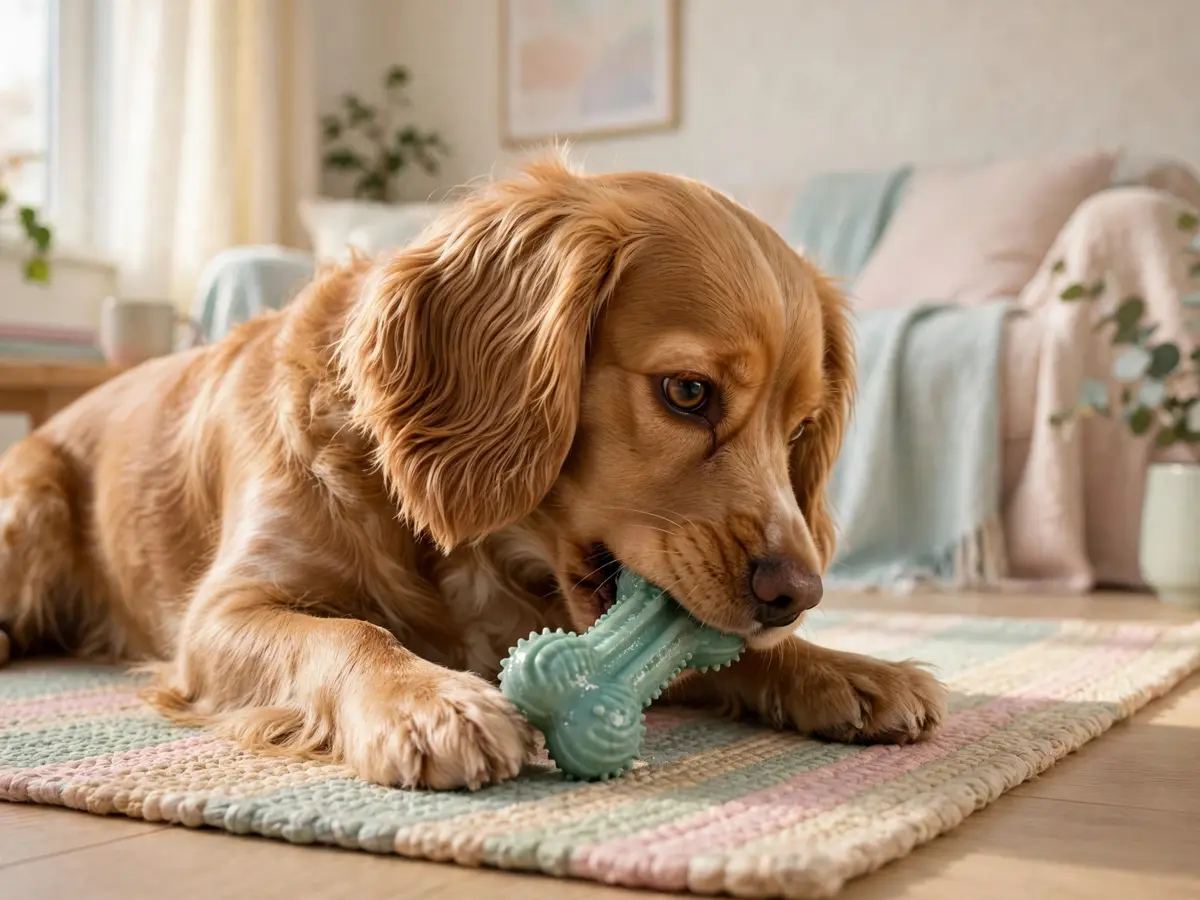
A chew is the brush's coworker, never its replacement. Gnawing scrubs the crowns of the front teeth and keeps the dog busy for a little while. It does not reach the gum line behind the back premolars, which is exactly where the trouble starts.
Size and texture matter more than hardness. A chew stiff enough to crack a molar is worse than no chew at all, and anything small enough to swallow whole is a size that belongs in a bin, not a mouth. Choose by the jaw and by the way the dog chews — nibbler, gnawer, or gulper — and keep the ten-minute rule: watch it, take it away, store it dry. For the textures sorted that way, see the chew toys picked by chewer type.
When the conversation moves to the vet
Some mouths are already past a brush by the time the routine starts. Bring the list below to the appointment rather than hoping it fixes itself: a brown line at the gum, a smell that survives three weeks of brushing, drool on a blanket, kibble dropped mid-chew, a head that flinches when you touch the muzzle, or a tooth that looks longer than its neighbour.
Tell the clinic what the routine is and what paste you use. A vet who can see a dog that tolerates a lip lift gets a faster exam, and one who finds bleeding gets to know whether it came from the brush, the paste or the gum. That answer changes what happens next, and it is much cheaper than guessing.
For the food side of the same mouth — the textures for a dog that chews carefully and the labels worth reading before buying — the soft homemade treats page and how to read a dog food label sit next to this one.
Teeth brushing questions
Can I just use my finger?
Yes, for the first two weeks, and a fingertip with paste is what the second and third moves are built on. The brush arrives once the mouth accepts a hand. Plenty of owners never go bigger than a finger brush and the routine still runs every night.
My dog fights the brush. What now?
Go back one move. A dog that fights the third move was rushed through the second, and the fix is a few more days of paste off a fingertip plus ten-second sessions. Keep the session shorter than the protest, and stop before the growl rather than after it.
Is a homemade paste or baking soda okay?
No. Human toothpaste is out for the reason on this page, and a baking-soda mix is alkaline, which a swallowing dog has no use for in its stomach. Buy the pet tube. It is cheaper than the appointment it delays.
How do I reach the back teeth?
Lift the lip instead of prying the jaw. Fold the cheek back with your thumb and the last molars sit right there in the open. Work both sides in one session, or the routine turns into a one-sided habit.
Does brushing deal with bad breath?
It takes the source off the teeth, which is most of the smell. A smell that survives a real routine for several weeks is a question for your vet, and sometimes it is a stomach or a single tooth that needs a clinic.
Can a puppy start?
Yes, and earlier is easier. A puppy that grows up with a hand in its mouth does not make its owner rediscover it later. Start with touches and paste tastes, and leave the brush out until the puppy stops mouthing your fingers.
Save these on Pinterest
Pin the four-move plan for the first two weeks, then keep the chew-picking and label-reading pages beside it. The dog food and treats collection holds the recipe side of this account, and the commands and rewards page covers the handling a mouth exam depends on.
Pet paste only, never human paste, and two minutes on most days. For informational purposes, consult your vet.