 PawStyle Daily
Best Pet Supplies & Gift Guide
Dog Chew Toys by Chewer Type: Gentle to Power
The toy aisle is organised by animal, not by mouth. A stuffed bear and a solid rubber ring are both called a chew toy, and one of them lasts a year on the right dog and ten minutes on the wrong one. This page sorts toys by the chewer instead: gentle, moderate, power, and the habits that apply no matter which one you have.
By PawStyle Daily · Updated 18 November 2026
Good to know: one toy per level, sized past the jaws · sessions watched · for informational purposes, consult your vet.
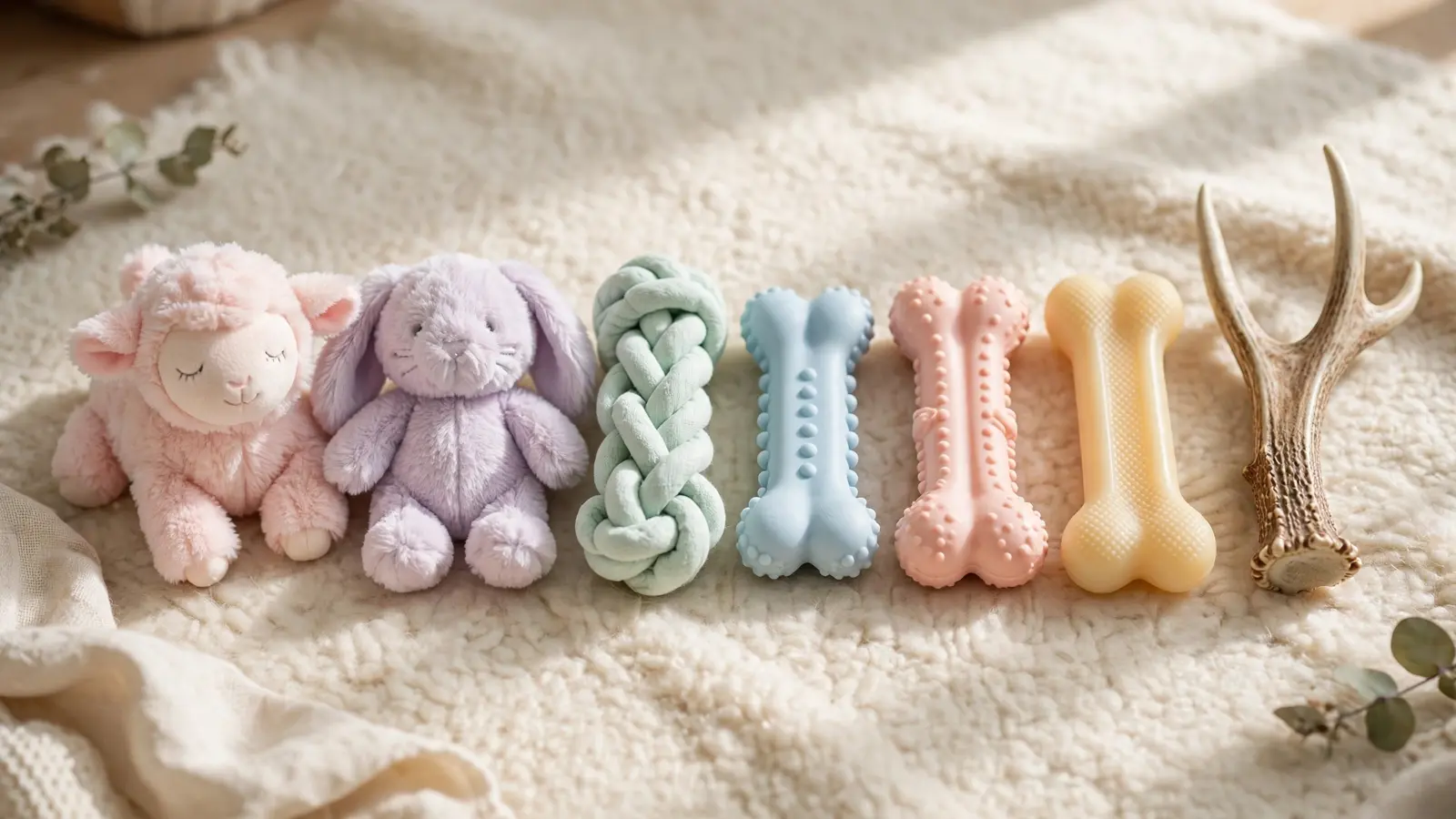
Chewing is not one behaviour. A dog that licks a frozen Kong at bedtime and a dog that disassembles a squeaky toy in the hallway are doing different jobs with their mouths, and the toy that holds up for one is a problem for the other. Finding the level is the whole buying decision, and it takes one watched session to find it.
How to read your dog's chewer level
Put a toy down and sit with it for ten minutes. What you see sorts the dog into one of three groups, and the group decides the material.
- Gentle: licks, gnaws the surface, carries the toy around. The toy comes back whole.
- Moderate: takes real bites and leaves small scallops along the edge. The toy comes back marked but intact.
- Power: bites through, and the session ends with pieces on the floor. The toy does not come back.
Breed is a hint, not the answer. Two dogs of the same breed can sit on opposite levels, so the ten-minute watch beats the label on the bag.
Gentle chewers: soft rubber and plush
A gentle chewer has the widest aisle to shop in. Soft rubber toys, plush toys with a squeaker, and light rope all last, and the stuffing stays inside the seam because this dog carries rather than bites down. Plush earns its place here as a comfort object: the toy that travels from the crate to the couch.
- Soft rubber rings and bones for the daily chew session.
- Plush for the carry-around hours, one at a time in rotation.
- Light rope for a two-handed tug with a human, not for solo chewing.
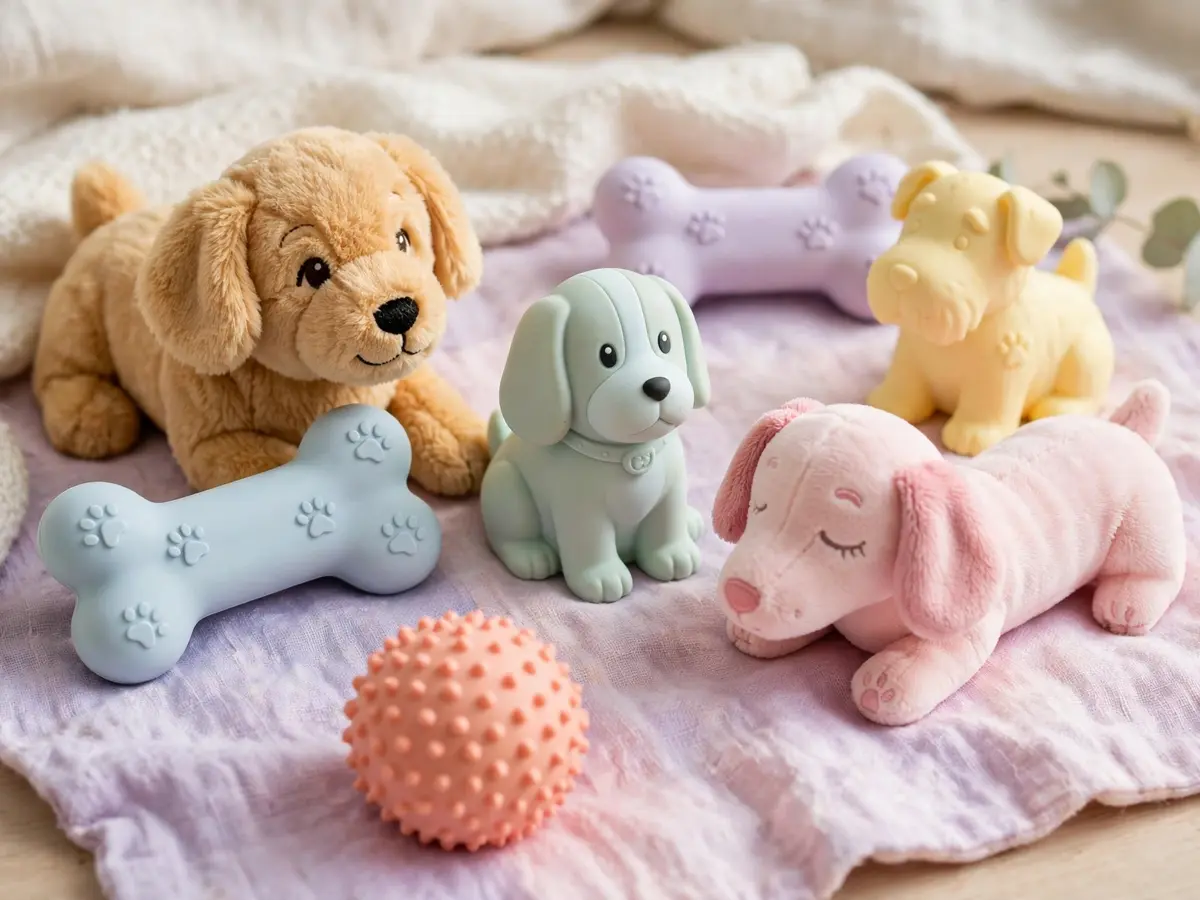
Moderate chewers: rubber rings and rope
The moderate chewer is where most of the aisle is aimed, and it is also where most mistakes happen. Dense rubber rings, twisted rope and hollow rubber that takes a bite and springs back all hold up. What does not hold up is anything with a seam, a glued eye, or a fabric layer, because a moderate bite is enough to open those.
Rope has one extra rule: the strands fray. A frayed rope sheds short fibres into the mouth, so a rope that looks like a mop goes in the bin rather than back in the toy basket.
Power chewers: thick rubber and nylon
A power chewer needs a toy with no give in the wrong places. Thick solid rubber and nylon chews are the two materials that survive real biting, and both are bought in the size past the dog's mouth, not the size that fits it. Anything hollow, anything plush, and anything with a squeaker is a ten-minute toy for this dog.
The check on a hard material goes the other way: a chew that is genuinely unyielding can wear a tooth down over months. Rotate a thick rubber with a softer option, and stop at the first sign of a chipped or flat tooth.
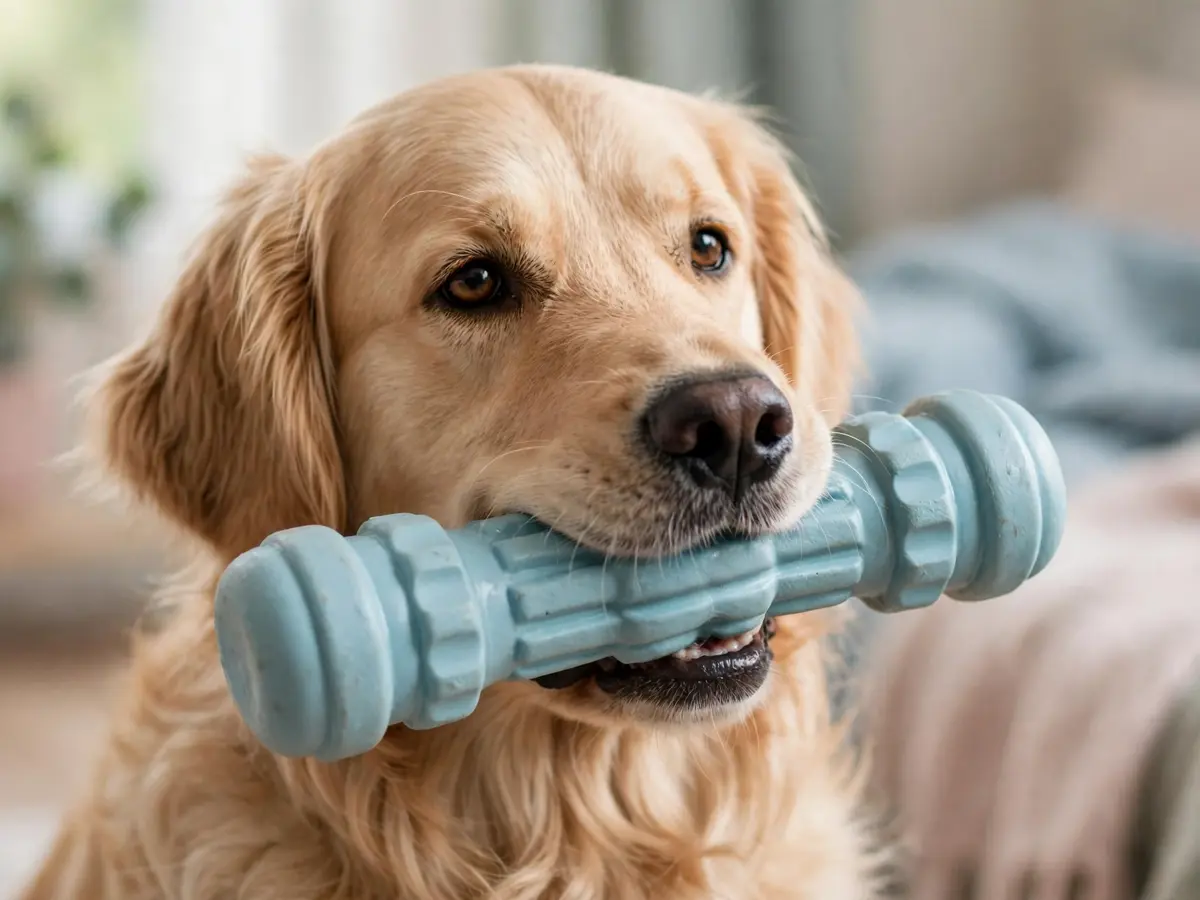
Chewer level and toy material
| Chewer level | Material that lasts | Material to skip | What to watch |
|---|---|---|---|
| Gentle | Soft rubber, plush, light rope | Nothing at this level | A plush seam opening late, after months |
| Moderate | Dense rubber rings, twisted rope, hollow rubber | Seams, glued eyes, fabric layers | Scalloped edges growing deeper each week |
| Power | Thick solid rubber, nylon chews | Hollow toys, plush, anything squeaky | Shards on the floor, and worn teeth |
Levels read from one watched session. The material column is what the toy is made of, not what the packaging calls it.
Four habits that matter at every level
The material is the purchase. These four are the routine, and they apply to a Chihuahua and a Great Dane alike.
- Size past the jaw. A toy the dog can fit fully in its mouth is a toy that can be swallowed whole. Pick the size that leaves a margin past the front teeth, then pick the next size up if you are between two.
- Watch the session. The first ten minutes with a new toy are supervised, always. That is the test that puts your dog on a level, and it is the only way to know the toy was the right call.
- Check it after every session. Run a thumb over the edges where the bites land. Scratch marks are fine. Raised, split, or soft spots are the toy failing, and that one goes in the bin.
- Replace it, do not repair it. Glue, tape and a stitched seam all end up in the dog's mouth. A worn toy is a bought-again toy, and the rotation keeps the replacement boring rather than urgent.
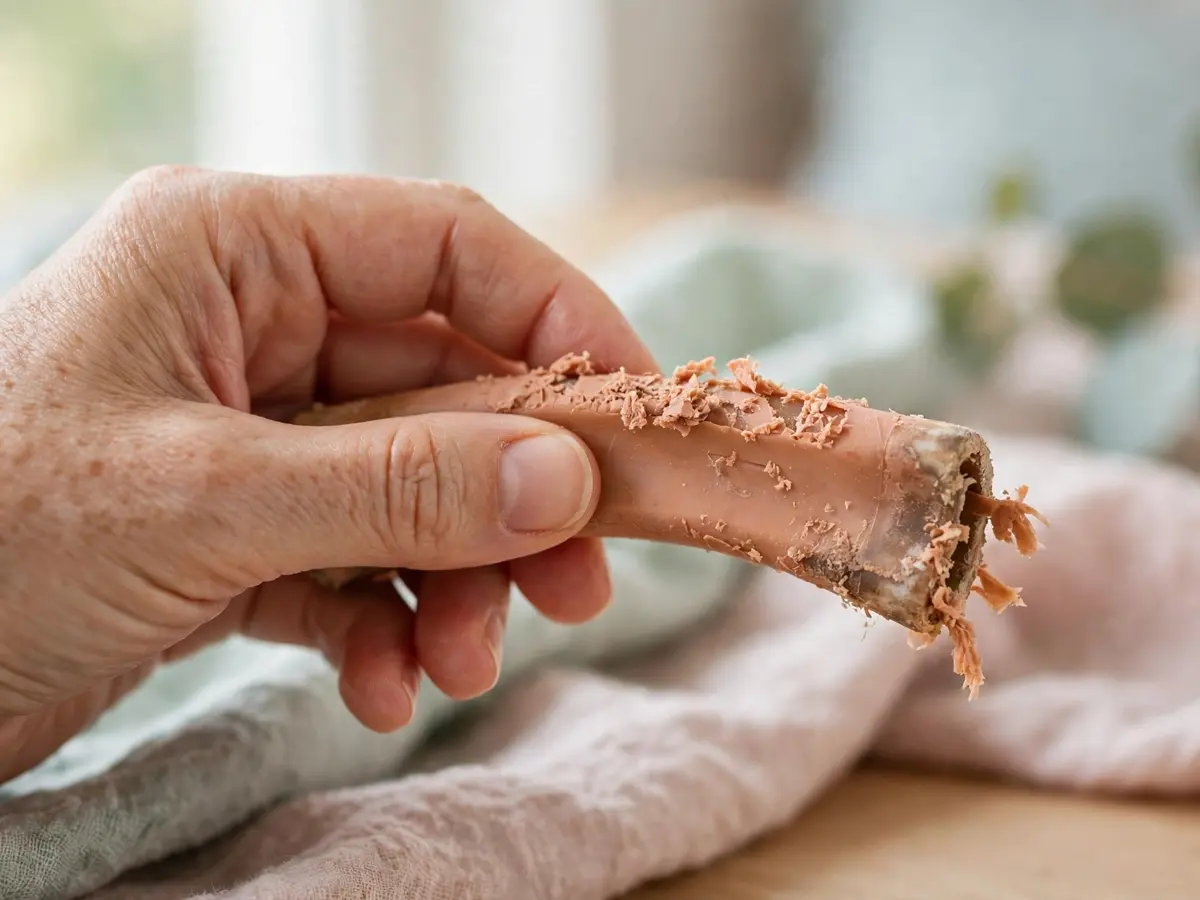
Chew treats as part of the day
A chew treat is not a freebie; it is food with a job. Count the piece against the day's meal rather than adding it on top, and keep the piece small enough that it takes a while rather than one bite.
Small amounts of lean cooked chicken, turkey, beef or pork with no bones and no seasoning are fine to share.
Raw meat and raw eggs can carry salmonella and E. coli, and cooked bones can block a gut and need surgery.
So the shared piece is cooked, boneless and unseasoned, and the same piece goes through the ten-minute watch like any new toy. A treat that disappears in one gulp is a portion, not a chew, and the day's food is where it gets counted.
Signs a toy is the wrong level
| What you see | What it means | The move |
|---|---|---|
| Pieces or shards on the floor | The toy lost the session | Bin it, go up a material |
| Scalloped edges, deepening weekly | Bites are landing harder than the toy gives | Denser rubber, same shape |
| Stuffing or filling coming out | A seam opened on a chewing dog | Plush moves to carry-only |
| Frayed rope strands | Fibres shedding into the mouth | Bin it, no repair |
| Flat or chipped tooth | A hard material doing its job too well | Rotate in a softer option, tell the vet |
| Toy swallowed whole | The size was wrong, not the material | Next size up, past the jaws |
Every row is a buying correction, not a training problem. The toy is the variable that is easiest to change.
Where to start shopping
Two toys beat a basket of six: one at your dog's level and one a step above it, so the second is waiting when the first wears out. For gift sizing and the under-$25 shortlist, the dog mom gift guide covers the same levels from the buyer's side, and the stocking stuffer list is the small-piece version of this page. Everything sits on the supplies and gift guide collection.
Dog chew toy questions
How do I find my dog's chewer type?
Watch one session with a toy you already own. A gentle chewer licks and gnaws the surface and leaves the toy whole. A moderate chewer takes real bites and leaves small scallops along the edge. A power chewer empties a toy in one sitting and leaves shards on the floor.
Should the toy be bigger than the mouth?
Yes, at every level. A toy that a dog can fit fully in its jaws is a toy that can be swallowed whole, so pick a size that leaves a good margin past the front teeth. The same shape in a bigger size is the cheaper fix.
Can a plush toy ever work for a strong chewer?
Only as a comfort object, not as a chew. A power chewer opens a plush in minutes and finds the stuffing, and the stuffing is the part that gets eaten. Keep plush for the dogs that carry things around the house without biting down.
How often should I check a chew toy?
After every session, and before the next one. Run a thumb over the edges where the bites land. Flat surfaces with scratch marks are fine; anything raised, split, or soft under the thumb goes in the bin.
Can I share meat as a chew?
Small amounts of lean cooked chicken, turkey, beef or pork with no bones and no seasoning are fine to share. Raw meat and raw eggs can carry salmonella and E. coli, and cooked bones can block a gut and need surgery, so the shared piece is cooked, boneless and unseasoned.
Is a supervised toy the same as a destroyed toy?
No. Supervision is the test that tells you which level your dog is on. A toy that survives ten watched sessions at your dog's level is the toy to buy more of, and a toy that does not is the one to size up or swap material.
Save these on Pinterest
Pin the level-and-material table before the next toy run, and keep the four habits next to it. Pair this with the gift guide and the stocking stuffer list, then keep the set on the pet supplies collection.
Toy and sharing guidance only, no brand picks. For informational purposes, consult your vet about your dog.