 PawStyle Daily
Homemade Dog Treats & Meal Planning
Dachshund Meals and Back Care: The Long-Body Guide
A dachshund carries its length on a frame built like a bridge, and the single kindest thing a kitchen can do is keep the load light. Measured meals, a bowl that comes up on time, a treat budget kept tiny, and a weekly hand check that tells the truth before the scale does.
By PawStyle Daily · Updated 18 November 2026
Good to know: measured meals, never a full bowl left down · the rib check weekly · treats stay tiny · for informational purposes, consult your vet.
Two sizes, one silhouette
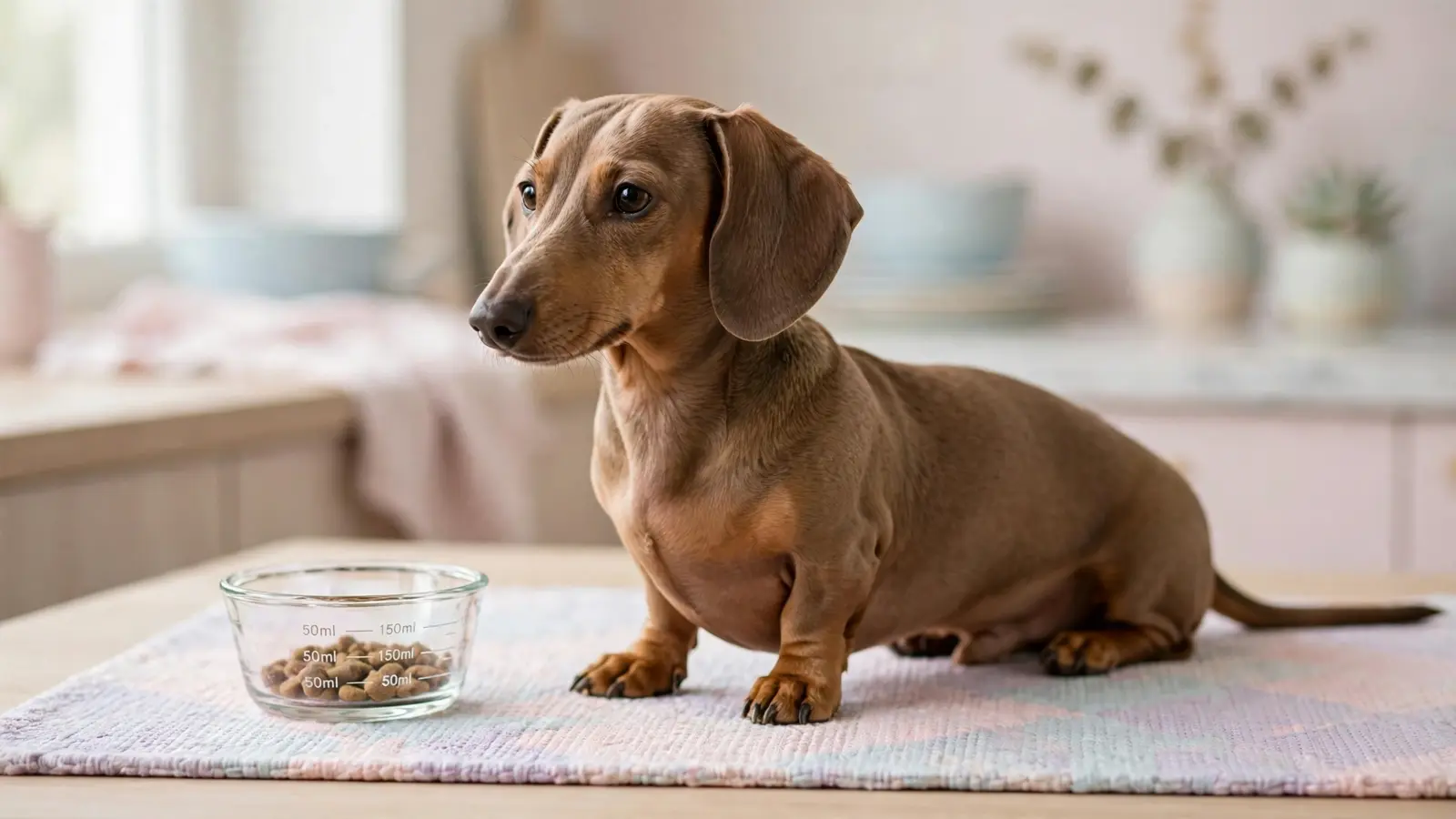
The AKC lists two Dachshund sizes, standard at 16 to 32 pounds and miniature at 11 pounds and under. The AKC describes the Dachshund as having a long, low silhouette. Those two facts shape everything in this guide: a small frame, a long back, and a body where every extra bit of weight rides on the same short legs.
The numbers above describe the breed, not your dog. Your own dachshund’s healthy weight is a conversation with your vet, and the kitchen’s job is the method, not the target.
Measured meals, not a full bowl
Measured meals beat food left down all day, because a puppy that eats whenever it wants is more likely to eat too much. An adult dachshund keeps the same logic: a bowl that stands open all day turns meals into grazing, and grazing is invisible weight.
Whatever is left in the bowl after 30 minutes goes away, so the puppy learns to eat at mealtimes. The same rule carries into adulthood, and it makes the next meal interesting again instead of routine.
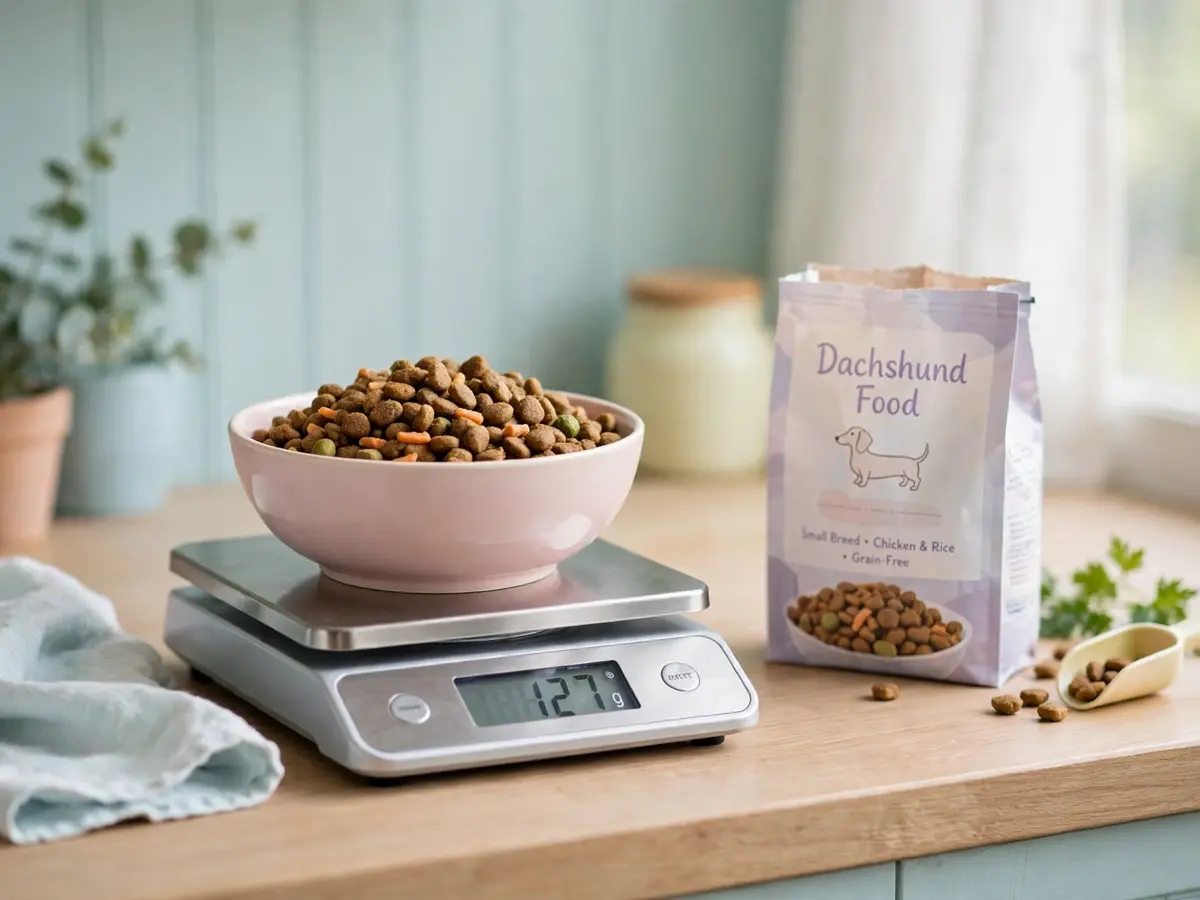
A kitchen scale does the arguing for you. Weigh the portion once, mark the scoop or the cup that matches it, and from then on the meal is a look, not a debate.
The weekly rib check
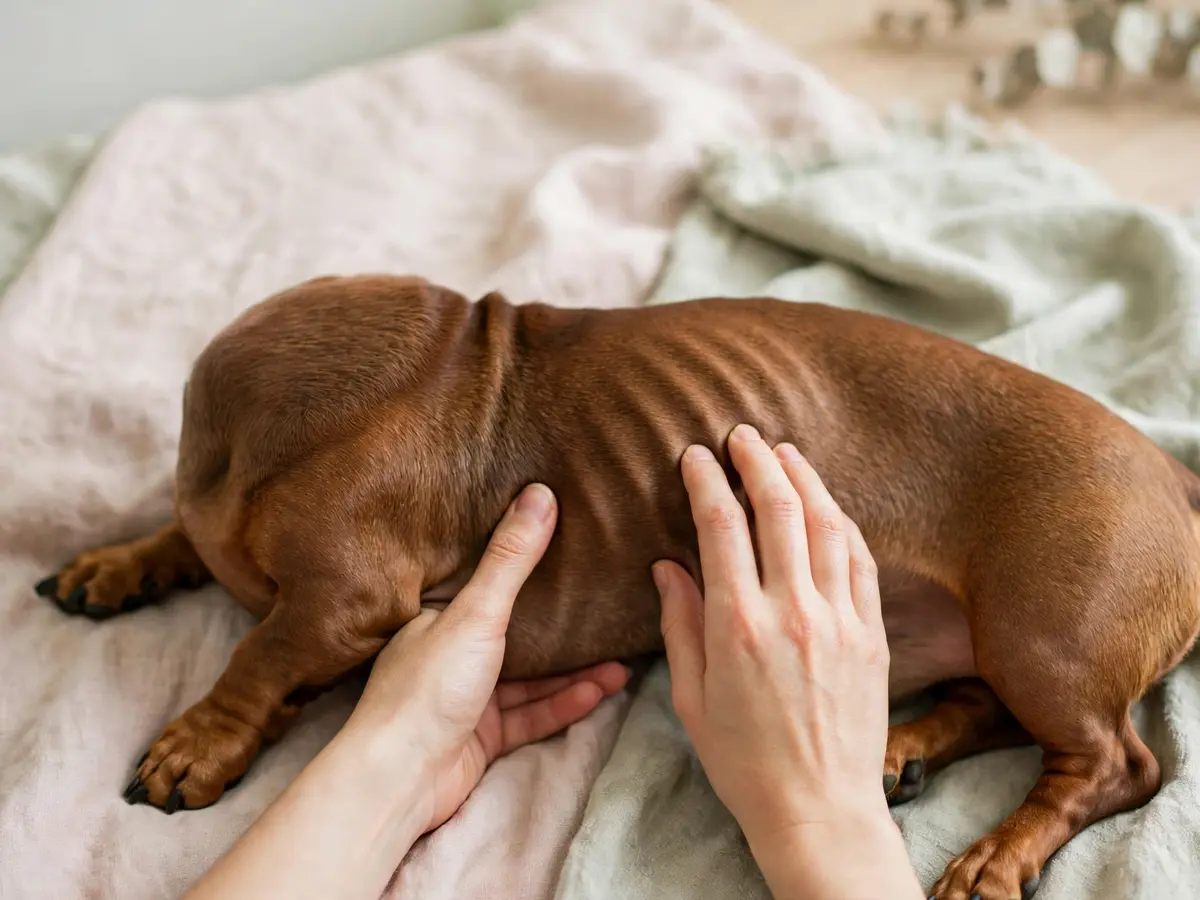
Look for a waistline that curves in behind the rib cage, a tucked tummy, and ribs you can feel but not see. On a long body the waist is easiest to read from above, with the dog standing square, and the ribs are easiest to feel from the side with both hands flat.
Make it a habit tied to something you already do — the Sunday brush, the nail trim, the bath. A dachshund’s coat hides a slow change better than most, and the hands find it weeks before the mirror does.
Fixed mealtimes and the 30-minute habit
Feed at the same times daily. A long-backed dog does better when the day has a spine to it: meals at the same hours, water refreshed at the same hours, and the kitchen going quiet between them.
The dachshund day in the kitchen
| Moment | What happens | Why it stays fixed |
|---|---|---|
| Morning meal | The weighed portion goes down for the meal window | The day starts with a known amount |
| Bowl comes up | Whatever is left after 30 minutes goes away | Meals stay interesting, grazing stops |
| Water check | Fresh water stays out all day, and the water bowl gets washed daily | A clean bowl gets drunk from, not sniffed at |
| Treat dish | One small dish filled for the whole day | The dish empties, the day's extras end |
| Evening meal | The second weighed portion, same hours as always | The body learns the rhythm |
Portion sizes come from your vet, sized to this dog. The kitchen owns the method; the numbers belong to a professional who can see the dog.
Same hours · same scoop · same spot on the mat.
A treat budget kept tiny
Treats should stay at no more than five percent of a dog's daily calories, so keep the pieces small. On a dachshund that line matters twice: the body is small, and the back prefers a light passenger.
Cut training treats smaller than you think you need to. A piece the size of a pea rewards a sit just as honestly as a biscuit, and the same bag lasts a season instead of a fortnight.
Ask the household to count aloud. Treats spent at the door, on the sofa and during training all come out of the same dish, and the dish is the only accountant this dog has.
Changing food over days, not in one meal
Switch the food over a few days, not in one meal. Start with a little new mixed into the old, shift the balance each day, and let the last meal of the swap be all new food. A slow change gives the stomach time to follow and gives you a clean way back if the new food disagrees.
Write the swap on the fridge note with the start date. A change with a written start and finish never drags into a month of half-and-half bowls.
The bowl, the mat and the water
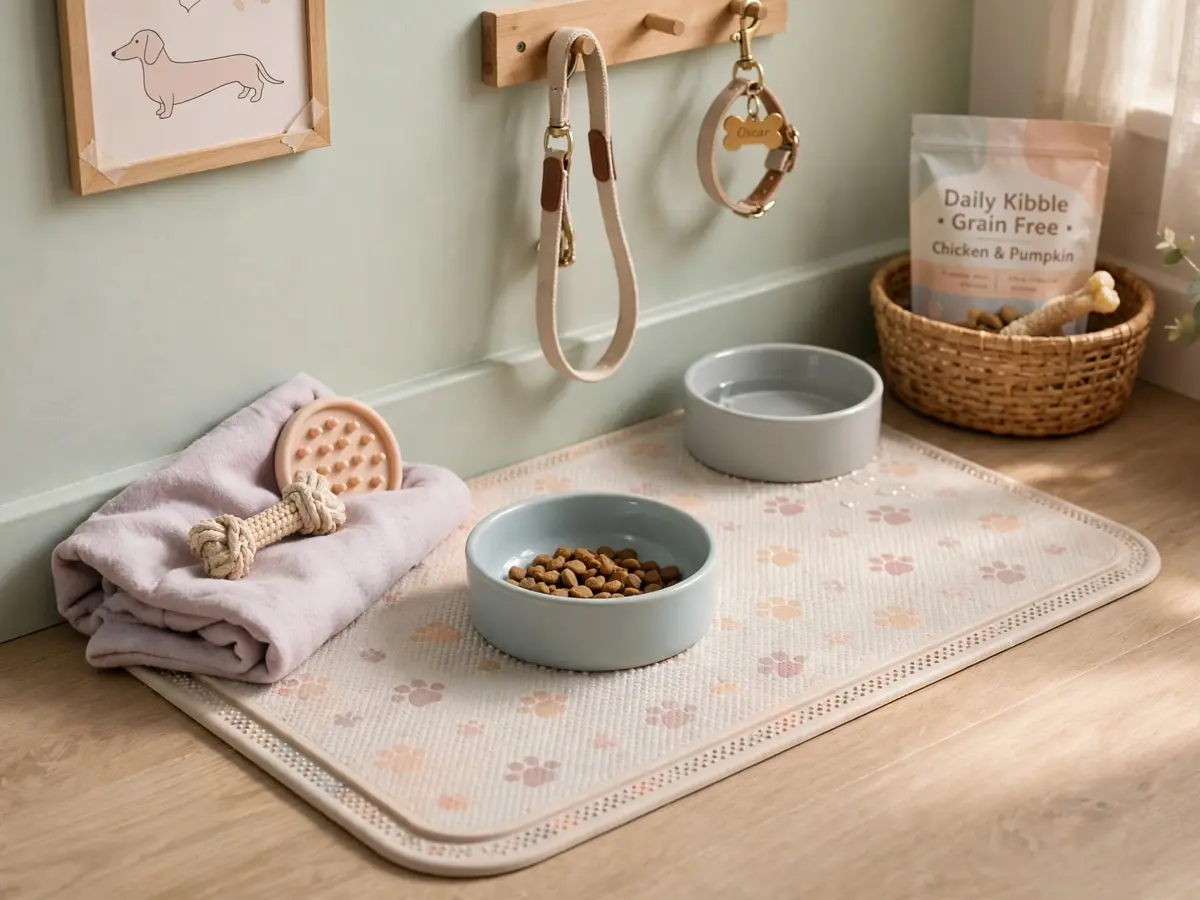
A low bowl on a non-slip mat keeps the meal where the dog put it, and it saves a long body from chasing its dinner across tile. Keep the setup in the same corner, away from the door everyone uses and the draft the hallway sends.
Fresh water stays out all day, and the water bowl gets washed daily. A dachshund will drink from a clean bowl without ceremony, and a washed one is the cheapest habit in this whole guide.
The same corner logic applies to the walks that keep this body moving — the harness picks for dachshunds cover the other end of the day.
Dachshund meal and back care questions
How much should my dachshund eat each day?
The daily amount belongs to your dog, not to the breed, so ask your vet for the number that fits this body. What the kitchen can own is the method: measured meals, weighed portions and a bowl that comes up when the meal is over.
Is free feeding ever easier for a long-backed dog?
It is easier for the human and worse for the dog. Measured meals beat food left down all day, because a puppy that eats whenever it wants is more likely to eat too much, and the same habit follows an adult dachshund for life.
What is the rib check, exactly?
Rest both hands flat on the sides of the chest and slide them back. You want to feel the ribs under a thin layer, the way you would feel fingers through a light glove. Look for a waistline that curves in behind the rib cage, a tucked tummy, and ribs you can feel but not see.
Can I switch foods in one day?
Switch the food over a few days, not in one meal. Mix a little of the new food into the old across several meals, then shift the balance each day until the bowl is all new. A slow swap is kinder to the dog and tells you which food actually disagrees.
Do treats really matter that much for a small dog?
On a small body, every treat is a bigger share of the day than it would be on a large dog. Treats should stay at no more than five percent of a dog's daily calories, so keep the pieces small, and count the training pieces against the day's food.
When does a dachshund need the vet instead of a plan?
When the ribs stop being findable, when a meal is refused twice in a row, or when the gait changes — a reluctance on stairs, a hunched posture, a yelp when lifted. Those are not feeding questions anymore, and a vet should see the dog rather than read about it.
Save these on Pinterest
Pin the rib check and the 30-minute bowl rule for the next feeding reset, then pair them with the puppy body condition rib check, the puppy-to-adult food switch and the harness sizing and fit guide. One board, one long-backed dog, one lighter load.
Treats should stay at no more than five percent of a dog's daily calories, so keep the pieces small. For informational purposes, consult your vet.