 PawStyle Daily
Cat-Friendly Apartment Decor
Senior Cat Vet Checkup: What to Bring and Ask
A senior cat vet checkup is a visit that starts at home, not in the waiting room. The cat on the pastel blanket beside the kitchen scale is the cat the vet will see, and the notebook on the table is the record the vet will read. This page covers the age a cat counts as senior, the weighing habit that catches change early, and the notes that turn a short exam into a long one.
By PawStyle Daily · Updated 19 November 2026
Good to know: the senior label is a life-stage marker · the same scale every couple of months · bring notes, not a memory · for informational purposes, consult your vet.

Why the visit starts at home
The vet sees the cat for a short window, and the cat in the exam room is a cat that traveled, waited, and met a stranger with a stethoscope. The cat at home is the cat the vet actually wants to hear about: the one on the perch, at the bowl, in the litter box. The home record is the part of the visit the exam cannot see, and the notes a person brings are the notes that fill that gap.
A senior cat hides things. A cat that slows down on the jump, eats a little less, or visits the box a little more often is a cat doing those things at home and none of them in the exam room. The scale on the rug, the notebook on the table, and the list of questions on the fridge are the three pieces of home that travel to the clinic, and the visit goes better when all three make the trip.
The spring visit is a good rhythm for a senior cat, because the winter corner is packed away, the coat has shed out, and the cat is back on the perch in the sun. It is also far enough from the autumn visit to catch a change that started in the months between. This page is the home side of that visit, and the rest is the drive over.
The age a cat counts as senior
The label matters because it is the age the home habits change, not because it marks the cat as ill. Cats are now considered older at 12 to 14 years of age.
The sentence is a life-stage marker, not a health verdict. A cat at that age is not automatically ill, and a cat at that age is a cat the home routine starts to watch a little more closely. The change is in the rhythm, not in the cat: the scale comes out a little more often, the notebook gets a column for weight, and the spring visit moves from optional to the calendar.
The reason the age is a range and not a single number is that cats age at different speeds, and a lean indoor cat at the top of the range is a different cat from a heavy outdoor cat at the bottom. The vet reads the cat in front of them, and the home record is what tells the vet whether this cat is at the young end or the old end of the range. The label is the starting point, and the cat is the rest of the sentence.
For the grooming side of the senior routine, the cat brushing routine page covers the coat that thins with age, and the litter side pairs with the cat litter types page, because a senior cat's box habits are the other half of the home record.
The weighing habit that catches change early
The scale is the one piece of gear the home record turns on, and the habit is simpler than the gear. Weigh a senior cat on the same scale at least every two months, because a change in weight can be an early sign of disease.
The same scale is the part people miss. Two scales read two different numbers, and a shift between them is a shift in the scale, not in the cat. The kitchen scale on the rug, the same rug, on the same morning, is the habit that turns the number into a record. The cat does not need to stand still for long, and a towel on the scale is the trick that keeps her on it for the few seconds the reading takes.
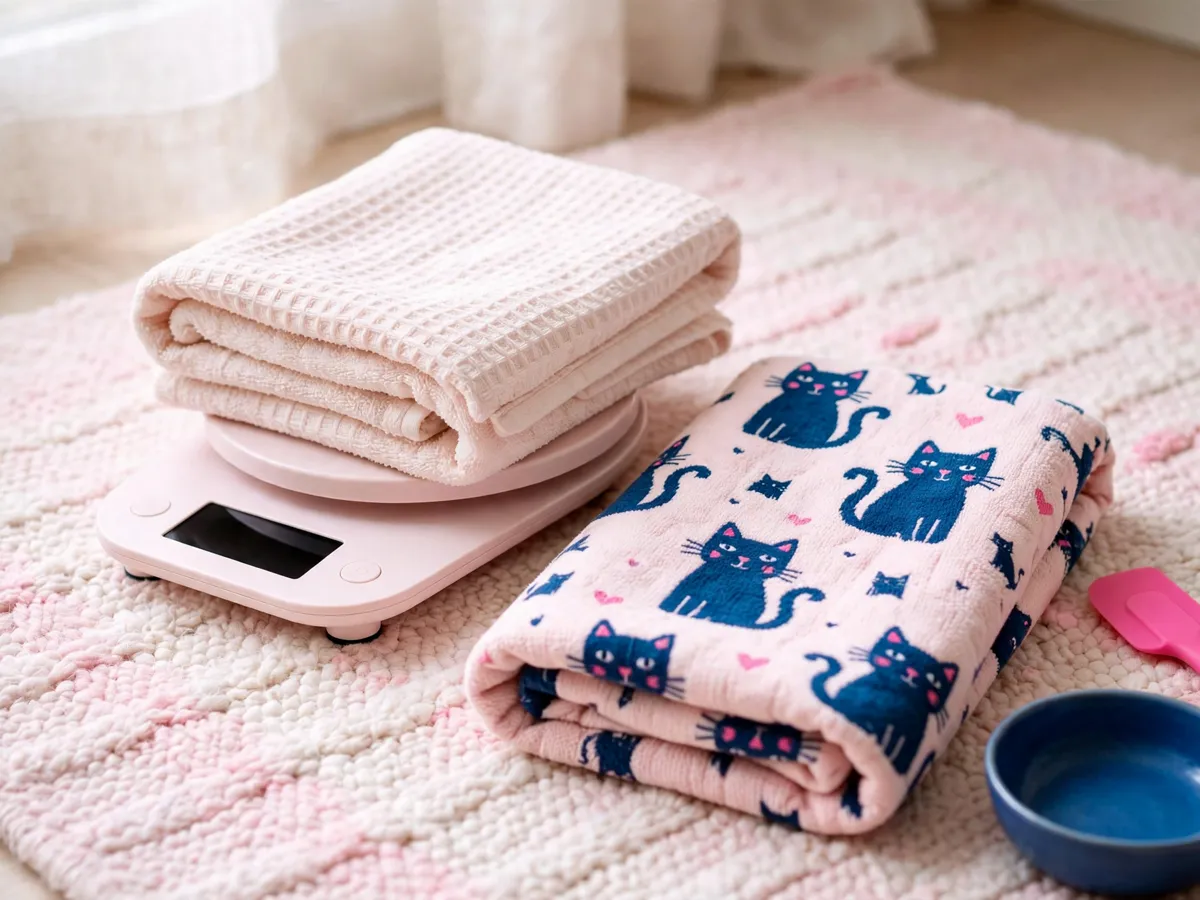
The reason the habit catches change early is that the scale reads a shift before the eye does. A cat that loses a little weight over the winter looks the same on the perch and reads different on the scale, and the notebook is the place the difference shows up. The eye notices a cat that is thinner when the thinness is already a story; the scale notices it when the thinness is still a number.
The cadence is the other half. Every couple of months is often enough to catch a trend and rare enough that the cat does not start to dread the towel. The spring visit is the anchor, and the weighing in the months before it is the record the vet reads alongside the exam. A number on the day is a snapshot, and a column of numbers is the story.
The notes the vet will want to see
The notebook is the part of the visit that travels from the kitchen table to the exam room, and it is the part most people leave at home. The vet reads the cat in front of them for a short window, and the notes are the months the window cannot see. The home record is the cat the vet never gets to meet, and the notebook is the introduction.

The notes that earn the trip are the ones the exam cannot reach. The weight column, the eating and drinking changes, the litter box visits that are different, and the questions that piled up between visits. A question on the fridge door is a question that makes the trip instead of being forgotten in the parking lot, and a notebook with a column of weights is a notebook the vet reads in a minute and remembers for the year.
The questions are the part people skip, and the questions are the part the visit is for. A list on the fridge, added to in the weeks before the visit, is the list that turns a short exam into a long one. The vet would rather read ten questions and answer five than guess at the five a person forgot to ask, and the notebook is the place the ten live.
The home checklist before the visit
The morning of the visit is easier when the week before it did the work. The checklist is short, and every item is a thing the cat already does at home, written down so the vet can read it.
- The weight column from the last few months, on the same scale, in the same notebook.
- The eating and drinking changes, with a note on the day each one started.
- The litter box visits that are different: more often, less often, or a different spot.
- The list of questions on the fridge, added to in the weeks before, not the morning of.
- The carrier the cat already knows, with a blanket that smells like home, loaded while the cat is calm.
The carrier is the last piece, and it is the piece that decides whether the cat arrives calm or arrives in a state the vet has to settle before the exam. The carrier training page covers the weeks of work that turn the carrier from a box the cat dreads into a box the cat walks into, and the spring visit is the day that work pays for itself.
The honest summary is that a senior cat vet checkup is a visit that starts on the kitchen table and ends in the exam room. The age is a life-stage marker, the scale is the habit that catches change early, and the notebook is the record the vet reads alongside the cat. The visit is a short window, and the home record is the months the window cannot see.
Questions we get about senior cat vet checkups
At what age is a cat considered senior?
Cats are now considered older at twelve to fourteen years of age. The label is a life-stage marker, not a health verdict, and a cat at that age is not automatically ill.
How often should I weigh my senior cat?
The same scale, at least every two months, is the habit that catches a change early. A shift in weight can be an early sign of disease, and the scale reads it before the eye does.
What notes should I bring to the vet?
Bring the recent weights, any changes in eating, drinking or litter habits, and a list of questions. The vet reads those notes alongside the exam, and the home record fills in the gaps the visit cannot see.
Save these on Pinterest
Pin the home checklist for the week before the spring visit, and keep the cat-friendly home collection for the brushing, litter and carrier pages that pair with the senior routine.
For informational purposes, consult your vet.