 PawStyle Daily
Cat-Friendly Apartment Decor
Cat Brushing: Short-Haired vs Long-Haired Routines
Two cats, one sofa, and a black coat on everything you own. Brushing decides whether the fur ends in the bin or on the couch, and the routine is different for a short coat than for a long one. This page separates the two — cadence, tools, mats — and puts the session somewhere the cat already wants to be.
By PawStyle Daily · Updated 18 November 2026
Good to know: coat care only · mats with skin trouble are a vet visit · for informational purposes, consult your vet.
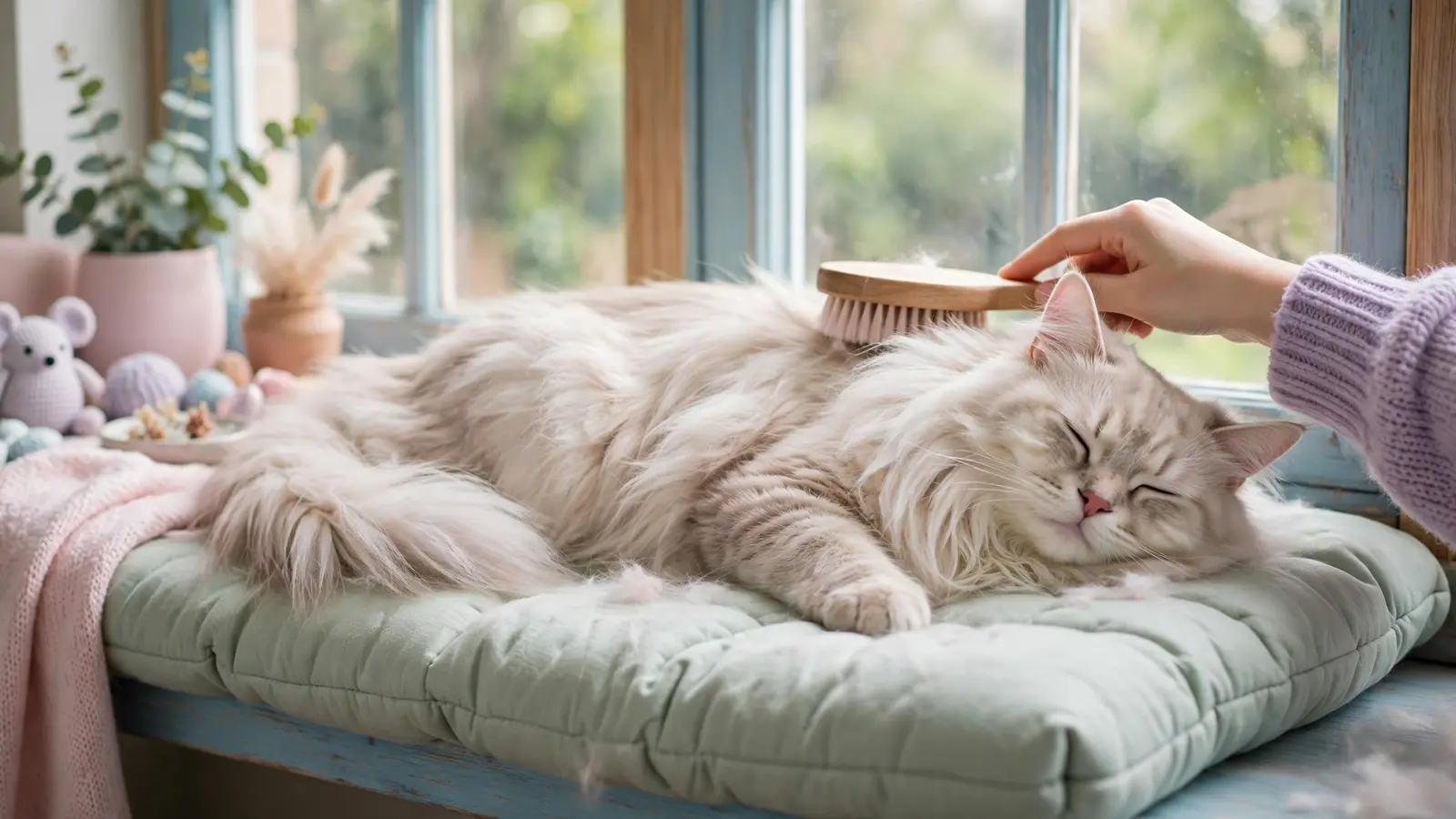
Loose fur is not a grooming problem. It is a furniture problem, a black-sweater problem, and once a year it is a whole-week problem when the spring shed hits. The brush is the tool that moves that fur into the bin instead of onto the couch — and the same strokes do very different jobs on a short coat and a long one.
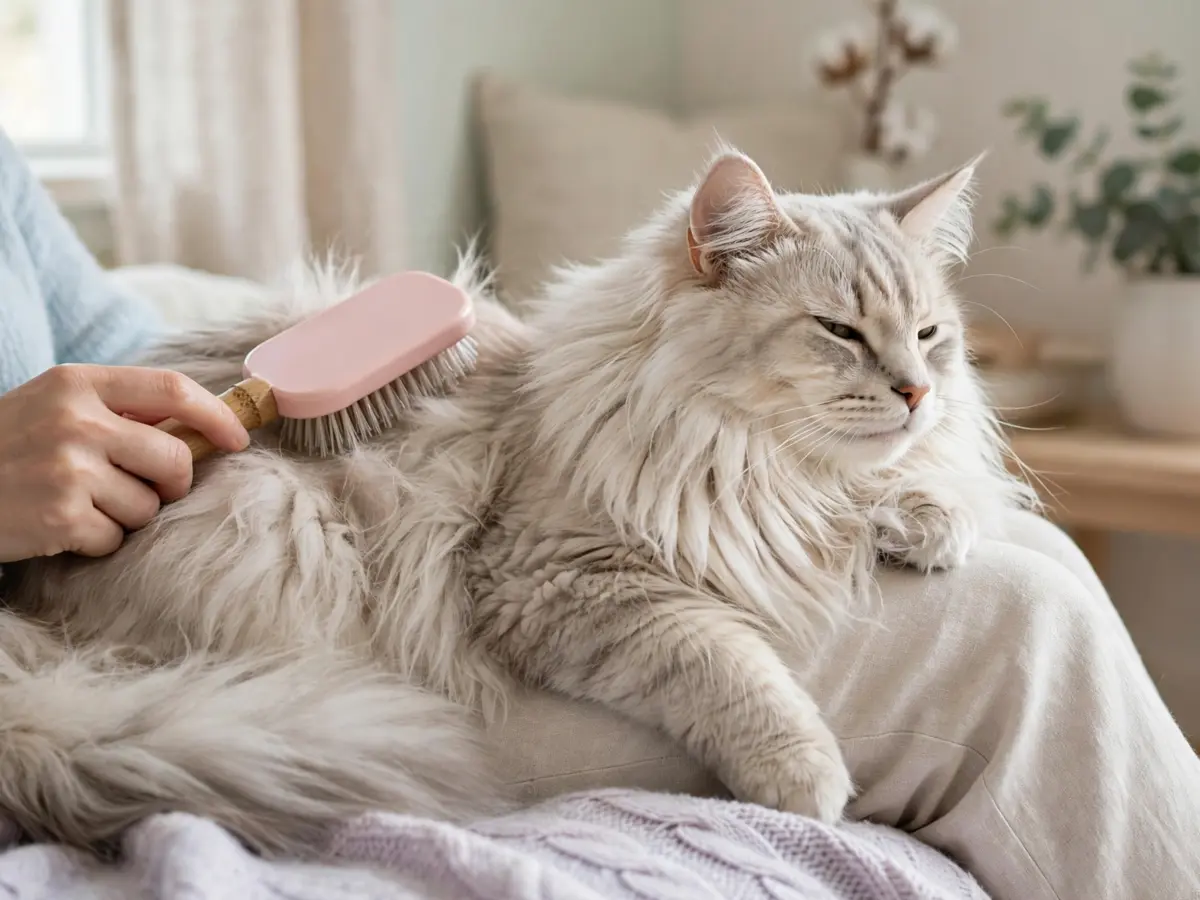
The short-haired routine: once a week
A short coat is a low-volume job with a high-frequency ceiling. One weekly session with a soft bristle brush covers the surface, and two extra passes during the spring shed catch the undercoat wave. The session runs three to five minutes and ends before the cat is done with it, not after.
- One pass with the bristle brush from neck to tail, following the way the fur lies.
- One pass against the grain on the flanks, where loose hair gathers.
- A quick comb through the whisker area and behind the ears, where even shorthairs tangle.
The long-haired routine: little and often
A long coat is the opposite shape of job: small sessions, most days. Loose undercoat left alone turns into a tangle between sessions, and a tangle left alone turns into a mat. Five minutes most evenings beats one long Sunday battle that ends with a cat under the bed.
- Slicker first, in short strokes through the undercoat on the back and the hind legs.
- Wide comb second, down to the skin on the armpits, the belly and behind the ears — the three places mats start.
- Finish with the bristle brush to lay the topcoat flat and catch the last loose hairs.
The three tools that matter
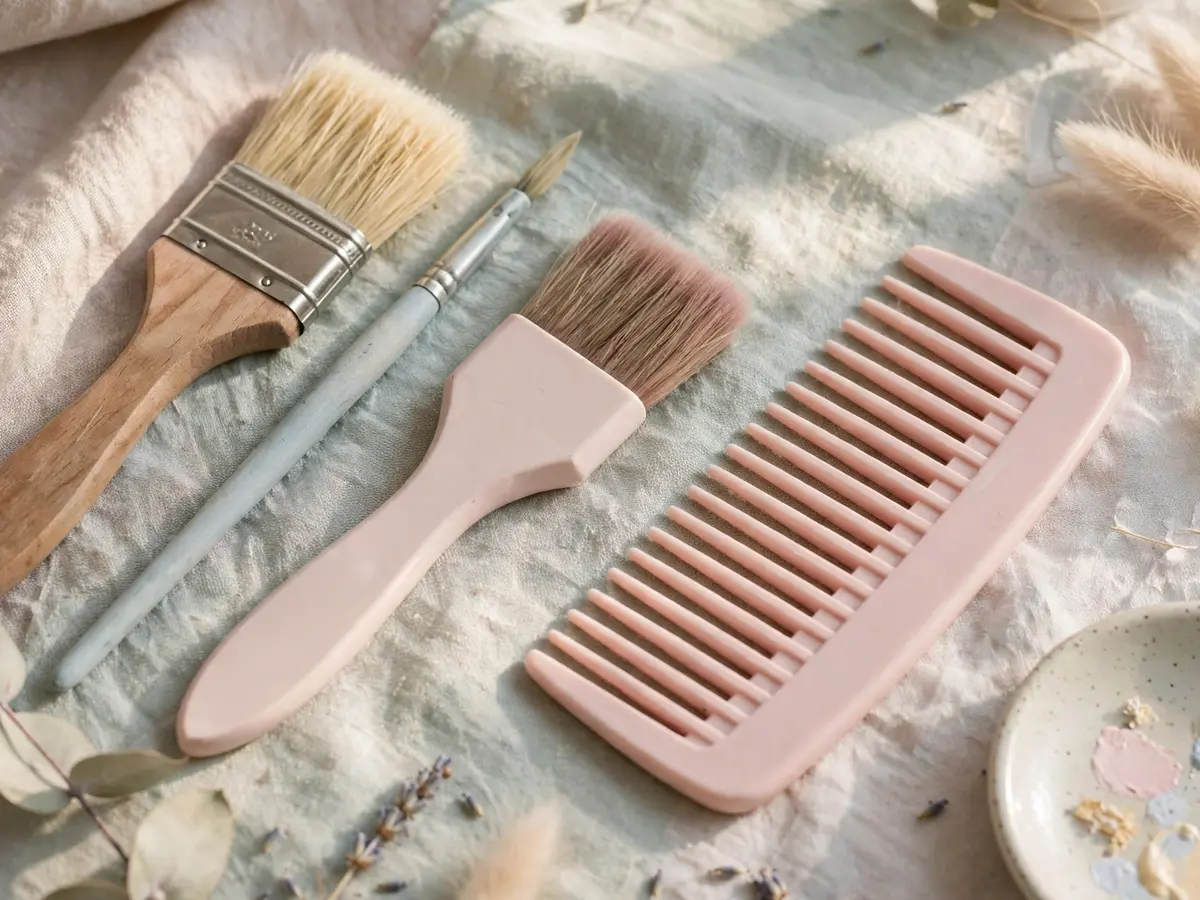
Every cat-owning household needs three tools, not a drawer of them. Each does one job the others cannot.
Brushing tools and their jobs
| Tool | What it does | Which coat needs it most |
|---|---|---|
| Soft bristle brush | Sweeps the surface coat and the last loose hairs | Shorthairs, and every coat as the finish pass |
| Slicker brush | Pulls loose undercoat out in short strokes | Longhairs and any cat in spring shed |
| Wide-tooth comb | Finds tangles the brushes slide over | Longhairs, and behind any cat's ears and armpits |
| Small clippers | Cuts a mat out at the skin without pulling | Any coat, for mats the comb cannot separate |
Three tools do ninety percent of the work; the clippers wait for the mat that will not comb out.
The brushing spot is one of the cat's own spots
The session goes where the cat already rests, not on a towel you bring out for the occasion. Give each resource its own spot and let the cat choose: a minimum of two resting areas, two feeding areas and two toileting areas. One of those resting areas is the brushing place, and the cat picks which one.
An ideal perch is elevated, with a padded cover, and an elevated area gives a cat vertical space to monitor its environment. A padded perch by a window works because the cat can see outdoors while you work through the coat — indoor resting areas, such as a perch or a secluded surface, should include a spot where the cat can see outdoors.
Short sessions on a spot the cat already trusts end on a good note, and a session that ends well is the one the cat comes back for.
Mats: clippers, not pulling
A mat is a tangle that has been left long enough to felt together, and by the time you can feel a solid lump it is too tight to comb. Pulling at it hurts, and a cat that has been hurt by the comb remembers the drawer, not the mistake.
The way out is below the mat, not through it: clippers cut the mat off at the base, and the coat grows back where the comb cannot. Hold the mat between two fingers so the skin stays out of the blades, and work in small cuts rather than one pass.
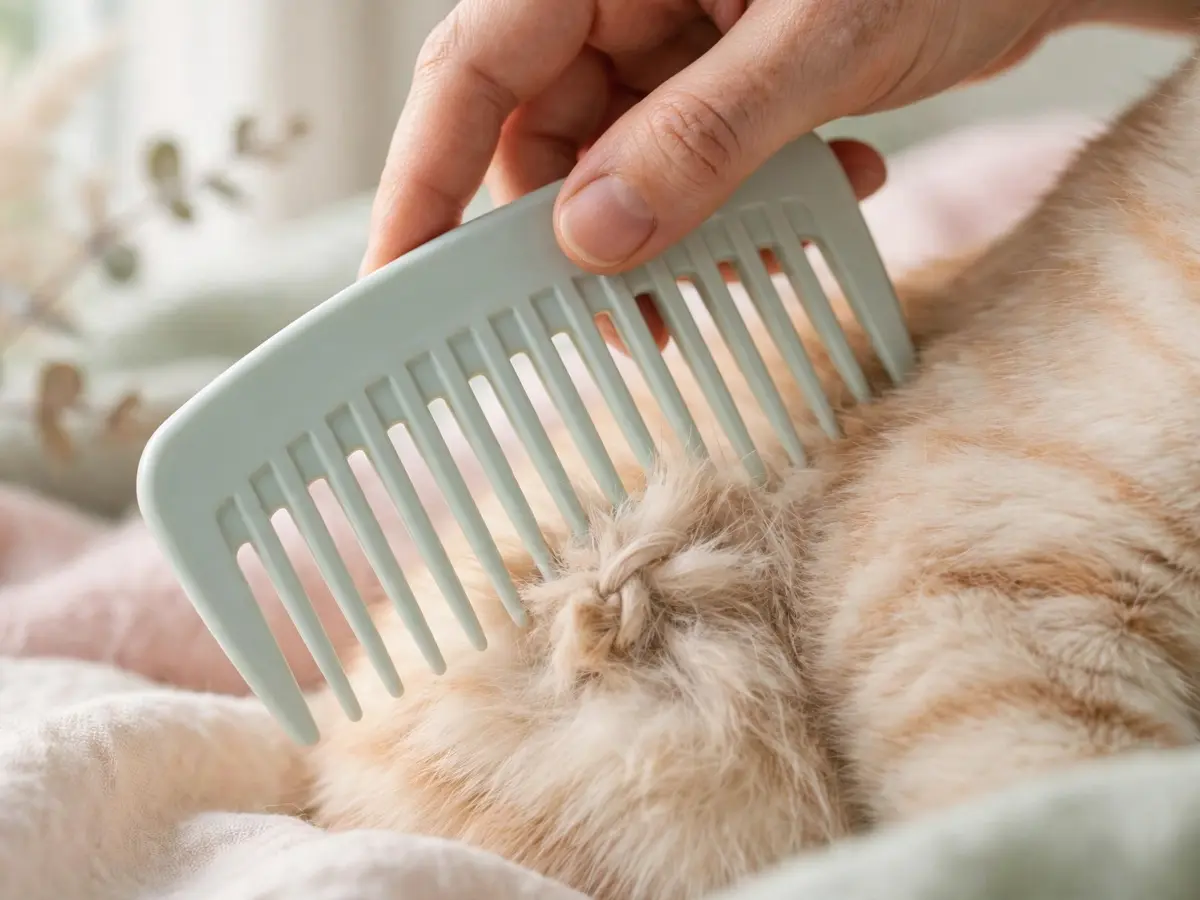
When the skin under a mat is red, flaky or sore, that is a vet visit, not a grooming session. The same goes for a cat that flinches before you even reach the spot.
Loose fur around the apartment
The brush does the sofa's job for it. Fur lands on whatever the cat sleeps on, so the cadence that keeps the coat clean is the same cadence that keeps the sofa clean: a short session where the cat naps, most days for a longhair and weekly for a shorthair, plus a throw blanket on the favorite spot that goes in the wash instead of the cushions.
During the spring shed, bump every cat up a level: the weekly shorthair goes twice a week, and the longhair's evening session grows by a few passes. The shed lasts a few weeks, and the couch notices the difference for months.
More on the room around the cat
The brushing spot is one corner of a bigger picture. The perch tutorial, the resource stations and the rest of the small-apartment setup live on these pages:
- DIY cat window perch, no drill — build the padded perch the session happens on.
- Multi-cat resource stations for a small home — the two-of-everything rule in practice.
- Cat corner aesthetic for 300 sq ft — where the resting areas fit in a studio.
- All cat-friendly apartment guides
Cat brushing questions
How often does a short-haired cat need brushing?
Once a week is the common rhythm for a shorthair, and more often during the spring shed. A longhair wants a short session most days, because loose undercoat left alone turns into a tangle between sessions.
Which tools do I actually need?
Three: a soft bristle brush for the surface coat, a slicker for the undercoat, and a wide-tooth comb for the face, armpits and any tangle you find. Everything else on the pet-aisle wall is optional.
My cat hates the brush. Where do I start?
Not with the brush — start where the cat already naps. Give each resource its own spot and let the cat choose: a minimum of two resting areas, two feeding areas and two toileting areas, and let one of those resting areas become the brushing place.
What kind of spot works best for the session?
An ideal perch is elevated, with a padded cover, and an elevated area gives a cat vertical space to monitor its environment. A padded window ledge the cat already uses turns the session into part of the nap it was already taking.
Why does the brushing spot have a window in it?
Indoor resting areas, such as a perch or a secluded surface, should include a spot where the cat can see outdoors. A cat that can watch birds and feet from its perch sits still longer, and a still cat is a brushed cat.
When does a mat become a vet visit?
When the skin under it is red, flaky, or sore to the touch, or when the cat flinches before you even reach the spot. Skin trouble under a mat is for the vet, not for the bathroom drawer.
Save these on Pinterest
Pin the two-routine split to your cat board so the weekly shorthair session and the daily longhair pass are both one tap away. Pair it with the window perch tutorial and the resource stations guide, then keep the whole set on the cat-friendly apartment collection.
Coat care only, no brand picks. For informational purposes, consult your vet about your cat.