 PawStyle Daily
Cat-Friendly Apartment Decor
Senior Cat Food and Weight Checks
Older cats get comfortable, and comfort shows up at the bowl first. This page covers the age marker, the switch to softer food that does not end in a strike, and a weighing record a veterinarian can actually read. It does not set portions, and it does not guess at what a trend means.
By PawStyle Daily · Updated 18 November 2026
Good to know: one scale, one carrier, before breakfast · change one thing at a time · for informational purposes, consult your vet.
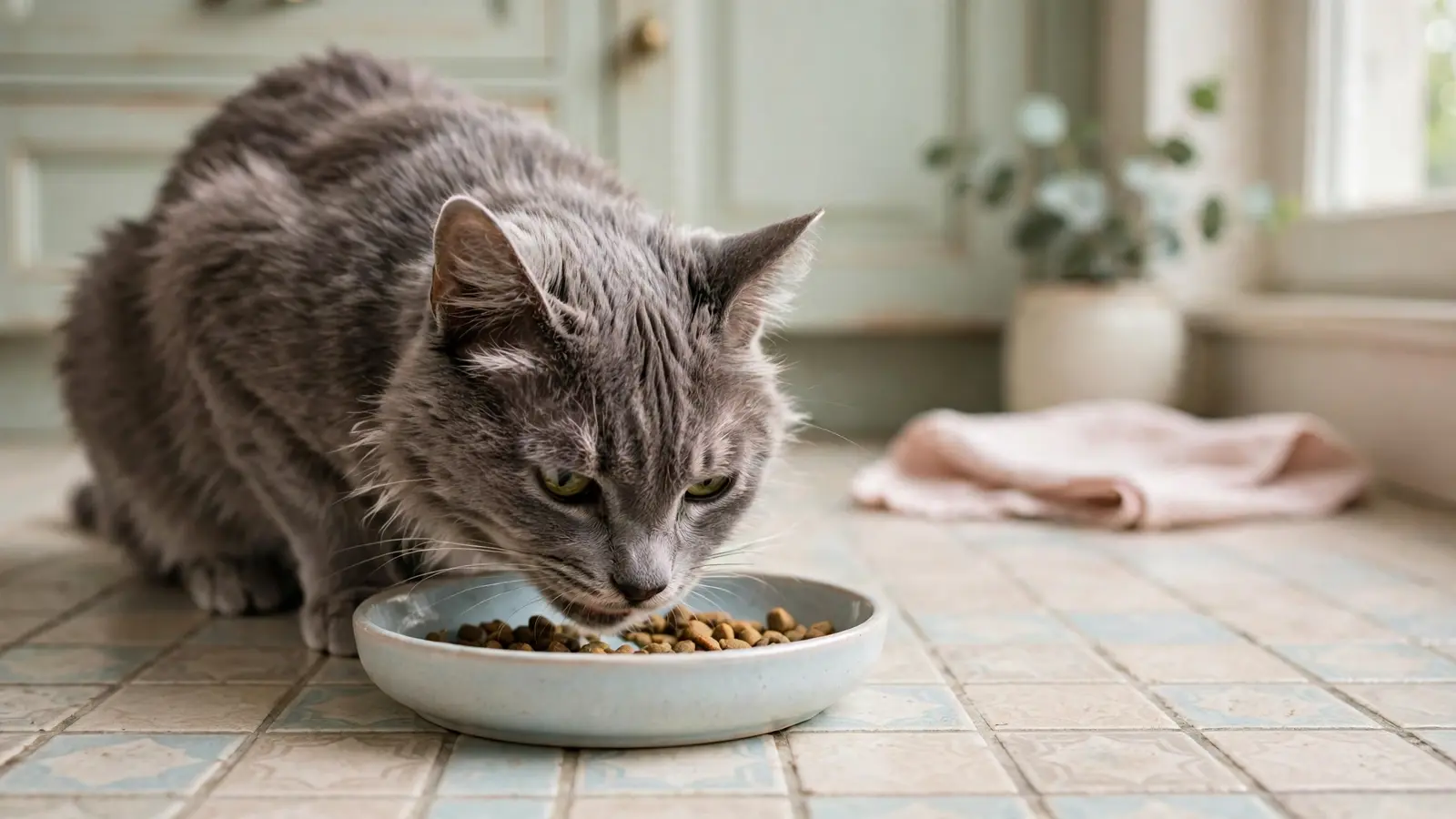
When a cat counts as older
Cats are now considered older at 12 to 14 years of age. That is one marker and nothing sharper: there is no birthday on which the food suddenly has to change, and no single number that says a cat of that age is unwell.
What points at the bowl is behaviour you can watch for yourself:
- Kibble left behind in a bowl that used to come back empty, with the cat still meowing at you afterwards.
- Eating slower, working on one side, or dropping pieces on the floor to pick them up again.
- Turning down a food accepted for years, with no new cat, no new room and no changed day under your roof.
- Drinking more visibly and visiting the bowl between meals.
None of those tells you what is happening inside the cat. They are reasons to make the meal easier and to bring the record to whoever reviews the diet.
The weight drift, and who decides the amount
Many cats get heavier or even obese as they age, so an overweight cat's diet should be reviewed by the veterinarian. That is the line this whole page has to respect: you may change the texture, the brand and the bowl, and how much the cat eats stays a decision for the veterinarian, not for the internet.
The opposite drift is real too. A thinner older cat is not a cat that simply needs more food in the bowl, and a bag of extras is not the answer to a weight that is falling. Both directions land in the same place: a dated record and a professional who reads it.
Making the switch without a strike
- Change one thing at a time: the texture, or the brand, or the bowl. Not all three in the same week.
- Start with a small amount of the new food on top of the old, and let the cat sniff it before you commit to the tin.
- Increase the new share over days. A refusal is information, so go back one step rather than pushing through.
- Keep the old food at the other end of the room for the first stretch, so a refusal is not a missed meal.
- Write down what the cat ate, not what you hoped it would eat. A photo of the bowl counts as a record.
- Stop changing things once the bowl is settled. A steady eater is the goal, not a finished experiment.
A cat that refuses food outright for more than a day has moved past this page. Ring the veterinarian before trying the next trick.
Weighing: same scale, same moment, same cat
Weigh a senior cat on the same scale at least every two months, because a change in weight can be an early sign of disease. The value sits in the comparison, so the method matters more than the number.
- One scale. The kitchen one, always. A second device disagrees with the first and invents a trend.
- One container. The same carrier, basket or towel every time, and the weight of the empty one written down once.
- One moment. Before breakfast rather than after a big drink, because a full stomach muddies the line.
- One name per line. Households with more than one cat should note which cat is which, or the record reads as one animal.
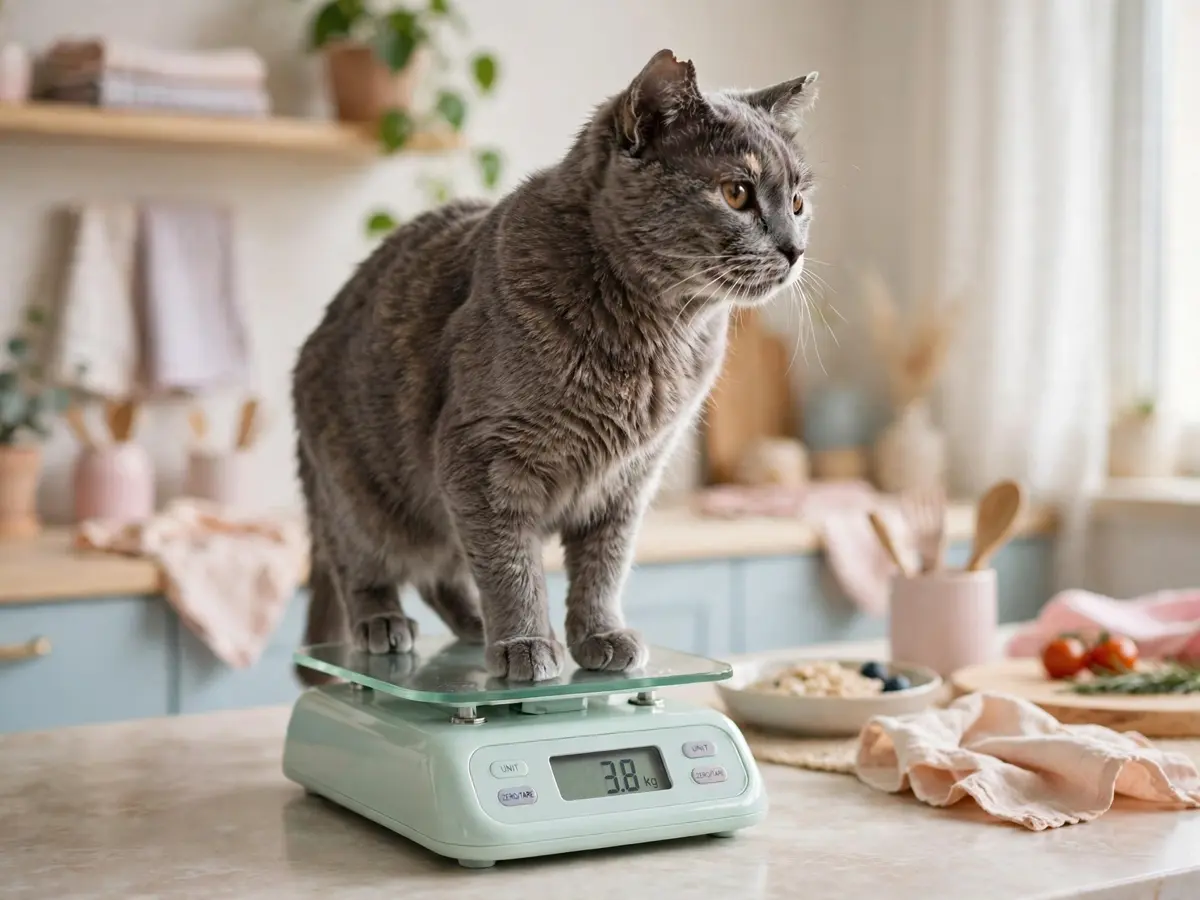
A single reading tells you almost nothing. Three readings on the same scale tell you whether the line is flat, climbing or falling, and that is what makes the next visit short.
What changes at the feeding station
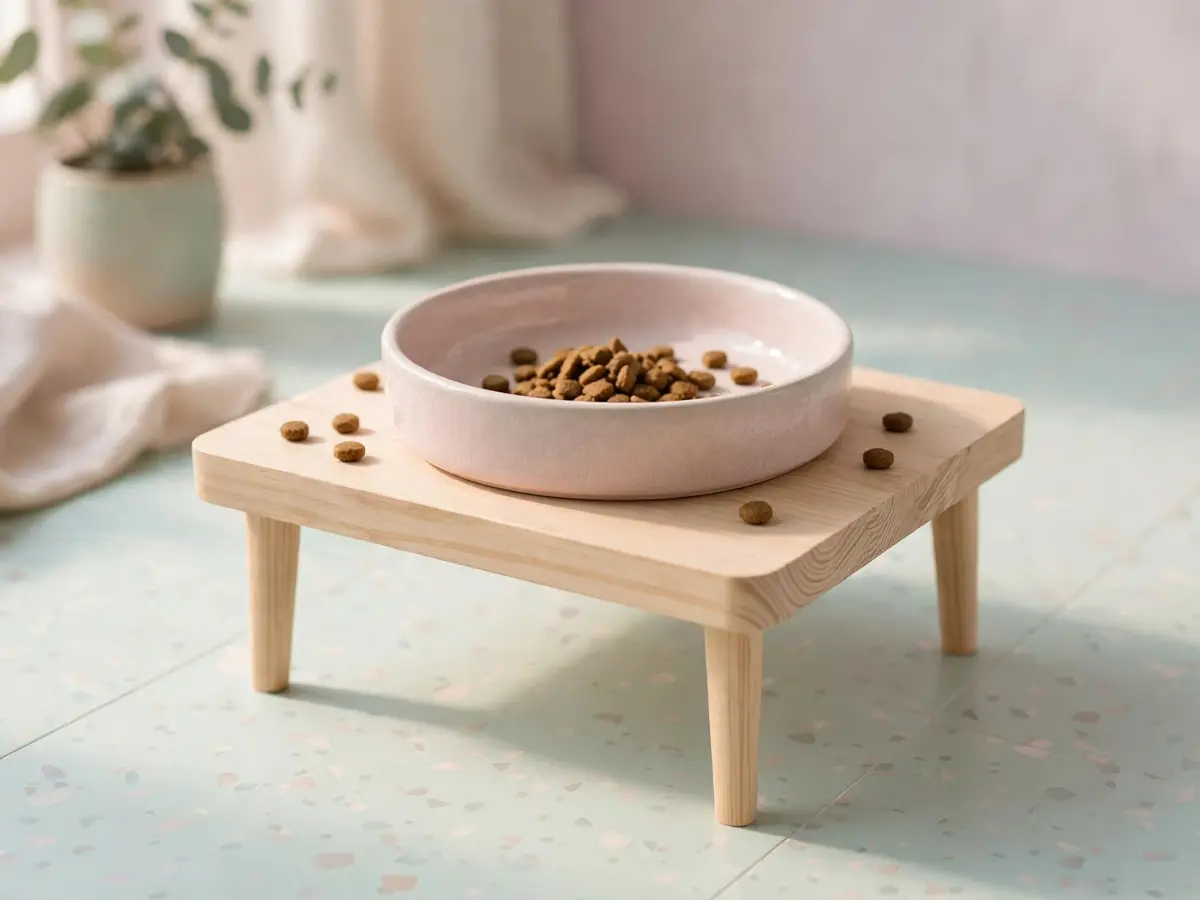
Half of an older cat's bowl problem is furniture. Before buying a different bag, move the station:
Four changes at the station
| Change | Why the cat notices | What to watch |
|---|---|---|
| Shallow, wide rim | No whisker pressure on every lap | Pieces left at the edge of the bowl |
| Up off the floor, or a low step | No crouch that hurts stiff joints | Hesitation before jumping, or a cat that walks past it |
| Away from the litter box and the dog station | Quiet, no ambush, no smell of the litter in the food | Eating fast then walking off, which reads as stress |
| A warm corner, out of the draught | Cold floors and cold air make a long meal unpleasant | A cat that eats better in the kitchen than by the window |
Water belongs near the station but not in it; the fountain and bowl page covers the placement.
Tracking the appetite between weigh-ins
Weigh-ins happen every couple of months; the bowl is watched daily. The record that matters in between is short and boring:
- Finished or leftover, marked once a day. A tick and a cross is enough.
- Any new food, and the day it went in. That is the column that explains a change later.
- Water visits and litter habits, in one word each.
- Energy and mood, in one word each, because an older cat that sleeps in a new position is telling you something.
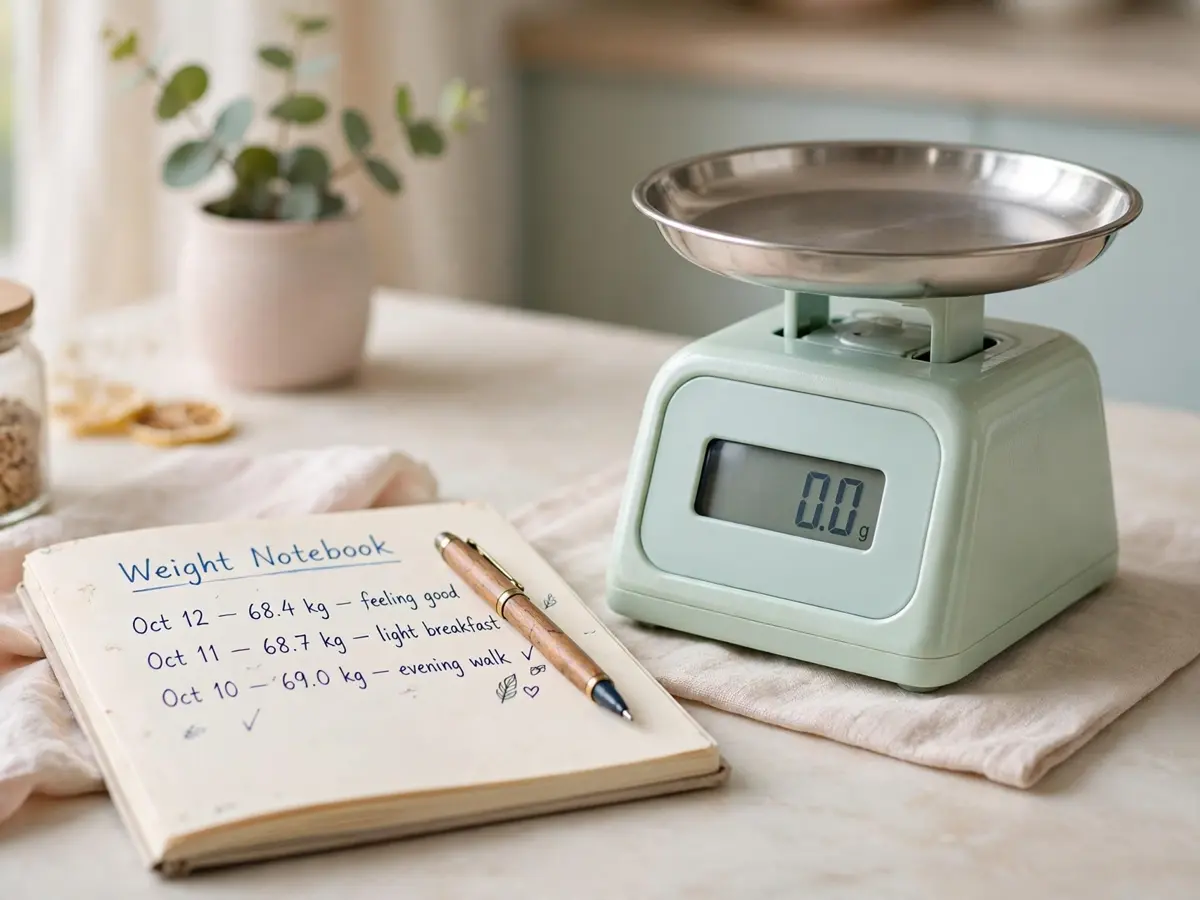
Ask whether the clinic takes a photo of the log by email. For an older cat, a visit that never happens is often the kinder outcome, and the photo is what the veterinarian reads instead.
When a change means a call
Some lines on the record are not a food question. Reach the veterinarian rather than the shop shelf when:
- The weight line moves in either direction between two scheduled weigh-ins.
- Eating drops for more than a day, or the cat eats and refuses to come back to the bowl.
- Drinking changes sharply, or the litter habit changes with it.
- Chewing becomes one-sided, or food keeps ending on the floor.
- Vomiting, or a new aversion to a food that was fine for a year.
None of these is a home remedy question, and none of them is answered by a supplement. Bring the log, the label photo and the note of what you changed, in that order.
Older cat food and weight questions
My older cat keeps leaving kibble in the bowl. Is that ageing?
It is often a comfort question rather than an appetite one, because hard kibble gets harder to deal with as cats get on. Change one thing, watch for a week, and bring what you saw to the veterinarian who reviews the diet.
Should I switch to wet food only?
Only if that is what your cat actually finishes. Plenty of older cats crunch kibble happily for years, and some want the softer thing and will not touch the dry bowl. The answer is in the bowl, not on the bag.
How often should I weigh my older cat?
The wording quoted on this page sets the interval, and it is worth treating as a floor rather than a ceiling. A cat already heavy, already thin, or already on a reviewed diet is usually weighed more often, and that cadence belongs to the veterinarian.
Do I have to buy food labelled for seniors?
A label is marketing, not a rule. What matters is whether the cat eats it, chews it comfortably and leaves the bowl clean. If a bag without the senior word on it does that, the label is not the point.
Is a kitchen scale accurate enough for a cat?
For spotting a trend, yes, and a trend is the whole job here. Same scale, same carrier, same moment of the day, and the line means something. Absolute accuracy is the clinic scale, and that is the reading they will take.
My cat put weight on after the change. Should I cut the amount?
Not on your own. Changing how much a heavier older cat eats is a diet decision, and it belongs to the veterinarian. Bring the dated line, a photo of the label and a note of what the cat actually finishes.
Save these on Pinterest
Pin the station changes for the next reorganise, then pair this with the water fountain and bowl guide for the drinking half of the same bowl, and with the ramp and low-perch page when the joints rather than the teeth are the problem. Everything in this corner of the site lives in the cat-friendly home collection, and the shelf for calm apartment cats continues with the British Shorthair wallpaper page.
Same scale, one change at a time, portions decided by the veterinarian. For informational purposes, consult your vet.
The senior page moves the bowl when the years do; the indoor cat bowl page covers the cat that never goes out.