 PawStyle Daily
Cat-Friendly Apartment Decor
Cat Water: Fountain vs Bowl
A cat that drinks enough is an easier cat to keep, and most of the difference sits in where the bowl is rather than what it is made of. This page does the arithmetic on water, settles the fountain argument with the honest answer, maps the stations onto a small apartment, and finishes with the signs that turn a water question into a phone call.
By PawStyle Daily · Updated 18 November 2026
Good to know: fresh water in two rooms beats one fancy bowl · fountain or still water is the cat's choice · for informational purposes, consult your vet.
The daily water budget
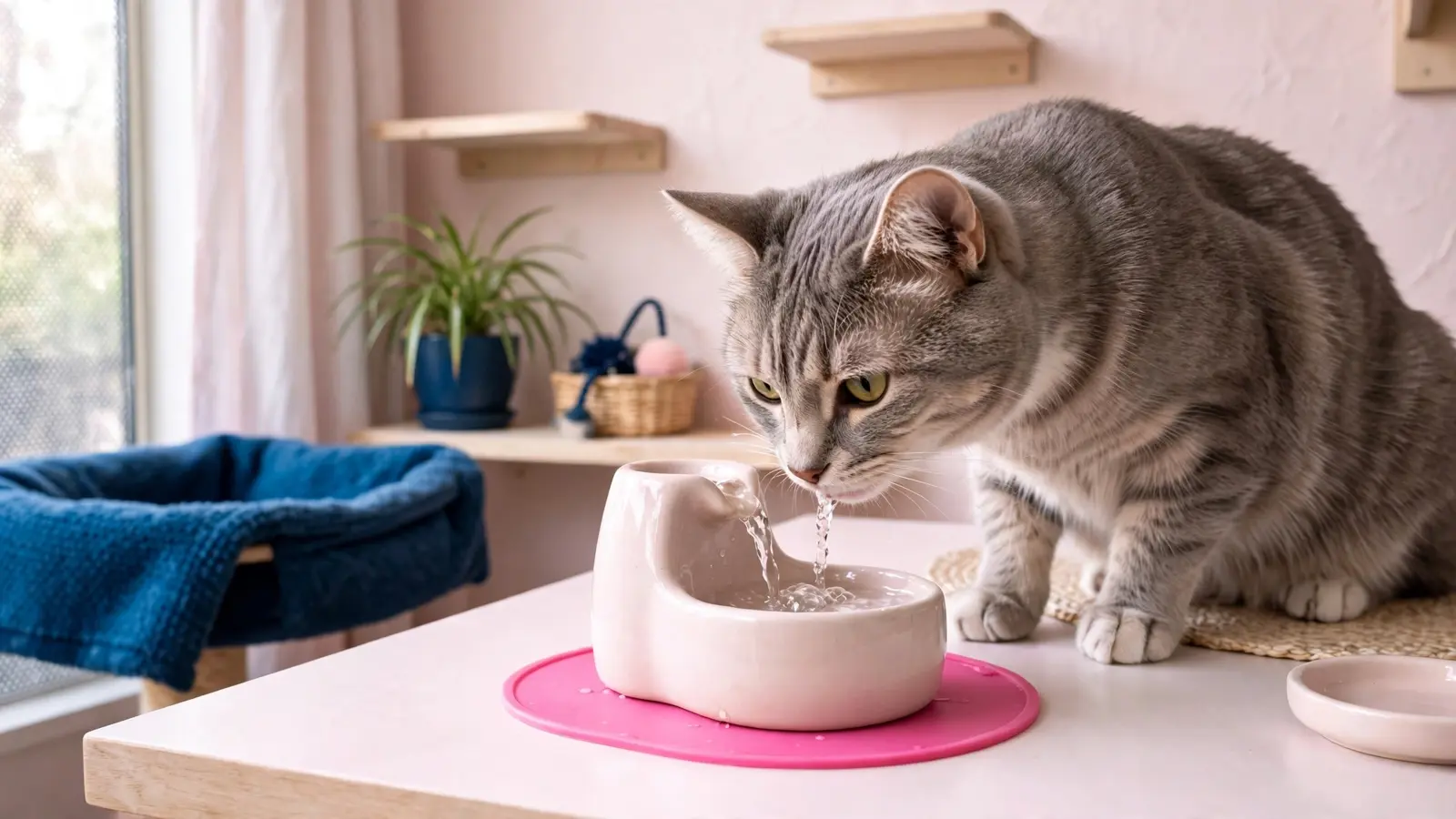
The starting figure is worth knowing, and worth holding loosely. A cat needs about 4 ounces of water per five pounds of lean body weight each day, so an average 10-pound cat drinks about one cup a day.
A cat on wet food, a cat in a warm apartment, a growing cat or a nursing cat sits somewhere else on that line, and no bowl size fixes a cat that simply prefers moving water. Three habits matter more than the number:
- Treat the figure as a floor to notice, not a target to hit by bedtime.
- Watch the cat rather than the cup: one that eats, plays and jumps to the perch as usual is telling you the day is fine.
- Keep two stations in two rooms, because a cat that drinks at both is a cat drinking well.
Why a wet-food cat visits the bowl less
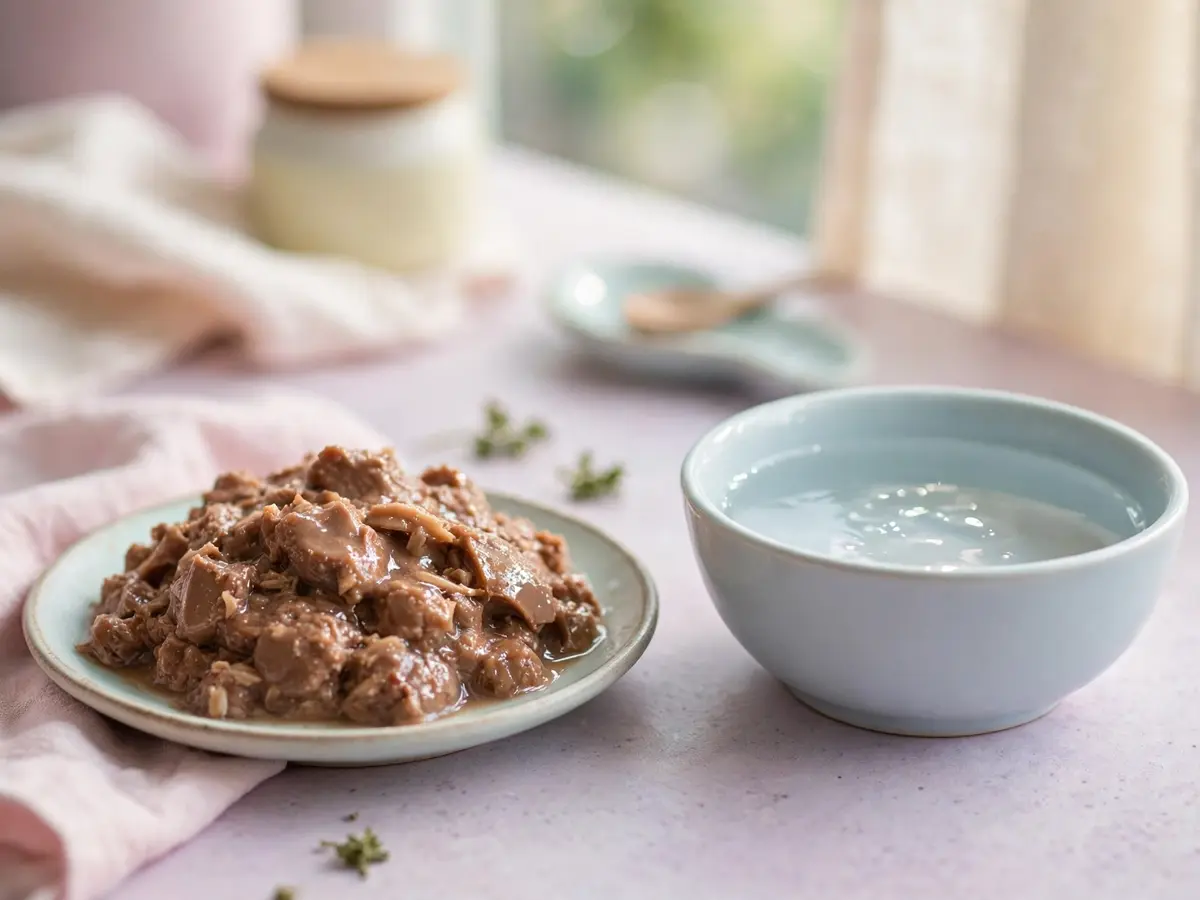
Canned food is mostly water, and that changes the arithmetic. Wet food can be up to 80% water, so a cat eating wet food may drink less from the bowl.
Less sipping is not less drinking. A cat on paté takes in most of the day from the saucer, and the bowl beside it turns into a backup rather than the main source. A cat on dry kibble has the opposite setup, where the bowl is the only tap in the flat. This is why one apartment needs two different water plans under one roof, and why the bowl that stays full next to the paté tin is not a mystery.
Fountain or bowl: which one wins?
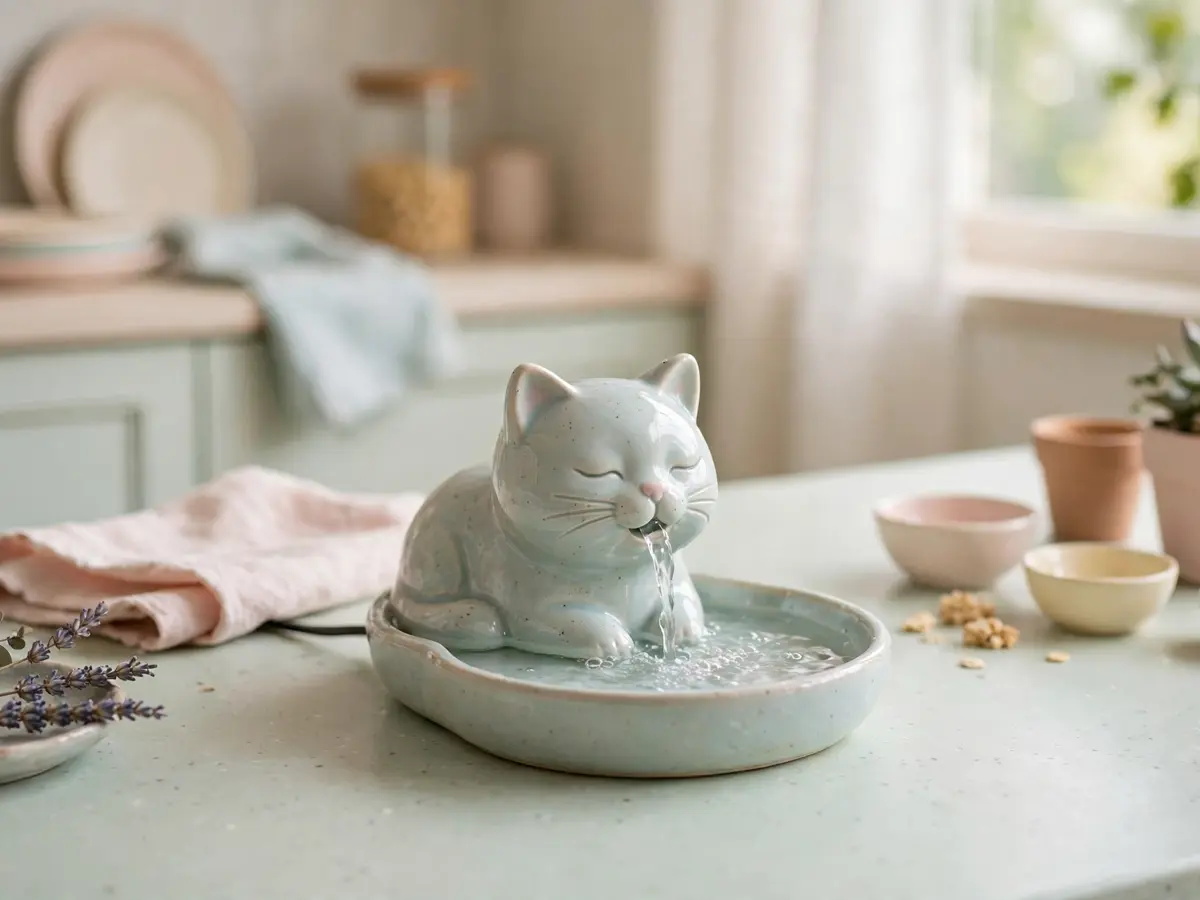
Ask a room full of cat people and you will get two answers. Some cats drink more from a fountain, but the preference varies from cat to cat. So the honest advice is to try one, watch it for a week, and let the cat vote.
A fountain earns its plug when:
- The cat ignores a still bowl and drinks from the tap instead.
- Two or three cats compete over one spot, and the loser walks away thirsty.
- The pump comes apart in the sink without a fight, so the weekly wash stays possible.
It loses the plug when:
- The cat watches the moving water and never touches it.
- The reservoir is one piece nobody can take apart.
- The hum keeps you awake, which means somebody turns the water off at night.
Where the water goes in a small apartment
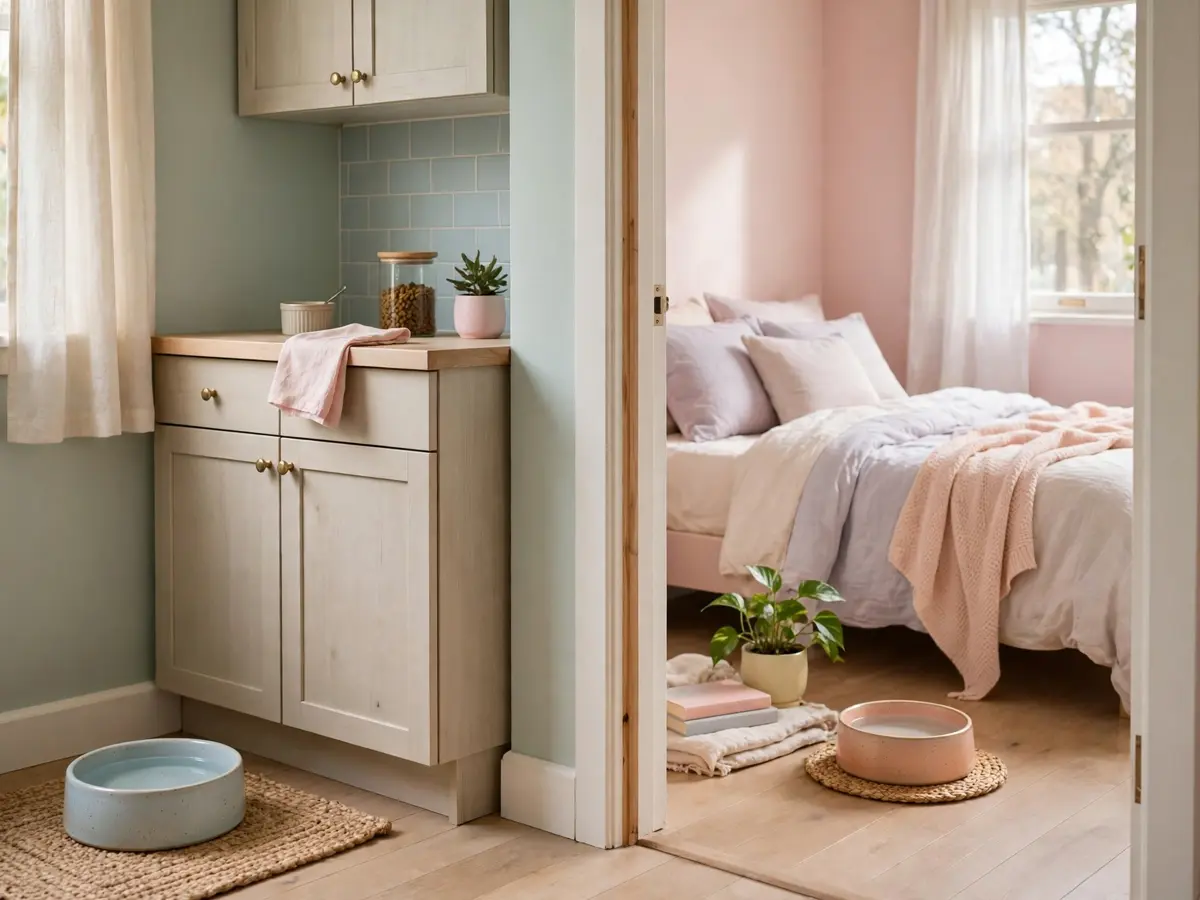
Fresh water in an easily reached place is the first move in almost every feline care guide, and in an apartment that is a floor-plan question rather than a shopping one.
- Away from the eating mat. Plenty of cats walk a few steps to drink, and the corner with the food bowl is the last place a water bowl belongs.
- Away from the litter box, and away from the scoop you shake over it.
- One station in the rooms the cat patrols, one in the room where it sleeps, so a closed door never means a dry night.
- Up off the floor in a shared home, or one station per cat plus one spare.
For the full map with two or three cats, the multi-cat resource stations guide covers the same rooms with the litter and resting spots added, and the standoffs that happen when one corner holds everything.
Water stations for a one-bedroom apartment
| Spot | Setup | Why it earns the floor space |
|---|---|---|
| Kitchen counter | One ceramic bowl, rinsed each morning | The room the cat patrols most hours of the day |
| Living room | Second bowl, well away from the eating mat | Choice, and no single point of failure |
| Bedroom or hallway | Third station if a door closes overnight | Nobody goes thirsty because of a shut door |
| Window ledge | Fountain here, if the cat likes moving water | Drinking and watching happen in the same spot |
| Under the desk | Only with a spill mat and tucked cables | Cable-chewers and paddling paws live here too |
Fresh water in an easily reached place is the first move, and one bowl in one room is the easiest thing in the apartment for a cat to walk past.
The bowl shape most cats prefer
Before the fountain debate, the bowl itself gets a check. A bowl a cat dislikes is a bowl a cat does not drink from, and the prettiest fountain on the shelf is useless if the cat will not go near it.
- Wide and shallow, so the whiskers stop brushing the rim on every lap.
- Ceramic or stainless steel. Plastic scratches, and the scratches hold the film a quick rinse misses.
- Heavy enough to survive a cat who paddles while it drinks.
- Clean enough to see the bottom of. A cat that has to hunt the water line with its nose will often walk away instead.
The clean-water routine
A fountain is not less work than a bowl; it is different work, and the part everybody skips is the pump.
- Bowl: emptied, rinsed and refilled every morning, then washed in hot water with unscented soap once or twice a week.
- Fountain: the reservoir, the impeller and the cover come apart on the same weekly day you wash the bowls.
- Filter: swapped when the stream weakens or the water smells stale, not on the box calendar alone.
- No standing water in a warm room for days at a time. A film on the side of the dish is the visible version of what the cat is lapping.
Signs that mean a call, not a bigger bowl
Read the list once now, while the cat is well, because the early ones look like an ordinary lazy afternoon. Signs of dehydration in a cat include lethargy, weakness, poor appetite and dry mucous membranes.
None of those is a home-remedy question, and a cat that hides feeling unwell tends to arrive late on this list. That is why the stations, the morning rinse and the twice-a-day glance matter more than any test in the bathroom. Two of the signs together, or any of them after a day of barely eating, is a call to the vet the same day.
Cat water questions
How much water should my cat drink in a day?
A cat needs about 4 ounces of water per five pounds of lean body weight each day, so an average 10-pound cat drinks about one cup a day. Hold that loosely: it is a starting figure, not a quota to hit by bedtime, and a cat on wet food reaches the day from a different bowl entirely.
Is a water fountain better than a bowl?
Some cats drink more from a fountain, but the preference varies from cat to cat. Neither one wins by default, so give a still bowl a fair week before the fountain goes on the order list.
My cat drinks from the tap instead. Should I worry?
No, and it is a clue rather than a habit to break. A cat that turns down a still bowl and chases running water is telling you which of the two options it prefers, and a fountain is the version of that tap you can control.
Do wet-food cats need a water bowl at all?
Wet food can be up to 80% water, so a cat eating wet food may drink less from the bowl. Less is not none, and a bowl still belongs in the home for the days the saucer is empty.
How often does a fountain really need cleaning?
The reservoir and the pump come apart on the same weekly day you wash the bowls, and the water tops up every morning. A fountain nobody opens grows a film the stream keeps pushing back into the dish.
When is a cat drinking less an emergency?
Signs of dehydration in a cat include lethargy, weakness, poor appetite and dry mucous membranes. Any two of those together, or a cat that will not drink at all, is a same-day call to the vet rather than a bigger bowl.
Save these on Pinterest
Pin the station map for the next reorganise, then pair it with the multi-cat stations guide if more than one cat drinks in your flat, and with the senior cat food and weight checks page once the cat in front of the bowl turns twelve. Everything in this corner of the site lives in the cat-friendly home collection.
Fresh water in two rooms, washed weekly, chosen by the cat. For informational purposes, consult your vet.