 PawStyle Daily
Cat-Friendly Home
Modular Cat Tree: Configurations That Change With the Room
A modular cat tree is bought for the day it changes shape. The single-piece tower is decided in a factory, arrives tall, and stands in the same spot until it is carried out. A modular tree arrives as a box of platforms, posts, and connectors, and the household builds it into the corner that is empty this month, then rebuilds it along the wall after the move. The whole value sits in one part: the joint. Get the connector tight and square and the same parts read as furniture in any layout. Get it wrong and every configuration wobbles the same way. This page owns the joint and the layout, not the purchase decision.
By PawStyle Daily · Updated 20 November 2026
Tighten the joint before the platform goes on | corner, wall run, or window line | add the module the cat already reaches for | re-tighten after the first week | For informational purposes only.
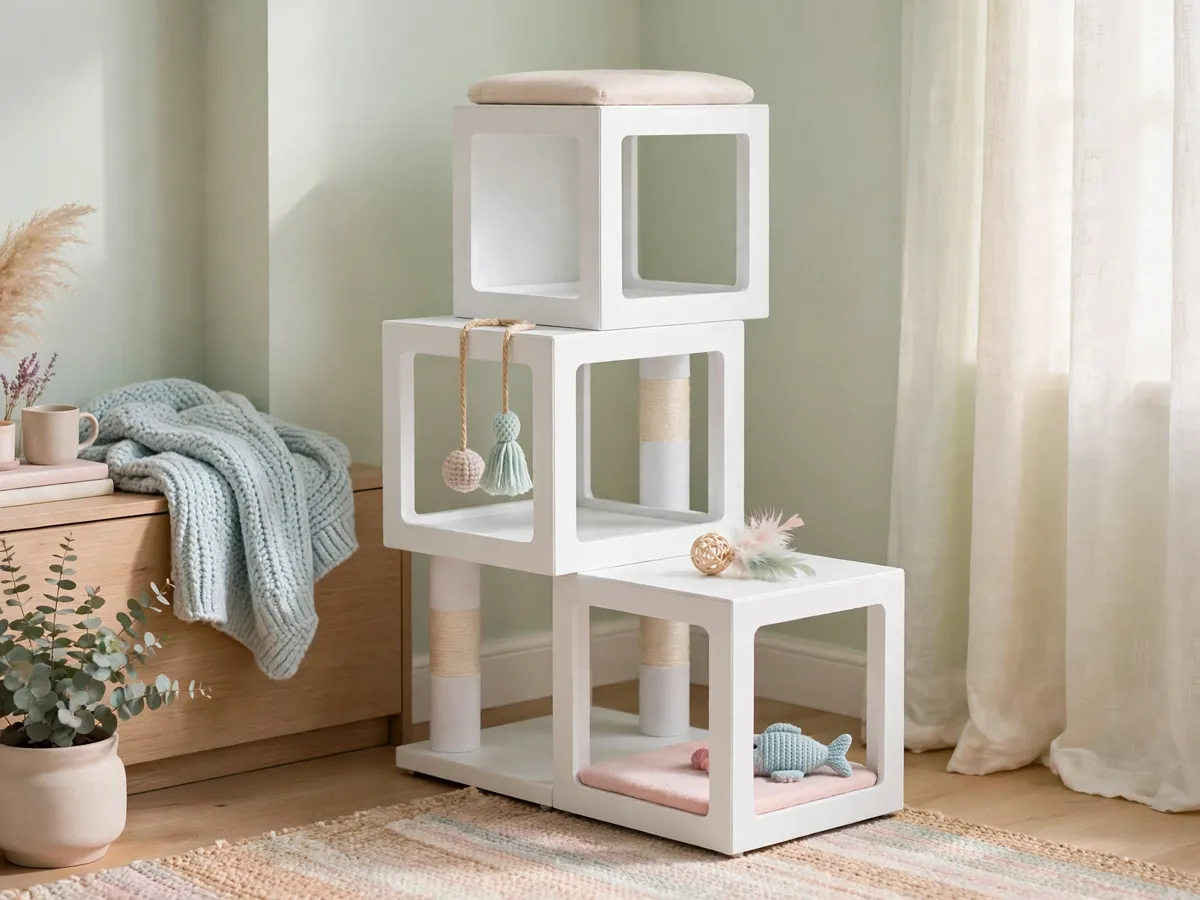
The tree that is allowed to change shape
Most cat trees are bought once and stood once. The layout is fixed by the moulding, the height is set by the tallest column, and the household arranges the room around the object. A modular tree inverts that: the parts are neutral, and the household decides the shape each time it assembles them. A low run of platforms along a wall becomes a corner climb when two posts are swapped for four. The box of parts is the same box.
The reason this matters in a small apartment is that the room changes more often than the furniture does. A sofa moves, a desk arrives, a kitten grows into a cat that clears a higher perch, and a fixed tower that fitted the old plan sits in the new one as an obstacle. A modular build follows the room. It is the difference between an object with one job and a set of parts with as many jobs as the layout has.
Choosing the parts is a separate task, and the cat tree buying guide owns it, floor space and all. Post replacement and sisal rewrapping belong to the repair page. What is left here is the part nobody sells you: what to do with the box once it is open. The joint, the layout, the growth, and the tightening.
The bolted connector: the one part that decides everything
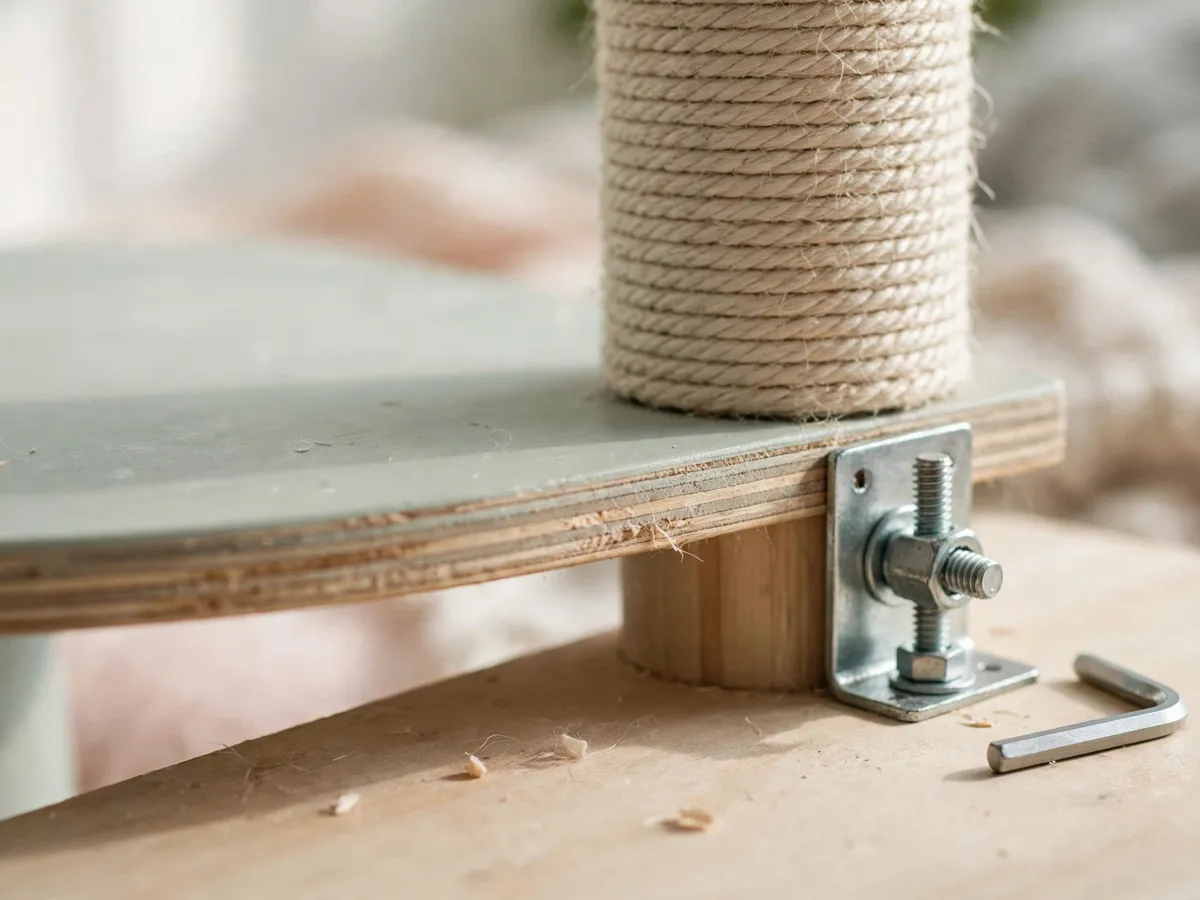
A modular tree stands or fails at the joint where a post meets a platform. The good version is a bolted connector: a threaded rod or a hex bolt pulled through the platform into the post, drawn tight with an allen key. The cheaper version is a cam lock or a plain dowel, and it lets the platform rock against the post after a month of use. Buy modular for the reconfiguration and the joint is the only thing that makes reconfiguration possible twice.
The assembly order matters more than the torque. Build from the base up and tighten each joint as it closes, rather than standing every post first and tightening at the end. A tree assembled loose and tightened late is a tree that has already leaned its platforms out of square, and the top platform sits at an angle no amount of final tightening will correct. Tighten as you go and the whole column stays true to the base below it.
Square is checked by hand, not by eye. Set a platform on two posts and press down on opposite corners in turn. If the corners alternate lifting off the posts, one joint is shorter than its neighbor and the platform is bridging them. Back the bolt out, seat the post fully, and re-tighten. A platform that rocks on the bench will rock harder under a cat, and the wobble travels up the entire column from there.
Corner, wall run, or window line
Three layouts cover most rooms. The corner build stacks the climb into the angle where two walls meet, and it is the layout that costs the room the least floor. A corner holds the tree on two sides, so the build can be tall without the base needing to be broad, and the sofa and the desk keep the middle of the room. The trade is access: a corner climb is reached from one direction only, which is fine for one cat and cramped for two.
The wall run lays the platforms along a single wall at staggered heights, and it reads as shelving from the doorway. This is the small room layout, because the climb leaves the floor line almost entirely clear and the cat travels the wall instead of the air. It also puts the resting perch at the top of a run rather than on a tower, which keeps the highest point below the ceiling line in a low apartment.
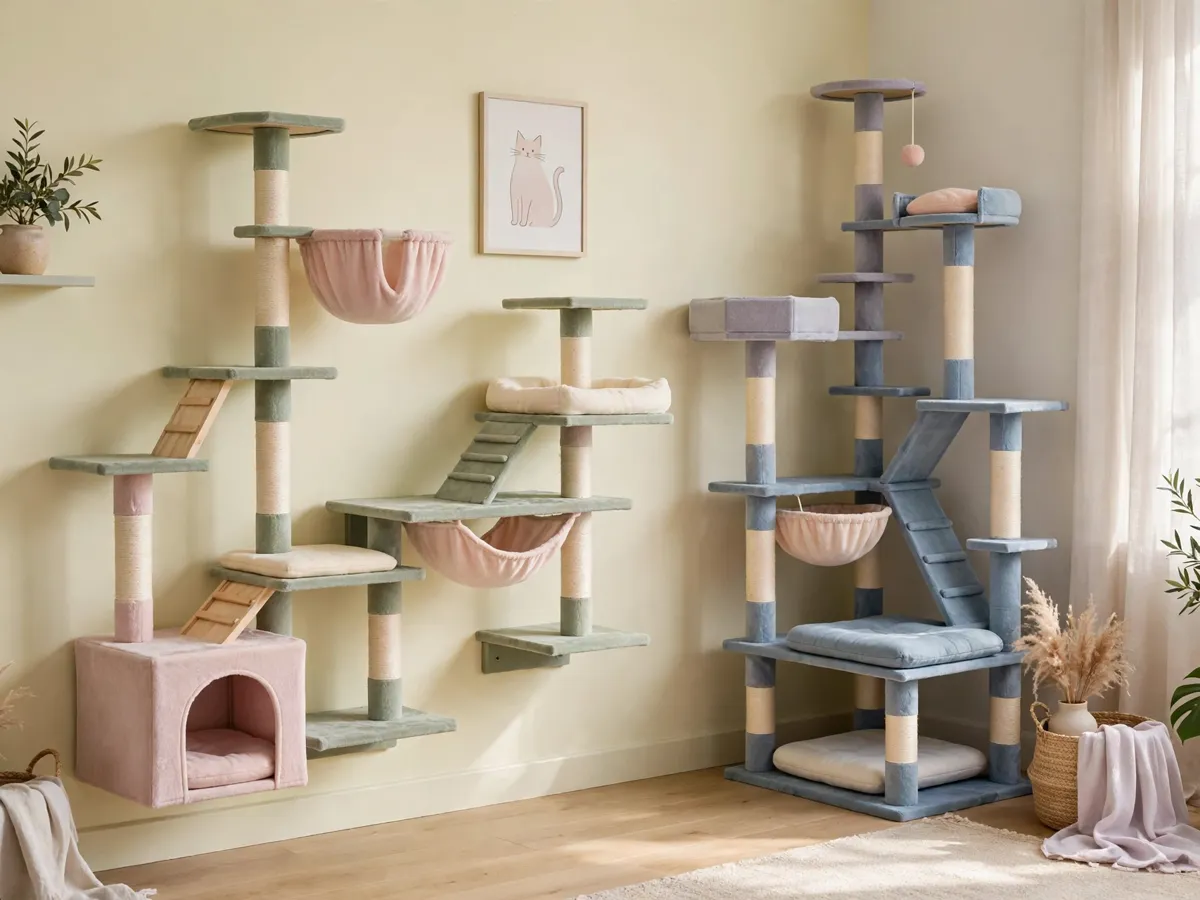
The window line is the wall run aimed at the light. One platform lands under the sill, one at the sill, and the climb between them becomes the route the cat takes to watch the street. It is the layout people regret not building first, because it turns the tree into the room's television rather than a piece of equipment in the corner. Keep the run off the radiator and off the swing of the curtain, and leave the lowest perch reachable from the floor.
Adding a module when the household changes
The module to add is the one the cat is already using, not the one that photographs well. Watch the tree and note where the cat lands and what it stretches toward. A cat that keeps jumping to the arm of the chair beside the top platform is telling you the gap is too wide, and the fix is a single intermediate platform, not a taller tower. Add the part that closes the gap the cat already made.
A second cat changes the arithmetic differently, and the answer is more stations rather than more height. Two cats on one climb share the top perch and block each other on the route, so the layout that serves them is a wider one with two separate resting points and no single choke point. The multi-cat resource stations page covers how many stations a shared room wants and where they go; the modular tree is simply the cheapest way to add the climbing half of that plan.
Add modules in the same order the tree was first built: base, then post, then platform, tightening each joint as it closes. A new platform bolted onto an old column that has never been re-tightened loads the oldest joints first, and those are the ones already relaxed by months of use. Take the opportunity to go around the whole tree while the key is out.
Re-tightening, and keeping a reconfigured tree square
A modular tree needs a tightening pass, and the first one is the most important. After the opening build, run the allen key over every joint once more once the cat has been using the tree for a stretch. The parts settle while they are jumped on, and a joint that was snug on the table is slack after landings. Later passes can follow the same rhythm whenever the tree feels soft under a hand.
Every reconfiguration resets the clock. Take the tree apart and the joints you did not remove are the ones that carry the wear, so a rebuilt tree gets a full tightening pass on the way up and another once the cat has lived with the new layout a while. This is the maintenance the single-piece tower never asks for, and it is the price of a tree that can change shape.
Two habits keep a reconfigured tree quiet. Store the parts by joint type rather than by platform, so a rebuild uses connectors that all seat the same way, and photograph the layout before taking it apart. The photo is the only record of which post went where, and a tree rebuilt from memory tends to end up with one column shorter than its neighbor. A wobble you cannot locate is usually a joint you cannot reach, and the fix is to lay the tree down and work along the column rather than pushing on the top.
Modular cat tree questions
What makes a modular tree different from a tall one?
The joint. A tower bought as one piece is fixed at the factory, while a modular tree is platforms and posts you can re-space, so the same box of parts becomes a low run or a corner climb.
Which layout suits a small room?
The wall run. It keeps the climb off the floor line, reads as furniture from the doorway, and leaves the middle of the room clear. A corner build wastes less of the room than a free-standing tower.
Can I add a module later?
Yes, and it is the reason to buy modular. Add the platform a cat is already reaching for, not the one that looks good in the catalogue, and re-tighten every joint after the first week of use.
Save the cat tree layouts on Pinterest
Pin the three layouts before the next rebuild, or send the first-week tightening pass to a friend whose new tower already feels soft. The Cat-Friendly Home collection holds the buying guide, the shelf routes, and the small-apartment corners that a wall run fits best.
For informational purposes only.
If the tower may need to grow with the cat, the modular layouts for heavy cats page shows how the sections stack.