 PawStyle Daily
Cat-Friendly Apartment Decor
Indoor Cat Winter Enrichment That Sticks
Winter is the season the indoor cat goes quiet. The windows stay shut, the balcony door closes, and the walk that used to end at the window perch now ends at the radiator. The enrichment that sticks through January is not a pile of new toys, it is the same three pieces the cat uses all year, placed where the winter light lands and spaced so the cat has a reason to cross the room. This page builds that arrangement from the perch up, then keeps it running through the weeks the cat would otherwise spend asleep on the nearest warm surface.
By PawStyle Daily · Updated 19 November 2026
Window perch · second resource set · the sisal pad earns its spot · for informational purposes, consult your vet.
Why winter enrichment is a placement problem
An indoor cat in winter is a cat with a smaller territory. The windows that carried bird traffic in summer carry frost in January, the balcony is closed, and the cat that spent the autumn walking the apartment now spends it on one warm spot. The enrichment that sticks is not the toy that arrives in a box, it is the perch that moves to where the winter sun lands, the second water bowl that sits across the room, and the sisal pad that earns its spot beneath the perch the cat already uses.
The three pieces are the same ones the cozy cat winter corner page builds for warmth, and this page builds them again for activity. The corner page is the one for the nap, this is the one for the route between naps. Both sit inside the same apartment, and both work because the cat has a reason to move from one to the other across the day.
The perch by the window
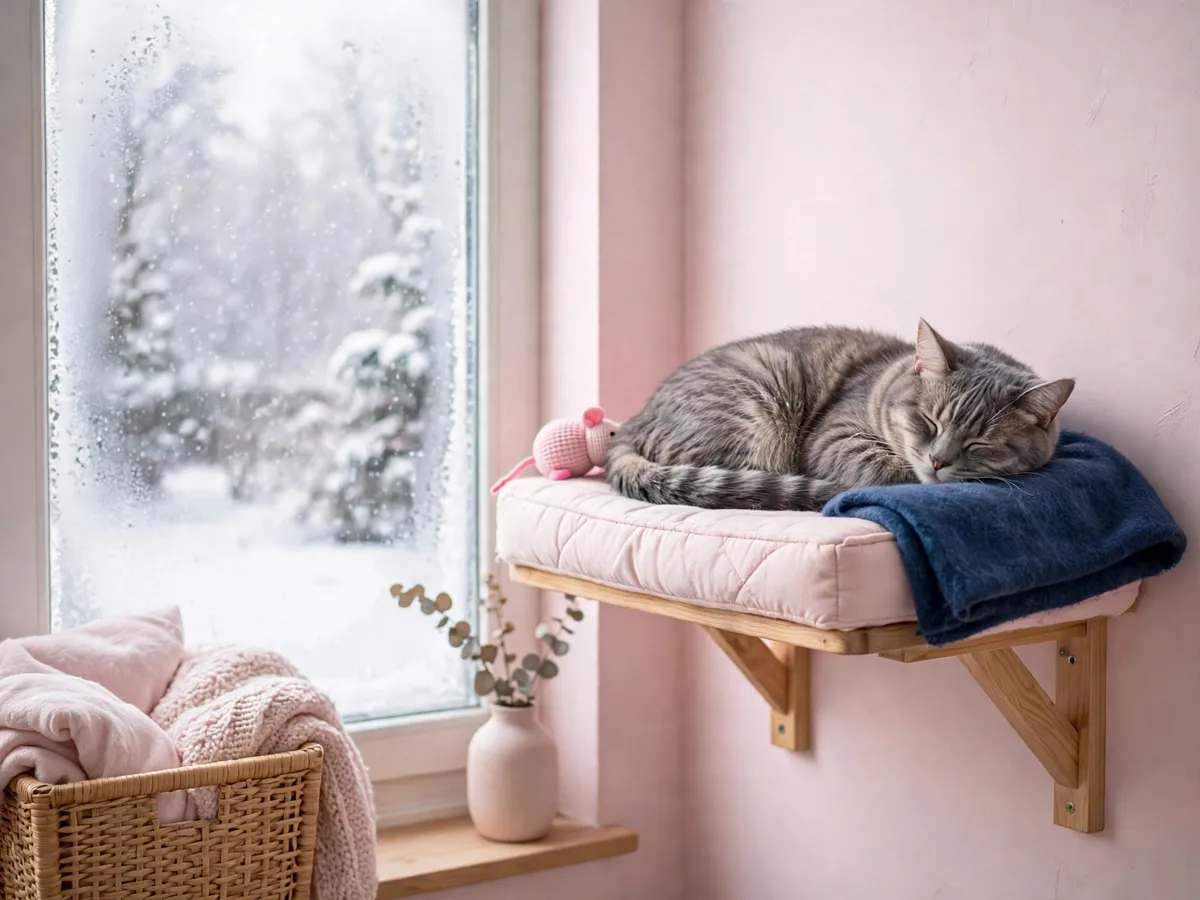
The window perch is the anchor of winter enrichment, and the window it sits beside is the one the winter sun reaches. The summer sun crosses the apartment in a wide arc, the winter sun crosses it in a low one, and the window that catches the low arc is the one the perch belongs to from November to March. A weekend of watching the light tells you which window that is, and the perch moves to it before the first cold week.
An ideal perch is elevated, with a padded cover, and an elevated area gives a cat vertical space to monitor its environment. The winter perch is the one that earns the padded cover, because the sill beneath it is cold and the cat sits on it for longer stretches. A perch that sits at sill height, with a washable fleece cover, is the version that survives January without the cat abandoning it for the radiator. The cover washes weekly, the perch stays put, and the cat returns to it because the view through the glass is still the best one in the room.
The window and the view
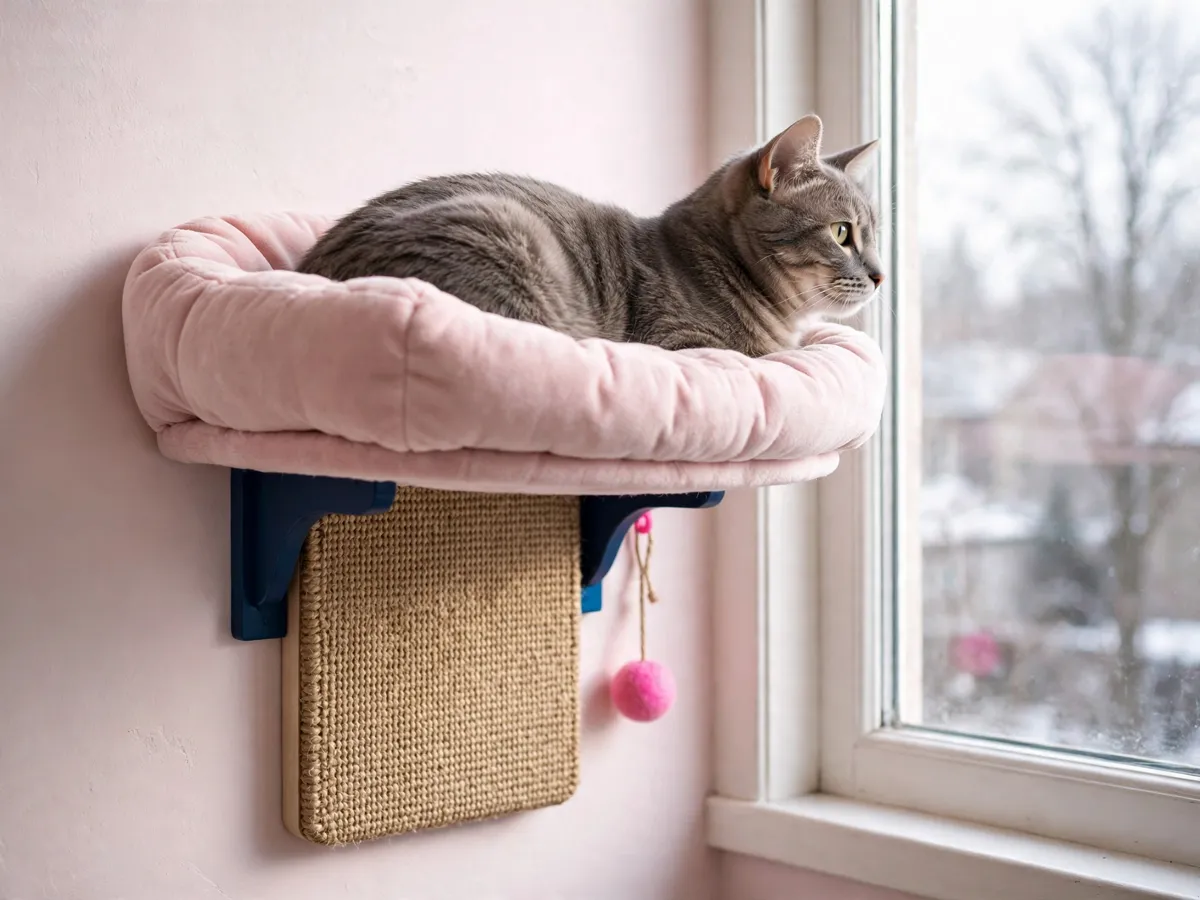
The window is the enrichment, not just the light. A cat that can see outdoors has something to watch, and winter has more to watch than summer if the feeder is in the right place. A bird feeder hung outside the winter-sun window turns the perch into the seat at a show, and the show runs from dawn to dusk on the days the birds come. The feeder is the one piece of winter enrichment that costs the least and runs the longest, because the cat does the watching and the feeder does the work.
Indoor resting areas, such as a perch or a secluded surface, should include a spot where the cat can see outdoors. The winter version of this is the same rule, run against a window that carries frost instead of open air. A perch that faces the glass, a sill shelf that gives the cat a place to sit at window height, and a feeder in the line of sight are the three that turn the winter window into the summer one. The cat that watches is a cat that is awake, and a cat that is awake in winter is a cat that moves.
The second set of resources
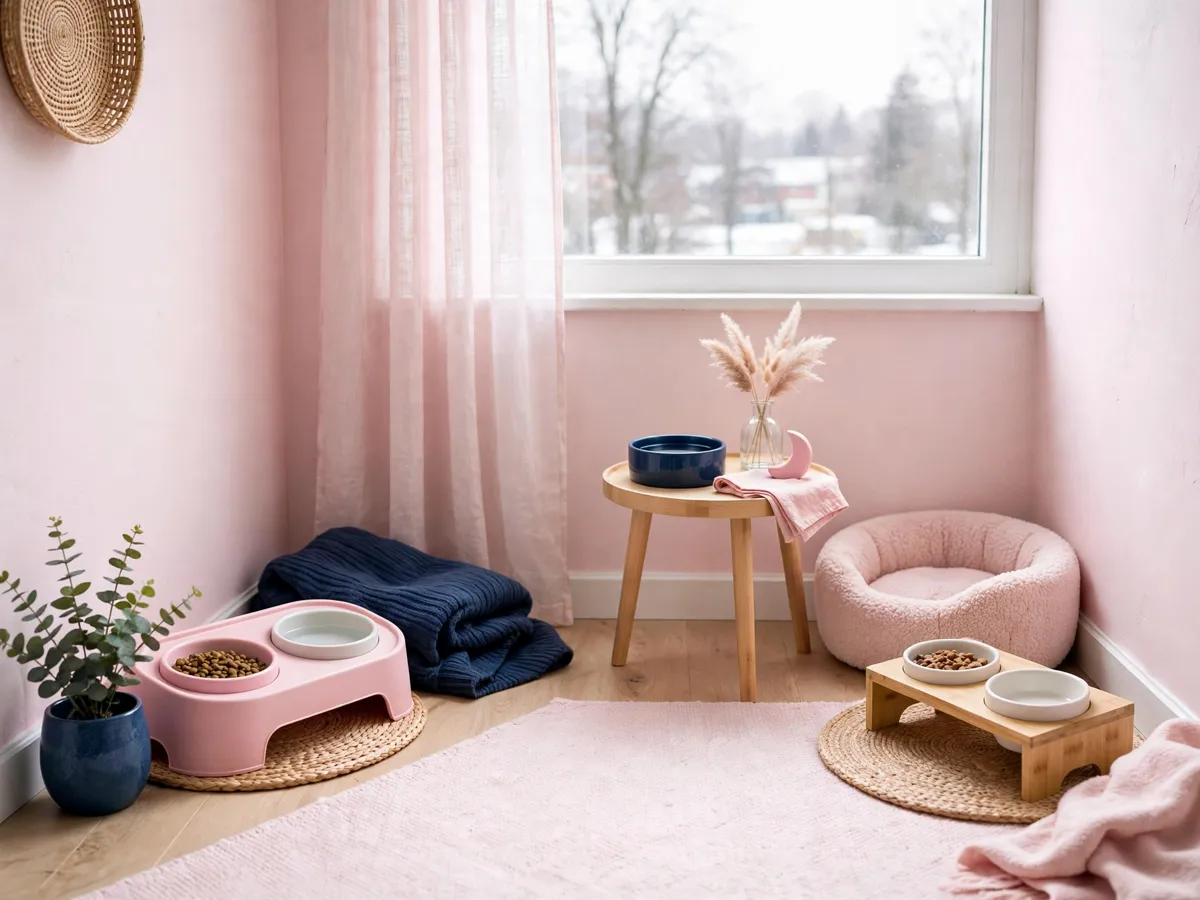
The cat that has one feeding station, one water bowl, and one litter box in the same corner is a cat that has no reason to cross the room. Winter enrichment is the season to split the set, because the cat that walks from the window perch to a water bowl across the apartment is a cat that moves twice in an hour instead of twice a day. The second set is not a second cat's worth of resources, it is the same resources spaced further apart so the route between them is the activity.
Scratching areas can be a sisal-covered surface on an elevated perch or a scratching pad, and key resources should be available in multiple locations. The winter version of this is a sisal pad mounted beneath the window perch, a second water bowl on the opposite side of the room, and the food bowl moved to a corner the cat has to cross the apartment to reach. The sisal pad earns its spot because the cat passes it on the way down from the perch, and the cat that scratches on the way down is a cat that stretches on the way down. The multi-cat resource stations page carries the same spacing rule for a home with more than one cat, and the scratching post placement page carries the placement detail for the sisal pad itself.
The routine that survives January
The enrichment that sticks is the enrichment that runs on a routine, and the routine that survives January is the one that does not depend on the cat's mood. The morning play session that runs for the length of one coffee, the evening wand session that runs until the cat sits down, and the feeder refill that happens on the same day each week are the three that carry the cat through the winter. Each one is short, each one is at the same time, and each one is the one the cat learns to expect.
The play session is the one that drops off first in winter, because the human is cold and the cat looks asleep. The cat that looks asleep on the radiator is the cat that has not been offered anything to wake up for, and the wand that comes out at the same time each evening is the one that wakes the cat up. Five minutes is the length that earns a stretch, a chase, and a sit-down, and five minutes is the length that fits between the dishwasher and the evening. The routine is not a schedule the cat reads, it is a pattern the cat learns, and the pattern that runs in January is the one that runs the rest of the year.
Questions about winter cat enrichment
How do I keep my indoor cat active in winter?
The window perch is the anchor. Add a sisal pad beneath it, move one feeding station to a new corner, and the room has a new route without buying anything.
Should I get a second perch in winter?
A second elevated spot gives the cat a choice and a change of view. The one by the window is for daylight, the one in the quiet corner is for the long nap.
Does my cat need more food in winter?
The body condition check tells you, not the season. If the ribs are easy to feel and the waistline curves, the amount stays. If the ribs disappear, cut back.
Save these on Pinterest
Pin the winter arrangement before the first cold week. The Cat-Friendly Home collection holds the winter corner page, the resource stations page, and the scratching post page that this enrichment page runs on top of.
For informational purposes, consult your vet.
Winter enrichment arranges the same apartment for one season; an indoor cat feeding explainer arranges the bowl for all of them.