 PawStyle Daily
Cat-Friendly Apartment Decor
Cat Summer Hydration and Dehydration Signs to Watch
Summer turns a water bowl into a daily question, and the answer sits in the math more than the shopping. A cat that drinks enough is a cat that eats, plays and finds the sunny spot as usual, and the bowl on the counter is only one part of how that happens. This page does the water arithmetic, settles what wet food changes, names the early signs worth knowing, and ends with the honest answer on the second bowl.
By PawStyle Daily · Updated 19 November 2026
Good to know: the water math stays the same year-round · wet food carries water · a second bowl is the cat's call · for informational purposes, consult your vet.
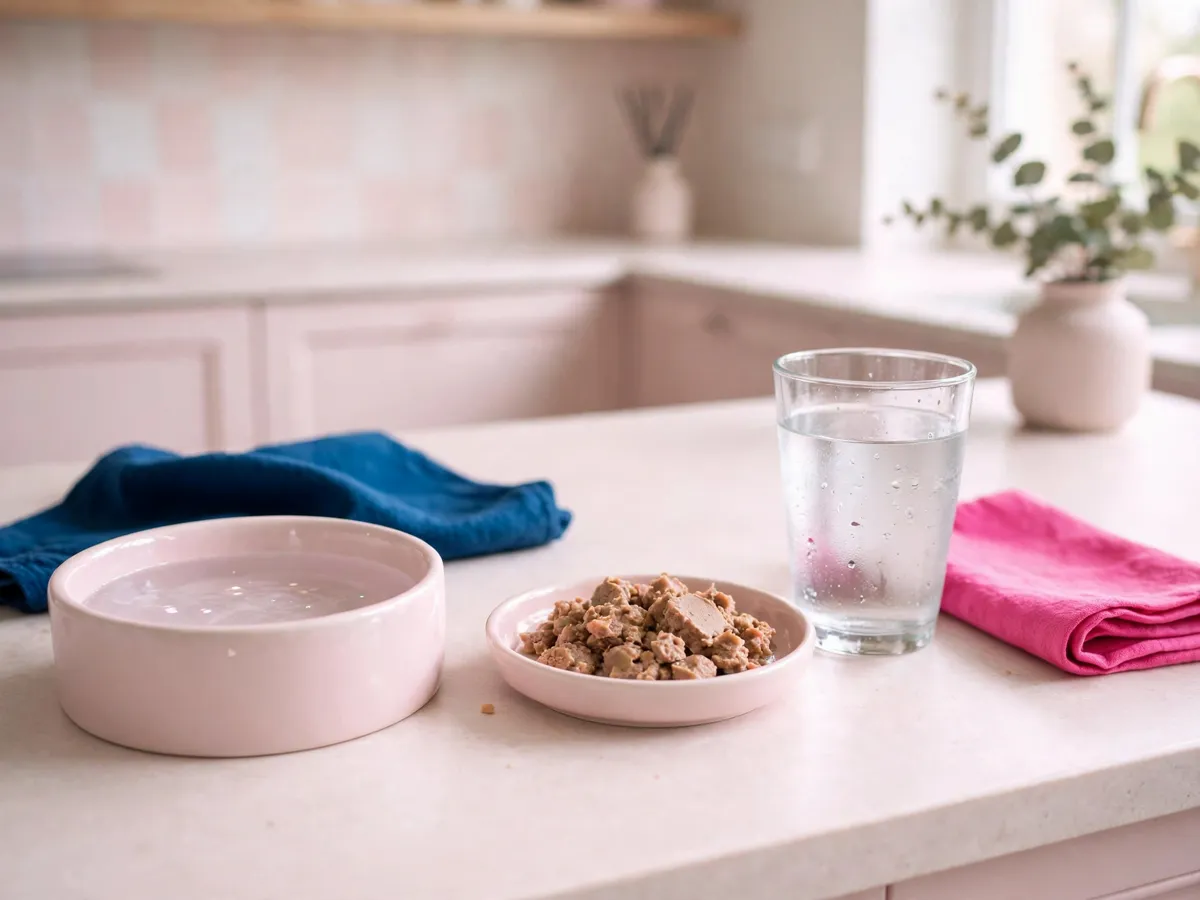
Why summer turns the bowl into a daily question
The bowl on the counter is easy to forget in winter, when the apartment stays cool and the cat barely moves. Summer is the opposite. A warm room dries the air, the cat stretches out on the tile floor instead of the bed, and the water level in the bowl drops a little faster than it did in March. None of that is an emergency on its own. It is the reason the bowl earns a daily glance from June through September.
The cat is the other half of the equation, and the cat does not read the calendar. A cat that spends the afternoon in a sunbeam drinks more than a cat that sleeps under the desk, and a cat that eats wet food drinks less from the bowl than a cat on dry kibble. The summer question is not "is the bowl full" but "is the cat drinking the way she drinks, and is the water clean when she gets there."
The honest answer is that most of the year the bowl is fine on its own. Summer is the season that tests it, and the test is a short one: keep the water fresh, keep it where the cat patrols, and watch the cat rather than the cup. The rest of this page is the detail behind that short answer.
The water math behind the bowl
The starting figure is worth knowing, and worth holding loosely. A cat needs about 4 ounces of water per five pounds of lean body weight each day, so an average 10-pound cat drinks about one cup a day.
That sentence is a floor to notice, not a target to hit by bedtime. A cat in a warm apartment, a growing cat, or a nursing cat sits somewhere else on that line, and no bowl size fixes a cat that simply prefers moving water. Three habits matter more than the number on the page: treat the figure as a thing to notice, watch the cat rather than the cup, and keep the water fresh in the rooms the cat patrols.
The reason the number is loose is that a cat that eats well, plays and jumps to the perch as usual is telling you the day is fine, and a cat that does none of those things is telling you something else no matter what the cup says. Summer is when the figure matters most, because the warm air pulls water out of a cat faster than a cool room does, and the bowl is the only tap in the flat for a cat on dry food.
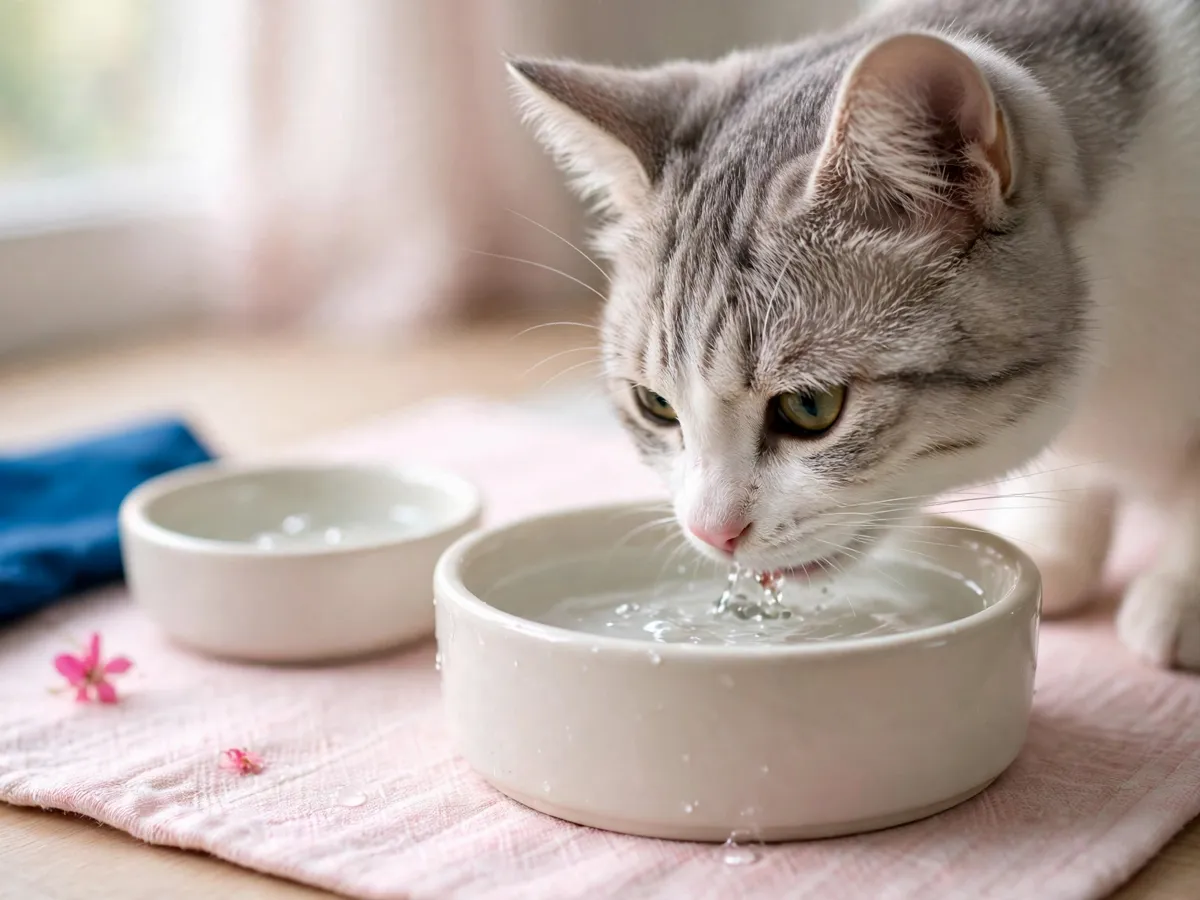
For the full map of where the water goes in a small flat, the cat water fountain and bowl guide does the placement work room by room. This page is the summer angle on the same setup: the math stays the same, the season is what changes.
What wet food changes about the bowl
Canned food is mostly water, and that changes the arithmetic. Wet food can be up to 80% water, so a cat eating wet food may drink less from the bowl.
Less sipping is not less drinking. A cat on pate takes in most of the day from the saucer, and the bowl beside it turns into a backup rather than the main source. A cat on dry kibble has the opposite setup, where the bowl is the only tap in the flat. This is why one apartment can hold two cats on two different water plans under one roof, and why the bowl that stays full next to the pate tin is not a mystery.
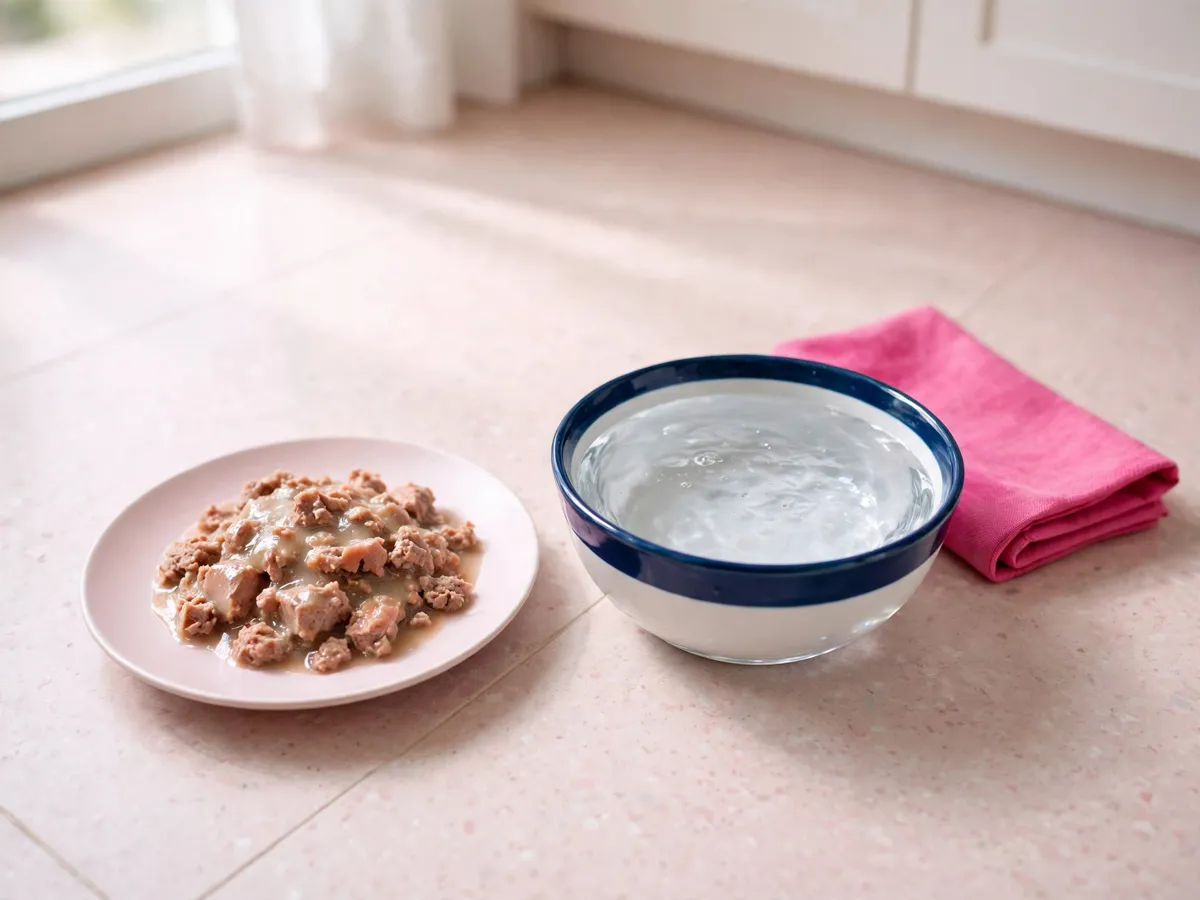
The summer angle on wet food is that the tin itself dries out in a warm room, so a half-finished saucer left from breakfast is not the same meal at lunch. Lift what the cat leaves, rinse the saucer, and put down a fresh spoonful at the next meal rather than letting the old one sit. The water the cat gets from the saucer is only the water that is still in the saucer, and a dried-out pate is a pate that lost its water to the air.
For a cat on dry food, summer is the season the bowl earns its full attention. The kibble carries almost no water, so every drop the cat needs comes from the bowl, and the bowl on a warm afternoon is the one piece of the flat the cat cannot do without. Keep it clean, keep it full, and keep it in the room the cat actually uses.
The early dehydration signs worth knowing
Read the list once now, while the cat is well, because the early ones look like an ordinary lazy summer afternoon. Signs of dehydration in a cat include lethargy, weakness, poor appetite and dry mucous membranes.
None of those is a home-remedy question, and a cat that hides feeling unwell tends to arrive late on this list. Lethargy is the cat that does not lift her head when the treat bag opens. Weakness is the cat that does not make the jump she made yesterday. Poor appetite is the saucer left full from the morning. Dry gums are the one a person can check if the cat lets them, and the rest are visible from across the room.
Two of the signs together, or any of them after a day of barely eating, is a call to the vet the same day. Summer heat is the season that moves a quiet afternoon into a serious one faster than a cool week does, and the early signs are the ones the bowl cannot fix. A fresh bowl is a good bowl, and a fresh bowl is not a veterinary visit.
For the wider winter setup that pairs with this summer page, the cozy cat corner page covers the warm side of the same flat, and the litter box odor control page covers the other end of the water question, because what goes in comes out, and a dry litter box in summer is its own signal.
When a second bowl is not the answer
The instinct in summer is to add a second bowl, and the instinct is half right. A second bowl in a different room is fine if the cat uses it, and a second bowl the cat ignores is floor space the cat walks past. The cat decides whether a second spot earns its place, and a cat that has always drunk from the kitchen bowl is a cat that keeps drinking from the kitchen bowl.
The better summer move is to make the one bowl the cat already uses easier to find and easier to trust. Fresh water every morning, a rinse at night, and the bowl in the room the cat patrols rather than the room the cat avoids. A bowl beside the air conditioner, in the draught, or next to the litter box is a bowl a cat walks past on the way to somewhere else, and a second bowl in the same wrong spot is the same wrong answer twice.
The second bowl earns its place in one situation: a door that closes overnight. A cat locked out of the kitchen at bedtime is a cat with no water until morning, and a second bowl in the bedroom is the answer to that one problem. Outside of the closed-door question, the single clean bowl in the right room beats two bowls in two wrong ones, and the cat votes with her feet.
The honest summary is that summer hydration is a habit, not a purchase. The math stays the same, the wet food carries what it carries, the signs are the signs, and the second bowl is the cat's call. Keep the water fresh, keep it where the cat is, and watch the cat rather than the cup. The rest of the year the bowl is fine on its own, and summer is the season that earns the daily glance.
Questions we get about cat summer hydration
How much water does a cat need in summer?
The daily amount stays the same year-round, tied to lean body weight. A cat on wet food may drink less from the bowl because the meal carries water, while a cat on dry food does most of her drinking from the bowl.
Should I add a second water bowl in summer?
A second bowl in a different room is fine if the cat uses it, but some cats ignore the extra bowl entirely. The cat decides whether a second spot earns its place.
What are the dehydration signs to watch for?
Watch for a cat that is unusually quiet, weak or off her food, and check the gums if she lets you. Any of those signs in summer heat means a call to the vet, not a home fix.
Save these on Pinterest
Pin the water math and the dehydration signs for the next warm week, and keep the cat-friendly home collection for the fountain, the winter corner and the litter setup that pair with this page.
For informational purposes, consult your vet.