 PawStyle Daily
Dog-Friendly Apartment Decor
Dog-Friendly Apartment Decor Ideas That Feel Like Home
A dog-friendly apartment can still feel like your apartment. Start with the furniture you already own, give daily dog gear one home, and style a single restful corner with colors that belong to the room. These ideas are made for renters, compact living rooms, and people who want the dog bed to look considered rather than temporarily parked beside the sofa.
By PawStyle Daily · Updated 16 November 2026
Good to know: renter-minded layouts · simple storage · one dog zone at a time.
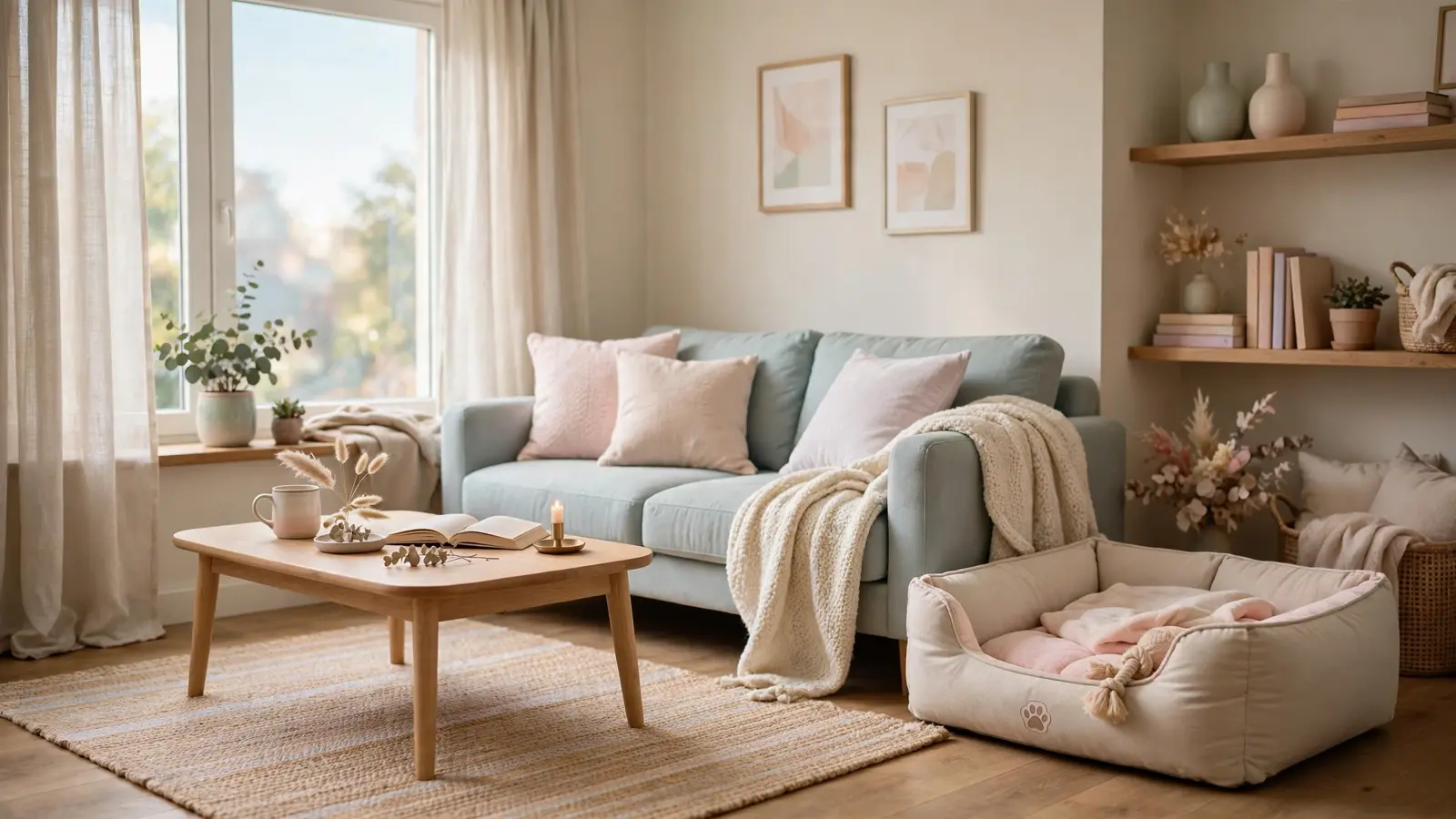
Start with the apartment, not a shopping list
Before moving furniture, look at the apartment as it is on an ordinary weekday. Notice where people enter, where shoes collect, which seat gets used most, and where the dog naturally settles. Write those observations on a small floor sketch. The point is not to create a showroom; it is to make the everyday route feel deliberate.
Mark three areas on the sketch: the entry, the main walking path, and a resting corner. Let the entry take the smallest footprint. A narrow tray, a basket, and a washable mat can hold the daily pieces without claiming a whole wall. Leave the walking line visually open. The dog corner can be near the sofa or along a quiet wall, provided it does not sit in the middle of a doorway or chair path.
Set a simple color rule before choosing new pieces: one main neutral, one warm material, and one accent. For example, cream walls, natural wood, and blush; or charcoal upholstery, pale oak, and soft blue. Repeat the accent once in a cushion, frame, or storage label. A small repeated detail feels more composed than a room full of unrelated pet prints.
Make one dog corner feel intentional
A dog corner does not need a themed sign or a matching set. Begin with the bed, then add only what belongs beside it: a small basket for a blanket, a washable mat, or a low side table for the human things that share that part of the room. Leave a little breathing space around the bed so it reads as a planned zone rather than a pile of accessories.
For a studio, try the end of a sofa, the sheltered side of a low bookcase, or the open area beneath a console. For a one-bedroom rental, a bedroom corner can take a flat bed and a lidded basket. Keep the dog area on the same visual line as existing furniture: a bed aligned with the sofa front looks tidy, while an angled bed can soften a square corner. Take a phone photo from the doorway and check whether the room still has a clear route across it.
Choose a cover that relates to a nearby textile rather than trying to disappear completely. A cream cover beside a cream sofa may blend; a muted blue cover can give a pale room one useful point of color. If the room has a patterned rug, pick one of its quieter colors for the bed. If the floor is already busy, choose a solid cover and let the rug carry the pattern.
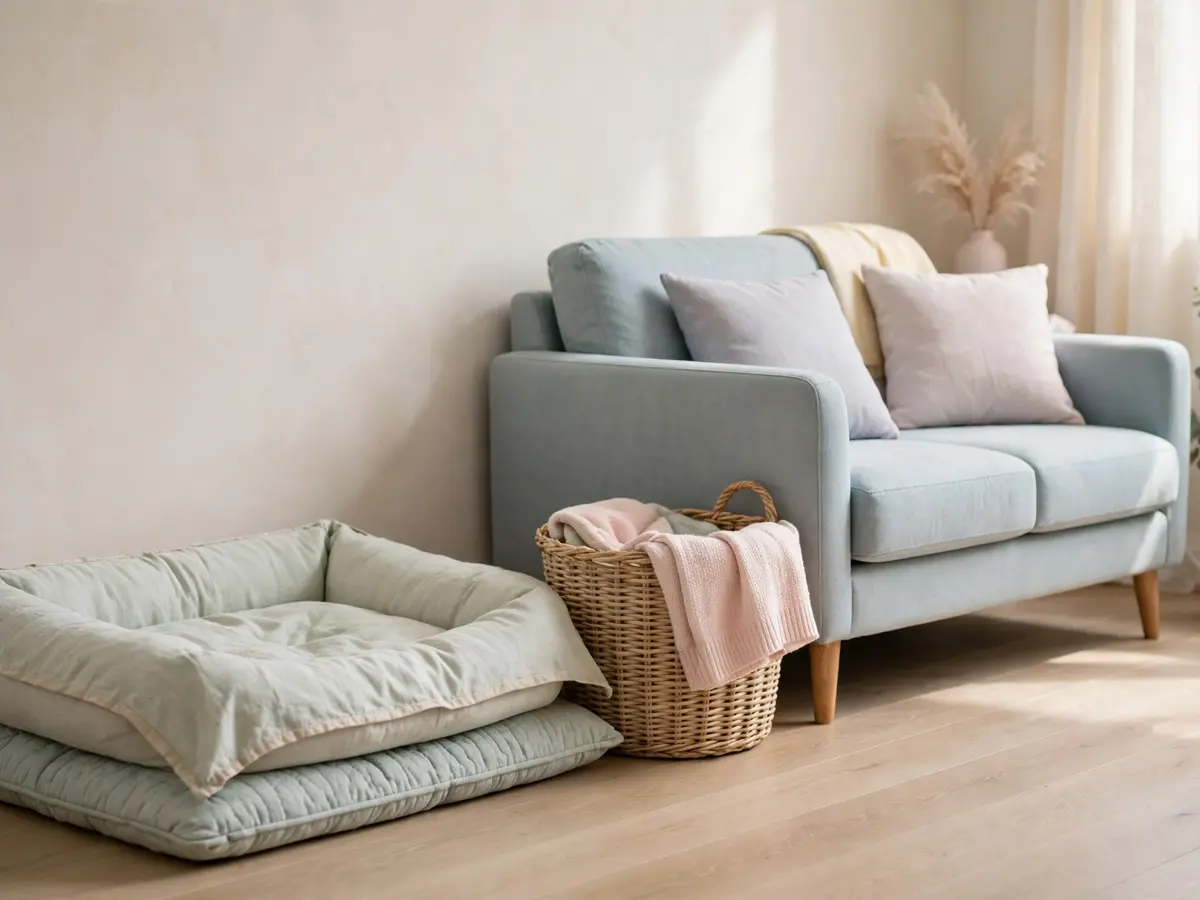
Give the entry a small reset station
The entry collects the things that leave the apartment with you. A compact station makes that collection look like part of the decor. Put a shallow tray on a console or shelf for the leash and keys. Set a basket below for toys or spare layers. A hook can sit beside the door when the rental rules allow it; otherwise, use a freestanding rack or a basket with a handle.
Think in layers. The floor layer is a mat with enough room for the door to open. The middle layer is a basket or a short bench with storage. The upper layer is a tray, framed print, or small lamp. Keeping the objects at three heights creates a finished vignette without turning the entry into a supply closet. Pick containers in one material family, such as woven fiber and pale wood, or matte metal and dark wood.
Measure the door swing before bringing home a bench or basket. Mark its full path with painter's tape, open and close the door, and check that the proposed station does not intrude. In a narrow hall, skip the bench and use a wall-side tray on a slim console. In a shared entry, assign one labeled basket to each person rather than mixing every leash, hat, and tote into one container.
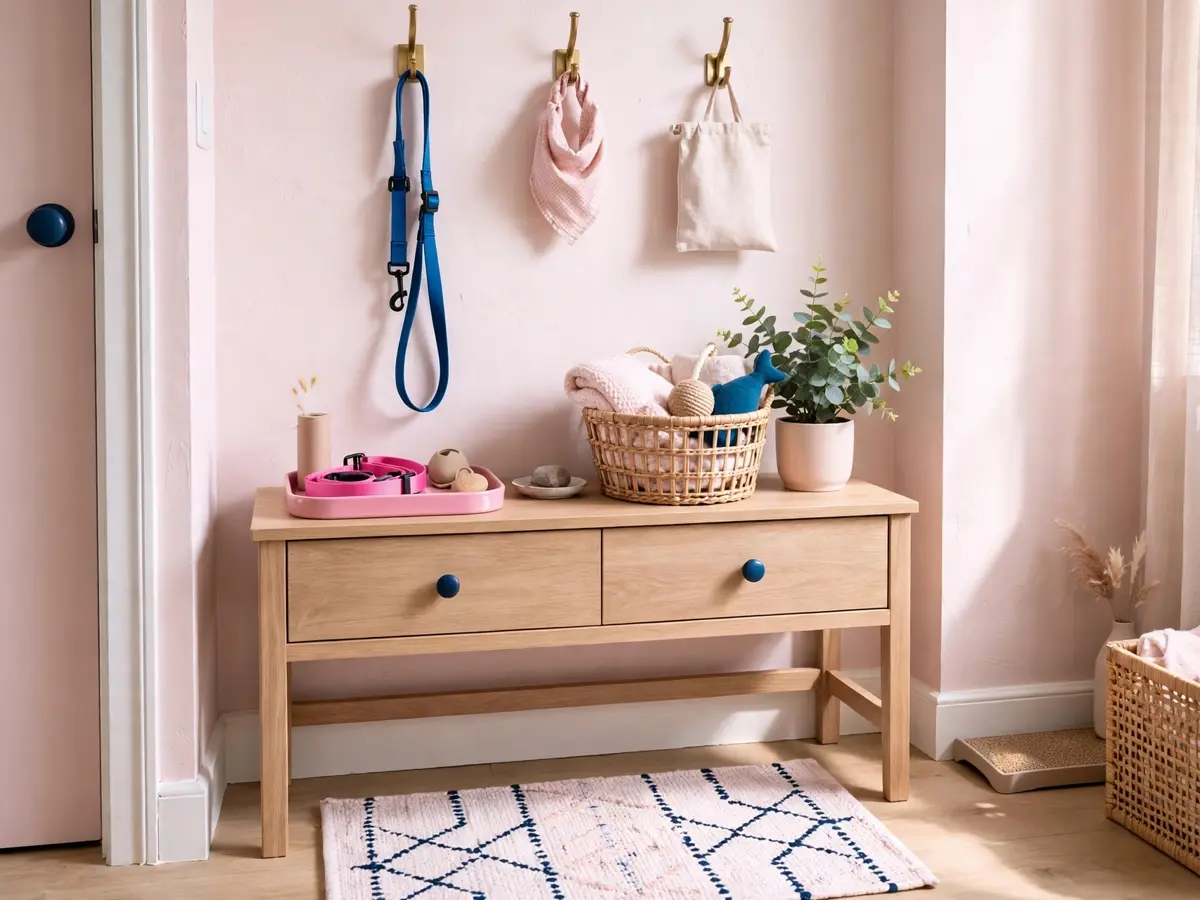
Layer textiles without making the room feel crowded
Textiles are the quickest way to make pet pieces feel connected to the rest of a room. Use one washable throw on the sofa, one rug or runner to define the seating area, and a cushion cover that repeats the accent color. Let the dog bed stay simple. Three coordinated fabrics give the eye a small story to follow; six competing prints can make a compact room feel busy.
Read care labels before choosing a fabric. A removable cover is convenient when the bed is part of the daily routine. A flat-weave rug suits a small dining or entry area where chairs move often. A patterned throw can disguise the visual clutter of a blanket folded over the sofa arm, while a solid throw makes a patterned rug feel less dominant. There is no single right texture: use the one that suits your cleaning routine and the rest of the room.
If you are starting from an empty room, choose the largest textile first. A rug sets the color balance; the sofa throw and dog-bed cover can follow. If the rug is already in place, borrow one muted color from it. For a low-cost refresh, change one pillow cover or fold a throw in a new way before buying another large piece.
Store toys and everyday items with a repeatable routine
Use two containers instead of one catch-all. The first holds the pieces used every day and sits near the entry or living area. The second holds occasional toys and spare items in a closet or cabinet. A soft basket fits beside a sofa; a lidded box suits a bookshelf or under-console shelf. Match the shape to the space and the contents rather than choosing a basket because it appeared in a styling photo.
A small reset takes less time when every object has a home. At the end of the day, fold the throw, place the toys in their container, return the leash to the tray, and clear the entry mat. If the basket is difficult to reach, move it to a shelf or floor spot that fits the household's actual path. Storage that asks for too many steps usually becomes another pile.
Keep the visual labels quiet. A small tag, a color-coded bin, or a single word on the inside of a lid can be enough. The rest of the room does not need paw-print labels on every cabinet. When dog gear shares a shelf with books or plant pots, group the items on a tray so the shelf still reads as one arrangement.
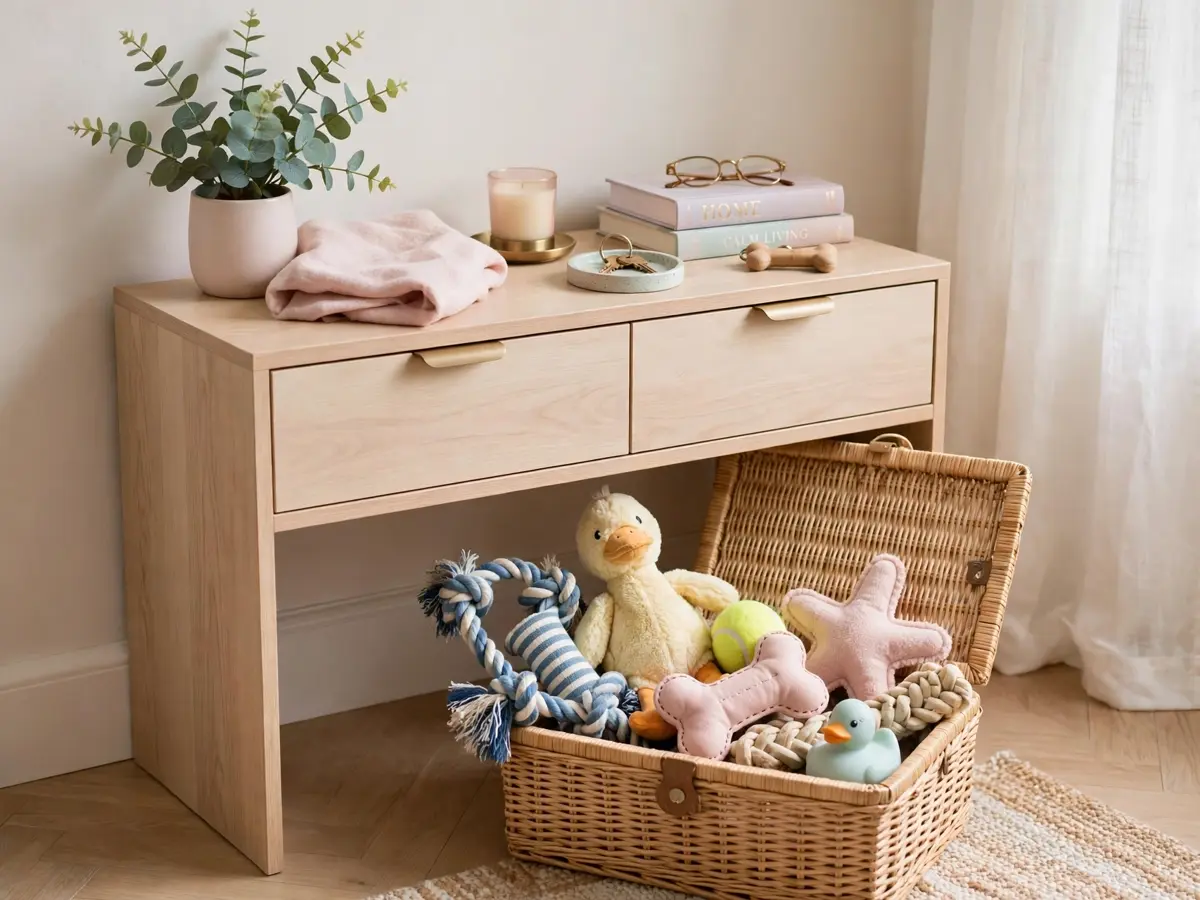
Renter-friendly details that still look finished
Renters can make a room feel personal without turning every wall into a project. Lean a framed print on a stable shelf, use a freestanding lamp instead of a wall fixture, and let a short console define the entry. Removable hooks are another option when the product instructions and lease allow them. Try a sample in a hidden spot before hanging anything over a painted wall.
Think about the move-out version while planning the move-in one. Choose pieces that can travel to another apartment: a bed with a removable cover, stackable baskets, a narrow console, and art in common frame sizes. Avoid buying a large piece solely to fill a difficult corner. A blank patch of wall can look deliberate when the furniture below it has clean lines and a small lamp or framed print.
For a wall gallery, trace each frame on paper and tape the outlines up before placing a nail or adhesive. Step back from the doorway, adjust the spacing, and leave the lowest frame outside the reach of furniture being moved. A pet portrait can tie the room together; ourprintable pet wall-art layout ideas show a simple way to plan the arrangement before printing.
Three compact layout plans
Use these as starting sketches, then adjust them to the furniture and doorways in your own home. The labels describe where each item goes; they are not a shopping checklist.
- Studio by the sofa: place a flat dog bed at the sofa's short end, a narrow basket on the other side, and the leash tray near the door. Leave the center of the room open and use one rug to mark the seating area.
- Long living room: set the dog bed beside a low bookcase at the quiet end. Put toy storage in the bottom shelf and the daily tray near the entry. One floor lamp and a framed print can balance the taller furniture.
- Bedroom corner: place the bed against a short wall, add a washable runner, and use a lidded basket beneath a nightstand for occasional items. Leave the route to the closet and bedroom door clear.
If the layout still feels unfinished, remove one accessory before adding another. A dog bed, a basket, and one nearby textile can be a complete corner. A second basket, a sign, a themed blanket, and matching wall art are optional. Use the pieces that fit your home and let the unused corner stay open.
A one-hour styling reset
- Take a photo from the entry and sketch the main walking path.
- Choose one dog resting corner and move only the pieces needed for it.
- Collect daily gear in a tray and one easy-to-reach basket.
- Repeat one room accent in the bed cover, throw, or frame.
- Open every door and drawer, then adjust the layout around its swing.
- Take a second photo and remove any item that makes the room feel crowded.
The reset is meant to work with objects already in the apartment. Borrow a basket from another room, fold an existing throw over the bed, or shift a console closer to the entry. If a new purchase still seems useful after living with the arrangement for a few days, take measurements and shop for that exact gap. For more compact room layouts, browse our small-apartment pet corner guide and the renter-minded cardboard castle plans.
Sharing a small apartment with both species comes down to one detail, and the the dog-proof litter box gap page is that detail.
Questions about dog-friendly apartment decor
How do I make a small apartment feel dog-friendly?
Give the dog one clearly defined resting spot, one place for daily items, and an open path through the room. Choose furniture and textiles that already fit the apartment instead of adding a separate pet-themed layer everywhere.
What colors work with a dog bed in the living room?
Start with the room's existing palette. A bed in a similar neutral looks quiet, while one accent color repeated in a throw or cushion makes the corner feel intentional.
How can renters decorate without drilling?
Use freestanding storage, removable hooks within their stated limits, and textiles to mark a zone. Measure the wall and door swing before buying a tall cabinet or bench.
Where should a dog bed go in a studio?
Choose a corner near the household's usual routine but outside the main walking line. A low-profile bed beside a sofa or under a console can read as part of the furniture plan.
How do I hide leashes and toys?
Put the daily leash on a tray or in a lidded basket by the door, then sort occasional toys into a second container. A label or one-color bin makes the setup easy to reset.