 PawStyle Daily
Cat-Friendly Home
Bengal Cat Litter Box Size and Setup Guide
A Bengal is the biggest, busiest cat in most rooms it walks into, and the litter box is the one corner where the body and the energy both have to fit at once. A small box is the single most common reason a Bengal starts going around it rather than in it, because the cat turns, digs and kicks hard in tight quarters and the walls are too close. This guide walks through the box length a Bengal actually needs, the box style that suits a strong digger, the litter that lets a sensitive nose work, and the placement that keeps visits steady for a cat with activity to spare. For informational purposes, consult your vet.
By PawStyle Daily · Updated 20 November 2026
Good to know: box length over box height · open and unscented · a low-traffic corner with a clear exit · for informational purposes, consult your vet.
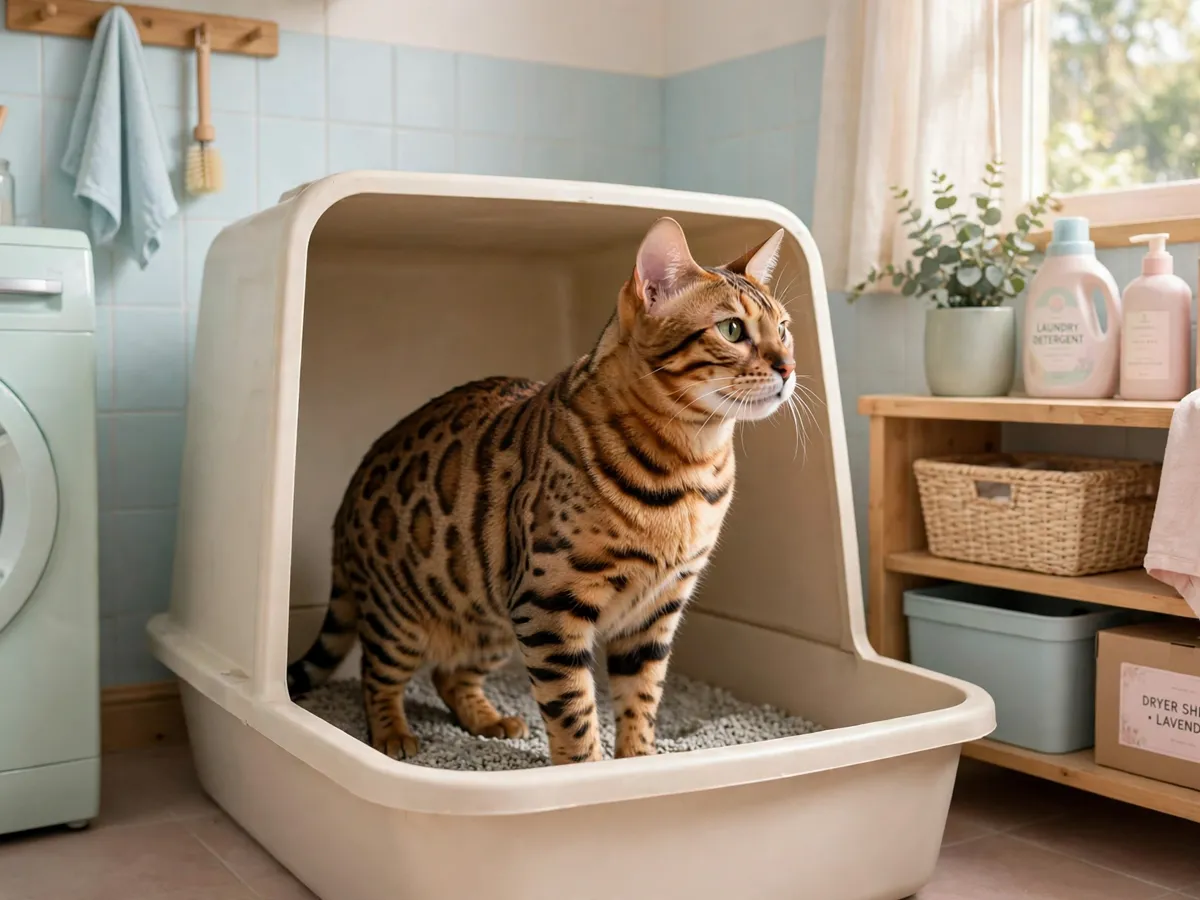
Why a Bengal reads the box differently
The breed profile matters here. A Bengal is a long, athletic cat with a deep chest, a busy nose and a habit of digging at the litter with both front paws before the business and after. The pet-store box that works for an average domestic shorthair is often too short front-to-back for a Bengal whose body fills that length with room to spare, and too shallow for the litter depth a strong digger throws around. The first task is to think of the box as a workshop, not a tray: room to turn, room to dig, room to leap out without scattering.
The second task is the room around the box. Bengals settle a litter station when the approach is clear and the exit is open, the way a cat with escape routes thinks about every resource. Anything that narrows the approach runs the risk of the cat finding a quieter spot instead. The sections below move from the size up: the box first, then the style, then the fill, then the corner the whole station lives in. The litter box 101 setup page covers the fundamentals every cat shares, so this page stays on what a Bengal adds to that base.
Size: the length that fits a long cat
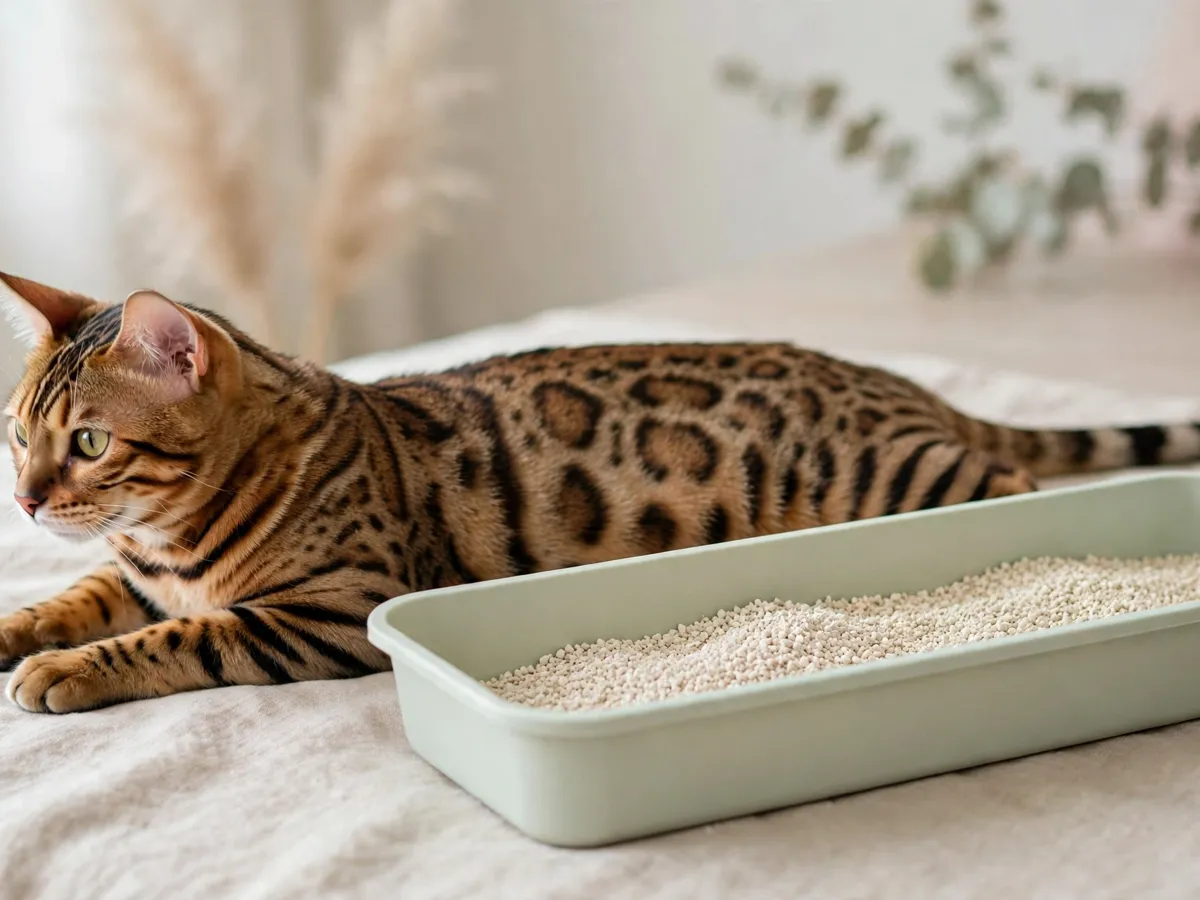
A Bengal measures nose to tail base and the box measures along the same axis. A rectangular box one and a half times the length of the cat from nose to base of tail is the recommendation, and bigger is better. The length rules out the common small covered box and points toward an uncovered storage tub or an under-bed storage container, both of which run long enough for a Bengal and low enough to step into easily.
Height is a separate decision and rarely the generous one. A tall box catches scatter, but a tall box also asks a cat to jump over a wall to get in, and a Bengal with a full bladder may decide the floor by the box is the lower wall. A box low enough to step into and high enough to contain scatter is the balance, and a tall scatter guard that clips to the box (or sits behind it) keeps the litter in without making the entry a jump. The footprint is the number that decides visits: long and wide first, tall only where the scatter in your room demands it.
Style: open or covered
An open box is recommended where possible, because it is easier to monitor and scoop and it does not trap odors. The open box serves a Bengal two ways: it lets the cat watch the room during use, which a cat with activity and an escape plan values, and it keeps the air moving so the nose inside the box is the clean nose that a strong digger stirs up. A covered box the cat already uses is still fine; the guidance tracks the easier-to-manage option rather than a rule.
The covered box has a real role for a Bengal that scatters litter on the exit, because the walls and the door flap catch the outbound spray. The trade is the door flap: it needs to be wide enough for a big chest, low enough for a long stride, and kept clean, because a sticky flap is the first thing that turns a cat away from a covered box. The covered style also hides waste from a human walking past, so the scoop routine behind a covered box runs on a visible cue (a scheduled scoop twice a day, a smart sensor) rather than the nose. The best unscented clumping litter page covers what goes in the box itself, and the choice there is what makes an open box feel clean between scoops.
Fill: the depth a digger wants
A Bengal digs deep. A shallow fill leaves the cat scraping the bottom of the box, which turns the dig into noise and the noise into scatter from the low walls. The fill depth for a strong digger sits at the high end of the standard range, deep enough to bury waste and shallow enough to keep the scatter inside the box. Unscented clumping litter is the fill that lets a sensitive nose work: a Bengal reads the box with its nose before it steps in, and a scented fill masks the signals the cat is looking for and adds its own. Unscented is also the easiest to scoop and the easiest to keep fresh between full changes.
The scatter is the fill problem a Bengal owner hits first. The solution is the combination, not any one piece: a deeper fill than the pet-store default, a lower entry wall, and a large mat that sits a paw length beyond the box edge on every side. A mat with a mesh surface catches litter from the paws on the exit, and a mat big enough to buffer the landing stays under the cat the whole way out. The depth, the open box and the mat together turn a scatter corner into a clean one, and the depth alone is rarely enough for a Bengal that exits the box at speed.
Place: the corner with a clear exit
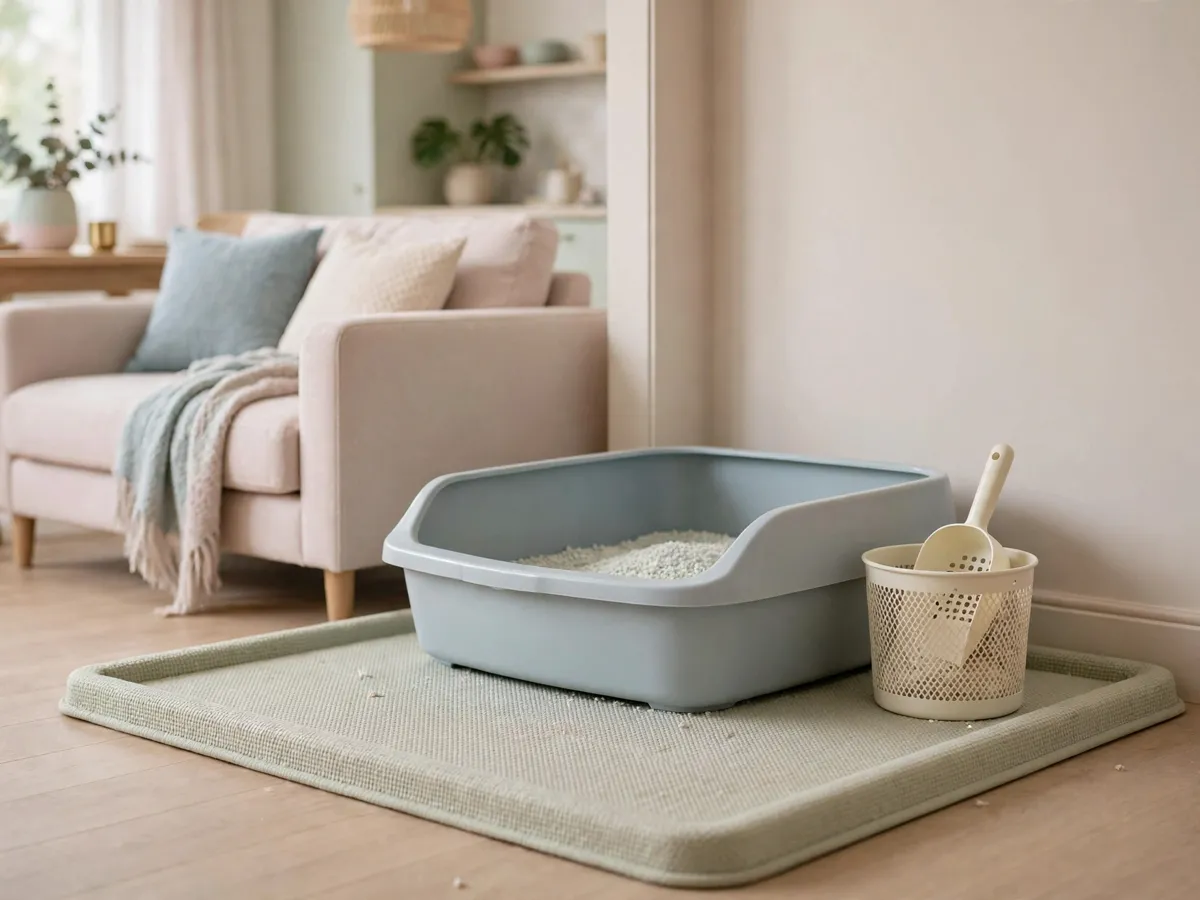
The box lands in a low-traffic corner with a clear exit on at least one side, away from the food and water bowls by more than the length of the cat. A Bengal walks into the box with the same energy it walks into anything, so the approach is the path the cat takes and the exit is the path the cat takes after, and both need to stay open. A box pushed against a wall on three sides leaves one way out, which is enough for a quiet cat and not enough for a cat that likes a choice. Two sides open is the setup a Bengal settles into.
The room scale follows the cat. A small apartment with a single Bengal runs one station, sized large. A home with a second cat runs a second station elsewhere, because a shared single box is the setup that turns a settled cat into a cat that finds the rug. The station needs its own scoop caddy and its own mat, and the scoop runs on a schedule the cat can predict. The corner that stays quiet, open and clean is the corner a Bengal returns to, and the setup work up front is less work than the cleanup work down the line when a corner is wrong.
Bengal litter box questions
How big does a Bengal litter box need to be?
Long and wide rather than tall. A big athletic cat needs room to turn, so a storage-tub style box often works better than a pet-store box.
Do Bengals prefer covered or open boxes?
An open box lets a cat see the room while using it, and it is easier for you to monitor and scoop.
Why does my Bengal kick so much litter out?
A powerful dig followed by a high exit. A larger footprint, a lower fill line and a mat around the box catch most of it.
Save this Bengal litter box guide
Pin it for the shopping trip and the next rearrange, because the box length and the open exit are the two decisions the rest of the station hangs on. The Cat-Friendly Home collection holds the cleaning schedule, the litter guide and the multi-cat station notes that sit beside this setup.
The length and the exit come after a number, and the how many boxes, exactly page is where that number comes from.