 PawStyle Daily
Budgie & Cockatiel Corner
How to Bathe a Pet Bird — Mist, Dish and the Shower Perch
A bathing bird looks like a bird having the best day of its week — head down, wings loose, water everywhere. This page is the calm version of it: the three ways to offer water, the body language that tells you when the bird is done, and the things that never go into a bird bath no matter what the shelf says.
By PawStyle Daily · Updated 18 November 2026
Good to know: plain water only · the bird ends the bath, not you · warm room, no drafts · check with an avian vet about anything health-related.
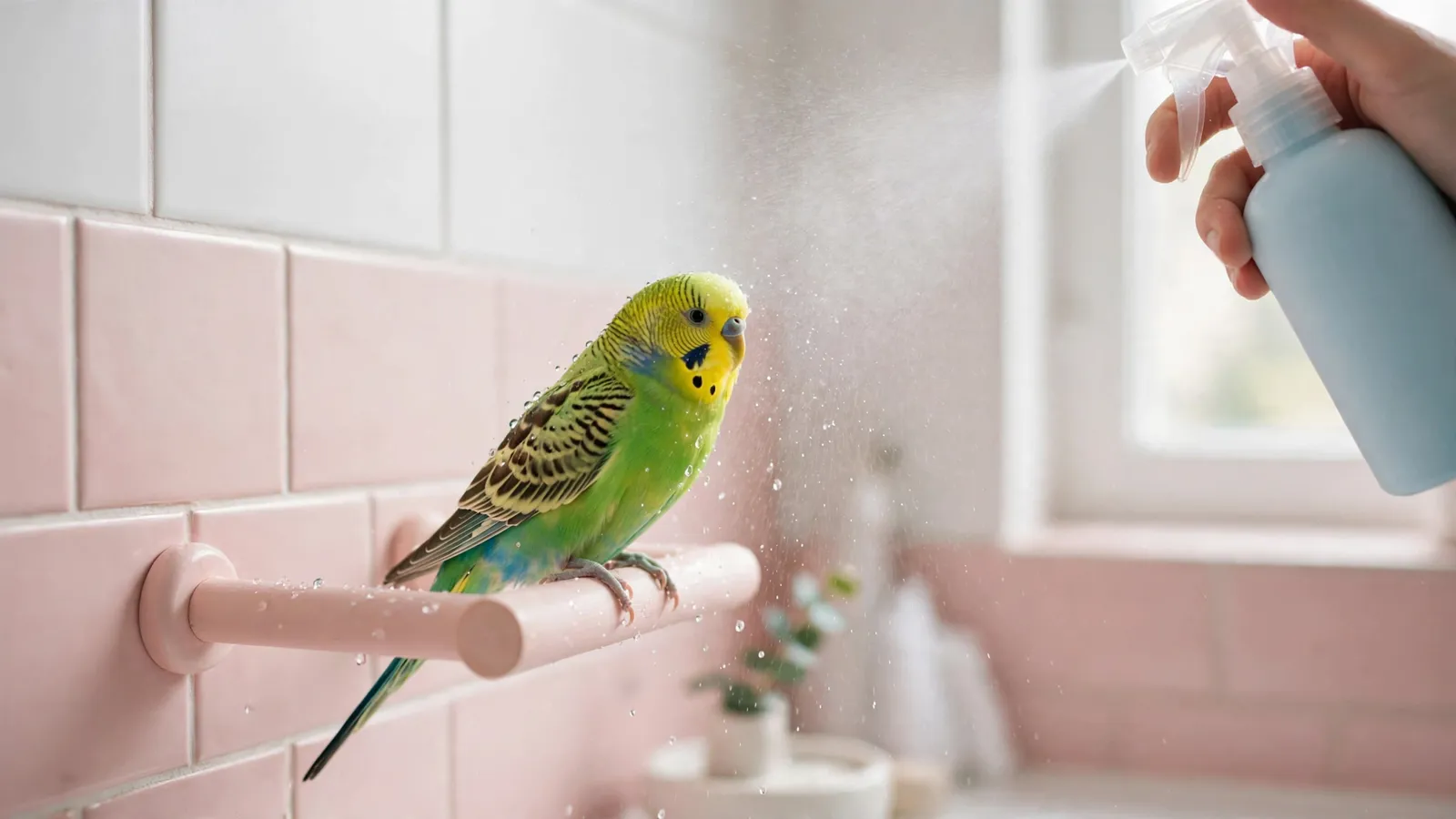
Bathing is part of the grooming routine
A pet bird should be given opportunities to bathe as part of a regular grooming routine. The phrasing matters: opportunities, not sessions you schedule and enforce. A wild budgie bathes when the rain or the wet grass presents the chance, and the pet bird keeps the same shape of preference — the water appears, and the bird chooses. Your whole job is the offering: clean water, a warm room, and no clock running. A bird who never takes the offer for a while is not failing at grooming; it may simply be waiting for the version of water it likes.
The three ways to offer water
A shallow dish of water, a mist from a clean spray bottle, or a shower under the faucet are the three bathing options a bird owner can offer. Each one suits a different personality, and many birds enjoy more than one.
- The shallow dish. A sturdy dish clipped to the cage door or set on the floor of the room, filled shallow — deep enough to splash, never deep enough to swim. Some birds step straight in; some prefer to bathe the leaves of a wet piece of greens laid beside the dish first.
- The mist. A clean spray bottle that has never held anything but water, set to the finest mist, sprayed into the air above and around the bird so the droplets fall like rain rather than a jet. The bird fluffs, leans in, and does the rest.
- The faucet shower. A slow, gentle puddle of water over a shower perch or your hand in the sink basin, for the birds who like the sound and the running water. Some cockatiels will sit in it for a long spell once they discover it.
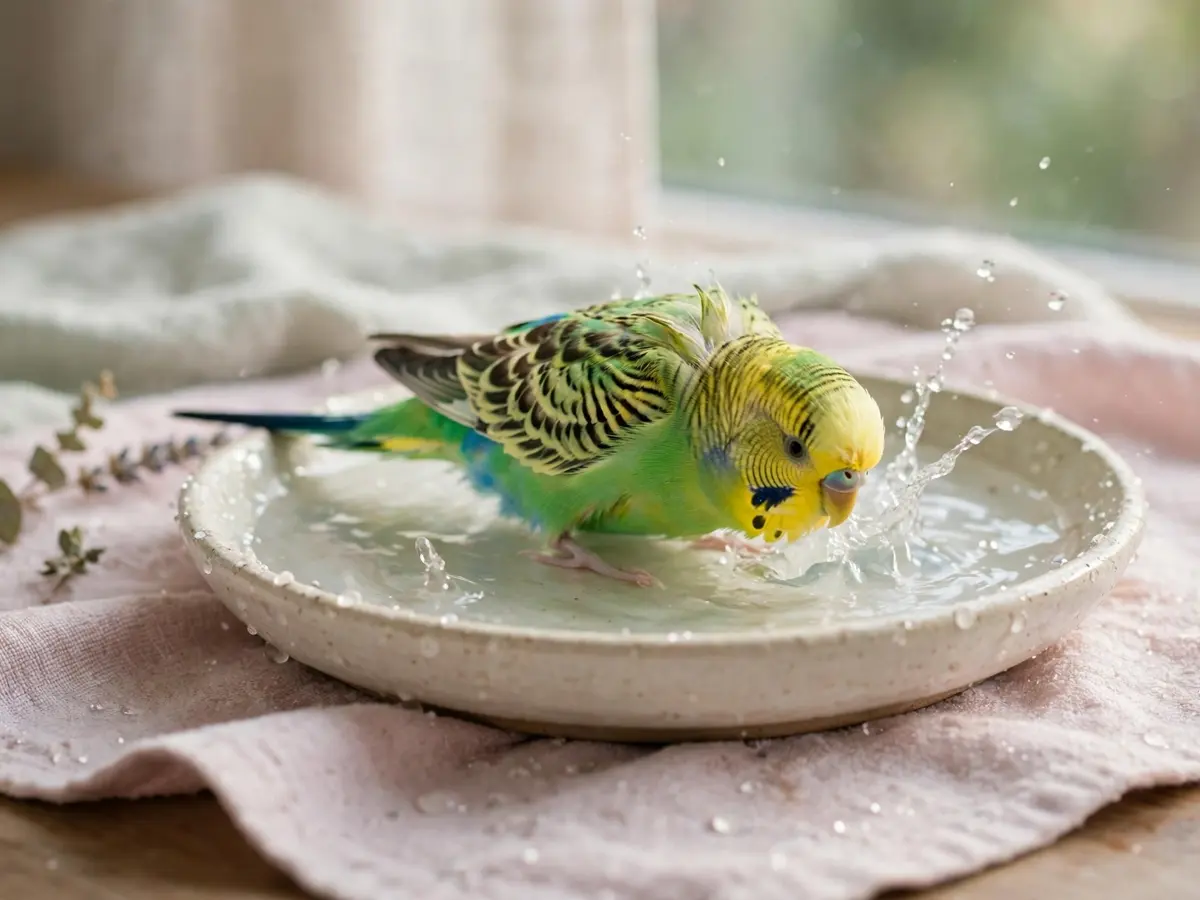
Reading the body language
The bath belongs to the bird, and the bird ends it. Leaning in is a yes: fluffed feathers, dropped wings, a body that loosens into the water or lowers toward the dish. Rolling, splashing, shaking the head through the mist — all the good stuff.
The end looks different: turning the back to the spray, pressing against the bars or the far wall, climbing away from the dish, or simply going still and sleek again. The moment any of those appear, the bath is over — put the water away calmly, without commentary, so the memory of the bath stays a good one.
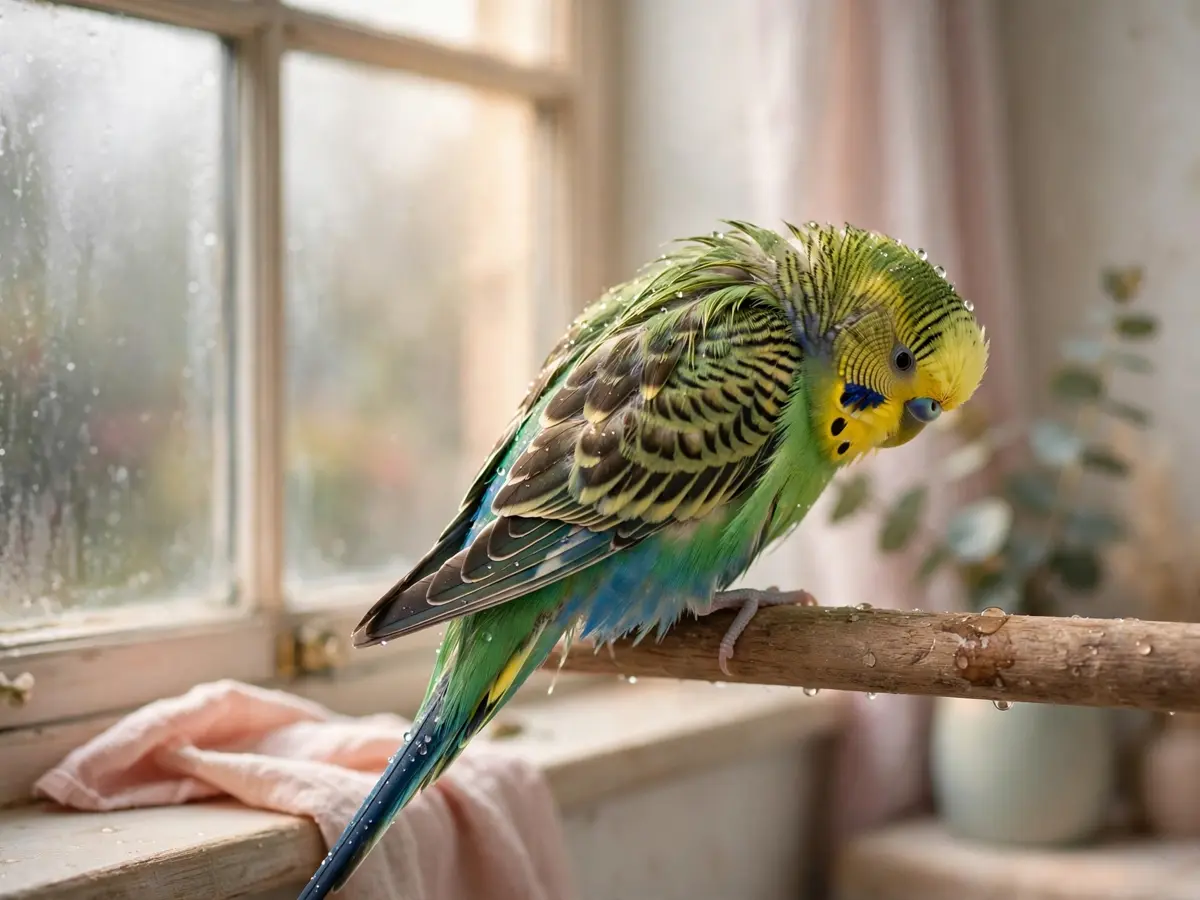
What never joins a bird bath
Plain water only. No soap, no shampoo, no feather spray, no bath additive — a bird grooms whatever lands on its feathers, so the bath is the one place where nothing added is the rule. No hairdryer afterwards either; the drying is done by a warm room, daylight, and the bird's own preening. And no chasing: a bird who does not want the bath today gets the offer withdrawn, not followed around the room with a spray bottle.
The room setup
The water is half the setup; the room is the other half. Warm, with the window closed and no draft crossing the bathing spot. Morning or early afternoon works best, so the feathers dry well before the temperature drops with the evening. After the bath, a familiar perch in the warm spot — preening is the rest of the routine, and a bird who feels safe settles into it happily. For the wider housing picture, the budgie cage setup checklist and the perch guide cover the rest of the room the bath happens in.
Bird bath questions
How often should I offer a bath?
A pet bird should be given opportunities to bathe as part of a regular grooming routine — the bird decides how much of each opportunity it takes. Some birds splash with enthusiasm the moment the dish lands; some ignore it for a week and then commit completely. Offer it, watch what the bird does with it, and let that answer set your rhythm rather than a schedule.
Which method is best — mist, dish or faucet shower?
There is no best one. A shallow dish of water, a mist from a clean spray bottle, or a shower under the faucet are the three bathing options a bird owner can offer, and the bird's own reaction picks the winner. What works for a budgie who loves mist may bore the cockatiel next door, so the honest answer is to offer more than one and see.
Can I use bird shampoo or a special bath spray?
No soap, no shampoo, no bath additive — plain water only. A bird's feathers are maintained by the water and the bird's own preening, and anything added to the bath lands on feathers the bird then grooms. If a health question about the feathers or the skin comes up, that is an avian-vet conversation, not a bath product to buy.
My bird fluffs up and stops moving in the mist. Is that okay?
That posture — feathers fluffed, wings dropped slightly, body loosened — is the bathing stance, and it says the mist is welcome. What ends the bath is different: turning away, pressing into the bars or the wall, pushing off the perch. Read the two apart and the mist never becomes a chase.
Should the bath happen inside the cage or outside?
Wherever the bird feels brave. A dish clipped at the cage door works for a bird who wants the cage within reach; a shower perch in the bathroom suits the faucet-shower bird. The one setup rule is the room itself: warm, no draft, and hours of daylight left so the feathers dry long before the room cools for the night.
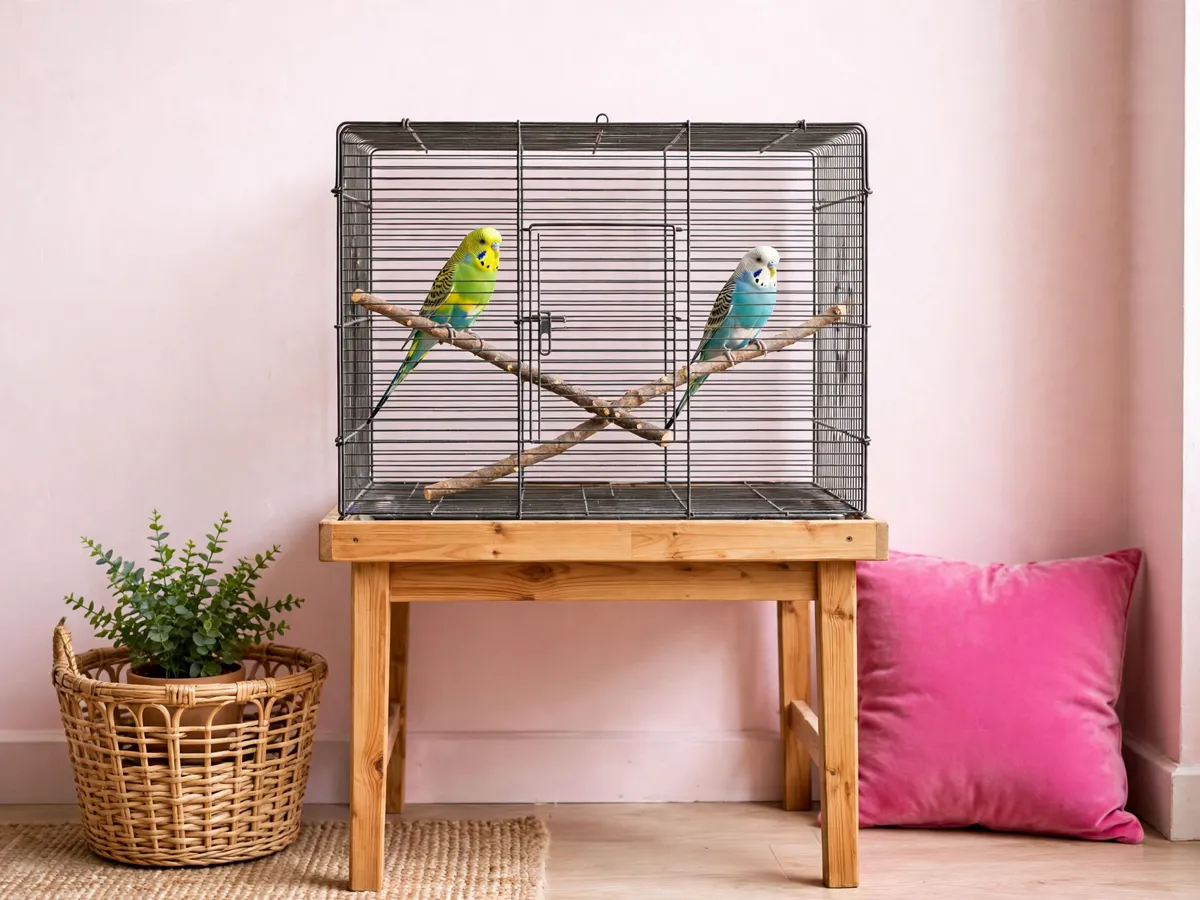
The bathing corner
A dish, a mist bottle and a perch to dry on
A sturdy clip-on water dish, a dedicated clean spray bottle for the mist, and a comfortable perch for the post-bath preen — the small setup a bathing corner is made of.
See the bathing corner →As an Amazon Associate we earn from qualifying purchases.
Save this for bath day
Pin the three-way setup so the next splash session is ready before the bird decides it is. The Budgie & Cockatiel collection holds the rest, including the mist-and-dish walkthrough with photos of each method.