PawStyle Daily
Budgie & Cockatiel Corner
Cockatiel Diet: Pellets, Seeds and Produce
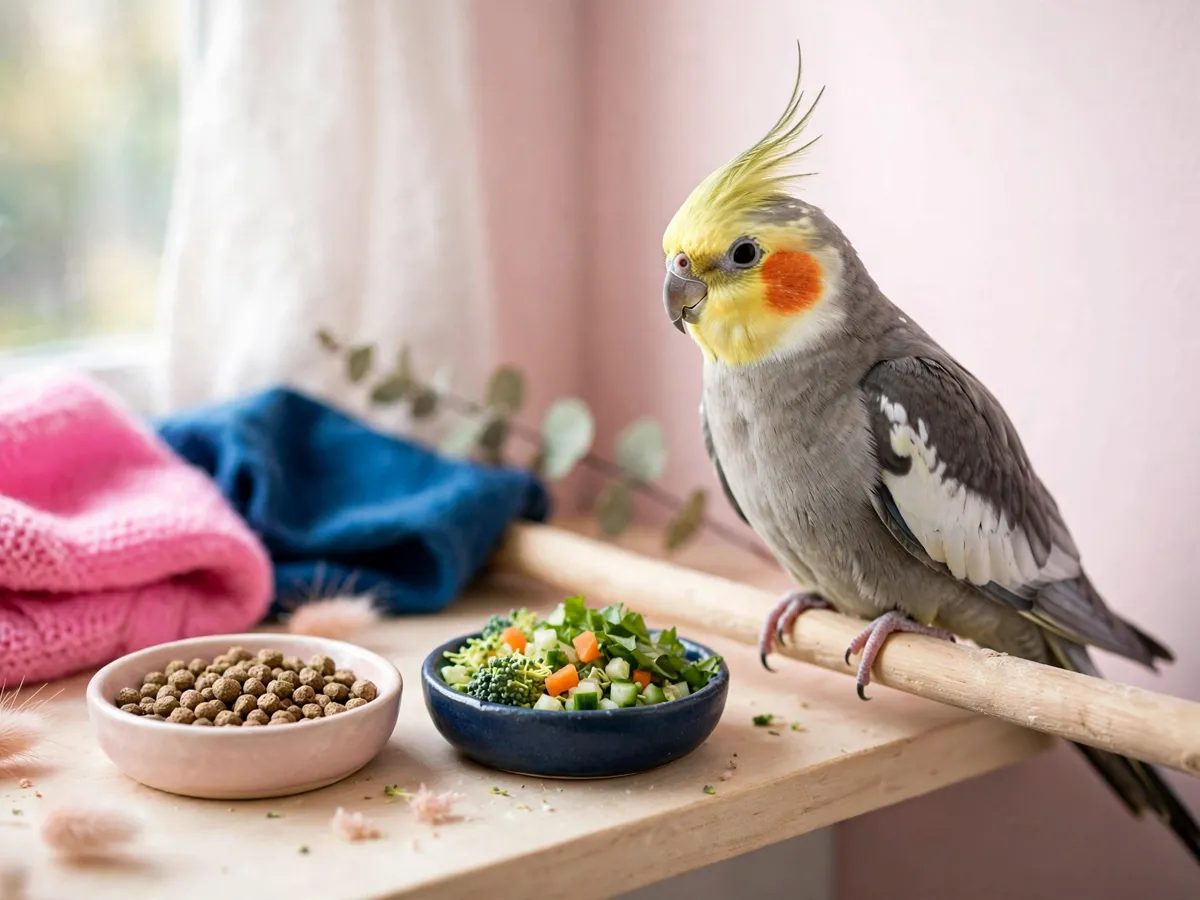
A cockatiel eats from two small dishes, and what goes into them decides more about the bird than the cage, the perches or the toys combined. The base is pellets, the colour is produce, and seeds are the currency you spend on training rather than the bowl you fill. This page walks the proportions, the produce rotation, the slow switch from a seed-only bird, and the extras that turn a diet into a routine. Check with an avian vet on anything that touches health.
By PawStyle Daily · Updated 19 November 2026
Good to know: pellets carry the base · produce adds colour and variety · seeds stay limited · check with an avian vet.
What a cockatiel bowl actually looks like
A cockatiel in the wild spends most of its day foraging for grass seeds, and that is the origin of the seed-only myth. The pet version of that life is a cage, two dishes, and a bird that never has to fly a kilometre for a meal. The diet has to make up for the missing kilometre, and that is where the proportions matter more than the ingredient list.
The base is a plain pellet, the produce is the part you rotate every few days, and the seed is the small share you use for training rewards. A bird that arrives seed-only needs a gradual switch rather than an overnight swap, and the whole thing sits inside a daily routine that keeps the dishes clean, the water fresh, and the produce out of the cage before it spoils.
Why pellets carry the base
Build the diet on pellets with produce - about 75-80 percent pellets with 15-20 percent fruits and vegetables - keep seeds and nuts strictly limited, and never starve a bird into pellets.
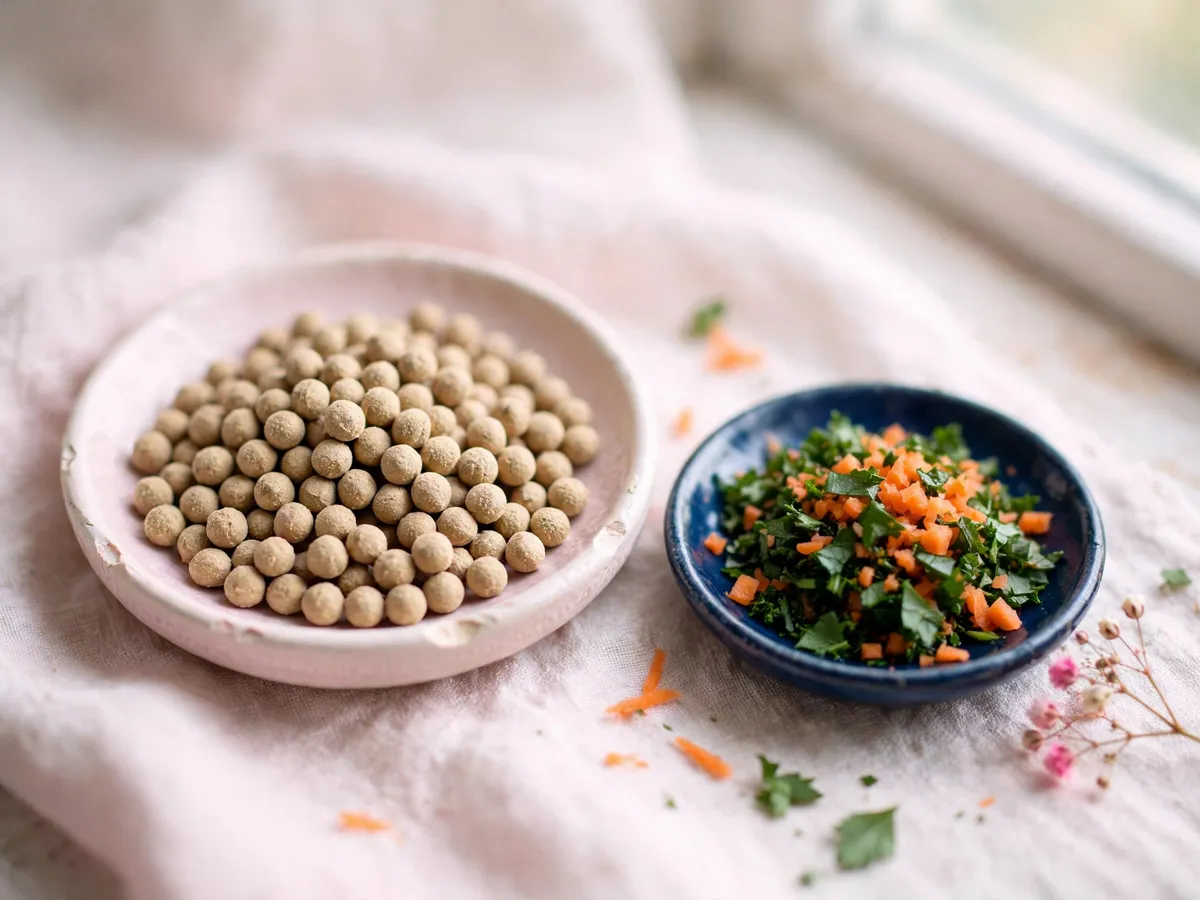
The reason pellets carry the base is simple: a plain pellet is formulated to deliver a balanced mix in every bite, where a seed mix lets a bird pick the sunflower and leave the rest. A cockatiel on a seed-only dish is a cockatiel eating one ingredient, and that ingredient is high in fat and low in the rest. The pellet does the work the seed refuses to do.
Pick a plain pellet rather than a coloured one. The coloured pellets are the bird version of a cereal aisle, and a cockatiel will sort the red from the green the same way a child sorts the marshmallows. A plain pellet is one colour, one shape, one nutrition profile, and it is the one that earns the shelf space.
Where seeds belong
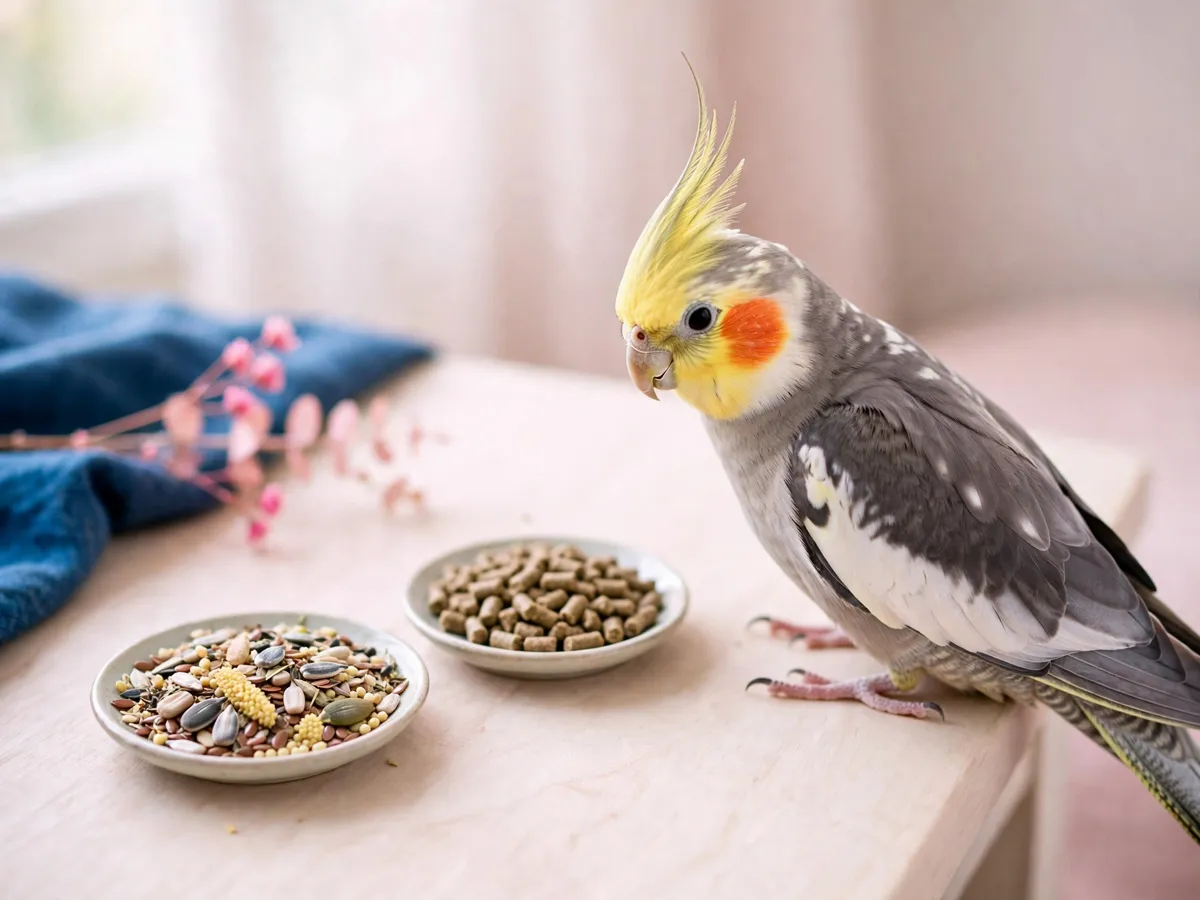
Seeds are not the enemy, and they are not the bowl. They are the training currency, the foraging reward, and the small share that keeps a cockatiel interested in the hand that feeds it. A teaspoon of seed in a foraging toy earns more attention than a full dish ever does, and it keeps the bird working for the reward instead of eating it from a pile.
The practical version is a separate, smaller dish for seeds, or no dish at all and a foraging toy that dispenses them one at a time. The seed dish, if you keep one, is a treat dish, and it is empty more often than it is full. A cockatiel that learns to work for seeds is a cockatiel that stays busy, and a busy bird is a quieter, happier one.
For the builds that turn a seed ration into a puzzle, the DIY foraging toys page has the paper-and-treat builds that fit a cockatiel cage.
The produce rotation
The produce share is the part that changes every few days, and it is the part a cockatiel notices first. Leafy greens, a shred of carrot, a slice of bell pepper, a small piece of apple or melon, and a broccoli floret the size of a thumbnail all belong in the rotation. The point is variety, not volume, and a small amount rotated through the week keeps the bird interested without letting any one food dominate.
A week of produce for a cockatiel
| Day | Produce | How to offer |
|---|---|---|
| Monday | Leafy greens (spinach or kale) | Hung from a clip beside a perch |
| Tuesday | Grated carrot | In a small side dish, separate from pellets |
| Wednesday | Bell pepper slice | Washed and tucked into a foraging toy |
| Thursday | Small apple piece (no seeds) | In the side dish, removed after a few hours |
| Friday | Broccoli floret, thumbnail-size | Wedged between the bars near a perch |
| Saturday | Melon piece, seedless | In the side dish, a small slice |
| Sunday | Rotate back to greens | Clip a fresh leaf and start the week again |
Skip avocado entirely, and remove fresh produce from the cage after a few hours so it does not spoil.
Two rules that never bend: avocado stays out of the cage entirely, and fresh produce comes out of the cage after a few hours. A piece of fruit left in a warm cage is a piece of fruit that ferments, and a cockatiel that eats it is a cockatiel that needs an avian vet.
The slow switch from seed
A bird that arrived on a seed-only diet did not learn to eat pellets overnight, and it will not switch to them overnight either. The switch is gradual, measured in days and weeks, and the bird that refuses food for a day needs an avian vet rather than a stricter owner.
- Start with the seed dish the bird knows, and add a small amount of pellets beside it in a separate dish.
- Over the first week, grow the pellet share slowly. Mix a little pellet into the seed dish itself so the bird encounters both in the same beak-ful.
- Watch the droppings and the weight. A bird that is eating keeps both steady; a bird that is not eating changes both.
- By the second week, the pellet dish should be the larger one and the seed dish the smaller. Keep the seed dish in the cage as a safety net until the bird is reliably eating pellets.
- Once the bird eats pellets reliably, move seeds to a foraging toy only and keep the pellet dish as the base.
For the full step-by-step with the daily ratios, the budgie pellet diet conversion page walks the same method for both small bird species.
The extras: perches, baths and a clean dish
A diet sits inside a routine, and the routine has three extras that matter as much as the food. The first is the perch the bird eats from. Offer perches in an assortment of diameters, shapes and textures with natural wood ideal, and never use sandpaper perches because they are too abrasive for a bird's feet. A bird that eats from a comfortable perch eats calmly, and the rough sandpaper kind gets left on the shop shelf.
The second extra is the bath. A pet bird should be given opportunities to bathe as part of a regular grooming routine. A cockatiel that bathes keeps its feathers in condition, and the bath itself is a small event the bird looks forward to. Offer a shallow dish of plain water, a clean mist bottle, or a faucet shower perch, and let the bird decide when the bath is done.
The third extra is the clean dish. Pellets and water get a daily wash; the produce dish gets a wash after every produce session. A dish that sits with old produce is a dish that grows something the bird should not eat, and a quick wash after each produce session is cheaper than the vet visit that follows a dirty dish.
For the wider picture on perch sizing, the perch diameters and wood types page covers the natural-wood options that fit a cockatiel cage.
Cockatiel diet questions
Can cockatiels live on seed alone?
Seed-only diets miss a lot, and the registered advice keeps seeds and nuts strictly limited while pellets carry the base. The switch itself is gradual, and a bird that refuses food for a day needs an avian vet.
How do I switch from seeds to pellets?
Mix a little pellet into the seed dish and grow the share over days, watching the droppings and the weight. Never starve a bird into pellets. For the full step-by-step, our budgie pellet diet conversion page covers the same method.
What produce is safe to offer?
Leafy greens, carrot and small pieces of fruit fill the produce share. Skip avocado entirely, and remove fresh produce from the cage after a few hours.
Save these on Pinterest
Pin the produce rotation and the switch steps so the next dish is ready before the bird asks. The budgie and cockatiel collection holds the cage setup, the perch guide and the foraging builds that round out the routine.
Pellets carry the base, produce adds the colour, and seeds stay limited. For informational purposes, check with an avian vet.