 PawStyle Daily
Budgie & Cockatiel Corner
Budgie Winter to Spring Cage Reset
Spring changes the room a budgie lives in, and the cage that carried the bird through the cold weeks is not the cage the same bird needs now. The daylight stretches, the heating goes quiet, and the window that needed a cover in February can do without one in March. The winter-to-spring reset is not a deep-clean project. It is four small moves: the dishes go back onto the side walls, the pellet-and-produce base holds its shape, the seed jar moves up and out of reach, and the bath comes back with the light. Nothing here is a spring-only rule. The rules are the year-round ones that the season simply makes visible again.
By PawStyle Daily · Updated 19 November 2026
Dishes back on the sides · pellets and produce as the base · seeds and nuts stay limited · the bath returns · for informational purposes, consult your vet.
What the season actually changes
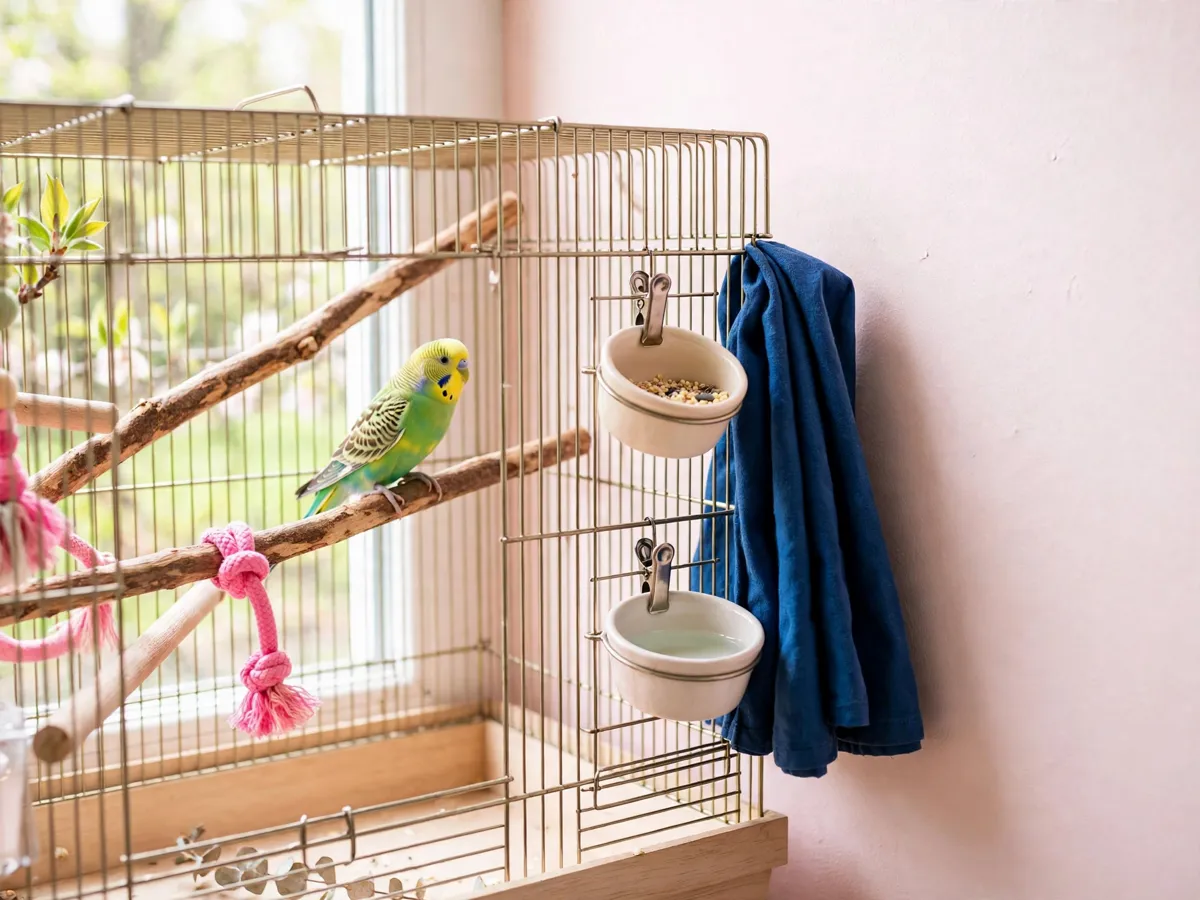
A budgie reads the year through light, not through a calendar. As the days lengthen, the bird wakes earlier, sings more, moves more, and starts paying attention to the corners of the cage it ignored for a whole winter. This is also the stretch when a bird may moult, and when a pair in breeding condition begins looking for somewhere to nest. None of that is a problem and none of it needs a new cage. It does mean the setup built for the cold weeks is now serving a different bird.
The reset is one walk around the cage, in four places. The dishes, the food, the produce plate, and the bath. Each of them is a year-round rule that winter quietly bent: the cover went over the back panel, the bird stayed inside more, the water dish drifted toward the floor because refilling it meant reaching in on a cold morning. Spring straightens those out, and it is worth doing all four in the same afternoon rather than letting them creep back one at a time.
The page that ran the other direction, the draft-free corner, the cover, the perch mix for the weeks the bird stays indoors, is the budgie winter cage setup , and this one picks up where that page leaves off. Read them back to back once and the year makes sense as a loop instead of two separate emergencies.
The dishes go back on the side walls
In winter, a dish on the cage floor is easy to reach and easy to refill, and a bird that spends its day sitting on a high perch is not throwing much around. Spring flips that. The bird is active, it plays with the toys, it walks along the bars, and whatever is lying at the bottom gets moved. A dish down there now catches the husks, the droppings and the bedding the bird is kicking.
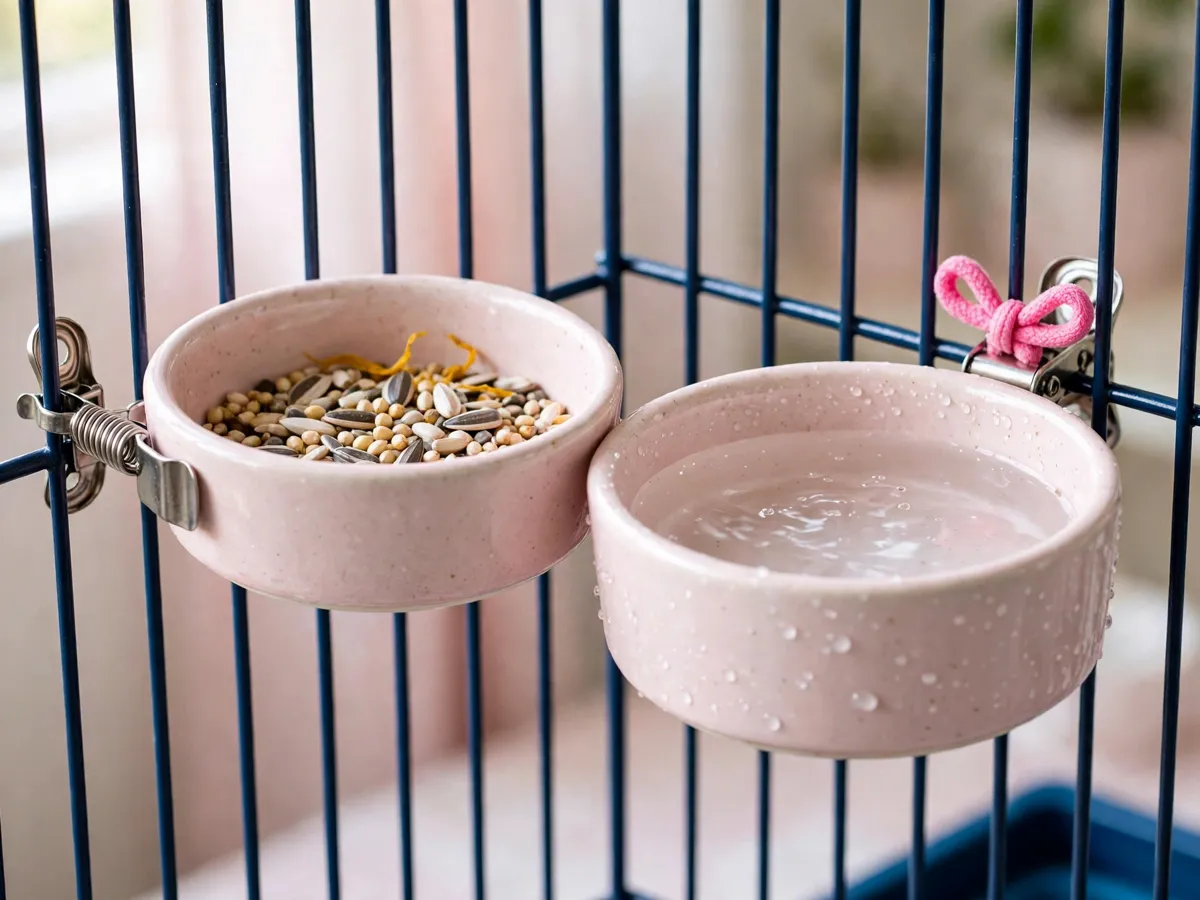
Attach sturdy, non-toxic food and water dishes to the cage sides rather than the bottom so droppings do not fall into them, and clean and disinfect them every day.
That is the whole rule, and the spring part is only the reminder. The clips sit on the side bars at a height the bird reaches from a perch, and not underneath the sleeping perch. The wash runs every day rather than every other day. The reset is also the moment to check that the clips still grip the bars: a dish that has slid down to the floor during the cold months is a dish the bird has been eating out of the bedding without anyone noticing.
Two dishes, one for water and one for the pellet mix, is the usual budgie setup, and the second one is worth adding near the produce plate so the fresh food has a home of its own rather than being dropped into the dry bowl. Ceramic beats plastic here for the same reason it beats it all year: a bird cannot tip it, chew it, or push it along the bars, and it takes a daily wash without clouding.
The diet base does not move with the season
Spring is when the seed jar tends to come back. The bird seems less interested in the pellet bowl, the weather is nicer, and a handful of seed reads as a treat on a windowsill. It is the single most common way a diet that was going well quietly reverses itself, and it happens because the season changed rather than because the bird did.
Build the diet on pellets with produce - about 75-80 percent pellets with 15-20 percent fruits and vegetables - keep seeds and nuts strictly limited, and never starve a bird into pellets.
The sentence does two jobs, and the second one is the one people skip. The first half sets the shape of the bowl. The second half rules out the shortcut: a bird that refuses pellets for long enough will eat its way back to seed, and a bird that is hungry enough will eventually eat anything, which is not the same thing as a bird that is fed. If the conversion is not finished, or if it slipped backwards over the winter, the pellet conversion page runs the swap slowly and in the bird's own order instead of in one weekend.
The percentages describe the bowl across a week, not a weighing exercise every morning. What the reset actually asks is narrower: put the seed and nut jars somewhere they are not grabbed on reflex, keep the foraging toys near the pellet dish so the bird works for the dry food, and let the fresh plate be the part of the diet that changes with the season.
What the produce plate adds in spring
The fresh half of the bowl is the part that gets more interesting as the market fills up, and it is the only part of the diet that should move with the season. What is cheap and good in March is not what is on the stall in September, and a bird that has eaten the same broccoli floret all winter will notice when it changes.
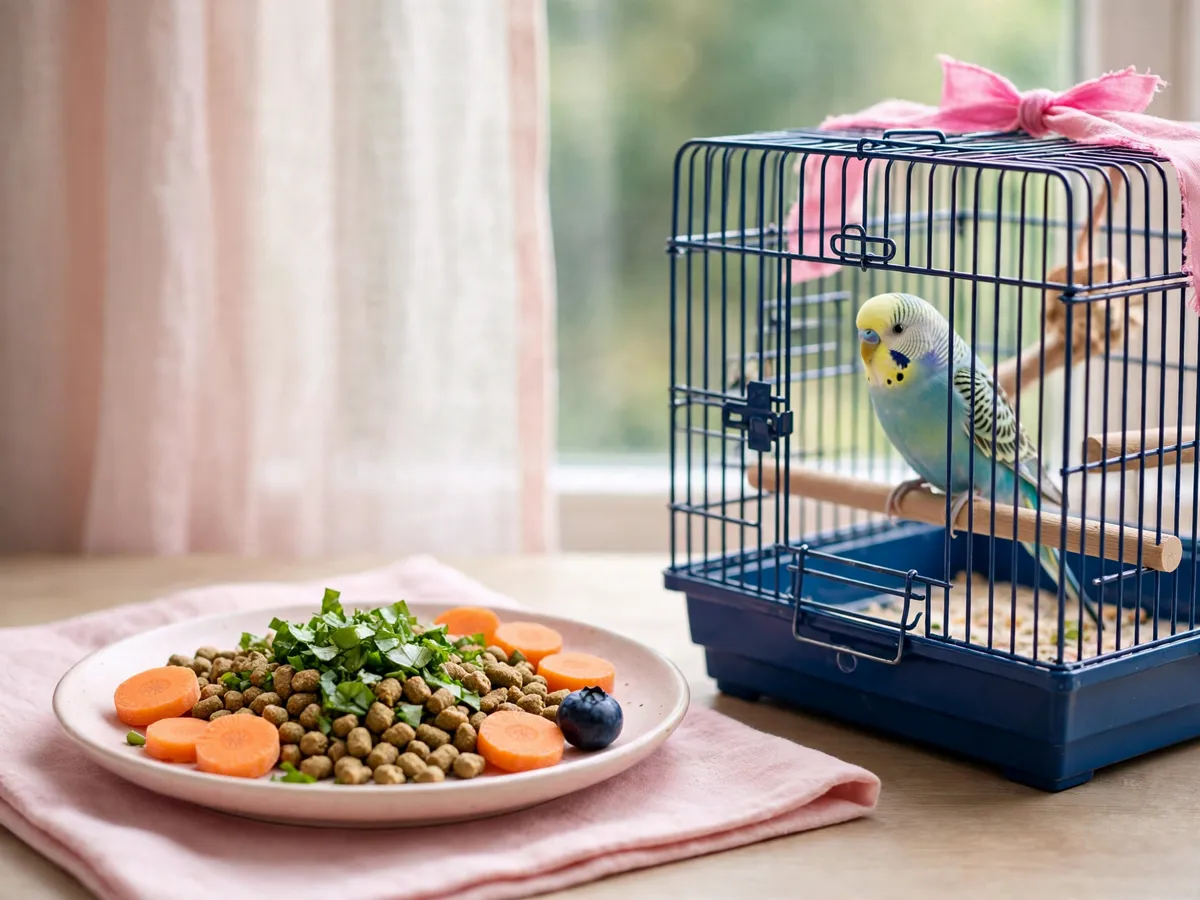
Keep the plate small and rotate a short list rather than a long one: leafy greens, carrot coins, broccoli florets, a berry, cooked squash cooled to room temperature. Wash whatever you serve. Avocado, onion and the stone inside a cherry stay off it. The plate comes out once the bird has walked away from it rather than being left to sit in a warming room.
Introduce one new vegetable at a time, on a morning when the bird is already eating well. A budgie that meets three unfamiliar things on one plate and then refuses the plate leaves its owner with no idea which item caused it, and the whole week gets blamed on the wrong food. The same rule runs backwards: a vegetable the bird loved in spring is worth keeping in rotation rather than swapping out for novelty.
Chop everything to the size a budgie can pick up and swallow without working at it, and leave the tough stalks out. The point of the plate is variety and the habit of eating something fresh, and a piece too large to carry is a piece that ends up on the floor as a toy.
The bath comes back with the light
A pet bird should be given opportunities to bathe as part of a regular grooming routine. Winter asks for the bath early in the day, on the mildest morning, so the bird is dry before night. Spring lifts that constraint. The mornings hold more heat, the room warms faster, and the bird that stood in a shallow dish and looked at you in January will often step into it in March without any persuasion at all.
The two methods that carry a budgie through the year are the same ones here: a shallow dish on the cage floor and a fine mist from a clean spray bottle. The dish is the one to bring back first, an inch of water at room temperature, and the mist is the one for a bird that ignores the dish entirely. Bathing is also the piece that makes the moult bearable, because a bird working through new feather growth is a bird that needs its skin and plumbers looked after, and dust from the old sheaths has to come off somehow.
Let the bird set the pace rather than the calendar. Some budgies bathe often once the water returns and some take to it immediately and then lose interest for a week, and neither pattern needs correcting. The mist-and-dish walkthrough has the full routine, including what to do about a bird that startles at the sound of the bottle and how to keep a spray bottle from becoming the thing it fears.
Budgie winter-to-spring reset questions
When should I reset the budgie cage for spring?
The reset starts when the daylight hours stretch and the draft cover comes off. The cage gets a full clean, the dishes move back to the sides, and the bath routine returns.
Should I change the budgie diet in spring?
The pellet-and-produce mix stays the base. Spring adds a little more fresh produce variety, but the pellet share holds and seeds stay limited.
Can budgies bathe more in spring?
A shallow dish or a light mist works year-round. Spring brings warmer mornings, so the bath window opens up, but the bird picks the pace.
Save these on Pinterest
Pin the four moves together so the reset gets done in one afternoon instead of creeping back over the season. The Budgie & Cockatiel Corner collection holds the winter setup, the pellet conversion and the bathing walkthrough that this page runs on top of.
For informational purposes, consult your vet.