 PawStyle Daily
Budgie & Cockatiel Corner
A Budgie Cage Ready for Winter Drafts
Winter changes the room a budgie lives in, even when the thermostat stays the same. The window that was a sunny spot in September carries a draft by January, the air dries out, and the corner that worked all summer is suddenly the coldest wall in the apartment. This page walks the winter cage from the corner it sits in to the perches inside it, the dishes on the sides, and the bath that still runs in cold weeks. Nothing here is a winter-only rule, just the year-round ones that matter most when the temperature drops.
By PawStyle Daily · Updated 19 November 2026
Draft-free corner · mixed natural-wood perches · dishes on the sides · bath still runs · for informational purposes, consult your vet.
Why winter asks for a cage check
A budgie is a small bird in a small body, and a small body feels the room before the thermostat does. The draft that a human walks through without noticing is a draft a budgie sits in for hours, and the corner that was the warmest spot in summer is often the coldest one in winter because the glass behind it radiates cold air even when the window is closed. The winter cage check is the one walk around the room that catches this before the bird does.
The check is four pieces, and each one is a year-round rule that winter simply makes urgent. The corner the cage sits in, the perches inside it, the dishes on the sides, and the bath that still runs. Each piece is the same one the budgie cage setup checklist covers for the rest of the year, and winter is the season to read them again because the room has changed underneath the cage.
The draft-free corner and the cage that fits it
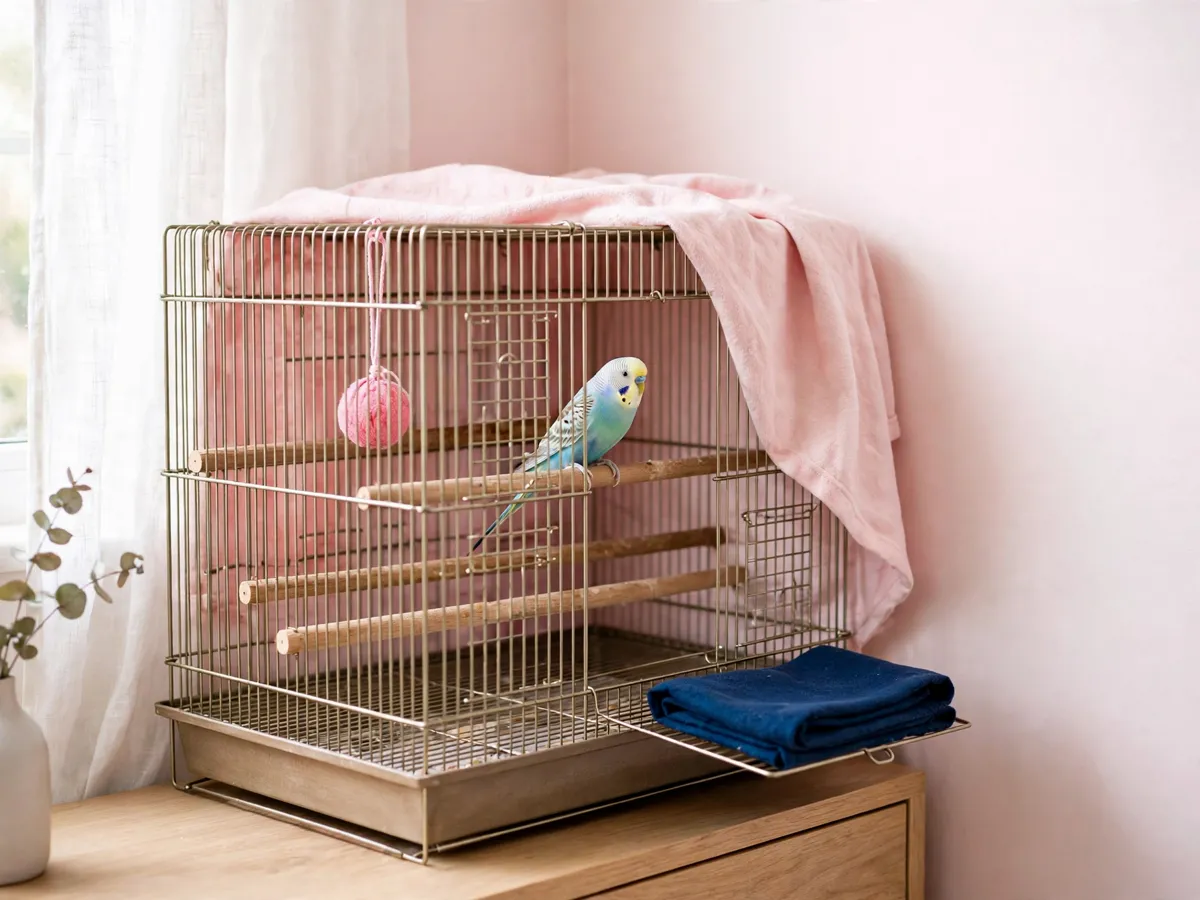
The winter corner is an interior one, away from the window and away from the door. The window that gave the bird a view in summer is the one that gives the bird a draft in January, and the door that swings on a hinge is the one that sends a cold wave across the bars every time someone carries the groceries in. The corner that wins in winter has two walls at the bird's back, a view into the room, and daylight that reaches it from a window across the room rather than beside it.
A budgie's cage should be big enough to turn around without striking anything, move from perch to perch, and stretch or flap its wings - the minimum guideline is 1 ft x 1 ft x 2 ft (30 cm x 30 cm x 60 cm), and bigger is better. The winter corner does not change the size rule, it changes where the cage of that size sits. A cage that fits the corner with room on three sides is a cage the bird can live in for the season, and a cover over the back panel blocks the wall draft without closing the cage in.
The cover is the winter piece that is not a winter-only rule. A light fabric over the back panel, hung off the top hooks, blocks the draft the wall carries and leaves the front open so the bird sees the room. A heavy blanket that wraps the cage is the one to avoid, because it holds the warm air against the bars and the bird has nowhere cool to move. The cover goes on the back, the front stays open, and the corner stays bright.
The perch mix for cold weeks
The perches are the piece the bird touches all winter, and winter is the season that punishes a dowel-only cage. A factory dowel is the same diameter from end to end, and a foot that sits on the same diameter for twelve hours a day is a foot that loses the range of motion the bird needs. The winter perch mix is the one that runs all year, and the cold weeks are the weeks to check it because the bird spends more time inside the cage when the room is cold.
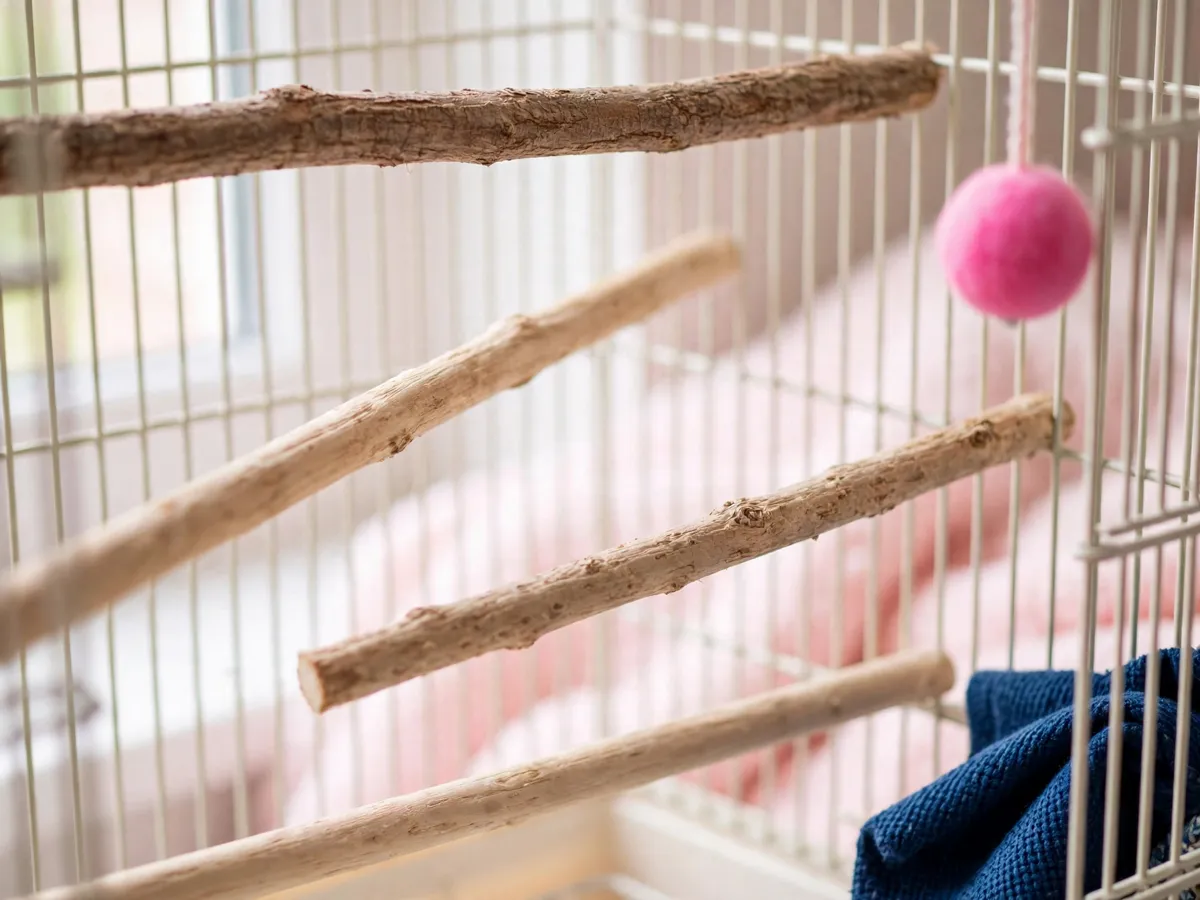
Offer perches in an assortment of diameters, shapes and textures with natural wood ideal, and never use sandpaper perches because they are too abrasive for a bird's feet. The winter mix is a natural branch with the bark still on, a second perch of a different diameter, a platform the bird can sit flat on, and the sleeping perch at the top. The natural branch is the one that earns its place in winter because the texture and the curve give the foot something a dowel cannot copy. The perch diameters and wood types page carries the full list of safe woods and the diameters that suit a budgie.
Dishes on the sides, not the floor
The dishes are the piece that winter makes messier, not harder. The bird eats more when the room is cold, the droppings land more often because the bird is inside more, and a dish on the floor is a dish that catches every dropping that falls. The year-round rule is the one that earns its place in winter: dishes on the sides, not the floor, and a daily wash that does not wait.
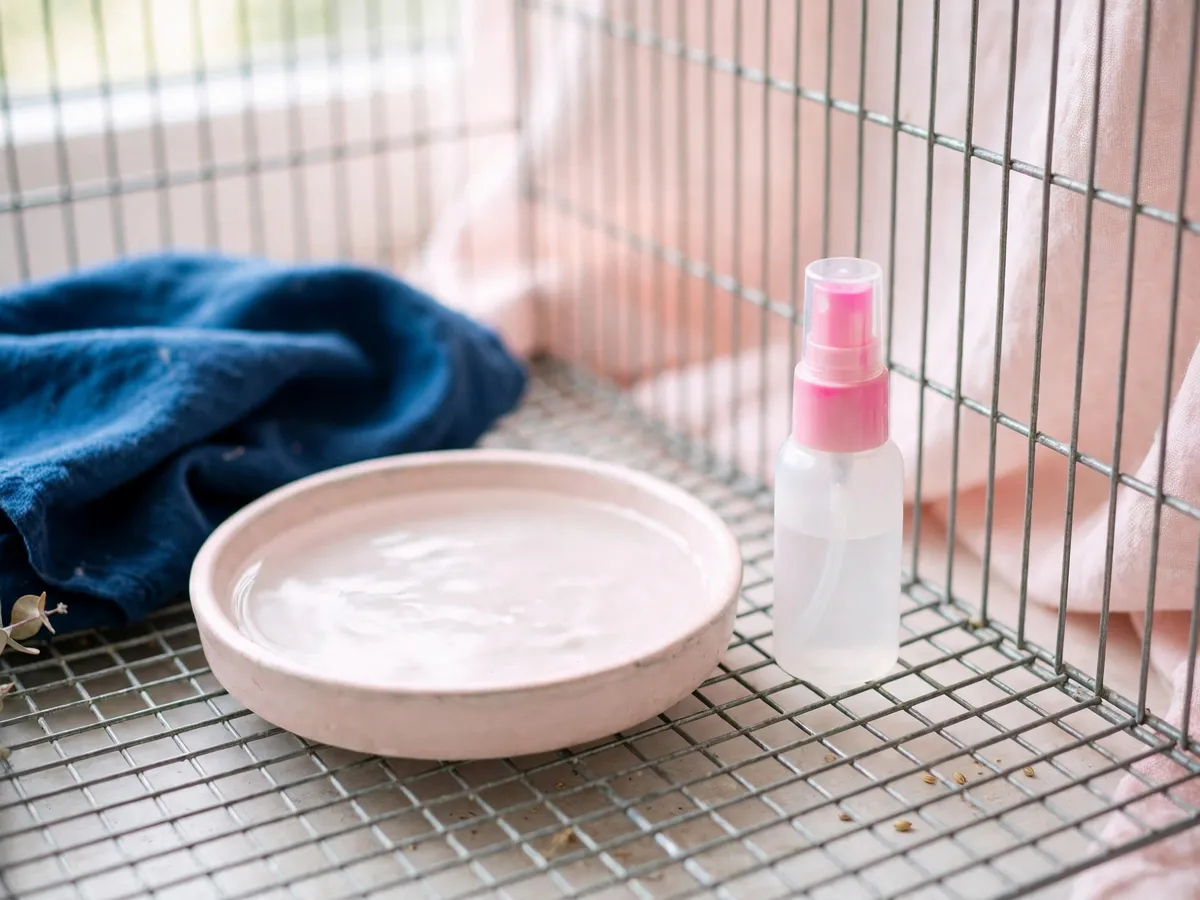
Attach sturdy, non-toxic food and water dishes to the cage sides rather than the bottom so droppings do not fall into them, and clean and disinfect them every day. The winter routine is the same one, run a little more often. The water dish gets a morning wash and a fresh fill, the food dish gets an evening wipe, and the disinfect is the one that runs over both before the bird wakes up. A dish on the side is a dish the bird reaches from a perch, and a dish the bird reaches from a perch is a dish that does not sit under the sleeping perch.
The bath that still runs in cold weeks
A pet bird should be given opportunities to bathe as part of a regular grooming routine. The bath is the one people skip in winter, and it is the one the bird needs most when the heating dries the air. The winter bath is the same bath run on a different day, and the rule is simple: pick a morning, use water at room temperature, and skip the bath on the coldest day rather than running it late.
A shallow dish of water, a mist from a clean spray bottle, or a shower under the faucet are the three bathing options a bird owner can offer. The shallow dish is the winter one because it is the gentlest, and a dish an inch deep on the cage floor is a dish the bird steps into on its own terms. The mist is the one for a bird that does not like the dish, and the faucet is the one for a bird that has learned to sit under a slow trickle. The mist-and-dish walkthrough carries the full routine, and the winter version is the same routine run earlier in the day.
Questions about winter cage warmth
Can I cover the cage with a blanket for warmth?
A fabric cover over the back panel blocks the draft without trapping air inside. Leave the front open so the bird sees the room and the light.
Should I move the cage away from the window in winter?
The window that was fine in summer may carry a draft in January. An interior corner away from the glass is the winter spot, and the bird still gets daylight from the room.
Can budgies still bathe in winter?
A shallow dish or a light mist works year-round. Use room-temperature water, pick a morning so the bird dries before night, and skip the bath on the coldest days.
Save these on Pinterest
Pin the winter cage check before the first cold week. The Budgie & Cockatiel Corner collection holds the perch page, the bath walkthrough, and the setup checklist that this winter page runs on top of.
For informational purposes, consult your vet.