 PawStyle Daily
Budgie & Cockatiel Corner
Budgie Cage Setup in a Bedroom Apartment
A bedroom is a room a budgie can live well in, and a small apartment is a space a cage can sit well in, but the two together ask for a few choices the living room does not. The bird sleeps where the family sleeps, the daylight comes through the same glass the family looks out of, and the corner the cage sits in is the corner that decides whether the bird guards the room or the room guards the bird. This page walks the bedroom cage from the corner it sits in to the light it lives under to the night cage it moves to when the family stays up late. Nothing here is a product requirement, just the placement choices that earn their place in a small space.
By PawStyle Daily · Updated 19 November 2026
Corner over open wall · draft and temperature check · daylight the bird can move away from · a night cage for late evenings · for informational purposes, consult your vet.
Why a bedroom asks for a cage check
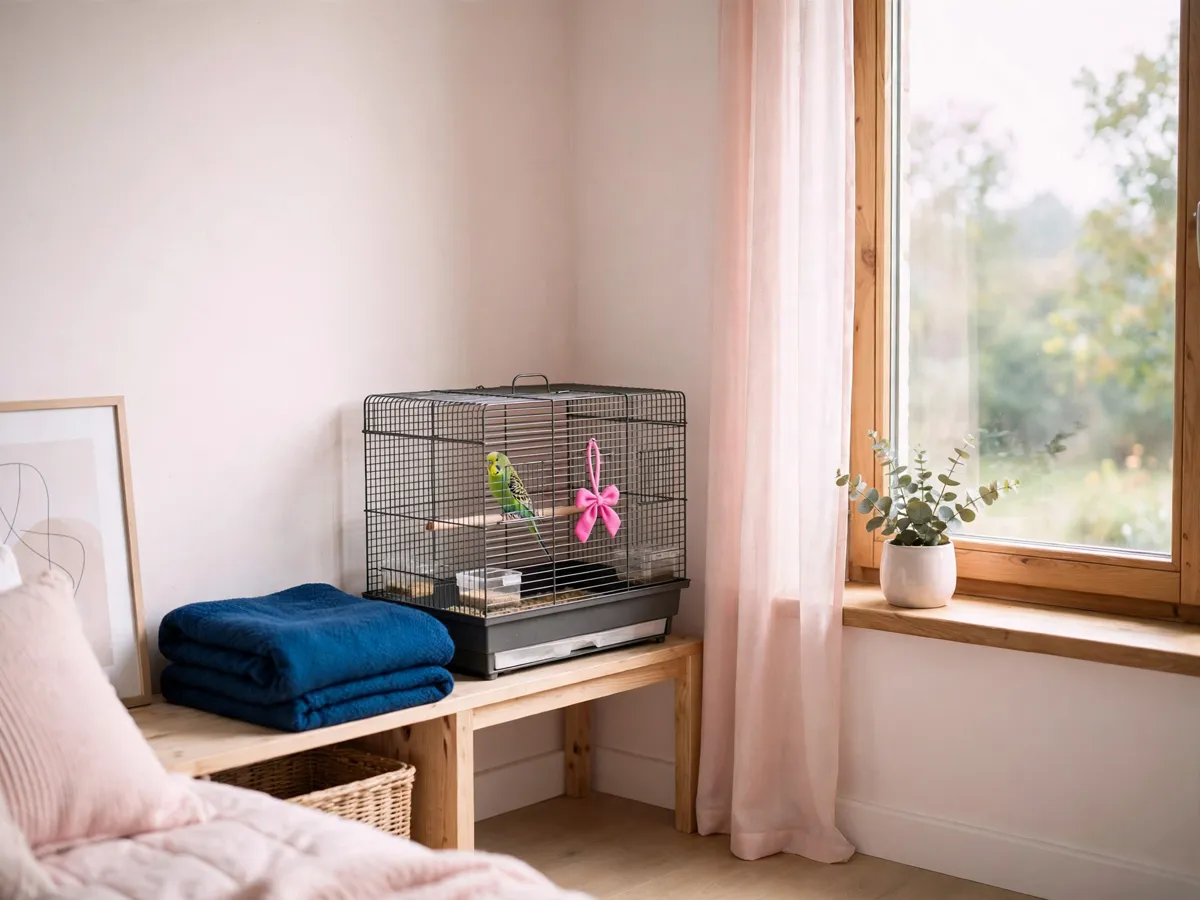
A budgie is a bird that lives in the room the family lives in, and a bedroom is the room the family spends the most time in at night. The cage that sits well in a living room sits differently in a bedroom, because the bedroom carries a bed, a window, a door, and a lamp the living room does not. The corner, the draft, the daylight, and the night are the four pieces a bedroom cage has to answer to, and the four are the ones this page walks.
The reason the corner matters more in a bedroom is that a bedroom is smaller. A cage against an open wall in a living room has the whole room behind it; a cage against an open wall in a bedroom has the bed, the door, and the closet behind it, and the bird has to watch all of it. The corner is the answer a small room gives to a bird that does better with two walls at its back.
If you already ran the budgie cage setup checklist for the room, this is the bedroom half of the same walk. The checklist covers the cage; this page covers the room the cage sits in.
The corner that lets the bird guard two sides
A corner is the spot a cage earns in a bedroom, because a corner gives the bird two walls at its back and only two sides to watch. A bird in an open wall has to watch the whole room, and a bird in a corner has to watch half of it. The difference is the difference between a bird that rests and a bird that stays alert, and the corner is the piece of the room that decides which one the bird is.
The corner that works is the one the family walks past without surprising the bird. A bedroom corner behind the door is a corner the bird gets startled in, because the door opens toward the cage and the bird sees the room arrive at once. A bedroom corner beside the window is a corner the bird sees the room from, because the light is on one side and the family is on the other, and the bird watches both without turning around.
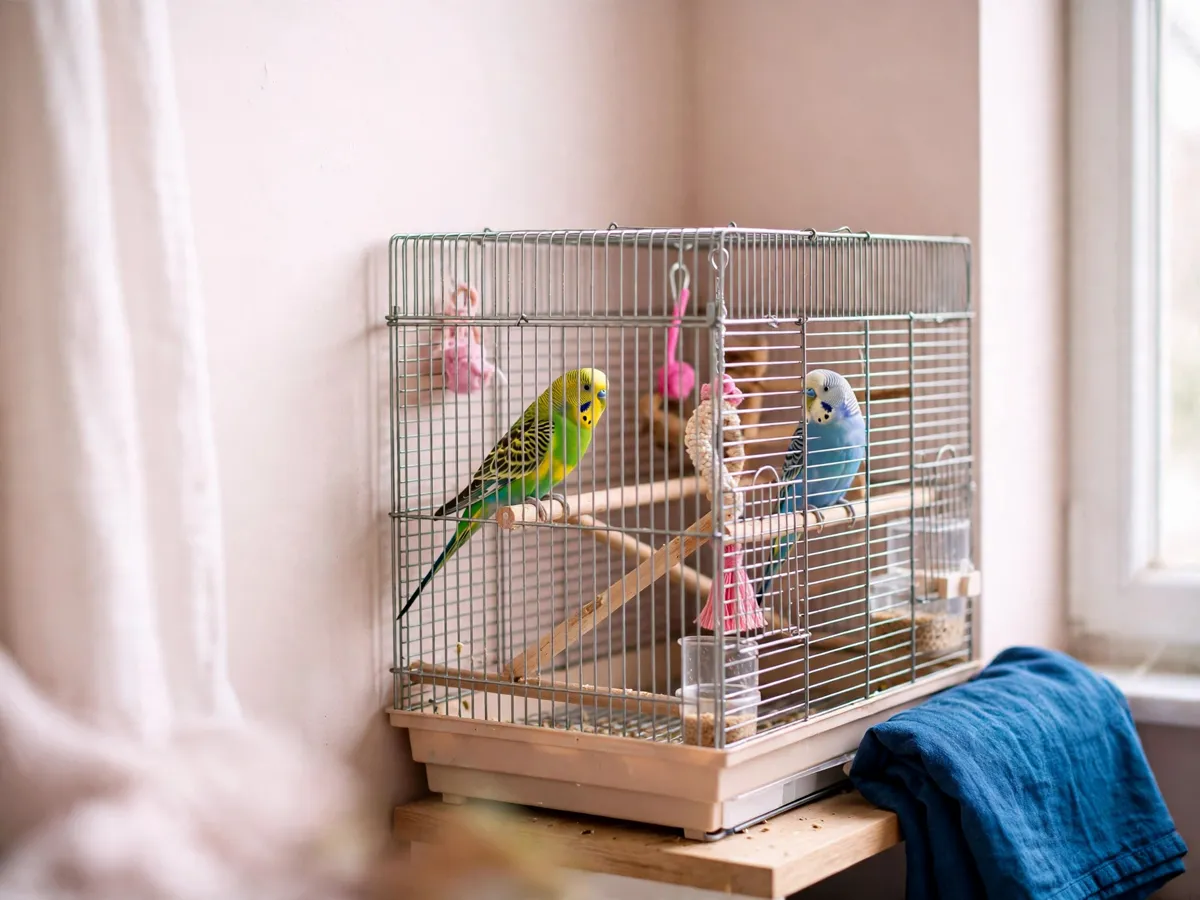
The perch mix inside the cage is the other half of the corner. The bird perch diameters and wood types page walks the perches the bird's feet need; this page walks the corner the perches sit in. The two read together, because a cage in the right corner with the wrong perches is still a cage the bird does better in than a cage in the wrong corner with the right perches.
The draft and temperature check
The ideal temperature range for a pet bird is between 70 and 80 degrees F, and the cage sits away from drafts such as the direct line of an air conditioner or a heating vent.
That line is the one a bedroom asks a cage reader to hold to. The window that lets the light in is the same window that lets a draft in, and the vent that warms the room in winter is the same vent that dries the air out. The corner that works for the bird is the corner that is out of the direct line of both, and the check is the same one in every season: stand where the cage sits, feel the air, and move the cage if the air moves.
A bedroom in a small apartment often has one window and one vent, and the two are sometimes on the same wall. The cage that sits between them sits in the path of both, and the cage that sits across the room sits out of the path of either. The move is a small one, and the bird reads the difference before the family does.
The winter version of the same check lives on the budgie winter cage warmth page, where the draft and the temperature are the whole walk. This page sets the bedroom version of the same line, and the winter page carries it through the cold weeks.
Daylight the bird can move away from
Provide daily access to unfiltered sunlight or full-spectrum lighting, because window glass blocks the UV rays a bird needs, and the bird must be able to move away from the direct sun.
The bedroom window is the piece of daylight a bedroom cage has to answer to. A bird by a window gets light, but the glass between the bird and the sun is the glass that blocks the part of the sun the bird needs. The cage that sits in the corner by the window gets the view and the brightness; the bird that gets the full spectrum is the bird that gets the sun without the glass, or a lamp that carries the spectrum the glass drops.
The other half of the daylight line is the move-away. A bird in direct sun is a bird that can overheat, and the cage that gives the bird no shade is a cage that gives the bird no choice. The corner that works is the corner that lets the bird sit in the sun and step out of it, and the perch on the sun side and the perch on the wall side are the two perches that give the bird the choice.
The bedroom version of the daylight line is the same as the living room version: the bird gets the sun, the bird gets to move away from the sun, and the glass is the piece the family has to know about. A bedroom curtain is the piece that lets the family dim the room for sleep, and the curtain is also the piece that lets the bird step out of the direct sun without moving the cage.
The night cage for late evenings
A separate sleeping cage, or a cage on casters moved at night, keeps the bird's sleeping pattern uninterrupted when the family stays in the room late.
A bedroom is the room the family sleeps in, and a bedroom is also the room the family sometimes stays up late in. The bird that sleeps in the same cage the family sits next to is the bird that sleeps when the lamp is on and wakes when the lamp goes off, and the bird's rest is the piece that loses out. The night cage is the answer a bedroom gives to a bird that needs the dark when the family is still awake.
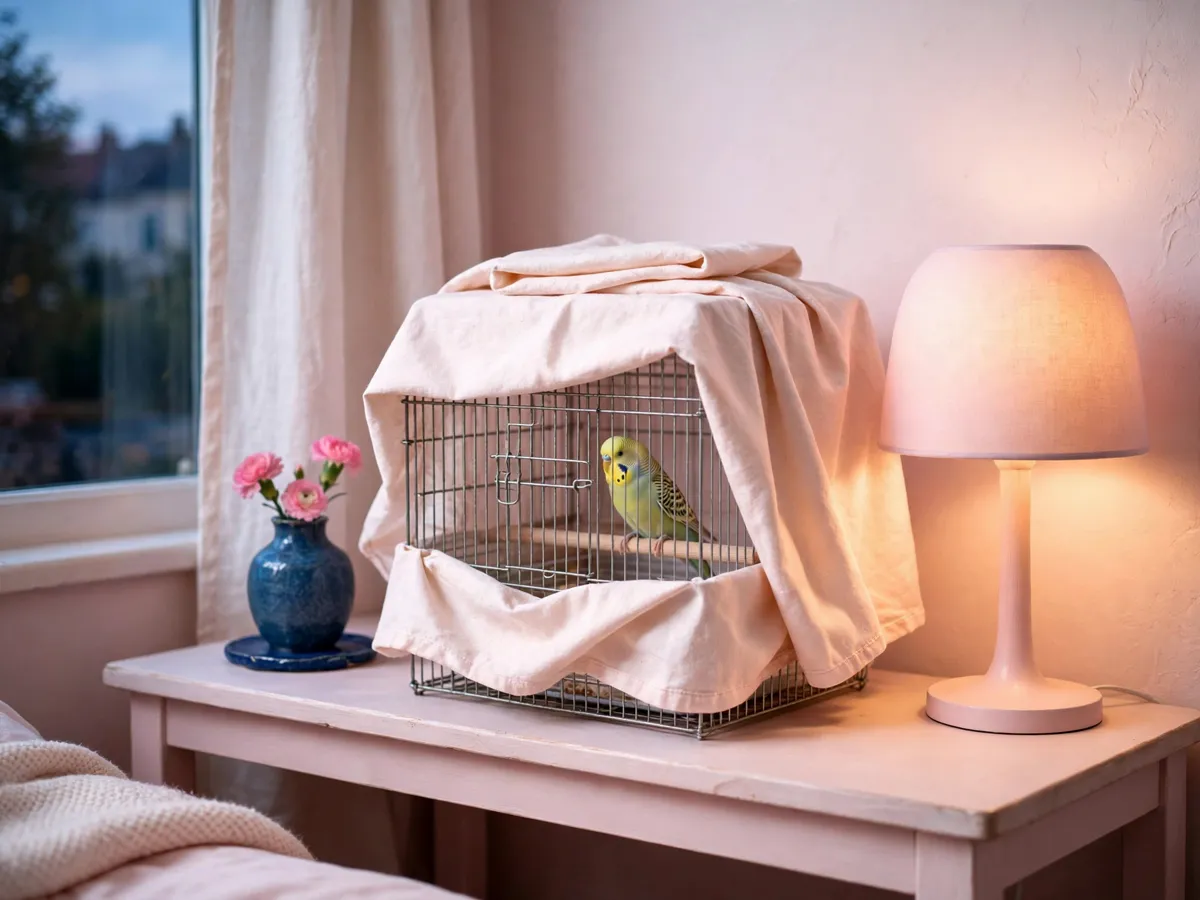
The night cage is a separate cage, or the same cage on casters moved to a quieter corner. A light cover for the night cage is a piece of cotton folded over the top, and the cover is the piece that dims the lamp for the bird without dimming the room for the family. The cover is a light one, and the front stays open so the bird sees the room and the air moves through.
The night cage is the piece a bedroom asks for that a living room does not, because a living room goes dark when the family leaves it and a bedroom does not. The bird that sleeps in a bedroom is the bird that sleeps on the family's schedule, and the night cage is the piece that gives the bird a schedule of its own.
Questions we get about a budgie cage in a bedroom
Where should a budgie cage go in a bedroom?
A corner or a spot against a wall in the room the family uses most is ideal, because the bird only has to watch two or three sides instead of all the way around. The cage on a counter or table in the open can stress a bird.
Does window glass give my bird enough sunlight?
No. The glass between the bird and the sun drops the part of the light a bird needs, so a bird behind a pane gets brightness without the full spectrum. Let the bird have daily time in the direct sun, or run a full-spectrum lamp, and always leave a shaded perch to step back onto.
Do I need a separate sleeping cage?
A second cage for sleeping, or the same cage rolled to a quieter spot at night, gives the bird a rest the late-evening lamp cannot break. The setup is about the bird's rest, not a product requirement.
Save these on Pinterest
Pin the bedroom cage setup before the next move, or send it to someone setting a cage up in a small apartment for the first time. The Budgie & Cockatiel Corner collection holds the perch page, the winter warmth page, and the setup checklist that this bedroom page runs on top of.
For informational purposes, consult your vet.